Hepatopulmonary Syndrome: Symptoms, Causes & Treatment Guide

Updated: 2 days ago
Medically reviewed by Dr. Baraa Alnahhal, MD · Last reviewed: September 2026
TL;DR
Hepatopulmonary syndrome (HPS) is a rare condition in which blood vessels in and around the lungs widen (dilate) and multiply in people who have advanced liver disease. These changes make it hard for red blood cells to absorb oxygen, leading to low blood oxygen (hypoxemia). Often there are no symptoms at all. When symptoms do appear, they can include breathlessness that worsens when sitting or standing and improves when lying down, rounded fingertips (clubbing), spider-like broken blood vessels under the skin (spider angioma), and a bluish or gray tinge to the lips and skin (cyanosis). Doctors diagnose HPS with three main tests — pulse oximetry, arterial blood gas, and chest imaging. Supplemental oxygen therapy is the main treatment for breathlessness, and a liver transplant is the only cure.
Quick Answer
What it is: A condition in which lung blood vessels dilate and multiply, lowering blood oxygen, occurring only in people with advanced liver disease.
Why it happens: Not fully understood; the link between liver disease and the lung changes is not yet known.
Key symptom: Shortness of breath that is worse when sitting or standing and better when lying down.
Other signs: Finger clubbing, spider angioma, cyanosis (bluish or gray lips and skin).
Diagnosis: Pulse oximetry, arterial blood gas, and chest imaging (X-ray, CT, or saline contrast echocardiogram).
Main treatment: Supplemental oxygen therapy for low blood oxygen.
Only cure: A liver transplant.
What Is Hepatopulmonary Syndrome?
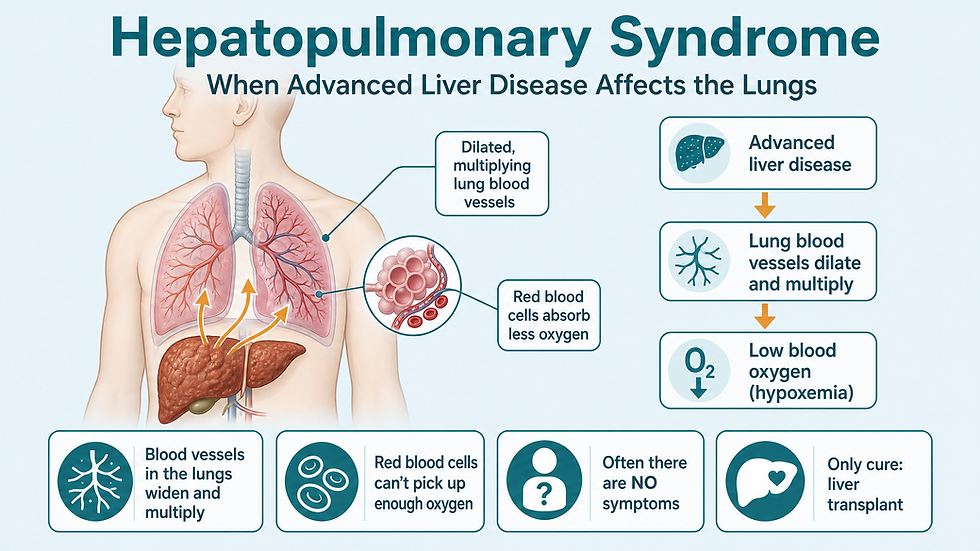
Hepatopulmonary (hep-uh-toe-POOL-moe-nar-e) syndrome is caused by blood vessels in the lungs expanding — also called dilating — and increasing in number. This condition affects the lungs of people who have advanced liver disease.
These changes in the lungs make it hard for red blood cells to take in oxygen. The lungs then can't send enough oxygen to the body. This leads to low oxygen levels in the blood, also called hypoxemia (hye-pok-SEE-mee-uh).
Key point: How liver disease is linked to the lung condition isn't yet known. It's also not known why some people with liver disease develop hepatopulmonary syndrome while others do not.
What Are the Symptoms?
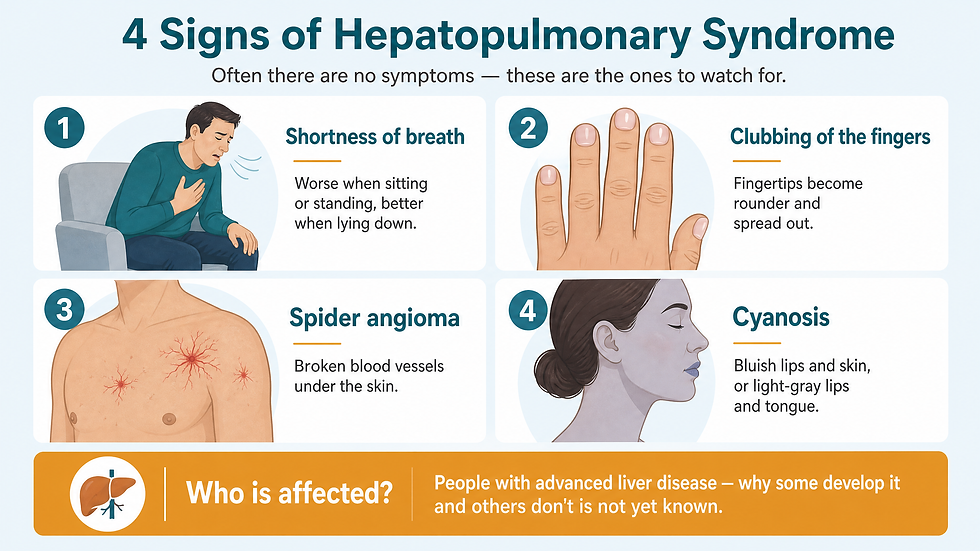
Often, there are no symptoms of hepatopulmonary syndrome. If there are symptoms, they can include the four listed below.
Symptom | What It Looks or Feels Like |
Shortness of breath | Worse when sitting or standing; gets better when lying down |
Clubbing of the fingers | Fingertips spread out and become rounder than usual |
Spider angioma | Broken blood vessels under the skin |
Cyanosis | Bluish tinge of the lips and skin in white people; in Black and brown people, the lips or tongue might look light gray |
The breathlessness pattern is distinctive. Unlike many lung conditions that worsen when lying flat, hepatopulmonary syndrome often feels worse when upright and better when lying down. If you have liver disease and notice this pattern, it's worth mentioning to your care team.
What Causes Hepatopulmonary Syndrome?
Hepatopulmonary syndrome is caused when blood vessels in and around the lungs widen — also called dilate. This affects the amount of oxygen that moves from the lungs into the bloodstream.
Question | What Is Known |
What triggers the blood vessel changes? | Not clear |
Why do only some people with liver disease develop it? | Not known |
Can it be prevented? | No known prevention (cause is not yet understood) |
The condition is classified as a rare disease by rare-disease medical organizations. Because the underlying mechanism is still being studied, there is currently no way to prevent it — the focus is on early detection in people who already have advanced liver disease.
Who should be alert: Anyone with advanced liver disease (such as cirrhosis) should report new or unusual breathlessness, fingertip changes, skin color changes, or spider-like skin markings to their doctor.
How Is It Diagnosed?
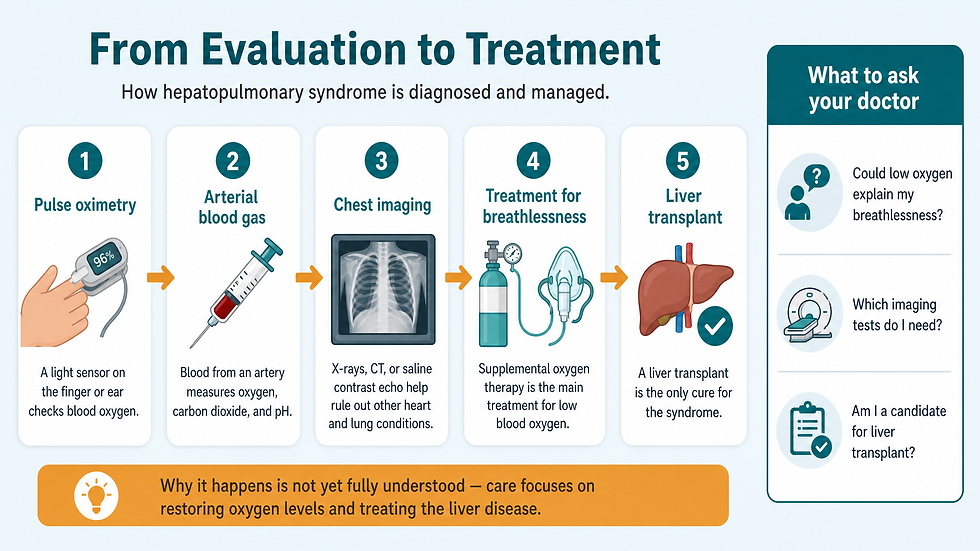
These three tests can help find out whether you have hepatopulmonary syndrome:
Test | How It Works | What It Shows |
Pulse oximetry | A sensor attached to the finger or ear uses light to measure how much oxygen is in the blood | Blood oxygen level |
Arterial blood gas | Blood is taken from an artery | Oxygen level, carbon dioxide level, and pH balance |
Chest imaging | X-rays, CT scanning, or an echocardiogram with a salt solution given through a vein (a saline contrast study) | Helps rule out other heart or lung conditions |
Doctors typically start with the simplest test — pulse oximetry — and move to blood gas analysis and imaging when the picture needs to be clearer. Imaging is especially useful because many heart and lung conditions can cause similar symptoms.
How Is Hepatopulmonary Syndrome Treated?
Treatment for hepatopulmonary syndrome focuses on two goals: restoring oxygen levels and addressing the underlying liver disease.
Treatment | Purpose | Key Fact |
Supplemental oxygen therapy | Main treatment for shortness of breath caused by low blood oxygen | Oxygen is delivered as a supplement to raise blood oxygen levels |
Liver transplant | The only cure for hepatopulmonary syndrome | Addresses the liver disease driving the lung blood vessel changes |
Being given oxygen, called supplemental oxygen therapy, is the main treatment for shortness of breath caused by low oxygen levels in the blood. A liver transplant is the only cure for hepatopulmonary syndrome.
Managing Day to Day
If you have hepatopulmonary syndrome, your care team may recommend carrying supplemental oxygen during activities that lower your oxygen levels, such as exertion or air travel. Because the condition is tied to advanced liver disease, ongoing specialist care for both the liver and the lungs is essential.
Conclusion
Hepatopulmonary syndrome is a rare but important complication of advanced liver disease. It often causes no symptoms, which makes awareness of the warning signs — unusual breathlessness that improves when lying down, rounded fingertips, spider-like skin markings, and bluish or gray lips — especially valuable. With pulse oximetry, blood gas testing, and chest imaging, doctors can identify the condition and rule out other causes. Supplemental oxygen therapy eases the breathlessness, and a liver transplant remains the only cure.
If you or a loved one has advanced liver disease and notices any of these signs, talk to your healthcare provider. Bring this guide to your appointment, note when symptoms occur and what makes them better, and ask whether oxygen testing is appropriate for you.
Related Reading on Rinnit
Fatty Liver Disease (MASLD): The Silent Liver Condition Linked to Weight, Diabetes, and Metabolic Health — another common driver of advanced liver disease
Heart Failure: Symptoms, Causes & Treatment Guide — another condition that can cause breathlessness worth telling apart from HPS
Goiter: What a Neck Bulge Means, the 7 Causes, and How Treatment Protects Your Thyroid — a different cause of breathing and neck-area symptoms worth ruling out
References
Frequently Asked Questions
What is hepatopulmonary syndrome?
Hepatopulmonary syndrome is a condition caused by blood vessels in the lungs widening and multiplying, which makes it hard for red blood cells to take in oxygen. It occurs in people who have advanced liver disease and leads to low blood oxygen (hypoxemia).
What are the first signs of hepatopulmonary syndrome?
Often there are no symptoms at all. When they appear, the first signs can include shortness of breath that's worse when sitting or standing and better when lying down, rounded fingertips (clubbing), spider-like broken blood vessels under the skin, and a bluish or gray tinge to the lips and skin.
Can hepatopulmonary syndrome be cured?
Yes — a liver transplant is the only cure for hepatopulmonary syndrome. Until then, supplemental oxygen therapy is the main treatment for shortness of breath caused by low blood oxygen.
Is hepatopulmonary syndrome the same as liver disease?
No. It is a lung condition that develops in some people who already have advanced liver disease. How liver disease leads to the lung changes is not yet known.
How is hepatopulmonary syndrome diagnosed?
Doctors use three tests: pulse oximetry (a light sensor on the finger or ear), an arterial blood gas test (measuring oxygen, carbon dioxide, and pH from artery blood), and chest imaging such as X-rays, CT scans, or a saline contrast echocardiogram.
Why does breathlessness improve when lying down?
In hepatopulmonary syndrome, the blood vessel changes in the lungs make oxygen uptake harder when upright. Lying down tends to improve breathing — a pattern that differs from many other lung conditions and can be an important clue.
Can hepatopulmonary syndrome be prevented?
Not at this time. The cause of the lung blood vessel changes is not clear, and it is not known why some people with liver disease develop the condition while others do not.
Who is at risk of hepatopulmonary syndrome?
The condition only affects people with advanced liver disease. Since the mechanism isn't fully understood, anyone with advanced liver disease who develops new breathing problems should be evaluated.
Rinnit.com provides general health information for educational purposes. This content is not a substitute for professional medical advice, diagnosis, or treatment. Always seek the guidance of a qualified healthcare provider with any questions about your health.
Comments