Fetal Tachycardia: Types, Symptoms, Causes, Diagnosis, Treatment and Outlook — What You Need to Know

Updated: 2 days ago
Medically reviewed by Dr. Baraa Alnahhal, MD · Last reviewed: September 2026
Executive Summary: TL;DR
Fetal tachycardia is a rare condition characterized by a fetal heart rate exceeding 160 beats per minute (bpm). While a normal fetal heart rate ranges between 120 and 160 bpm, tachycardia can indicate underlying maternal or fetal issues. The most common form is supraventricular tachycardia (SVT), which involves heart rates over 200 bpm. Although the mother typically feels no symptoms, healthcare providers detect the condition during routine prenatal exams or ultrasounds. Most cases are treatable with medications administered to the mother, which pass through the placenta to regulate the fetus's heart. While severe or prolonged cases can lead to complications like fetal hydrops or heart failure, the overall outlook for babies with fetal tachycardia is generally positive.
Quick Answer: What Is Fetal Tachycardia?
Fetal tachycardia occurs when a fetus's heart beats faster than the normal range of 120 to 160 beats per minute. Specifically, it is defined as a heart rate consistently above 160 bpm. This condition is rare, affecting approximately 1 in 200 pregnancies. It is usually discovered by a healthcare provider listening to the heartbeat or during an ultrasound, as it causes no noticeable symptoms for the mother. Causes range from maternal fever and infections to electrical issues within the fetal heart. Treatment often involves anti-arrhythmia medications given to the mother or, in severe cases, early delivery.
FETAL DISTRESS WARNING Fetal tachycardia can sometimes indicate fetal distress or lead to severe complications such as fetal hydrops (fluid buildup), heart failure, or stillbirth if left untreated for long periods. If your healthcare provider detects a sustained heart rate over 200 bpm, aggressive medical intervention is required. Follow all specialist recommendations for monitoring and treatment immediately to ensure the best possible outcome for your baby.
What Is Fetal Tachycardia?
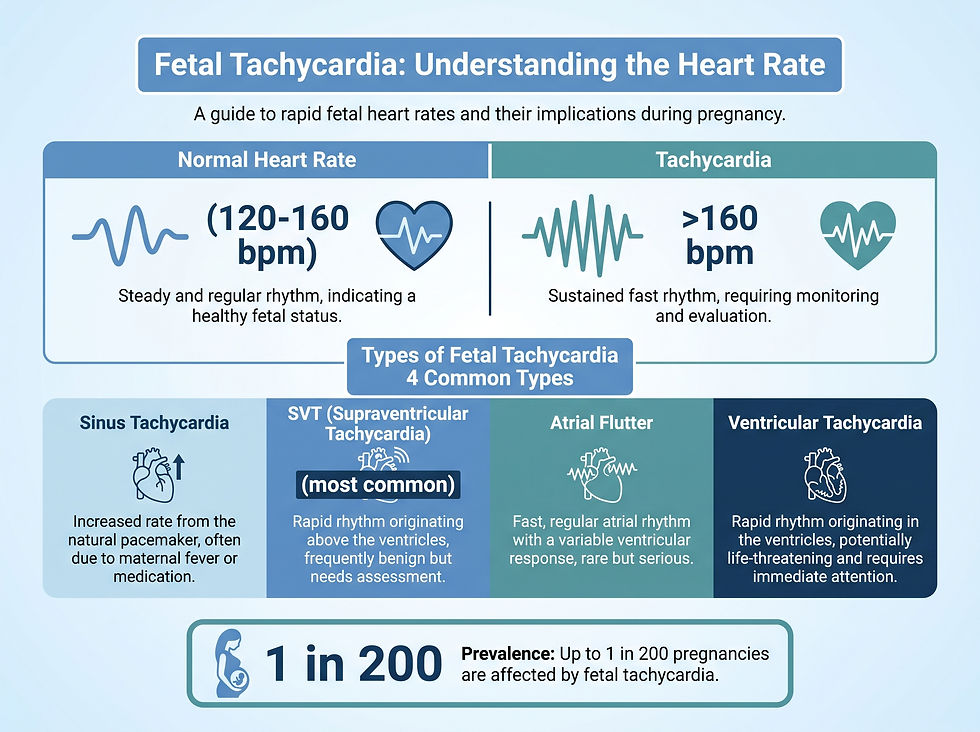
Fetal tachycardia is a condition where the fetus's heart rate is abnormally fast, defined as any rate over 160 beats per minute (bpm). For context, a healthy fetal heart rate typically fluctuates between 120 and 160 bpm. While the condition is rare—occurring in roughly 0.5% of pregnancies—it requires careful monitoring to prevent strain on the developing heart.
Key facts: fetal tachycardia overview
Definition: fetal heart rate consistently above 160 bpm
Normal range: 120 to 160 beats per minute (bpm)
Prevalence: up to 1 in 200 pregnancies (0.5%)
Primary detection: ultrasound or fetal heart monitoring
Maternal symptoms: none (the mother cannot feel the fast heart rate)
Primary goal: control the heart rate to prevent heart failure
Types of Fetal Tachycardia
Just as in children and adults, there are different classifications of fetal tachycardia based on where the fast rhythm originates and the specific heart rate reached.
Sinus tachycardia: the heart works normally but beats faster than usual; typically 180 to 200 bpm
Supraventricular tachycardia (SVT): abnormally fast rate originating in the upper chambers; the most common type, typically over 200 bpm
Atrial flutter: the upper chambers (atria) beat much faster than the lower chambers (ventricles); fast and sometimes irregular
Ventricular tachycardia: the lower heart chambers beat too fast; this form is rare in fetuses
Symptoms and Warning Signs
One of the most challenging aspects of fetal tachycardia is that it is "silent" for the pregnant person. There are no physical sensations, such as palpitations or discomfort, that indicate the fetus's heart is racing.
How tachycardia is detected
Because the mother cannot feel the condition, detection relies entirely on clinical observation:
Auscultation: a provider hears the fast rate while listening to the heartbeat during a check-up
Ultrasound exam: the rapid rhythm is visualized and measured during routine or targeted imaging
Fetal monitoring: electronic sensors detect the heart rate during specialized testing
Causes of Fetal Tachycardia
The causes of a rapid fetal heart rate are divided between factors affecting the mother and issues originating within the fetus itself.
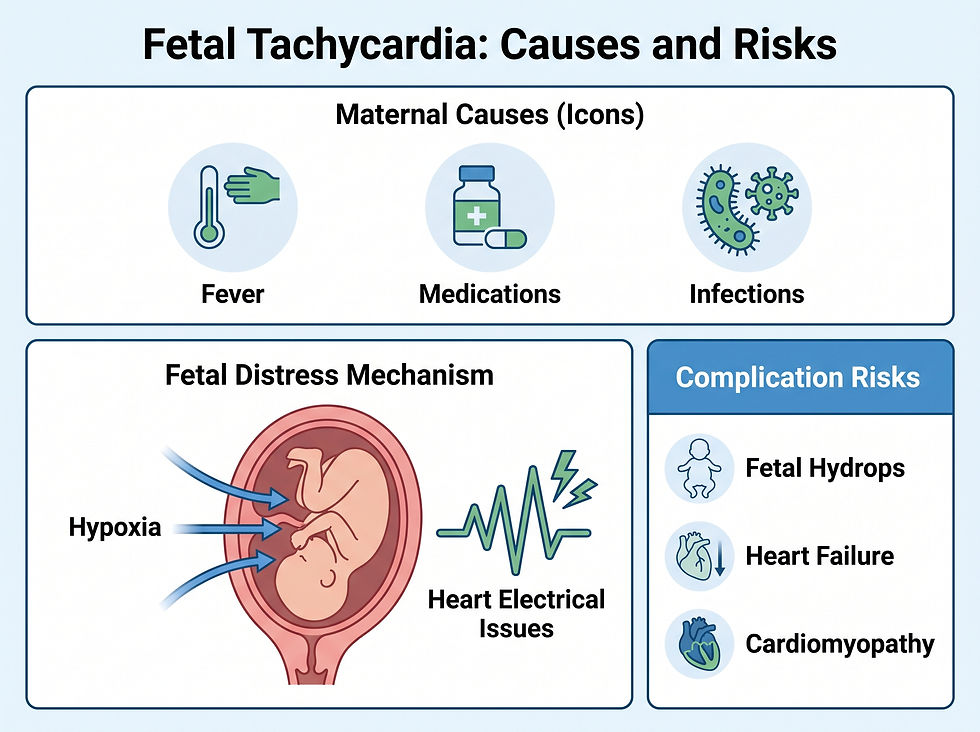
Maternal factors: fever (most common), infections (e.g., chorioamnionitis), anemia, and high thyroid hormone levels (hyperthyroidism)
Maternal medications: stimulants (ADHD, obesity), asthma/COPD medications, and low blood pressure treatments
Fetal factors: hypoxia (lack of oxygen), fetal distress, electrical system issues in the heart
Structural issues: congenital heart conditions (increase the risk of complications)
Potential Complications
While short bursts of tachycardia (lasting minutes) are usually harmless, sustained high heart rates can lead to serious health issues for the fetus.
Fetal hydrops: severe fluid buildup in the fetus's tissues and organs
Cardiomyopathy: damage to the heart muscle caused by overwork
Heart failure: the heart becomes unable to pump blood effectively (read more about heart failure)
Fetal compromise: general decline in fetal health and stability
Stillbirth: loss of the pregnancy in severe, untreated cases
Diagnosis and Testing
If a rapid heart rate is suspected, healthcare providers use specialized imaging to confirm the diagnosis and determine the specific type of tachycardia.
Fetal echocardiogram: specialized ultrasound to evaluate heart rate, rhythm, and structure
Fetal electrocardiogram: detects electrical activity through the mother's skin (most effective in early pregnancy)
External monitoring: sensors on the mother's abdomen track the heart rate over time
Internal monitoring: a sensor placed on the fetus's scalp (used only during delivery)
Treatment and Management
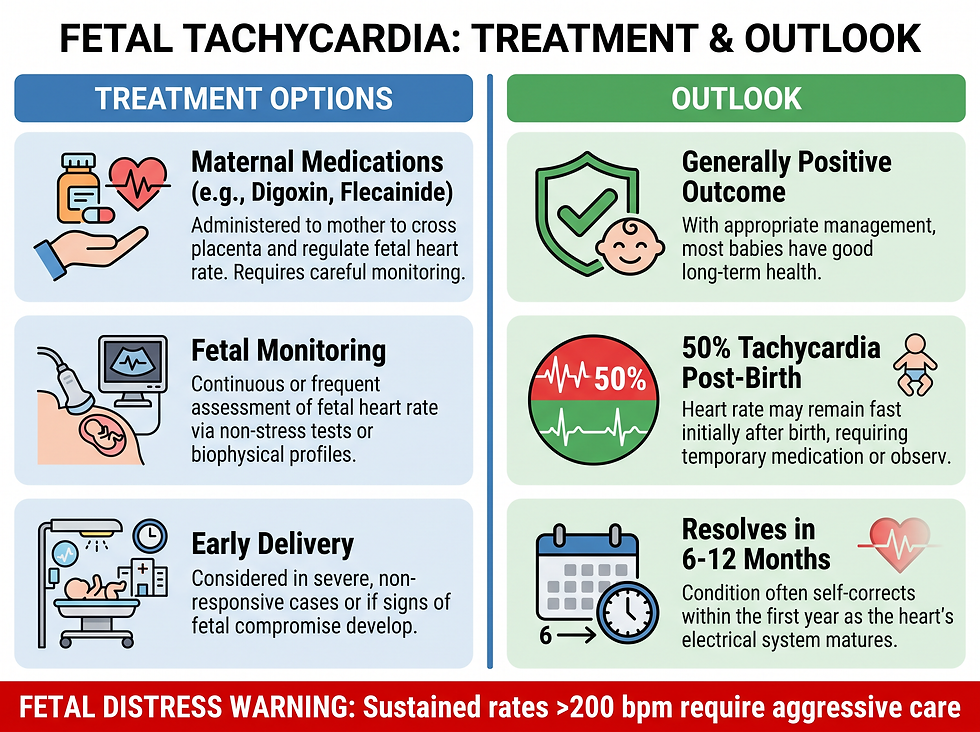
Treatment is not always necessary for mild cases or short episodes. However, if the heart rate exceeds 200 bpm or if there are signs of fluid buildup (hydrops), aggressive treatment is required.
Medical interventions
The primary treatment involves giving the mother anti-arrhythmia medications. These drugs cross the placenta to reach the fetus.
Common medications: digoxin, flecainide, sotalol, and amiodarone
Direct treatment: in rare cases where maternal medication fails, doctors may inject medicine directly into the fetus
Monitoring: the mother is closely monitored with EKGs and blood tests to ensure the medications are safe for her as well
Early delivery: if the fetus is near full term or if medications are ineffective, providers may induce labor or perform a C-section
Outlook and Prognosis
The outlook for fetal tachycardia is generally very good when the condition is detected and managed early. Most fetuses respond well to maternal medication.
What to expect after birth
At birth: some babies will no longer have tachycardia once born
Post-birth care: about 50% of babies will still have tachycardia and need a pediatric cardiologist
Long-term: for many, the condition resolves within 6 to 12 months after birth
Treatment: post-birth treatment may include medications or, rarely, surgery
Conclusion: A Note from the Care Team
"Learning that your future child might have a heart condition can be scary. But the good news is that fetal tachycardia is very treatable. While it’s serious, the overall outlook is usually positive. Through it all, lean on your healthcare team. They can explain what’s happening and offer guidance and reassurance."
Next Steps for Heart Health
Follow monitoring schedules: attend all fetal echocardiograms and monitoring sessions as prescribed.
Adhere to medication: if prescribed anti-arrhythmia drugs, take them exactly as directed by your specialist.
Plan for delivery: discuss with your OB-GYN and cardiologist whether a specialized delivery center is needed.
Frequently Asked Questions
What is the normal heart rate for a fetus? A normal fetal heart rate is typically between 120 and 160 beats per minute (bpm).
At what rate is a fetal heart rate considered tachycardia? Fetal tachycardia is defined as a heart rate that is consistently over 160 bpm.
How common is fetal tachycardia? It is a rare condition, estimated to occur in up to 1 in 200 pregnancies (0.5%).
Can the mother feel if the baby has a fast heart rate? No, the mother cannot feel fetal tachycardia. It is only detected by medical professionals using specialized equipment.
What is the most common type of fetal tachycardia? Supraventricular tachycardia (SVT) is the most common type, often involving heart rates over 200 bpm.
What is sinus tachycardia in a fetus? This is when the heart is structurally normal but beating faster than usual, typically between 180 and 200 bpm.
Is atrial flutter dangerous for a fetus? It can be serious if sustained, as the upper chambers beat much faster than the lower chambers, potentially leading to heart strain.
What causes sinus tachycardia in a fetus? The most common cause is a fever in the mother. Other causes include infections, maternal anemia, or certain medications.
Can maternal medications cause fetal tachycardia? Yes, certain medications for asthma, COPD, ADHD, and low blood pressure can increase the fetus's heart rate.
What is hypoxia in relation to fetal heart rate? Hypoxia is a lack of oxygen. When a fetus is not getting enough oxygen, its heart rate may speed up as a distress signal.
What are the risks of long-term fetal tachycardia? Sustained tachycardia can lead to fetal hydrops (fluid buildup), heart failure, or stillbirth.
What is fetal hydrops? Fetal hydrops is a serious condition where large amounts of fluid build up in a fetus's tissues and organs, often due to heart failure.
How is fetal tachycardia diagnosed? The most common diagnostic tool is a fetal echocardiogram, a specialized ultrasound that evaluates the heart's rhythm.
Can an EKG be used on a fetus? Yes, a fetal electrocardiogram can detect electrical activity through the mother's skin, though it is most effective in early pregnancy.
Is treatment always necessary for fetal tachycardia? No. If the episodes are short or the heart rate is only slightly elevated, providers may choose close monitoring instead.
How do medications reach the fetus? Doctors give anti-arrhythmia medications to the mother. These drugs pass through the placenta into the fetus's bloodstream.
Which medications are commonly used for fetal tachycardia? Commonly used medications include digoxin, flecainide, sotalol, and amiodarone.
Can a fetus receive medication directly? Yes, but this is rare and usually only done if the mother's medications are not working.
Does fetal tachycardia mean I need an early delivery? Not necessarily. The goal is usually to reach full term, but early delivery may be recommended if the fetus is in distress or medications fail.
Will the baby have heart problems after birth? About half of babies who had fetal tachycardia will still have it after birth, but it often resolves within a year.
Who treats a baby with tachycardia after birth? A pediatric cardiologist will evaluate the baby and guide any necessary ongoing treatment.
Are the medications safe for the mother? Most mothers tolerate the medications well, but they are closely monitored by cardiologists with EKGs and blood tests.
Can caffeine cause fetal tachycardia? Caffeine is not listed as a named cause, but stimulants (such as those in ADHD medications) can be a cause.
Is fetal tachycardia the same as an irregular heartbeat? Not exactly. Tachycardia refers to a fast heart rate, though some types, like atrial flutter, can also be irregular.
Can a structural heart defect cause tachycardia? Yes, fetuses with structural heart conditions are at a higher risk for developing tachycardia and related complications.
How often will I need monitoring if my baby has tachycardia? Your provider will recommend a schedule, but it typically involves frequent ultrasounds and heart rate checks.
Can fetal tachycardia be prevented? Some causes, like maternal fever or medication use, may be manageable, but many fetal electrical issues cannot be prevented.
What is the success rate of treatment? Most cases of fetal tachycardia are successfully treated with medication, leading to positive outcomes.
Is fetal tachycardia related to maternal anxiety? Maternal anxiety is not listed as a direct cause; the recognized causes are physiological factors such as fever, infection and medications.
What should I ask my doctor about fetal tachycardia? Ask about the specific type, the risk of complications, the best treatment plan, and what to expect during and after delivery.
External Authoritative Sources
Cleveland Clinic — Fetal Tachycardia overview (updated 07/17/2026)
Avery's Diseases of the Newborn, 11th ed. — Perinatal Arrhythmias (2024)
Acta Paediatr (2015) — Fetal Tachyarrhythmia Treatment Outcomes
Rudolph's Pediatrics, 24th ed. — Fetal Cardiology (2025)
StatPearls — Sympathomimetics and Fetal Heart Impact (2026)
Williams Obstetrics, 26th ed. — Intrapartum Fetal Assessment (2022)
Medical disclaimer: This article is for informational purposes only and does not constitute medical advice, diagnosis, or treatment. Always seek the advice of your physician or other qualified health provider with any questions you may have regarding a medical condition.
Comments