Felty Syndrome: Symptoms, Causes, Diagnosis, Treatment and Outlook — What You Need to Know

Updated: 2 days ago
Medically reviewed by Dr. Baraa Alnahhal, MD · Last reviewed: September 2026
Quick Answer: What Is Felty Syndrome?
Felty syndrome is a rare but serious complication of long-term rheumatoid arthritis (RA) that significantly impacts the immune system. It is defined by a "triad" of three conditions occurring together: rheumatoid arthritis, neutropenia (a low count of infection-fighting white blood cells), and splenomegaly (an enlarged spleen). Affecting approximately 2% of people with RA, it typically develops in adults aged 50 to 70 who have lived with progressive joint disease for over a decade. The primary risk of Felty syndrome is a heightened vulnerability to severe, chronic, and potentially life-threatening infections. Management focuses on treating the underlying RA with disease-modifying drugs to improve blood cell counts and prevent complications like sepsis or lymphoma.
TL;DR: The RA Complication at a Glance
Felty syndrome represents an "extra-articular" manifestation of rheumatoid arthritis, meaning it affects parts of the body outside the joints. While RA causes painful joint inflammation, Felty syndrome targets the blood and the spleen, weakening the body's natural defenses.
Early recognition is vital because many people develop this syndrome without new joint symptoms. Regular blood monitoring is the most effective way to detect the onset of neutropenia before severe infections occur.
Prevalence: Affects about 2% of people with rheumatoid arthritis.
Gender ratio: 3 times more common in females than in males.
Average age: Onset typically occurs between ages 50 and 70.
Primary risk: Chronic, life-threatening infections and sepsis.

What Is the Felty Syndrome Triad?
Felty syndrome is defined by three specific conditions that interact to compromise your health. It is essentially a severe form of seropositive rheumatoid arthritis.
Rheumatoid arthritis: chronic autoimmune inflammation in the joint linings.
Neutropenia: low levels of neutrophils, the white blood cells that fight infection.
Splenomegaly: an enlarged spleen that may hyperactively remove blood cells.
What Are the Symptoms of Felty Syndrome?
Most symptoms are related to the underlying rheumatoid arthritis, but the syndrome brings additional risks and visible signs that affect the skin, eyes, and internal organs.
Joint symptoms
Persistent joint pain and swelling.
Morning joint stiffness.
Progressive joint damage.
Reduced mobility.
Extra-articular symptoms
Rheumatoid nodules (firm lumps near joints).
Swollen lymph nodes and an enlarged liver.
Dry eyes and dry mouth (learn more in our Sjögren's syndrome guide) and skin ulcers (leg sores).
Frequent, persistent infections (colds, skin infections).

What Causes Felty Syndrome?
Felty syndrome is an autoimmune disorder where the immune system mistakenly attacks the body's own tissues. In this case, the attack extends to the bone marrow and the spleen.
Autoimmune attack: the body produces antibodies that tag neutrophils for removal and interfere with their production in the bone marrow.
Splenic hyperactivity: an enlarged spleen becomes hyperactive, filtering out and destroying healthy white blood cells too quickly.
Genetic factors: evidence suggests a hereditary link, particularly in those with seropositive RA (testing positive for rheumatoid factor).
How Is Felty Syndrome Diagnosed?
Diagnosis is confirmed when medical tests show evidence of all three components of the triad. Healthcare providers use a combination of blood work and imaging.
Complete blood count: measures neutrophil levels to confirm neutropenia.
Joint X-rays: assess the severity and progression of arthritis.
Ultrasound or CT: visualize the spleen to confirm enlargement (splenomegaly).
Bone marrow biopsy: rules out other blood disorders or bone marrow diseases.
What Are the Treatment Options?
Management focuses on controlling the underlying autoimmune process. When rheumatoid arthritis is effectively managed, the complications of Felty syndrome often improve.
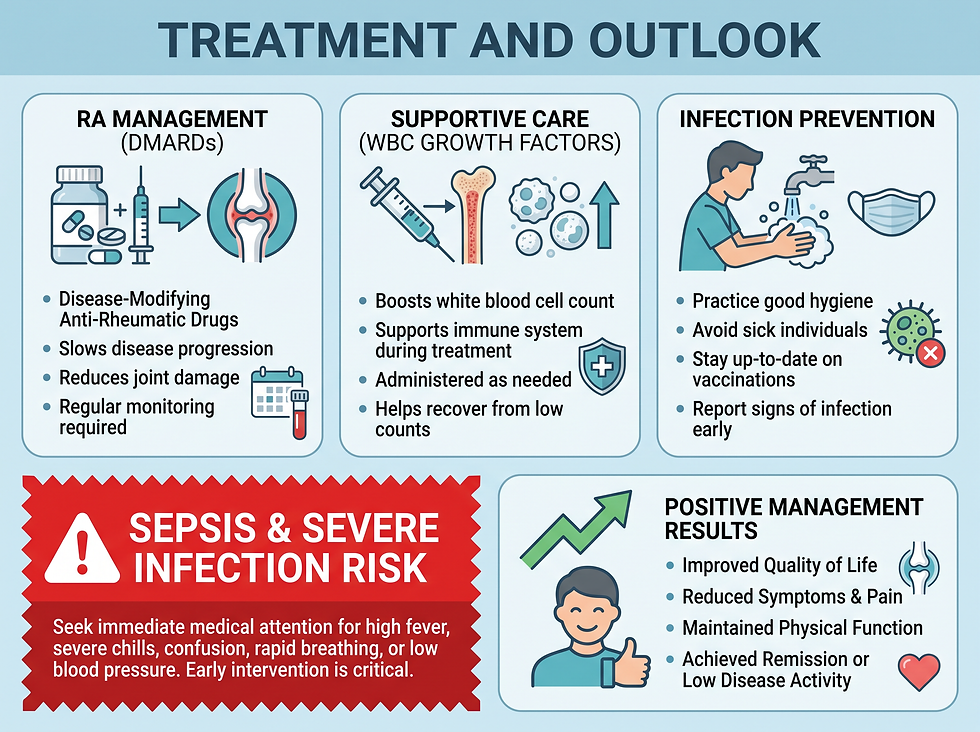
RA management: disease-modifying antirheumatic drugs (DMARDs) reduce systemic inflammation.
Neutropenia care: growth factors (G-CSF) boost white blood cell counts.
Infection control: proactive use of antibiotics for persistent illnesses.
Splenectomy: surgical removal of the spleen as a last resort.
Common DMARDs for Felty Syndrome
Healthcare providers select disease-modifying antirheumatic drugs (DMARDs) that control RA while being mindful of the patient's compromised immunity.
Methotrexate: often combined with folic acid to manage joint inflammation.
Abatacept: a biologic drug that helps modulate the immune response.
Rituximab: targets specific B-cells to reduce autoimmune activity.
What Are the Serious Complications?
Because Felty syndrome weakens the immune system, common illnesses can become life-threatening. Long-term monitoring is essential to catch these issues early.
Sepsis: a life-threatening reaction to an uncontrolled bacterial infection (read our complete guide to sepsis).
Chronic infections: persistent skin, stomach, or respiratory infections that won't clear.
Lymphoma: an increased risk of developing certain types of blood cancer.
Organ damage: complications from long-term inflammation in the heart or lungs.
Conclusion and Next Steps
Take these three steps:
Monitor your blood work — if you have RA, ensure your doctor regularly checks your white blood cell count to detect neutropenia early.
Report infections promptly — don't ignore "minor" colds or skin sores; persistent infections are a primary sign of Felty syndrome.
Optimize RA treatment — work with a rheumatologist to find the most effective DMARDs to keep your underlying arthritis under control.
This article provides general information and is not a substitute for professional medical advice. Always consult a qualified healthcare provider for diagnosis and treatment.
Frequently Asked Questions
What is Felty syndrome?
It is a rare triad of rheumatoid arthritis, low white blood cell count (neutropenia), and an enlarged spleen (splenomegaly).
Is Felty syndrome a form of cancer?
No, it is an autoimmune complication of rheumatoid arthritis, though it can increase the risk of certain cancers like lymphoma.
Who is most at risk for Felty syndrome?
People who have had severe, seropositive rheumatoid arthritis for 10 to 15 years, particularly those aged 50 to 70.
Why does the spleen enlarge in Felty syndrome?
The autoimmune process causes inflammation and hyperactivity in the spleen as it filters blood cells.
What are neutrophils?
They are a type of white blood cell that serves as the body's primary defense against bacterial infections.
Can Felty syndrome be cured?
There is no cure, but the condition can be effectively managed by treating the underlying rheumatoid arthritis.
What is the most dangerous part of Felty syndrome?
The increased risk of life-threatening infections and sepsis due to low white blood cell counts.
Are there any early warning signs?
Frequent infections and persistent joint pain are common early indicators.
Is Felty syndrome hereditary?
Evidence suggests that genetic factors may play a role in its development, similar to rheumatoid arthritis.
How common is Felty syndrome?
It affects approximately 2% of people who have rheumatoid arthritis.
What is seropositive rheumatoid arthritis?
It is a form of RA where the patient tests positive for rheumatoid factor or other autoimmune antibodies.
Can you have Felty syndrome without an enlarged spleen?
It is uncommon, but healthcare providers occasionally diagnose it based on RA and neutropenia alone.
What is a DMARD?
It stands for disease-modifying antirheumatic drug, used to slow the progression of rheumatoid arthritis.
Does methotrexate help Felty syndrome?
Yes, it is a common DMARD used to manage the underlying RA, which often improves neutrophil counts.
What is G-CSF?
It is a growth factor medication used to stimulate the bone marrow to produce more white blood cells.
Is splenectomy common for Felty syndrome?
No, removing the spleen is considered a last resort if other treatments fail to improve neutropenia.
Can Felty syndrome cause skin ulcers?
Yes, chronic leg sores and ulcers are common extra-articular manifestations of the condition.
How does Felty syndrome affect the eyes?
It can cause dry eyes (Sjögren's syndrome) or redness and swelling in the eyes (episcleritis).
What is sepsis?
A life-threatening medical emergency where the body's response to infection causes widespread organ damage.
Why are females more affected?
Like most autoimmune diseases, Felty syndrome is significantly more common in females, following the pattern of RA.
Can Felty syndrome affect the heart?
Yes, it can cause inflammation around the heart (pericarditis), leading to chest pain.
What about the lungs?
Inflammation in the lung lining (pleurisy) can cause shortness of breath.
Is a bone marrow biopsy always necessary?
It is often used during diagnosis to rule out other potential causes of low white blood cell counts.
What is the difference between RA and Felty syndrome?
RA is the joint disease; Felty syndrome is a specific complication involving the blood and spleen.
Can you live a normal life with Felty syndrome?
With effective RA management and infection prevention, many people lead active lives.
What is a rheumatoid nodule?
A firm, painless lump that develops under the skin, usually near joints affected by RA.
How often should I get blood tests?
Your rheumatologist will determine a schedule, but regular monitoring is essential for anyone with chronic RA.
Does Felty syndrome cause weight loss?
Unexplained weight loss and loss of appetite are potential symptoms of the systemic inflammation.
What is episcleritis?
A condition causing redness and inflammation in the white part of the eye, often seen in Felty syndrome.
Can I prevent Felty syndrome?
The best prevention is the early and effective treatment of rheumatoid arthritis to prevent severe complications.
Related Reading
Additional Resources
For further reading, these authoritative external references support the information above:
Comments