Fat Embolism Syndrome: Symptoms, Causes, Diagnosis, Treatment, Outlook and When to Seek Emergency Care — What You Need to Know

Updated: 2 days ago
Medically reviewed by Dr. Baraa Alnahhal, MD · Last reviewed: September 2026
Quick Answer
Fat embolism syndrome (FES) is a rare but potentially serious condition that occurs when fat particles enter the bloodstream and block blood flow to vital organs, most commonly the lungs, brain, and skin. This typically follows a major bone fracture, particularly in the pelvis or long bones of the legs like the femur. While most people recover fully, severe cases can lead to life-threatening respiratory failure or heart strain. Symptoms usually appear 12 to 72 hours after an injury and include trouble breathing, confusion, and a distinctive petechial rash. Diagnosis is based on clinical signs and imaging to rule out other emergencies like stroke or pulmonary embolism. Treatment focuses on supportive care, such as oxygen and immobilization of fractures, to allow the body to recover.
TL;DR: Fat Particles in the Bloodstream at a Glance
Fat embolism syndrome is a systemic response to trauma where fat droplets, released from bone marrow or damaged tissue, circulate and obstruct small blood vessels. While fat emboli can form after any fracture, the syndrome only develops when these particles are large enough or numerous enough to cause significant blockages.
The condition is characterized by a "classic triad" of symptoms: respiratory distress, neurological changes, and a specific skin rash. Early immobilization of broken bones is the primary method of prevention.
Most patients achieve a full recovery with supportive medical intervention, though severe cases require intensive care to manage impact on the heart and lungs.
Limitation statement: The referenced clinical source provides detailed diagnostic criteria, causes, and treatment strategies for fat embolism syndrome. It provides specific prevalence rates for isolated and multiple fractures but does not include global annual case numbers. No statistics are invented in this article.
Injury Type | Prevalence of Fat Embolism Syndrome |
Isolated Long Bone Fracture (e.g., Femur) | 0.5% to 2% of cases |
Multiple Broken Bones / Pelvic Fractures | 5% to 10% of cases |
Condition | Primary Cause | Primary Location |
Fat Embolism | Particles of fat in the blood. | Anywhere in the body. |
Pulmonary Embolism | Usually blood clots (rarely fat). | Blood vessels in the lungs. |
MEDICAL EMERGENCY: A pulmonary embolism is a life-threatening medical emergency. While most fat embolisms are not serious, they can cause pulmonary embolisms or severe respiratory distress. Seek immediate medical help if you experience sudden trouble breathing after an injury.

What Are the Symptoms of Fat Embolism Syndrome?
Symptoms typically manifest between 12 and 72 hours after a major bone break or significant trauma. The earliest and most common sign is respiratory distress.
The Classic Triad of Symptoms
Symptom Category | Description and Manifestations |
Trouble Breathing | Breathing fast or struggling to catch your breath; usually the first symptom to appear. |
Mental State Changes | Confusion, personality changes, headaches, or becoming unresponsive. |
Petechial Rash | Small, bruise-like spots on the head, neck, chest, arms, mouth, or inner eyelids. |
Neurological Impact
Mental Change | How it Presents |
Confusion | Disorientation or inability to think clearly. |
Personality Changes | Sudden shifts in behavior or temperament. |
Severe Impact | Seizures, going into a coma, or slow response times. |
Other Clinical Signs
Healthcare providers may also monitor for a fast heartbeat, fever, jaundice (yellowing of the skin/eyes), and vision changes. Laboratory tests often reveal low blood oxygen, anemia, kidney problems, and a low platelet count.
What Causes Fat Embolism Syndrome?
The syndrome occurs when droplet-like particles of fat enter the bloodstream and block circulation. While minor fat emboli are common after any fracture, they rarely cause blockages significant enough to trigger the syndrome.
High-Risk Fractures
Approximately 95% of FES cases involve fractures of the pelvis or long bones in the legs.
High-Risk Bone | Common Name |
Femur | Thighbone |
Tibia | Shinbone |
Fibula | Calf bone |
Pelvis | Hip bones |
Rare Non-Traumatic Causes
Circumstance | Description |
Surgical Procedures | Knee or hip replacement, liposuction. |
Medical Procedures | Bone marrow biopsy, stem cell transplant, receiving CPR. |
Health Conditions | Acute pancreatitis, fatty liver, sickle cell anemia. |
Severe Trauma | Extensive burns. |

How Is Fat Embolism Syndrome Diagnosed?
There is no universally accepted standard test for FES. Diagnosis relies on a physical exam, symptom review, and ruling out other life-threatening conditions.
Diagnostic Test | Purpose |
Physical Exam | Checking for petechial rash and listening to heart/lung sounds. |
Imaging (X-ray, CT, MRI) | Ruling out stroke or pulmonary embolism; confirming FES impact. |
EKG (Electrocardiogram) | Monitoring heart activity if the heart is affected. |
Skin Biopsy | Looking for fat particles blocking capillaries in the skin. |
Lab Tests | Checking blood, urine, or sputum for traces of fat particles. |
How Is Fat Embolism Syndrome Treated?
There is no direct cure for FES. Instead, healthcare providers focus on supportive care to manage symptoms while the body recovers.
Supportive Care Options
Treatment | Goal |
Oxygen / Ventilator | Supporting lung function and maintaining blood oxygen levels. |
Corticosteroids | Reducing inflammation in the lungs to ease breathing. |
Vena Cava Filters | Catching clots before they reach the lungs to prevent pulmonary embolism. |
Blood Thinners | Preventing additional blood clots from forming during recovery. |
Prevention and Outlook
Prevention Step | Why it Matters |
Early Immobilization | Keeping broken bones still immediately after injury prevents more fat from entering the blood. |
Surgical Stabilization | Fixing fractures quickly reduces the window for FES to develop. |
Most people who develop fat embolism syndrome recover fully without long-term complications. However, at severe levels, the condition can be fatal due to respiratory failure or extreme strain on the heart.
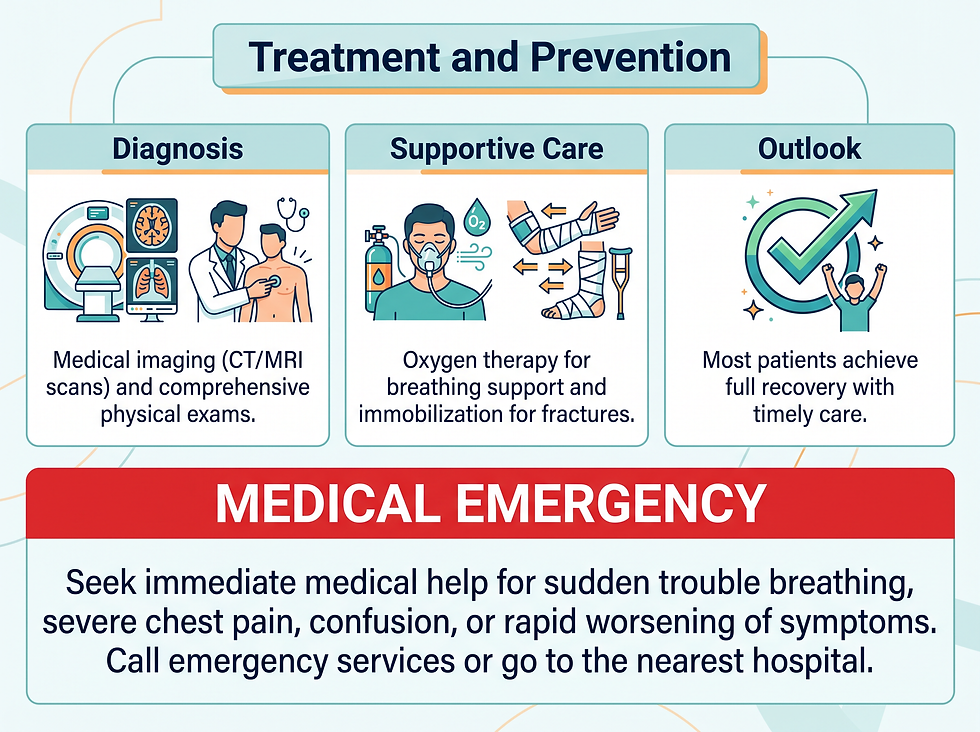
Take These Three Steps
Immobilize Immediately — if you suspect a major bone fracture, keep the limb still to minimize the risk of fat particles entering the blood.
Monitor Symptoms — watch for confusion or a distinctive rash in the 72 hours following a major injury.
Seek Emergency Care — go to the ER immediately if you experience sudden shortness of breath or rapid breathing after a trauma.
This article provides general information and is not a substitute for professional medical advice. Always consult a qualified healthcare provider for diagnosis and treatment.
Frequently Asked Questions
What is fat embolism syndrome?
It is a rare condition where fat particles enter the bloodstream and block blood flow, typically after a major bone fracture.
Is a fat embolism the same as a blood clot?
No. A fat embolism is made of fat particles, while a standard embolism is usually a blood clot or air bubble.
What bones are most commonly linked to fat embolism syndrome?
The femur (thighbone), tibia (shinbone), fibula (calf bone), and pelvis.
How common is fat embolism syndrome after a broken leg?
It occurs in about 0.5% to 2% of isolated long bone fractures.
Why is it more common with pelvic fractures?
Multiple fractures or pelvic breaks increase the likelihood to 5% to 10% due to the extent of the trauma.
What is the "classic triad" of FES symptoms?
Trouble breathing, mental state changes (confusion), and a petechial rash.
When do symptoms usually appear?
Typically within 12 to 72 hours after the injury, though it can happen as early as 12 hours.
What does a petechial rash look like?
Small, bruise-like spots caused by burst capillaries, usually on the head, neck, chest, or arms.
Can fat embolism syndrome affect the brain?
Yes, it can cause confusion, personality changes, seizures, or even a coma.
Is fat embolism syndrome contagious?
No, it is a physical response to trauma and cannot be spread between people.
Can liposuction cause a fat embolism?
Yes, liposuction is one of the rare non-traumatic causes of fat embolism syndrome.
Does sickle cell anemia increase the risk of FES?
Yes, it is listed as a rare underlying condition that can trigger the syndrome.
What is a pulmonary embolism?
A life-threatening blockage in the blood vessels of the lungs, which fat emboli can sometimes cause.
How do doctors diagnose FES?
Through physical exams, imaging (CT/MRI), and lab tests to rule out other emergencies like stroke.
Is there a specific test for fat embolism syndrome?
There is no universally accepted standard test; diagnosis is based on clinical signs and symptoms.
What is the treatment for fat embolism syndrome?
Treatment is primarily supportive, focusing on oxygen therapy and managing symptoms while the body heals.
Are corticosteroids used for FES?
They are sometimes used to reduce lung inflammation, though more research is needed on their effectiveness.
What are vena cava filters?
Devices placed in the body's largest vein to catch clots before they reach the heart or lungs.
Can you recover fully from FES?
Yes, most people recover completely without any long-term health effects.
Can fat embolism syndrome be fatal?
In severe cases, it can be deadly due to respiratory failure or heart failure.
How can fat embolism syndrome be prevented?
The most effective way is to immobilize broken bones as quickly as possible after an injury.
Are children at high risk for FES?
No, the condition is extremely rare in children.
What is jaundice, and why does it happen in FES?
Jaundice is yellowing of the skin or eyes, indicating the liver may be affected by the syndrome.
Does FES cause a fast heartbeat?
Yes, tachycardia (fast heart rate) is a possible symptom of the condition.
Can vision changes occur with FES?
Yes, fat particles can affect the small blood vessels in the eyes, leading to vision changes.
What is petechiae?
The medical term for the small bruise-like spots that appear on the skin in FES.
Why does FES cause anemia?
The syndrome can lead to changes in blood chemistry, including a drop in red blood cells.
Is oxygen therapy always required?
It is a common supportive treatment for those experiencing trouble breathing.
What should I do if I have trouble breathing after a fracture?
Seek emergency medical attention immediately, as it could be a sign of FES or a pulmonary embolism.
Can FES happen after a knee replacement?
Yes, joint replacements are among the rare circumstances that can cause the condition.
Related Reading
Additional Resources
For further reading, these authoritative external references support the information above:
Comments