Factitious Disorders: Types, Signs, Causes, Diagnosis, Treatment and Outlook — What You Need to Know

Updated: 24 minutes ago
Medically reviewed by Dr. Baraa Alnahhal, MD · Last reviewed: September 2026
Quick Answer: Factitious disorders are a group of mental health conditions where you appear sick, make someone else appear sick or purposefully create symptoms of a condition to receive medical care. Motivations are often personal and psychological, such as wanting attention, coping with stress or deceiving professionals. There are two main types: factitious disorder imposed on self (formerly Munchausen syndrome) and factitious disorder imposed on another (abuse where symptoms are fabricated for someone in care). These conditions are dangerous and can lead to unnecessary surgeries or life-threatening harm. Treatment focuses on modifying harmful behaviors and addressing underlying psychological causes through psychotherapy. If you or a loved one are in immediate danger, call 911.
TL;DR: Factitious Disorders at a Glance
Factitious disorders happen when you create symptoms of an illness to receive care for yourself or someone else. These mental health conditions are harmful and can be life-threatening. You might lie about symptoms, hurt yourself or others to cause symptoms, or intentionally change diagnostic tests (like contaminating a urine sample).
There are two primary types: factitious disorder imposed on self (formerly Munchausen syndrome) and factitious disorder imposed on another (formerly Munchausen syndrome by proxy). The latter is considered a form of abuse. Many people with these conditions deny having them, which makes diagnosis and treatment difficult.
Treatment first aims to modify harmful behaviors and reduce the misuse of medical resources, followed by addressing underlying causes through psychotherapy. If you or a loved one are in immediate danger, contact 911 or your local emergency services number.
Limitation statement: The referenced clinical source publishes no specific prevalence or incidence statistics for factitious disorders, noting that they are rare. No statistics are invented in this article.
If you feel like you or a loved one are in immediate danger, contact 911 or your local emergency services number right away.
Fact | What the source says |
What they are | Mental health conditions where you appear sick or make others appear sick to receive care |
Primary types | Imposed on self (formerly Munchausen syndrome) and imposed on another (abuse) |
Danger level | Very dangerous; can lead to unnecessary testing, treatments, surgeries and life-threatening harm |
Common behaviors | Lying about symptoms, hurting self/others, tampering with diagnostic tests |
Diagnosis | Difficult due to deceptive behaviors; involves medical history, exams and psychiatric evaluation |
Main treatment | Psychotherapy (counseling), particularly cognitive-behavioral therapy (CBT) |
Prevention | No known way to prevent; early treatment prevents serious complications |
Outlook | Varies; can last for years or decades, or stop suddenly if recognized by others |
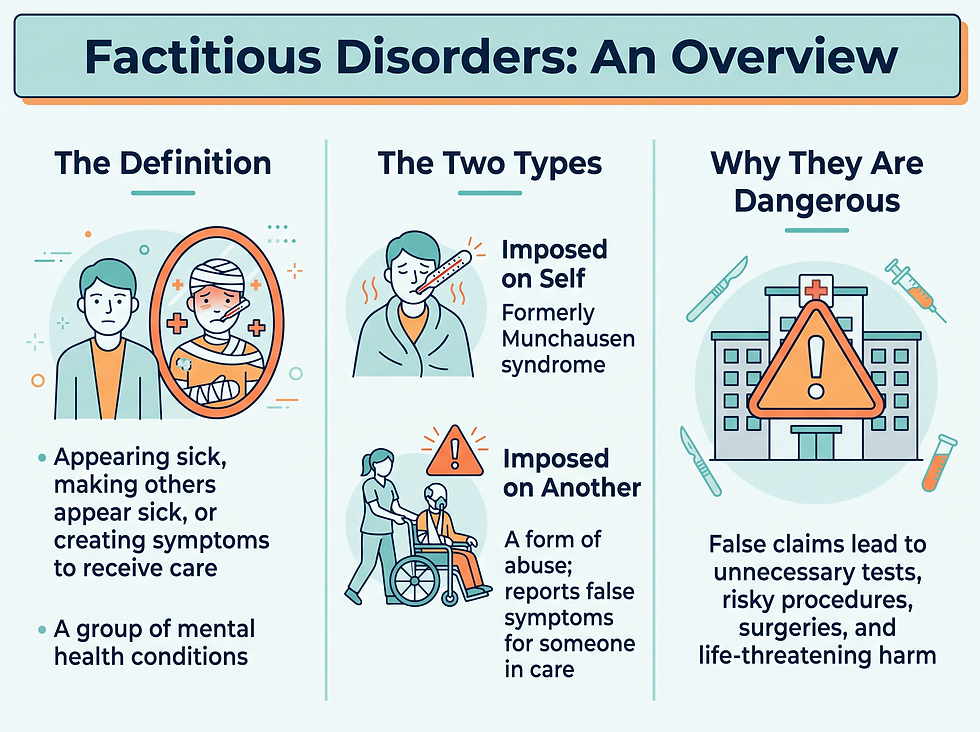
What Are Factitious Disorders?
Factitious disorders are a group of mental health conditions where you appear sick, make someone else appear sick or purposefully create symptoms of a condition to receive care. You might do this for personal and psychological reasons like wanting attention, coping with stress or deceiving healthcare professionals.
This condition can be very dangerous. You may harm yourself and others by producing symptoms or undergoing unnecessary testing, treatments, procedures and surgeries.
What are the two types of factitious disorders?
The types include:
Factitious disorder imposed on self (formerly known as Munchausen syndrome): This type includes making up psychological or physical signs or symptoms that aren't actually affecting you. You may fabricate a mental health condition (like schizophrenia) or physical symptoms (like a stomach ache or chest pain).
Factitious disorder imposed on another: This happens when you report made-up symptoms for people within your care (like a parent falsely stating their child is sick). In many cases, this involves intentionally harming someone else so they can receive care. This diagnosis is given to the person who causes harm, not the victim. It is considered a form of abuse.
What Are the Signs and Symptoms of Factitious Disorders?
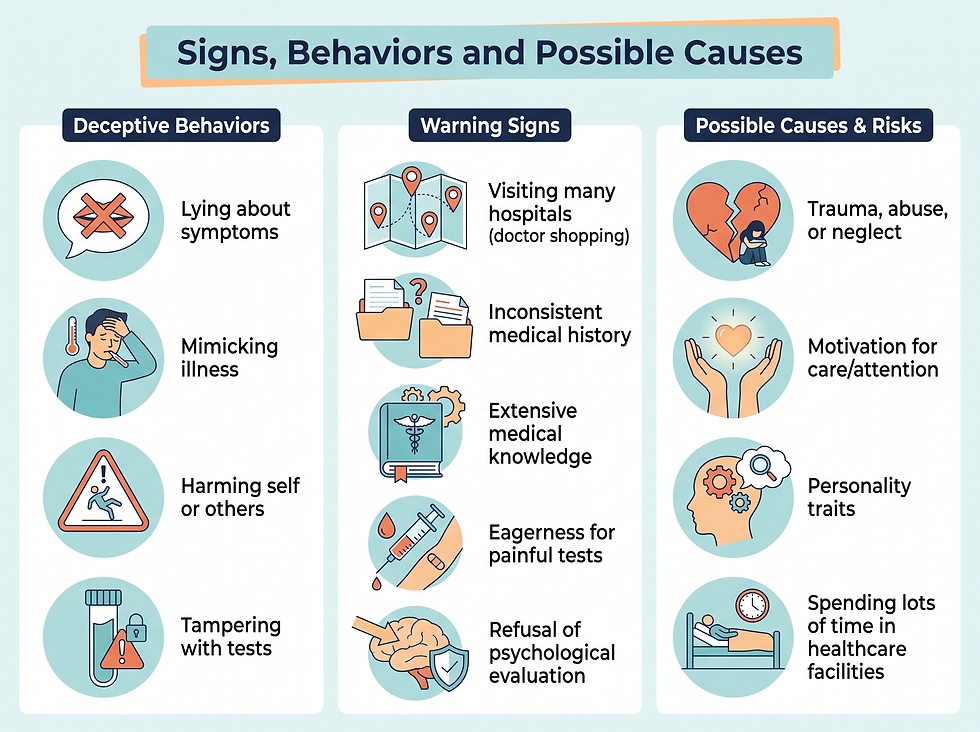
If you have a factitious disorder, you may lie about or mimic symptoms, hurt yourself or someone else to cause symptoms, or intentionally change diagnostic tests or treatment plans. You might contaminate a urine sample or damage a wound to prevent it from healing. Often, there is a strong desire for sympathy and special attention.
Sign or Behavior | Detail |
Mimicking | Lying about or mimicking symptoms of an illness |
Harming | Hurting yourself or someone else to cause symptoms |
Tampering | Intentionally changing diagnostic tests or treatment plans |
Seeking attention | A strong desire for sympathy and special attention |
What are the perplexing signs for healthcare providers?
Signs of a factitious disorder may include reporting symptoms that change or increase unexpectedly after treatment or after returning home from a facility. Symptoms may recur unpredictably or occur only when you are alone. Sometimes new symptoms appear right after a provider tells you there is nothing wrong.
Perplexing Sign | What It Looks Like |
Unexpected changes | Symptoms change or increase unexpectedly after treatment or returning home |
Unpredictable recurrence | Symptoms recur in ways that don't follow a normal pattern |
Solitary occurrence | Symptoms occur only when you are alone |
Reaction to good news | New or additional symptoms appear after a provider says nothing is wrong |
What are the other warning signs?
Other signs include visiting many hospitals and providers (even in different cities), an inconsistent medical history, changing names when visiting new providers, and having extensive knowledge of medical terminology or textbook descriptions of illnesses. There may be an eagerness to undergo painful testing or procedures, and a refusal to allow psychological evaluations or contact with family members.
Warning Sign | What It Involves |
"Doctor shopping" | Visiting many hospitals, clinics and offices, often in different cities |
Inconsistency | An inconsistent medical history when reported to different providers |
Deception | Changing names when visiting new healthcare providers |
Medical knowledge | Extensive knowledge of hospitals, medical terms or textbook descriptions |
Eagerness for pain | A desire or eagerness to undergo painful medical testing or procedures |
Refusal of access | Refusing psychological evaluations or provider contact with family/friends |
What Causes Factitious Disorders?
Healthcare providers don't know exactly what causes a factitious disorder. Studies suggest it could involve psychological factors (personality traits influencing thoughts and actions) and biological factors (brain chemistry and genetic makeup).
What are the motivations for deceptive behavior?
Research suggests motivations may include wanting someone else to take care of physical or emotional needs, looking for power and superiority over others, reducing anxiety around a fear of abandonment, or creating a new personal identity. It is also possible to develop the condition without a clear cause.
Possible Motivation | What It Represents |
Care-seeking | Wanting someone else to take care of physical or emotional needs |
Power | Looking for power and superiority over others |
Anxiety reduction | Reducing anxiety around a fear of abandonment |
Identity creation | Creating a new personal identity |
What are the risk factors?
Factitious disorders are rare. You may have a higher risk if you experience abuse, neglect, or trauma. Frequent illnesses that affected you or a loved one, family dysfunction, or spending a lot of time in a healthcare facility (due to illness, career training, or volunteering) are also risk factors.
Risk Factor | Detail |
Abuse/Neglect | A history of experiencing abuse or neglect |
Trauma | A history of traumatic events |
Illness history | Frequent illnesses affecting you or a loved one |
Family environment | Family dysfunction |
Facility exposure | Spending significant time in healthcare facilities (illness, training, volunteering) |
How Are Factitious Disorders Diagnosed?
A factitious disorder is difficult to diagnose due to deceptive behaviors. A provider will make a diagnosis by learning more through a thorough medical history, a physical examination, laboratory testing, and imaging tests. In some cases, a psychiatric or psychological evaluation may be recommended.
How Are Factitious Disorders Treated?
The first goal of treatment is to modify harmful behaviors and reduce the misuse or overuse of medical resources. Once these goals are met, the care team focuses on underlying causes and finding healthy solutions to meet your needs.
How is harm decreased?
Management focuses on decreasing harm. Providers work together to ensure you don't undergo unnecessary testing or treatment, which can cause side effects or organ damage. Sometimes providers may try to prevent self-harm, such as by reducing access to direct lines into blood vessels to decrease the risk of self-induced infection.
Treatment Goal | What It Focuses On |
Modify behaviors | Modifying harmful behaviors first |
Resource management | Reducing the misuse or overuse of medical resources |
Address causes | Addressing underlying psychological motivations after behaviors are modified |
Decrease harm | Ensuring no unnecessary testing or treatment occurs |
Prevent self-harm | Reducing access to ways you might harm yourself |
What types of therapy are used?
The most common treatment is psychotherapy (counseling). You will likely focus on cognitive-behavioral therapy (CBT) to change thinking and behaviors and learn healthier coping mechanisms. Family therapy may also teach loved ones not to reward or reinforce certain behaviors. While there are no medications for the condition itself, they may be used to treat associated conditions like depression or anxiety.
What Is the Outlook for Factitious Disorders?
The prognosis varies for each person. The condition can last for years or decades, or it may get better within months of the first signs. It can stop suddenly, often after loved ones or providers recognize what is happening. Unfortunately, many people avoid seeking treatment or following a plan. There is a risk of life-threatening complications that can abruptly affect life expectancy.
Can factitious disorders be prevented?
There is no known way to prevent the condition, but seeking treatment sooner can prevent serious complications. These include substance use disorder, abusing someone else, organ loss (unnecessary removal of organs or limbs), harm from unnecessary testing, bodily harm from fabricated illness, and suicide.
Possible Complication | Detail |
Substance use | Development of a substance use disorder |
Abusing others | Transitioning to abusing someone else |
Organ loss | Unnecessary removal of internal organs or limbs |
Medical harm | Side effects or harm from unnecessary testing or treatments |
Bodily harm | Harm resulting from attempts to fabricate illness |
Suicide | The risk of suicidal thoughts or actions |
What the care team says (verbatim): "Factitious disorders are complicated. They may happen after traumatic events, like abuse or neglect, and can happen alongside other mental health conditions. However, this isn't the case for everyone. A person diagnosed with a factitious disorder may be aware of what they're doing but not why they're doing it or how their behaviors affect themselves and those around them. Often, a person with this condition just needs someone to listen to them. Treatment is available to help you or a loved one feel better and avoid unnecessary harm."

Conclusion: Understanding Factitious Disorders
Factitious disorders are complex mental health conditions where symptoms are fabricated for personal or psychological reasons. Whether imposed on self or another, these behaviors are dangerous and can lead to life-threatening complications or unnecessary medical procedures. The deceptive nature of the condition makes it a significant challenge for both families and healthcare providers.
Recovery focuses on harm reduction and modifying behaviors through cognitive-behavioral therapy. Recognizing the signs — such as perplexing symptom patterns or "doctor shopping" — is the first step toward getting help. If you or a loved one are in immediate danger, reach out to emergency services. With proper treatment and support, it is possible to stop the cycle of harm and find healthier ways to cope.
Take these three steps:
Watch for perplexing patterns — be aware of symptoms that recur unpredictably, occur only when alone, or change unexpectedly after returning home from a medical facility.
Seek specialized evaluation — if you suspect a factitious disorder, encourage a thorough evaluation by a mental health professional who can address the underlying psychological motivations.
Prioritize safety in crisis — if there is an immediate risk of harm or suicidal thoughts, call 911 or call/text 988 (Suicide & Crisis Lifeline) immediately.
This article provides general information and is not a substitute for professional medical advice. Always consult a qualified healthcare provider for diagnosis and treatment.
Frequently Asked Questions
What are factitious disorders?
They are a group of mental health conditions where you appear sick, make someone else appear sick or purposefully create symptoms to receive care.
Why do people create these symptoms?
Reasons are often psychological, such as wanting attention, coping with stress or deceiving healthcare professionals.
Is factitious disorder dangerous?
Yes. It can lead to unnecessary testing, treatments, procedures, surgeries and life-threatening harm.
What was factitious disorder imposed on self formerly called?
It was formerly known as Munchausen syndrome.
What is factitious disorder imposed on another?
It happens when you report made-up symptoms for someone in your care. It is considered a form of abuse.
Who is typically the victim in FDIA?
Often a child, a person with disabilities or an adult over age 65.
What are common behaviors in factitious disorders?
Lying about symptoms, hurting self or others to cause symptoms, or changing diagnostic tests like contaminating a urine sample.
Do people with these disorders want sympathy?
Yes, there is often a strong desire for sympathy and special attention.
What happens to symptoms after treatment?
In factitious disorders, symptoms may perplexingly change or increase unexpectedly after treatment or after returning home.
Do symptoms occur when others are around?
Often, symptoms occur only when the person is alone.
What is "doctor shopping" in this context?
It is the sign of visiting many different hospitals, clinics and providers, sometimes in different cities.
Do people with these disorders know a lot about medicine?
Yes, they often have extensive knowledge of medical terminology, hospitals and textbook descriptions of illnesses.
Are they eager for medical procedures?
Yes, there may be a strange desire or eagerness to undergo even painful medical testing or procedures.
What causes factitious disorders?
The exact cause is unknown, but it likely involves a mix of psychological factors and biological/genetic factors.
What psychological motivations are common?
Wanting someone to take care of emotional needs, looking for power over others, or reducing anxiety about abandonment.
Can you have a factitious disorder without a clear cause?
Yes, it is possible to develop the condition without a clear cause.
What are the main risk factors?
A history of abuse, neglect, trauma, family dysfunction, or frequent illnesses affecting you or a loved one.
Does working in healthcare increase the risk?
Yes, spending a lot of time in a healthcare facility due to career training or volunteering is a risk factor.
How do providers diagnose factitious disorders?
Through a thorough medical history, physical exam, lab tests, imaging, and often a psychiatric evaluation.
What is the first goal of treatment?
To modify harmful behaviors and reduce the misuse or overuse of medical resources.
How do providers decrease harm?
By working together to ensure the patient doesn't undergo unnecessary testing or treatment.
What is the main focus of therapy?
Cognitive-behavioral therapy (CBT) to change thinking and behaviors and learn healthier coping mechanisms.
Is family therapy used?
Yes, it may teach loved ones not to reward or reinforce certain deceptive behaviors.
Are there medications for factitious disorders?
No specific medications treat the condition itself, but they may treat associated depression or anxiety.
How long can the condition last?
It varies; it can last for years or decades, or get better within months.
Can the condition stop suddenly?
Yes, studies show it can stop suddenly, usually if recognized by others.
What are the serious complications?
Substance use disorder, abusing someone else, organ loss, harm from unnecessary testing, and suicide.
What should I do if a loved one has this condition?
Listen to them and offer gentle encouragement to seek care from a mental health professional. Avoid belittling the behaviors.
When should I call for help?
Contact a provider if you feel the need to hurt yourself or others to receive care. A loved one may need to call if they notice signs.
What should I do in an immediate emergency?
Contact 911 or your local emergency services number immediately if you or a loved one are in danger.
Additional Resources
For further reading, these authoritative external references support the information above:
Content reviewed and produced following the Rinnit editorial framework. Last updated: September 28, 2026.
Comments