Exocrine Pancreatic Insufficiency (EPI): Symptoms, Causes, Diagnosis, Treatment and Outlook — What You Need to Know

Updated: 2 days ago
Medically reviewed by Dr. Baraa Alnahhal, MD · Last reviewed: September 2026
Quick Answer: Exocrine pancreatic insufficiency (EPI) happens when your pancreas doesn't make enough digestive enzymes — or the enzymes it makes don't work properly. Without enough amylase, lipase and protease to break down carbohydrates, fats and proteins, food passes through your intestines mostly undigested, so your body can't absorb the nutrients it needs. As many as 8 in 10 adults with chronic pancreatitis and nearly 9 in 10 infants with cystic fibrosis develop EPI. Symptoms include fatty, pale, foul-smelling stools that float, diarrhea, abdominal pain, gas, bloating and unexplained weight loss. It's a lifelong condition with no cure, but pancreatic enzyme replacement therapy (PERT) taken with every meal and snack, a high-calorie high-fat diet, and prescription vitamins A, D, E and K can greatly reduce symptoms and prevent malnutrition.
TL;DR
Exocrine pancreatic insufficiency (EPI) is a digestive condition in which your pancreas fails to produce enough digestive enzymes. Enzymes are proteins that cause the chemical reactions your body needs to break down food and absorb nutrients.
People with EPI have trouble digesting all three major food groups. Food passes through the intestines in a more complete, undigested state, and the body misses out on the fats, proteins and carbohydrates it needs for energy and organ function. Over time, this malabsorption can lead to malnutrition.
Children with cystic fibrosis and adults with chronic pancreatitis are the groups most likely to have EPI. The condition is lifelong and can't be cured, but pancreatic enzyme replacement therapy (PERT) taken with every meal or snack acts as a substitute for the missing enzymes and can greatly reduce uncomfortable digestive symptoms.
Limitation statement: The referenced clinical source does not publish an overall prevalence or incidence statistic for EPI. The only population figures cited here are those published in the source: as many as 8 in 10 adults with chronic pancreatitis develop EPI, and nearly 9 in 10 infants with cystic fibrosis develop it within the first year of life. No other statistics are invented in this article.
What Is Exocrine Pancreatic Insufficiency (EPI)?

EPI occurs when your pancreas doesn't make enough digestive enzymes. Sometimes the enzymes don't work as they should.
The pancreas is part of your digestive system. It makes enzymes that aid digestion and help your body absorb nutrients. Enzymes are proteins that cause chemical reactions in your body, and digestive enzymes break down food so your body can get the nutrients it needs.
Pancreatic enzyme | What it breaks down |
Amylase | Carbohydrates |
Lipase | Fats |
Protease and elastase | Proteins |
When you have EPI, you don't have enough of these enzymes. Foods pass through your intestines in a more complete (undigested) state, and as a result, your body doesn't get the nutrients it needs from foods.
Children with cystic fibrosis and adults with chronic pancreatitis are most likely to have EPI.
What Symptoms Does EPI Cause?
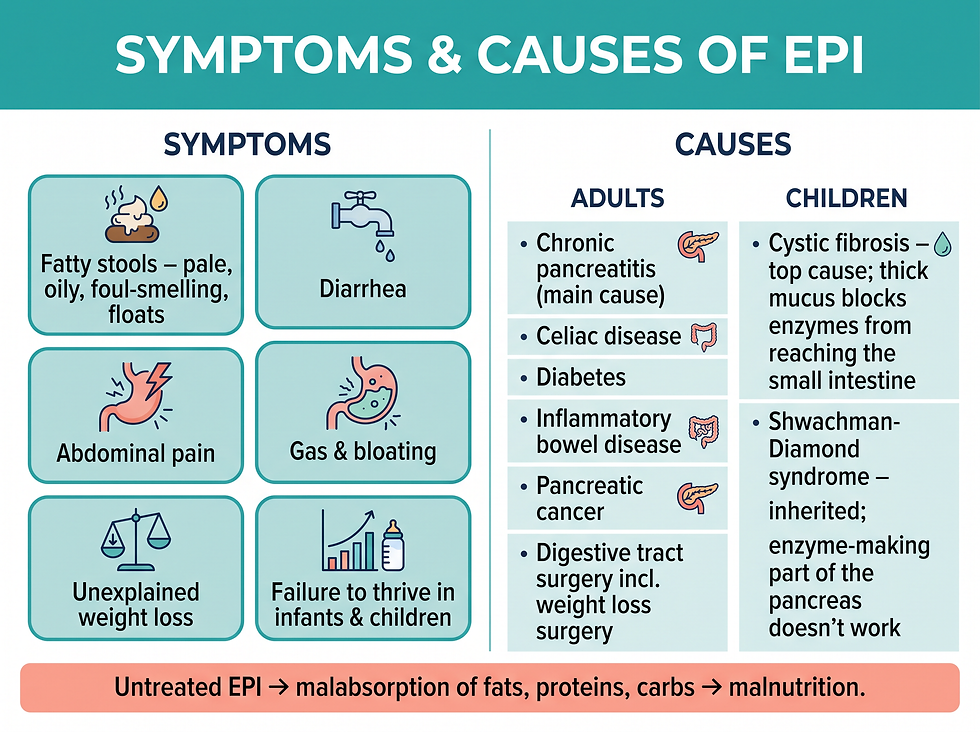
People with EPI have a particularly difficult time absorbing fats from foods. This leads to uncomfortable digestive problems.
Symptom | What you notice |
Fatty stools (steatorrhea) | Pale, oily, foul-smelling poop that floats |
Diarrhea | Frequent loose stools |
Abdominal pain, gas and bloating | Stomach discomfort and distension |
Constipation | Difficulty passing stool |
Unexplained weight loss | Losing weight without trying |
Failure to thrive | In infants and children who aren't growing as expected |
What Causes EPI?
What causes EPI in adults?
Chronic pancreatitis is the main cause of EPI in adults. Pancreatitis causes inflammation and swelling of the pancreas. Over time, chronic inflammation can damage the pancreatic cells that make digestive enzymes.
Adult cause | How it leads to EPI |
Chronic pancreatitis | Inflammation damages the enzyme-making cells; as many as 8 in 10 adults with this disorder develop EPI |
Celiac disease | An autoimmune condition that affects digestion |
Diabetes | A metabolic condition associated with the pancreas |
Inflammatory bowel disease (IBD), including Crohn's disease | Chronic intestinal inflammation affects nutrient absorption |
A tumor in the pancreas interferes with enzyme production | |
Digestive tract surgery | Includes weight loss surgery, which alters how food meets digestive enzymes |
What causes EPI in children?
Cystic fibrosis is the top cause of EPI in infants and children. Children inherit cystic fibrosis from a parent. It causes thick mucus to build up in the lungs, making breathing difficult. Mucus also collects in the pancreas, which keeps digestive enzymes from reaching the small intestine.
Nearly 9 in 10 infants with cystic fibrosis develop EPI within the first year. The rest are at risk for developing EPI during childhood or adulthood.
Another inherited condition, Shwachman-Diamond syndrome (SDS), also causes EPI in children. With SDS, the part of the pancreas that makes enzymes doesn't work properly.
What Are the Complications of EPI?
People with EPI can't absorb enough fats, proteins and carbohydrates from foods. This problem is called malabsorption. Your body needs these nutrients for energy and to maintain organ function. Malabsorption of nutrients can lead to malnutrition.
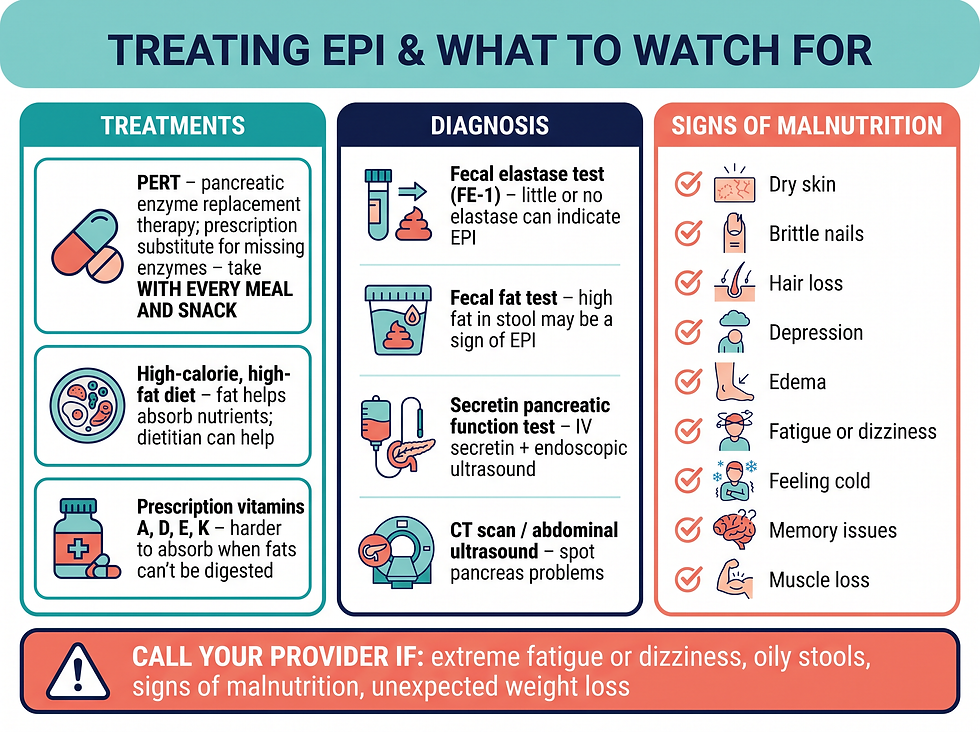
Sign of malnutrition | How it presents |
Skin, nail and hair changes | Dry skin, brittle nails and hair loss |
Mood and mind | Depression; irritability; memory and concentration issues |
Body and energy | Edema (tissue swelling); fatigue or dizziness; feeling cold all the time; muscle loss |
How Is EPI Diagnosed?
Many digestive problems cause symptoms similar to EPI. Your healthcare provider may suspect EPI if you have a condition that affects your pancreas. You may get one or more of these pancreas function tests.
Test | What it checks |
Fecal elastase test (FE-1) | Checks stool for the elastase enzyme that helps digest proteins; little or no elastase can indicate EPI |
Fecal fat test | Measures the amount of fat in stool; a high fat volume may be a sign of EPI |
Secretin pancreatic function test | Tests how the pancreas responds to secretin, a hormone that triggers the release of digestive enzymes; you receive secretin through an IV line, and your provider uses endoscopic ultrasound to collect fluid and test it for enzymes |
You may also get a CT scan, an abdominal ultrasound or other imaging tests. These tests can spot pancreas problems that can lead to EPI.
How Is EPI Treated?
EPI is a lifelong condition. Treatments focus on getting your body the nutrients it needs to maintain good health.
Treatment | How it works |
Pancreatic enzyme replacement therapy (PERT) | A prescription medication that substitutes for the missing digestive enzymes; you take PERT with meals to help your body break down nutrients in food |
High-calorie, high-fat diet | Ensures you get enough calories and fat with your meals; fat helps your body absorb nutrients; a dietitian can help |
Prescription vitamins | Your provider may prescribe vitamins A, D, E and K; people with EPI have a harder time absorbing these fat-soluble nutrients from food |
Can EPI be cured?
You can't cure EPI, but pancreatic enzyme replacement therapy can greatly reduce uncomfortable digestive symptoms.
For a longer, healthier life, it's important to manage the condition that causes EPI. Most people will always need to use PERT to manage EPI symptoms.
One notable exception exists among children. About half of kids with Shwachman-Diamond syndrome start producing digestive enzymes as they get older. They may be able to stop PERT.
Can EPI Be Prevented?
It's helpful to avoid smoking and alcohol use. These substances make your pancreas work harder and can contribute to pancreatitis, which can lead to EPI. Your healthcare provider can offer support to stop using these substances.
Because cystic fibrosis and Shwachman-Diamond syndrome are inherited, you can't prevent them or lower the risk of EPI with those conditions. Keeping a close eye on symptoms can help identify possible EPI so you can treat it right away.
When should I call the doctor?
You should call your healthcare provider if you experience any of the following.
PROVIDER ALERT — CALL YOUR PROVIDER IF: you experience extreme fatigue or dizziness; you notice oily stools; you see signs of malnutrition (dry skin, brittle nails, hair loss, edema, muscle loss, persistent low mood or poor concentration); or you lose weight unexpectedly. Untreated EPI can lead to malnutrition and its wide-ranging effects — from bone and muscle loss to cognitive issues. Report warning signs early.
A note from your care team: "You can't cure EPI, but pancreatic enzyme replacement therapy can greatly reduce uncomfortable digestive symptoms. Follow your healthcare provider's recommendations for taking PERT, and be sure to take it with every meal or snack. A dietitian can help you get the fats, nutrients and vitamins you need for good health."
What questions should I ask my healthcare provider?
Question | Why it matters |
What caused my EPI? | Identifies the underlying condition that needs management |
What is the best treatment for me? | Confirms your PERT plan and any additional therapy |
What changes should I make to my diet? | Ensures adequate calories and fat intake |
Should I take vitamins? | Determines whether prescription A, D, E and K vitamins are needed |
Should I look out for signs of complications? | Helps you catch malnutrition warning signs early |
Conclusion
Exocrine pancreatic insufficiency is a lifelong digestive condition caused by too few working pancreatic enzymes — most often from chronic pancreatitis in adults or cystic fibrosis in children. It shows up as fatty, pale, floating stools, abdominal discomfort, and weight your body can't absorb. While there's no cure, PERT taken faithfully with every meal and snack, a high-calorie high-fat diet, and prescription fat-soluble vitamins give most people a path to good nutrition and far fewer digestive symptoms.
If you or your child has frequent oily stools, unexplained weight loss, or a condition that affects the pancreas, don't brush off the symptoms. Talk to a healthcare provider about whether EPI testing — starting with a simple fecal elastase stool test — is right for you.
Disclaimer: This article is for general informational purposes only and is not a substitute for professional medical advice, diagnosis or treatment. Always seek the advice of your physician or other qualified health provider with any questions you may have regarding a medical condition.
Additional Resources
FAQ
What is exocrine pancreatic insufficiency (EPI) and how is it defined?
A digestive condition in which the pancreas doesn't make enough digestive enzymes, or the enzymes don't work properly.
What does EPI stand for?
Exocrine pancreatic insufficiency.
Is exocrine pancreatic insufficiency a serious condition?
Yes, if untreated it can lead to malabsorption and malnutrition, which affect energy, organ function, mood, skin, hair and muscles.
What causes exocrine pancreatic insufficiency in adults?
Chronic pancreatitis is the main cause; others include celiac disease, diabetes, inflammatory bowel disease, pancreatic cancer, and digestive tract surgery including weight loss surgery.
Can chronic pancreatitis cause EPI?
Yes; as many as 8 in 10 adults with chronic pancreatitis develop EPI.
How does chronic pancreatitis damage enzyme production?
It causes inflammation and swelling of the pancreas, and over time chronic inflammation damages the pancreatic cells that make digestive enzymes.
What causes EPI in infants and children?
Cystic fibrosis is the top cause; Shwachman-Diamond syndrome is another inherited cause.
How does cystic fibrosis cause EPI?
Thick mucus collects in the pancreas, which keeps digestive enzymes from reaching the small intestine.
Do all babies with cystic fibrosis develop EPI?
Nearly 9 in 10 infants with cystic fibrosis develop EPI within the first year; the rest are at risk during childhood or adulthood.
What is Shwachman-Diamond syndrome and does it cause EPI?
An inherited condition in which the part of the pancreas that makes enzymes doesn't work properly; it also causes EPI in children.
Can Shwachman-Diamond syndrome EPI improve with age?
About half of kids with SDS start producing digestive enzymes as they get older and may be able to stop PERT.
Is EPI inherited?
The underlying conditions cystic fibrosis and SDS are inherited, but EPI itself isn't passed on as a single trait.
What are the symptoms of exocrine pancreatic insufficiency?
Fatty stools (pale, oily, foul-smelling, floating), diarrhea, abdominal pain, gas, bloating, constipation, unexplained weight loss, and failure to thrive in infants and children.
What does steatorrhea look like?
Stool that is pale, oily and foul-smelling, and that floats.
Why do stools float and look oily with EPI?
People with EPI have a particularly difficult time absorbing fats from foods, so undigested fat passes into the stool.
Can EPI cause constipation as well as diarrhea?
Yes; both constipation and diarrhea are listed symptoms.
Does EPI cause weight loss?
Yes; unexplained weight loss and failure to thrive in infants and children are symptoms.
What is malabsorption in EPI?
The inability to absorb enough fats, proteins and carbohydrates from foods.
What are the signs of malnutrition from EPI?
Dry skin, brittle nails, hair loss, depression, edema, fatigue or dizziness, feeling cold all the time, irritability, memory and concentration issues, and muscle loss.
How is exocrine pancreatic insufficiency diagnosed?
Pancreas function tests: fecal elastase test (FE-1), fecal fat test, secretin pancreatic function test, plus imaging such as CT scan and abdominal ultrasound.
What does the fecal elastase test show?
It checks stool for the elastase enzyme that helps digest proteins; little or no elastase can indicate EPI.
What does a fecal fat test show?
It measures the amount of fat in stool; a high fat volume may be a sign of EPI.
What is a secretin pancreatic function test?
A test of how the pancreas responds to secretin, a hormone that triggers enzyme release; secretin is given by IV and endoscopic ultrasound collects fluid to test for enzymes.
Is there a cure for exocrine pancreatic insufficiency?
No; EPI is a lifelong condition, but treatment greatly reduces symptoms.
What is PERT (pancreatic enzyme replacement therapy)?
A prescription medication that substitutes for the missing digestive enzymes, taken with meals to help the body break down nutrients.
When should PERT be taken?
With every meal or snack; follow your healthcare provider's recommendations.
Do people with EPI need to eat a low-fat diet?
No; a high-calorie, high-fat diet is important because fat helps the body absorb nutrients — ideally with a dietitian's guidance.
What vitamins do people with EPI need?
Prescription vitamins A, D, E and K, because people with EPI have a harder time absorbing these fat-soluble nutrients from food.
Can EPI be prevented?
Avoiding smoking and alcohol helps, because they make the pancreas work harder and can contribute to pancreatitis; inherited causes (cystic fibrosis, SDS) cannot be prevented.
When should I call the doctor about possible EPI?
For extreme fatigue or dizziness, oily stools, signs of malnutrition, or unexpected weight loss.
Comments