Erythromelalgia: Symptoms, Types, Causes, Flare Triggers, Diagnosis and Treatment — What You Need to Know

Updated: 2 days ago
Medically reviewed by Dr. Baraa Alnahhal, MD · Last reviewed: September 2026
Quick Answer: Erythromelalgia (pronounced ur-i-thruh-muh-lal-jah) is a rare, chronic condition in which excess blood flow causes periodic symptom flares — episodes of increased skin temperature, burning pain and redness, most often in the feet but also the hands, arms, face or legs. Symptoms come and go, range from mild tingling to severe burning, and can worsen over time. Flares are often triggered by anything that suddenly raises body temperature: heat, exercise, stress, caffeine, alcohol, spicy foods or dehydration. There is no specific diagnostic test; providers rely on symptoms, flare photos and tests such as thermography, blood tests and genetic testing to confirm the diagnosis and rule out underlying conditions like autoimmune disease or blood disorders.
TL;DR: Erythromelalgia at a Glance
Erythromelalgia is a rare condition that causes episodes of pain and burning skin. It is a chronic condition, meaning that it stays with you for life. Symptoms may come and go and often include burning pain. While flares can make sleeping, walking and other tasks challenging, most people live long, rewarding lives, and medications may help calm symptom flares.
Limitation statement: This article contains no prevalence, incidence or survival statistics; the condition is described only as rare. No statistics have been invented.
Fact | Key point |
What it is | A rare condition in which excess blood flow causes periodic symptom flares; chronic (stays with you for life) |
Most affected area | The feet; also arms, face, hands and legs |
Three primary symptoms | Increased skin temperature, burning pain, skin redness |
Is it fatal? | Flares affect quality of life but are rarely fatal; most live well into older adulthood |
How it's diagnosed | No specific test — symptoms review, flare photos, thermography, blood tests, genetic testing, imaging |
Main treatments | Medications (oral drugs, topicals, lidocaine infusions), treating the underlying cause, cooling and self-care strategies |
Important warning | Ice baths can make symptoms worse and risk nonhealing wounds and necrosis |
Outlook | Symptom flares worsen over time; treatment helps many, though some flares remain hard to quiet |
What Is Erythromelalgia?
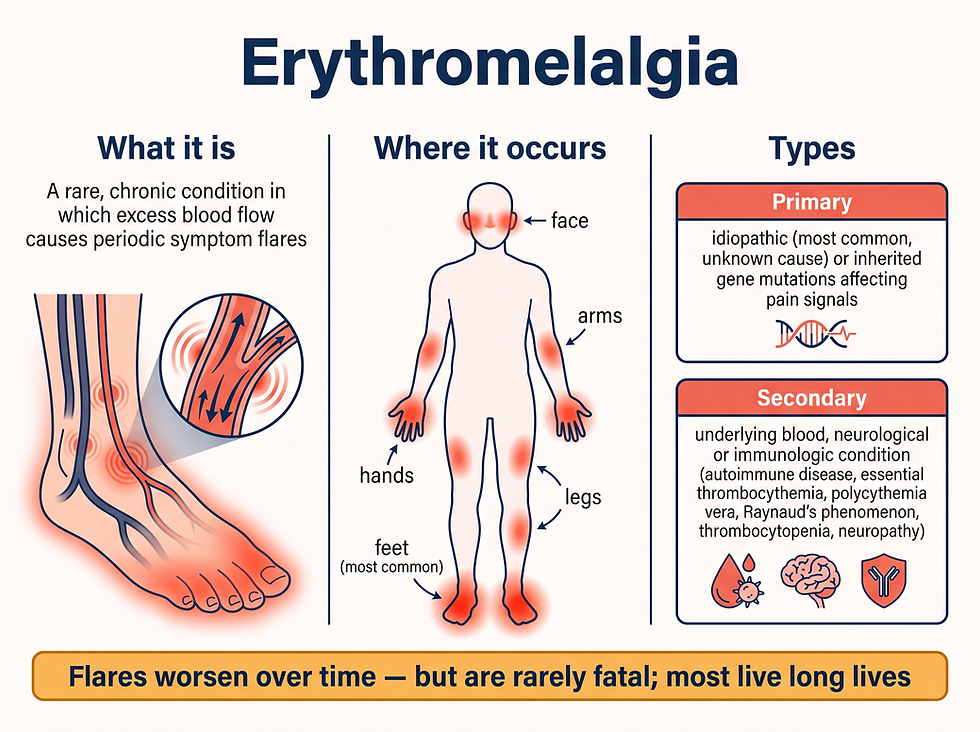
Erythromelalgia (ur-i-thruh-muh-lal-jah) is a rare condition in which excess blood flow causes periodic symptom flares. It's a chronic condition, meaning that it stays with you for life. Erythromelalgia symptoms, which often include burning pain, worsen over time.
Erythromelalgia typically affects your feet but can also occur on your arms, face, hands and legs.
How does erythromelalgia affect daily life?
Symptom flares can make sleeping, walking and other tasks challenging. People who have the disease say that symptom flares can feel like a binding sensation, as if your skin is too tight; being on fire or scalded by hot water; razor blades cutting your skin; or a severe sunburn.
What Are the Types of Erythromelalgia?
There are several types of erythromelalgia, grouped into primary and secondary forms.
Type | Description |
Primary erythromelalgia | Isolated and not due to an underlying disease |
Idiopathic erythromelalgia | The most common type; occurs for unknown reasons |
Inherited erythromelalgia | Due to gene mutations that affect pain signals and can be passed down in families |
Secondary erythromelalgia | Occurs when there is an underlying blood, neurological or immunologic condition |
What conditions are associated with secondary erythromelalgia?
Secondary erythromelalgia occurs when there is an underlying blood, neurological or immunologic condition. These include autoimmune diseases such as lupus and multiple sclerosis, essential thrombocythemia (a blood disorder that causes your body to produce too many platelets), polycythemia vera, Raynaud's phenomenon, thrombocytopenia and neuropathy.
What Are the Symptoms of Erythromelalgia?
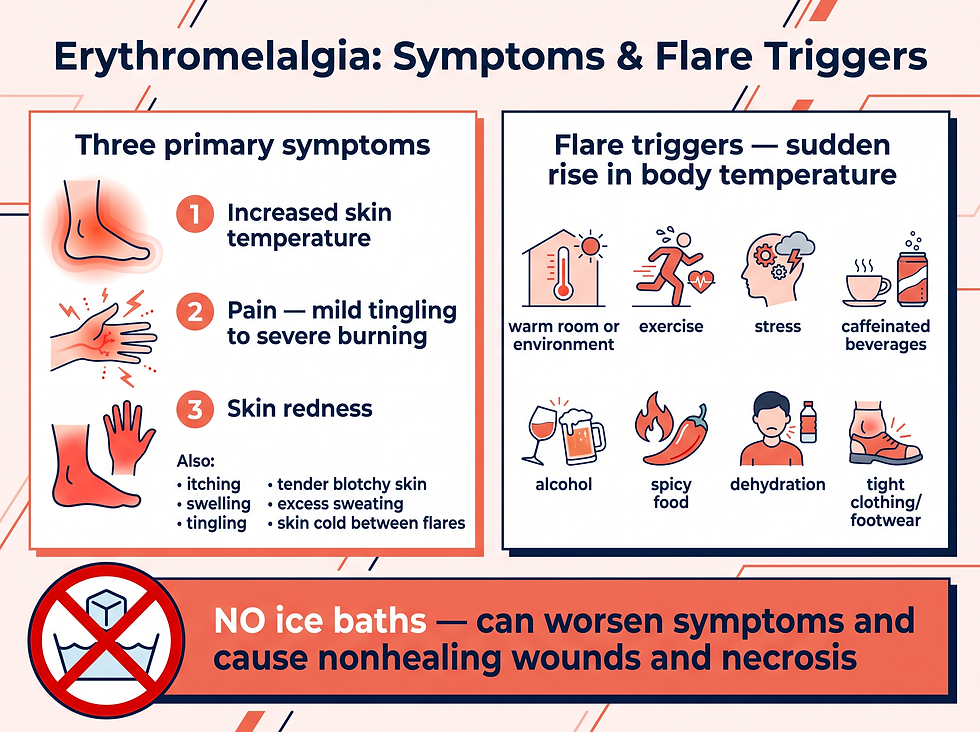
The three primary erythromelalgia symptoms are an increase in skin temperature, pain that ranges from mild tingling to severe burning, and skin redness.
Symptoms may also include itching, skin that's cold to the touch between flares, sweating in an area more than you usually would, swelling, tender blotchy skin and a tingling sensation.
When do symptoms appear, and how severe are they?
Symptoms may occur on one or both sides of your body. They can range from mild to intense. Some people experience their first flare in childhood, while others aren't affected until adulthood.
What causes symptom flares?
Flares usually occur when you experience a sudden increase in body temperature. This may happen when you are consuming caffeinated beverages, dehydrated, drinking alcohol, eating spicy food, exercising, feeling stressed, or in a warm room or environment.
Trigger | How it raises the risk of a flare |
Warm room or environment | Direct heat exposure raises skin temperature |
Exercise | Physical activity raises body temperature |
Stress | Emotional stress can trigger flares |
Caffeinated beverages | A listed dietary trigger |
Alcohol | A listed dietary trigger |
Spicy food | A listed dietary trigger |
Dehydration | A listed trigger |
How Is Erythromelalgia Diagnosed?
There's no specific test for diagnosing erythromelalgia. Your healthcare provider reviews your symptoms and examines any active flare-ups or photos of flare-ups. Multiple tests may be necessary to confirm your symptoms and rule out other medical issues.
Test | Purpose |
Symptom review and flare examination | Provider reviews your symptoms and examines active flares or photos of flares |
Blood tests | Help confirm symptoms and rule out other conditions |
Genetic testing | Checks for mutations responsible for the disease |
Thermography | Uses a special camera to pinpoint differences in skin temperature |
X-ray or other imaging studies | Further rules out other medical issues |
How Is Erythromelalgia Treated?
The treatment that's right for you depends on the cause. For secondary erythromelalgia, treating the underlying issue may relieve your symptoms. Treatment for primary erythromelalgia includes medications.

Can an ice bath help?
It may be tempting to soak the affected area in ice water, but ice baths can make erythromelalgia symptoms worse. It can also put you at risk for skin issues like nonhealing wounds and necrosis that are difficult to treat.
What medications treat erythromelalgia?
Erythromelalgia treatment often includes drugs you take by mouth. Many of these drugs are for other medical conditions. But they can be effective in relieving erythromelalgia symptoms.
Medication class | Examples | Notes |
Anticonvulsants | Gabapentin, carbamazepine | Often used for other conditions but can relieve symptoms |
Antidepressants | Amitriptyline, venlafaxine | Can relieve erythromelalgia symptoms |
Antihistamines | Cetirizine, diphenhydramine | Can relieve erythromelalgia symptoms |
Aspirin | — | For adults only |
Blood pressure medicines | — | Increase or decrease blood flow |
Prescription painkillers | — | For pain relief |
Are there other treatment options?
Erythromelalgia treatment may also include lidocaine infusions, a pain medication you receive through a vein in your arm; nutritional supplements such as magnesium and alpha-lipoic acid; pain management therapies, including nerve blocks; and topical medications, such as creams you apply to your skin.
What nonmedical relief strategies help?
Nonmedical therapies include elevating the affected area, resting on a cool surface such as a tile floor, using a fan, and wrapping cool first-aid gel packs in a thin towel and placing them on your skin.
Living With Erythromelalgia
What can I do to prevent symptom flares and stay comfortable?
There are many steps you can take to feel your best and ease discomfort.
Self-care step | Guidance |
Avoid food and beverage triggers | Pay careful attention to what you eat and drink so you don't consume items like caffeine or spicy foods that may raise your temperature |
Exercise | Choose gentle activities that get you moving without significantly raising your temperature — swimming, yoga and tai chi |
Stay in cool environments | If outdoors, do so in the morning when temperatures are cooler |
Bathe carefully | Choose showers instead of baths to avoid skin injuries; keep your body cool by opening a window and using lukewarm water |
Plan ahead | Flares tend to occur at night — take care of essential tasks earlier in the day |
Organize before sleeping | Keep a fan or portable air conditioning unit near your bed; use the lightest possible bed sheets or no top sheets at all |
How can I take care of my mental health?
Many people feel isolated and not understood by their family members or healthcare providers. Online erythromelalgia support groups enable you to connect with people who are going through similar challenges. Learning from the experiences of others can help you feel less alone.
Can erythromelalgia be prevented?
There isn't much you can do to prevent erythromelalgia. If you have a family history of the disease, genetic testing can uncover the likelihood of passing it on to a fetus.
Clinical care-team note: "Erythromelalgia is a rare condition that causes episodes of pain and burning skin. There are many treatment options, and they typically include medications. Sometimes medications aren't enough to quiet symptom flares, making it difficult to go about your daily routine. Even with these setbacks, many people live long, rewarding lives."
When Should I See My Healthcare Provider?
Because there is no specific test for erythromelalgia, it's important to have persistent or unexplained symptoms evaluated. See your healthcare provider if you experience recurring episodes of burning pain, redness and increased skin temperature in your feet, hands, arms, face or legs. Bring photos of active flare-ups if you can — they help the evaluation, and multiple tests may be needed to confirm your symptoms and rule out other medical issues.
AVOID ICE BATHS: It may be tempting to soak the affected area in ice water, but ice baths can make erythromelalgia symptoms worse and put you at risk for skin issues like nonhealing wounds and necrosis that are difficult to treat. Use the safer cooling strategies listed above instead.
Conclusion: A Manageable, Though Life-Long, Condition
Erythromelalgia is a rare, chronic condition driven by excess blood flow, and while its flares of burning pain, warmth and redness can make everyday life challenging, the outlook is broadly encouraging: flares are rarely fatal and most people live long, rewarding lives. The keys to living well with it are knowing your triggers — heat, exercise, stress, caffeine, alcohol, spicy foods and dehydration — and building cooling strategies into your day, from morning showers and fans at night to gentle exercise and trigger-free meals. If treatments don't fully quiet your flares, don't stop seeking options: multiple medication classes, infusions, supplements and pain-management therapies exist, and treating any underlying condition can relieve symptoms entirely in secondary cases.
Take these three steps:
1. Document your flares — photograph active flare-ups and track triggers; because there's no specific diagnostic test, this evidence helps your provider confirm the diagnosis and rule out other conditions.
2. Cool safely — use fans, cool gel packs wrapped in a towel, cool surfaces and lukewarm showers; avoid ice baths, which can worsen symptoms and risk nonhealing wounds and necrosis.
3. Review treatment regularly — if medications aren't quieting your flares, ask about other options including anticonvulsants, antidepressants, lidocaine infusions, nerve blocks and treatments for any underlying condition.
This article provides general information and is not a substitute for professional medical advice. Always consult a qualified healthcare provider for diagnosis and treatment.
Frequently Asked Questions
What is erythromelalgia?
Erythromelalgia (ur-i-thruh-muh-lal-jah) is a rare condition in which excess blood flow causes periodic symptom flares. It's a chronic condition, meaning that it stays with you for life.
How do you pronounce erythromelalgia?
It's pronounced ur-i-thruh-muh-lal-jah.
Is erythromelalgia a chronic condition?
Yes. Erythromelalgia is a chronic condition, meaning that it stays with you for life.
What areas of the body does erythromelalgia affect?
Erythromelalgia typically affects your feet but can also occur on your arms, face, hands and legs.
What causes erythromelalgia?
In primary erythromelalgia, the cause is isolated from any underlying disease — often unknown (idiopathic) or due to inherited gene mutations affecting pain signals. In secondary erythromelalgia, it's caused by an underlying blood, neurological or immunologic condition.
Is erythromelalgia fatal?
Symptom flares can affect your quality of life, but they are rarely fatal. Most people live well into older adulthood.
What are the three primary symptoms of erythromelalgia?
Increased skin temperature, pain that ranges from mild tingling to severe burning, and skin redness.
What other symptoms can erythromelalgia cause?
Itching, skin that's cold to the touch between flares, sweating in an area more than you usually would, swelling, tender blotchy skin and a tingling sensation.
Does erythromelalgia affect one side or both sides of the body?
Symptoms may occur on one or both sides of your body. They can range from mild to intense.
When do people first develop erythromelalgia symptoms?
Some people experience their first flare in childhood, while others aren't affected until adulthood.
What do erythromelalgia flares feel like?
People describe a binding sensation, as if your skin is too tight; being on fire or scalded by hot water; razor blades cutting your skin; and severe sunburn.
What triggers an erythromelalgia flare?
Flares usually occur when you experience a sudden increase in body temperature — when consuming caffeinated beverages, dehydrated, drinking alcohol, eating spicy food, exercising, feeling stressed, or in a warm room or environment.
Can caffeine trigger erythromelalgia flares?
Yes. Consuming caffeinated beverages is a listed trigger that can cause a sudden increase in body temperature.
Can spicy food trigger erythromelalgia flares?
Yes. Eating spicy food is a listed trigger.
Can stress trigger erythromelalgia flares?
Yes. Feeling stressed can cause a sudden increase in body temperature and trigger a flare.
Can alcohol trigger erythromelalgia flares?
Yes. Drinking alcohol is a listed trigger.
Is erythromelalgia inherited?
It can be. Inherited erythromelalgia is due to gene mutations that affect pain signals and can be passed down in families.
What is idiopathic erythromelalgia?
Idiopathic erythromelalgia is the most common type and occurs for unknown reasons. It's a form of primary erythromelalgia — isolated and not due to an underlying disease.
What is secondary erythromelalgia?
Secondary erythromelalgia occurs when there is an underlying blood, neurological or immunologic condition.
What conditions are linked to secondary erythromelalgia?
Autoimmune diseases such as lupus and multiple sclerosis, essential thrombocythemia (too many platelets), polycythemia vera, Raynaud's phenomenon, thrombocytopenia and neuropathy.
Can autoimmune diseases cause erythromelalgia?
Yes. Autoimmune diseases such as lupus and multiple sclerosis are listed causes of secondary erythromelalgia.
Is there a specific test for erythromelalgia?
No. There's no specific test for diagnosing erythromelalgia. Your provider reviews your symptoms and examines active flare-ups or photos of flare-ups.
What tests help diagnose erythromelalgia?
Blood tests, genetic testing to check for mutations responsible for the disease, thermography (a special camera that pinpoints differences in skin temperature), and X-ray or other imaging studies. Multiple tests may be necessary to confirm symptoms and rule out other medical issues.
Can photos of flares help diagnosis?
Yes. Your healthcare provider reviews your symptoms and examines any active flare-ups or photos of flare-ups.
Can an ice bath help erythromelalgia?
No. It may be tempting to soak the affected area in ice water, but ice baths can make erythromelalgia symptoms worse and put you at risk for skin issues like nonhealing wounds and necrosis that are difficult to treat.
What medications treat erythromelalgia?
Treatment often includes oral drugs such as anticonvulsants (gabapentin, carbamazepine), antidepressants (amitriptyline, venlafaxine), antihistamines (cetirizine, diphenhydramine), aspirin (for adults only), blood pressure medicines and prescription painkillers. Many are used for other conditions but can effectively relieve symptoms.
Are there other treatment options besides oral medications?
Yes. Lidocaine infusions (pain medication through a vein), nutritional supplements such as magnesium and alpha-lipoic acid, pain management therapies including nerve blocks, and topical medications such as creams.
What nonmedical therapies help erythromelalgia?
Elevating the affected area, resting on a cool surface like a tile floor, using a fan, and wrapping cool first-aid gel packs in a thin towel and placing them on your skin.
Does treating the underlying condition help secondary erythromelalgia?
Yes. For secondary erythromelalgia, treating the underlying issue may relieve your symptoms.
How can I prevent symptom flares?
Avoid food and beverage triggers like caffeine and spicy foods; choose gentle exercise such as swimming, yoga or tai chi; stay in cool environments and go outdoors in the morning; choose showers over baths with lukewarm water; plan essential tasks earlier in the day since flares tend to occur at night; and keep a fan or portable air conditioner near your bed with the lightest possible bed sheets.
Can erythromelalgia be prevented?
There isn't much you can do to prevent erythromelalgia. If you have a family history of the disease, genetic testing can uncover the likelihood of passing it on to a fetus.
How does erythromelalgia affect mental health?
Many people feel isolated and not understood by their family members or healthcare providers. Online support groups enable you to connect with people facing similar challenges, which can help you feel less alone.
What is the prognosis for erythromelalgia?
Symptom flares can affect your quality of life, but they are rarely fatal. Most people live well into older adulthood — they have jobs, travel and enjoy hobbies. Sometimes treatment is not successful, making daily routine difficult, but many people live long, rewarding lives.
Additional Resources
For further reading, these authoritative external references support the information above:
Content reviewed and produced following the Rinnit editorial framework. Last updated: September 28, 2026.
Comments