Polycythemia Vera: Complete Guide to Symptoms, Causes, Diagnosis, and Treatment

Updated: 2 days ago
Medically reviewed by Dr. Baraa Alnahhal, MD · Last reviewed: September 2026
TL;DR
Polycythemia vera is a rare type of blood cancer that causes the bone marrow to make too many red blood cells, which thickens the blood, slows its flow, and raises the risk of blood clots. It develops slowly, so many people have it for years without knowing — often it is found on a blood test done for another reason. A signature sign is itching after a warm bath or shower. There is no cure, but treatment lowers complication risk: phlebotomy (blood withdrawal) is the most common approach, supported by cell-lowering medicines, aspirin, and self-care steps such as avoiding tobacco and hot baths.
Quick Answer
Polycythemia vera is a type of blood cancer that causes the bone marrow to make too many red blood cells. These extra cells thicken the blood, slowing its flow and raising the risk of blood clots that can cause a stroke or heart attack. It is rare and comes on slowly — many people have it for years without knowing, and it is most often diagnosed in adults over 60 and more common in men. The telltale symptom is itching, mostly after a warm bath or shower. While there is no cure, the most common treatment is phlebotomy — having blood withdrawn regularly, the same procedure used for donating blood — plus medicines that lower red blood cell counts, low-dose aspirin to reduce clot risk, and everyday self-care.
What Is Polycythemia Vera?
Polycythemia vera is a type of blood cancer. It causes the bone marrow to make too many red blood cells. These extra cells thicken the blood, slowing its flow. This may cause serious problems, such as blood clots.
The body normally keeps tight control over the number of each of the three types of blood cells: red blood cells, white blood cells, and platelets. In polycythemia vera, that control breaks down, and the bone marrow makes too many of some of these blood cells.

Symptoms: A Rare Disease With a Signature Sign
Many people with polycythemia vera do not notice symptoms. Some people get symptoms such as headache, dizziness, tiredness, and blurred vision.
The disease is rare, and it comes on slowly. You might have it for years without knowing. Often the condition is found during a blood test done for another reason.
Clearer symptoms of polycythemia vera include the ones in the table below. One stands out as a signature clue: itchiness that is mostly felt after a warm bath or shower.
Symptom | What it feels like |
Itching | Mostly after a warm bath or shower |
Nerve sensations | Numbness, tingling, burning, or weakness in the hands, feet, arms, or legs |
Early fullness | A feeling of fullness soon after eating |
Spleen pressure | Bloating or pain in the left upper stomach area due to an enlarged spleen |
Bleeding | Unusual bleeding, such as a nosebleed or bleeding gums |
Joint pain | Painful swelling of one joint, often the big toe |
Breathing trouble | Shortness of breath and trouble breathing when lying down |
Bone pain | Aching in the bones |

When to See a Doctor
Make an appointment with your health care professional if you have symptoms of polycythemia vera. Because the disease develops slowly and many people notice nothing, the trigger to act is persistent, unexplained symptoms — especially itching after a warm bath or shower, unusual bleeding, or symptoms of sluggish blood flow such as headache, dizziness, and blurred vision.
Causes and Risk Factors
Polycythemia vera happens when a change in a gene causes a problem with making blood cells. The cause of the gene change in polycythemia vera is unknown. But it is not passed through families.
Fact | Detail |
Mechanism | A gene change disrupts the bone marrow's production of blood cells, producing too many red blood cells (and sometimes too many white blood cells or platelets) |
Cause of the gene change | Unknown |
Inheritance | Not passed through families |
Age | Can happen at any age; more common in adults over age 60 |
Sex | Men are more likely to get polycythemia vera than women |
Complications
Without treatment, polycythemia vera can be life-threatening. The extra red blood cells drive several complications, most of them tied to thick, slow-moving blood.
Complication | How it develops |
Blood clots | Increased blood thickness, decreased blood flow, and atypical platelets raise the risk. Clots can cause a stroke or a heart attack, block an artery in the lungs, or block a vein deep within a leg muscle or in the belly |
Enlarged spleen | The spleen filters waste such as old or damaged blood cells; the extra blood cells make it work harder, causing it to enlarge |
Peptic ulcers | Open sores on the inside lining of the stomach, upper small intestine, or esophagus |
Gout | Swelling of the joints from too many red blood cells |
Other blood disorders | Rarely, scar tissue that replaces bone marrow, stem cells that fail to mature or work as they should, or acute leukemia — a cancer of the blood and bone marrow |
How Polycythemia Vera Is Diagnosed
A health care professional starts with a medical history and a physical exam. From there, the diagnosis rests on three steps.
Blood tests are the first signal. If you have polycythemia vera, blood tests might show more red blood cells than usual and sometimes an increase in platelets or white blood cells; a higher portion of red blood cells making up total blood volume (the hematocrit measurement); and a higher level of hemoglobin, the iron-rich protein in red blood cells that carries oxygen.
Bone marrow examination confirms what the blood tests suggest. A bone marrow biopsy takes a sample of the spongy tissue in the marrow, while a bone marrow aspiration removes a small amount of the liquid portion — the two are often done at the same time. The marrow is usually taken from a spot in the back of the hipbone with a thin needle.
Gene testing studies your bone marrow or blood and might show the gene change that is linked with the disease.
Diagnostic step | What it shows |
Blood tests | More red blood cells than usual (sometimes more platelets or white blood cells), higher hematocrit, higher hemoglobin |
Bone marrow biopsy and aspiration | A sample of the spongy tissue and liquid portion of the marrow, taken from the back of the hipbone |
Gene testing | The gene change linked with the disease, in bone marrow or blood |
Treatment: Lowering the Cell Count
There is no cure for polycythemia vera. Treatment aims to lower your risk of complications, and treatments might also ease your symptoms.
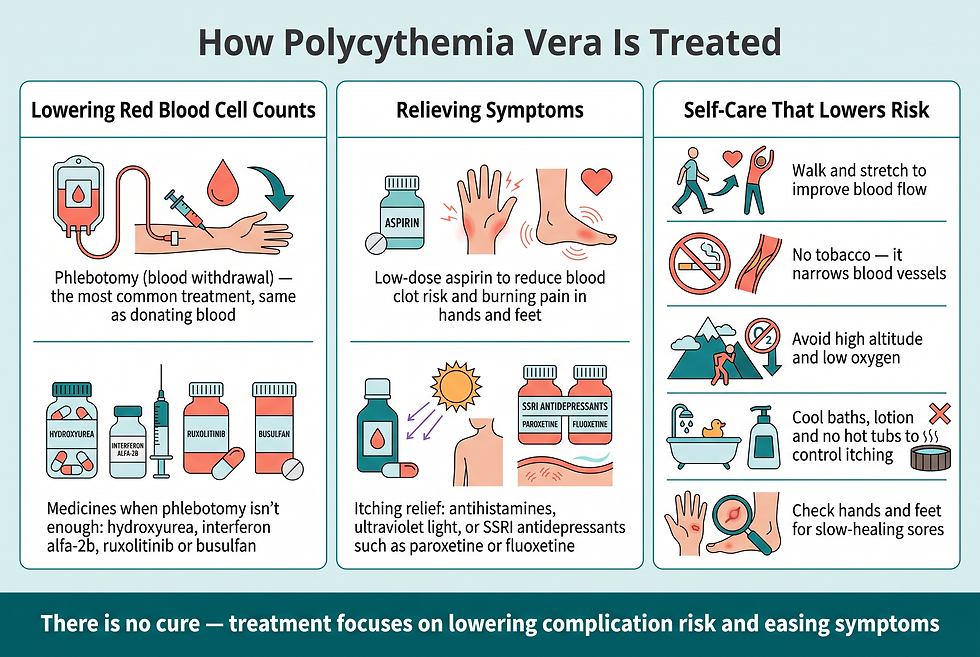
The most common treatment for polycythemia vera is having blood withdrawn often, using a needle in a vein — a procedure called phlebotomy. It is the same procedure used for donating blood. Phlebotomy lowers your blood volume and reduces the number of excess blood cells. How often you need blood withdrawn depends on how severe your condition is.
If phlebotomy does not help enough, medicines can lower the number of red blood cells in your blood:
Medicine | Examples |
Hydroxyurea | Droxia, Hydrea, Siklos |
Interferon alfa-2b | Intron A |
Ruxolitinib | Jakafi |
Busulfan | Busulfex, Myleran |
Treatment: Managing Clot Risk and Itching
Your health care professional will also likely prescribe medicines to control risk factors for heart and blood vessel disease. These include high blood pressure, diabetes, and high cholesterol.
A low dose of aspirin reduces your risk of blood clots. Low-dose aspirin also may help reduce burning pain in your feet or hands.
For the itching that bothers so many people with this condition, medicines such as antihistamines or treatments with ultraviolet light might give relief. Medicines that are used to treat depression, called selective serotonin reuptake inhibitors (SSRIs), helped relieve itching in clinical trials. SSRIs include paroxetine (Brisdelle, Paxil) or fluoxetine (Prozac, Symbyax).
Self-Care: Everyday Steps That Lower Risk
Self-care plays a real role in polycythemia vera because thick, slow blood is sensitive to lifestyle factors.
Exercise. Gentle exercise, such as walking, can improve blood flow, which helps lower the risk of blood clots. Leg and ankle stretches and exercises also can improve blood flow.
Don't use tobacco. Tobacco can narrow your blood vessels. This raises the risk of heart attack or stroke due to blood clots.
Don't go places with low oxygen levels. Living at high altitudes, skiing, or climbing in mountains all reduce the oxygen levels in your blood.
Be good to your skin. To reduce itching, bathe in cool water, use a gentle cleanser, and pat your skin dry. Adding starch, such as cornstarch, to your bath might help. Do not use hot tubs or heated whirlpools, and do not take hot showers or baths. Try not to scratch — scratching can hurt your skin and raise the risk of infection. Use lotion to keep your skin moist.
Take care in hot and cold temperatures. Poor blood flow increases your risk of injury from hot and cold temperatures. In cold weather, always wear warm clothing and keep your feet and hands warm. In hot weather, protect yourself from the sun and drink plenty of liquids.
Watch for sores. Poor blood flow can make it hard for sores to heal. Look at your hands and feet often, and tell your health care professional about any sores.
Self-care habit | Why it matters |
Gentle exercise and leg stretches | Improves blood flow, lowers clot risk |
No tobacco | Tobacco narrows blood vessels, raising heart attack and stroke risk |
Avoid high altitude and low oxygen | High altitudes reduce oxygen levels in the blood |
Cool baths, gentle cleanser, lotion; no hot tubs | Controls itching; hot water triggers it |
Dress for the weather; hydrate in heat | Poor blood flow raises temperature-injury risk |
Check hands and feet for sores | Slow blood flow makes sores hard to heal |
Preparing for Your Appointment
You are likely to start by seeing your primary health professional. If you have polycythemia vera, you might be sent to a specialist in blood conditions, called a hematologist.
Before the visit, make a list of all your symptoms and when they began, key personal information including other medical conditions and family medical history, and all medicines, vitamins, or supplements you take, including doses and how often you take them. Ask a family member or friend to come along if possible, to help you remember the information you are given.
Questions to ask your health care professional |
What is the most likely cause of my symptoms? |
What tests do I need? |
Will this condition go away, or will I always have it? |
What treatments are available, and which do you suggest? |
I have other health conditions — how can I best manage them together? |
Should I see a specialist? |
Will I need follow-up visits, and if so, how often? |
Are there printed materials or websites you suggest? |
Expect your health care professional to ask whether your symptoms are present all the time or come and go, how your symptoms affect your life, and what seems to make them better or worse.
Conclusion
Polycythemia vera is a rare, slow-moving blood cancer in which the bone marrow makes too many red blood cells, thickening the blood and raising the risk of clots, strokes, and heart attacks. It hides well — many people have it for years without knowing — but a distinctive clue is itching after a warm bath or shower, along with headaches, dizziness, blurred vision, unusual bleeding, and left-sided stomach pressure from an enlarged spleen. Diagnosis rests on blood tests showing high red blood cell counts, hematocrit, and hemoglobin, confirmed by bone marrow examination and gene testing. There is no cure, but with phlebotomy, cell-lowering medicines, low-dose aspirin, and disciplined self-care, treatment can ease symptoms and lower the risk of serious complications.
If you have unexplained symptoms — especially itching after a warm bath or shower — talk with a health care professional about a simple blood test. Proper medical care can help ease the symptoms and complications of this disease.
Frequently Asked Questions
What is polycythemia vera?
Polycythemia vera is a type of blood cancer that causes the bone marrow to make too many red blood cells. These extra cells thicken the blood, slowing its flow and raising the risk of blood clots, stroke, and heart attack.
What are the symptoms of polycythemia vera?
Many people notice no symptoms. Some get headache, dizziness, tiredness, and blurred vision. Clearer symptoms include itching mostly after a warm bath or shower, numbness or tingling in the hands and feet, unusual bleeding such as nosebleeds, feeling full soon after eating, left upper stomach pain from an enlarged spleen, shortness of breath when lying down, bone pain, and painful swelling of one joint, often the big toe.
What causes polycythemia vera?
A change in a gene causes a problem with making blood cells, so the bone marrow produces too many red blood cells (and sometimes too many white blood cells or platelets). The cause of the gene change is unknown, and it is not passed through families.
Who is most likely to get polycythemia vera?
It can happen at any age but is more common in adults over age 60. Men are more likely to get polycythemia vera than women.
How is polycythemia vera diagnosed?
Through a medical history, physical exam, blood tests showing more red blood cells, a higher hematocrit, and higher hemoglobin, a bone marrow aspiration or biopsy taken from the back of the hipbone, and gene testing that may show the gene change linked with the disease.
Is there a cure for polycythemia vera?
No, there is no cure. Treatment aims to lower the risk of complications and may ease symptoms.
What is the most common treatment?
Phlebotomy — having blood withdrawn often using a needle in a vein. It is the same procedure used for donating blood. It lowers blood volume and reduces the number of excess blood cells, with frequency depending on disease severity.
What self-care helps with polycythemia vera?
Gentle exercise like walking, avoiding tobacco, avoiding high altitude and low oxygen, bathing in cool water with a gentle cleanser and lotion (no hot tubs or hot showers), dressing for the weather, and checking hands and feet for slow-healing sores.
References and Further Reading
External References
Medical disclaimer: This article is for general informational purposes only and is not a substitute for professional medical advice, diagnosis, or treatment. Always seek the advice of a qualified health care provider with any questions you may have regarding a blood disorder or other health concern. Never disregard professional medical advice or delay seeking it because of content you have read on this site.
Comments