Eosinophilic Colitis: Symptoms, Causes, Diagnosis, Treatment and When to See Your Provider — What You Need to Know

Updated: 2 days ago
Medically reviewed by Dr. Baraa Alnahhal, MD · Last reviewed: September 2026
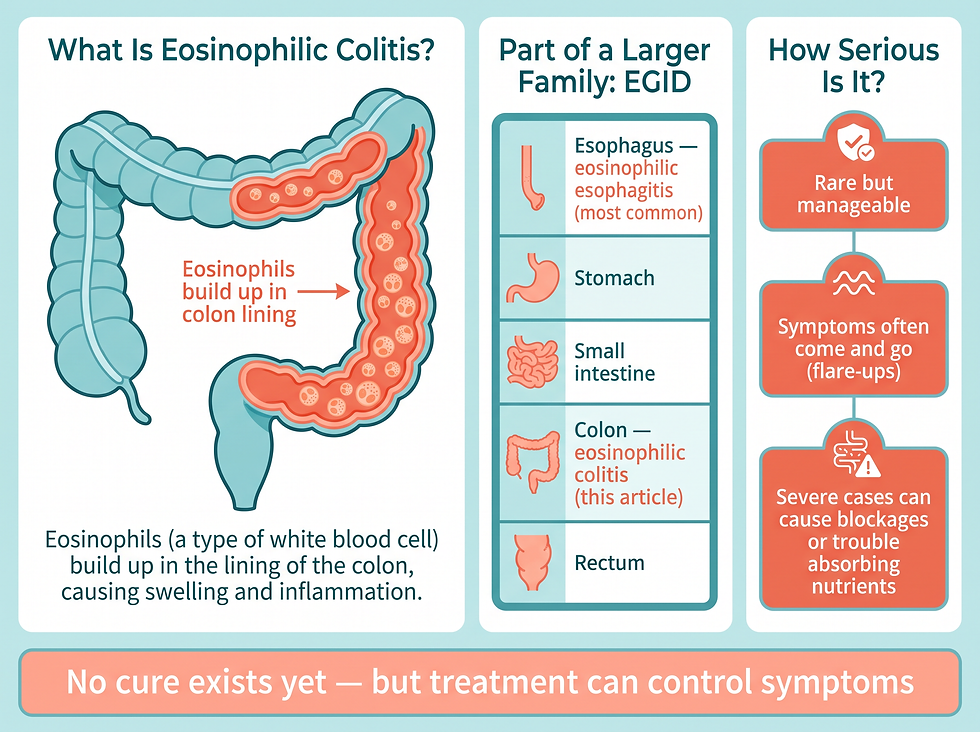
What is eosinophilic colitis?
Eosinophilic colitis (EoC, pronounced "ee-uh-sin-uh-FIL-ik kuh-LAHY-tis") is a rare inflammatory disorder of the colon, or large intestine. It happens when white blood cells called eosinophils build up in the colon's lining, causing swelling and irritation known as inflammation [1].
EoC is one form of eosinophilic gastrointestinal disease (EGID). The condition can be serious because the inflammation produces ongoing symptoms such as diarrhea, belly pain and weight loss that do not go away on their own. In more severe cases, it can affect how the intestines work, potentially leading to blockages and trouble absorbing enough nutrients.
Although EoC is often a long-term (chronic) condition, it is manageable. Treatment focuses on lowering inflammation and easing symptoms, which may involve dietary changes or medication. Many people feel better with treatment, though symptoms can come and go over time.
Quick answer
What is the short answer to "what is eosinophilic colitis?" Eosinophilic colitis is a rare, often chronic inflammation of the colon caused by a buildup of eosinophils (a type of white blood cell) in the colon lining. Symptoms include chronic diarrhea (sometimes with blood), belly pain or cramping, blood or mucus in stool, nausea or vomiting, and weight loss. It is diagnosed with a colonoscopy plus biopsy, often with normal-looking colon tissue on camera but visible inflammation under the microscope. There is no universal eosinophil cutoff that confirms the diagnosis. Treatment targets the cause: elimination diets (often removing cow's milk or soy in infants), corticosteroids, and other medications for severe or persistent cases. Most people can manage symptoms with the right plan, and infants in particular may improve within weeks of dietary changes. See a provider for ongoing diarrhea, blood in stool, unexplained weight loss or frequent belly pain.
TL;DR: Eosinophilic colitis at a glance
Question | Answer |
What is it? | A rare inflammatory disorder in which eosinophils (white blood cells) build up in the lining of the colon (large intestine) |
How does it happen? | The eosinophil buildup causes swelling and irritation (inflammation) of the colon lining |
Is it related to other conditions? | Yes — it is a type of eosinophilic gastrointestinal disease (EGID) |
How serious is it? | It can be serious: inflammation causes ongoing symptoms, and severe cases can affect how intestines work, causing blockages and trouble absorbing nutrients |
Is it long-term? | Often chronic, but manageable — symptoms may come and go |
How is it diagnosed? | Colonoscopy with biopsy; blood tests; stool tests to rule out infection |
Is there a cure? | No single cure, but treatment manages symptoms |
What is the outlook? | Many people improve with treatment; infants often improve quickly with dietary changes; others have a long-term condition with flare-ups |
Limitation statement: The source does not publish prevalence statistics (exact rates of eosinophilic colitis in the population), so no invented statistics appear in this article. All facts below come from the cited clinical source.
Eosinophilic colitis symptoms: What does it feel like?
Symptoms can vary from person to person, but several common patterns appear across cases.
Symptom | Notes |
Chronic diarrhea | May contain blood |
Abdominal (belly) pain or cramping | Ongoing, not occasional |
Blood or mucus in stool | Reported in stool |
Nausea or vomiting | May occur |
Weight loss or trouble gaining weight | Common sign |
In more severe cases, additional symptoms may appear:
Severe symptom | Frequency |
Bloating or a swollen belly | Occurs in more severe cases |
Signs of an intestinal blockage | Rare |

What causes eosinophilic colitis?
Researchers do not fully understand the exact cause. They believe it is linked to how the immune system reacts.
Possible causes or triggers include:
Cause or trigger | Notes |
Food-related immune reactions | More common in infants |
Medications | Certain anti-inflammatory drugs |
Who is more likely to develop eosinophilic colitis?
You may be more likely to develop EoC if you have one or more of the following:
Risk factor | Details |
Allergies, asthma or eczema | Associated immune conditions |
History of food sensitivities | Reported trigger pattern |
Certain medications | Drugs linked to inflammation |
Some forms of EoC are more likely to affect infants and young children.
Can eosinophilic colitis cause complications?
Without treatment, eosinophilic colitis may lead to several complications:
Potential complication | Description |
Chronic symptoms | Ongoing diarrhea, pain or other symptoms |
Poor nutrition or weight loss | From long-term inflammation and reduced intake |
Long-term condition with flare-ups | Symptoms that come and go over time |
Intestinal blockage | Rare but serious |
If your symptoms do not improve, your provider may check for signs of inflammatory bowel disease (IBD), since persistent inflammation can overlap with other conditions.
How is eosinophilic colitis diagnosed?
To diagnose eosinophilic colitis, your healthcare provider will ask about your symptoms and try to rule out other conditions first. The definitive test is a colonoscopy with a biopsy, which works as follows:
Diagnostic step | What happens |
Symptom review | Provider asks about your symptoms and history |
Ruling out other conditions | Other causes are excluded before diagnosis |
Colonoscopy | A thin tube with a camera examines the colon |
Biopsy | Small tissue samples are taken during the procedure |
Laboratory analysis | A pathologist checks samples under a microscope for high levels of eosinophils |
Two important diagnostic nuances to know:
Your colon may look normal during a colonoscopy, but a biopsy can still show inflammation.
There is no universal cutoff number of eosinophils that confirms the condition. Your provider makes the diagnosis based on test results and by ruling out other causes.
Your provider may also order additional tests:
Test | Purpose |
Blood tests | Check eosinophil levels |
Stool (poop) tests | Rule out infections |
How is eosinophilic colitis treated?
There is no single cure for eosinophilic colitis, but treatment can help you manage your symptoms. The approach depends on your age and how severe your symptoms are.
Treatment | Who it targets | How it works |
Dietary changes (infants) | Infants with EoC | Symptoms may improve after removing foods such as cow's milk or soy from their diet |
Elimination diet | Older children and adults | Helps identify trigger foods |
Corticosteroids | Children and adults | Prescription medicines that reduce inflammation |
Other medications | Severe or non-improving cases | Additional options when symptoms are severe or do not improve |
Your provider will tailor your care to your needs, and your care plan may change over time.
How long does recovery take?
Recovery differs for everyone. Some infants improve within weeks after dietary changes are made. Older children and adults may need longer treatment. Because symptoms may come and go over time, ongoing monitoring is often part of the plan.
When should you see your healthcare provider?
Talk to your provider if you experience any of the following:
Warning sign | Action |
Ongoing diarrhea | Contact your provider |
Blood in your stool | Contact your provider |
Unexplained weight loss | Contact your provider |
Frequent belly pain | Contact your provider |
Seek care sooner if symptoms are severe or do not improve with treatment.
What is the outlook for people with eosinophilic colitis?
Eosinophilic colitis is rare, and it does not affect everyone the same way. Some people — especially infants — get better with simple treatment. Others may have a long-term condition with flare-ups. Most people can manage symptoms with the right treatment plan.
A note from the clinical care team: "Eosinophilic colitis can be hard to live with, especially if symptoms affect your daily life. Getting the right diagnosis is an important first step. With a personalized treatment plan, many people can manage their symptoms and stay active. You may need to change what you eat or take medicine to control inflammation. Stay in touch with your healthcare provider, especially if your symptoms change. Over time, you and your provider can adjust your care to help you feel your best."
Conclusion: Eosinophilic colitis is rare, but it's manageable with the right plan
Eosinophilic colitis sits at the intersection of allergy, immunity and digestive health. Because symptoms like chronic diarrhea and belly pain overlap with many other conditions, getting an accurate diagnosis — typically through colonoscopy and biopsy — is the critical first step.
Three action steps to consider:
See your provider for ongoing diarrhea, blood in stool, unexplained weight loss or frequent belly pain.
Ask about dietary changes — especially for infants (cow's milk or soy elimination) and older patients (elimination diet to find trigger foods).
Stay in touch with your care team as symptoms change; your plan may need adjustment over time.
This article is for informational purposes only and is not medical advice. Always consult a qualified healthcare professional for diagnosis and treatment.

Frequently asked questions (FAQ)
These questions are written the way people actually ask AI assistants and search engines.
What is eosinophilic colitis in simple terms?
Eosinophilic colitis is a rare condition where white blood cells called eosinophils build up in the lining of the large intestine (colon), causing inflammation, swelling and irritation.
Is eosinophilic colitis a type of inflammatory bowel disease (IBD)?
Not exactly. It is classified as a type of eosinophilic gastrointestinal disease (EGID). However, if your symptoms do not improve, your provider may check for signs of inflammatory bowel disease because the conditions can overlap.
Is eosinophilic colitis common or rare?
Eosinophilic colitis is rare. The source does not provide a specific prevalence rate, and no invented statistics are used in this article.
What causes eosinophilic colitis?
Researchers do not fully understand the exact cause. It is believed to be linked to how the immune system reacts. Possible triggers include food-related immune reactions (more common in infants) and certain medications such as anti-inflammatory drugs.
Can food allergies cause eosinophilic colitis?
Food-related immune reactions are one of the possible causes or triggers, and they are more common in infants.
What are the main symptoms of eosinophilic colitis?
The main symptoms include chronic diarrhea (sometimes with blood), belly pain or cramping, blood or mucus in stool, nausea or vomiting, and weight loss or trouble gaining weight.
Can eosinophilic colitis cause blood in stool?
Yes. Chronic diarrhea may contain blood, and blood or mucus in stool is listed among the common symptoms.
Does eosinophilic colitis cause weight loss?
Yes. Weight loss or trouble gaining weight is a common symptom, and poor nutrition or weight loss is also listed as a possible complication without treatment.
Can eosinophilic colitis cause a bowel blockage?
Yes, but it is rare. Signs of an intestinal blockage may appear in more severe cases.
How do doctors test for eosinophilic colitis?
Doctors use a colonoscopy with a biopsy — a thin tube with a camera examines the colon, and small tissue samples are taken. A pathologist checks the samples under a microscope for high levels of eosinophils.
Can your colon look normal but still have eosinophilic colitis?
Yes. The colon may look normal during a colonoscopy, but a biopsy can still show inflammation.
Is there a specific eosinophil count that confirms eosinophilic colitis?
No. There is no universal cutoff number of eosinophils that confirms the condition. The diagnosis is based on test results and ruling out other causes.
What blood tests are used for eosinophilic colitis?
Blood tests check eosinophil levels. Stool (poop) tests may also be ordered to rule out infections.
How is eosinophilic colitis treated in babies?
If an infant has EoC, symptoms may improve after dietary changes — often by removing foods such as cow's milk or soy from their diet.
What is an elimination diet for eosinophilic colitis?
For older children and adults, an elimination diet may help identify trigger foods. It is one of the main treatment approaches alongside medications.
Do steroids help with eosinophilic colitis?
Yes. Providers may prescribe corticosteroids to reduce inflammation in older children and adults.
Is there a cure for eosinophilic colitis?
There is no single cure. However, treatment can help you manage symptoms, and many people feel better with the right plan.
How long does it take for eosinophilic colitis to heal?
Recovery differs for everyone. Some infants improve within weeks of dietary changes. Older children and adults may need longer treatment.
Is eosinophilic colitis permanent?
It is often a long-term (chronic) condition, but it is manageable. Symptoms may come and go over time.
Can eosinophilic colitis come back after treatment?
Yes. Symptoms may come and go over time, and others may experience a long-term condition with flare-ups.
What happens if eosinophilic colitis is left untreated?
Without treatment, it may lead to chronic symptoms, poor nutrition or weight loss, a long-term condition with flare-ups, and rarely, intestinal blockage.
Who is most at risk for eosinophilic colitis?
You may be more likely to develop it if you have allergies, asthma or eczema; a history of food sensitivities; or take certain medications linked to inflammation. Infants and young children are more likely to be affected by some forms.
Is eosinophilic colitis related to asthma or eczema?
Yes. Having allergies, asthma or eczema is listed as a risk factor, suggesting an immune-system connection.
Can medications cause eosinophilic colitis?
Certain medications, such as anti-inflammatory drugs, are listed as possible causes or triggers.
Should I see a doctor for ongoing diarrhea?
Yes. Talk to your provider if you have ongoing diarrhea, blood in your stool, unexplained weight loss or frequent belly pain. Seek care sooner if symptoms are severe or do not improve with treatment.
Can adults get eosinophilic colitis?
Yes. It affects infants, children and adults. Treatment for adults may include an elimination diet, corticosteroids or other medications depending on severity.
What is the long-term outlook for eosinophilic colitis?
Eosinophilic colitis is rare and does not affect everyone the same way. Some people, especially infants, get better with simple treatment. Others may have a long-term condition with flare-ups. Most people can manage symptoms with the right treatment plan.
How do I manage eosinophilic colitis flare-ups?
Stay in touch with your healthcare provider, especially if symptoms change. Your care plan may be adjusted over time — through dietary changes or medication — to help you feel your best.
Comments