Enterovirus: Symptoms, Causes, Diseases, Diagnosis, Treatment, Prevention and When to Seek Emergency Care — What You Need to Know

Updated: 2 days ago
Medically reviewed by Dr. Baraa Alnahhal, MD · Last reviewed: September 2026
Quick Answer
What is enterovirus and what does it cause? Enterovirus is a group of viruses that can make you sick in many different ways. Some types cause respiratory illnesses similar to a cold, others cause hand, foot and mouth disease or polio, and in some cases they can cause severe complications like pneumonia and paralysis. All enteroviruses are contagious, spreading through mucus, saliva, stool and contaminated water. There is no specific treatment that cures the infections — most resolve on their own — but good hand hygiene and surface disinfection meaningfully reduce your risk of catching or spreading them.
TL;DR — Key Facts at a Glance
Enterovirus is not a single virus. It is a whole family of viruses that carry their genetic instructions on RNA. The name comes from where infections usually begin: the digestive tract ("entero" relates to the intestines) or the throat. Interestingly, even though the infections start there, they do not often cause digestive symptoms, and they can spread to other parts of the body.
What is it? A group of RNA viruses that cause many different illnesses.
Where do infections start? The digestive tract or the throat.
How do they spread? Mucus, saliva, stool and contaminated water.
What do they cause? Colds, hand, foot and mouth disease, pink eye, polio and more.
Is there a cure? No specific treatment cures them; most infections resolve on their own.
Can they be serious? Yes — complications can include pneumonia, heart inflammation and paralysis.

What Is Enterovirus?
Enterovirus is a group of viruses that can make you sick in lots of different ways. Some of them cause respiratory illnesses similar to a cold. Others cause hand, foot and mouth disease or polio. They can cause severe complications like pneumonia and paralysis.
The viruses carry their genetic instructions on RNA. Infections usually begin in the digestive tract or the throat. However, they do not often cause digestive symptoms, and they can spread to other parts of your body.
Which viruses belong to the enterovirus family?
Enteroviruses are often named starting with "EV," followed by letters and numbers that identify the type — for example, EV-D68, EV-A6 or EV-A71. The family includes five subtypes (species):
Coxsackievirus
Echovirus
Enterovirus — named types such as EV-D68, EV-A6 and EV-A71
Poliovirus — the virus that causes polio
Rhinovirus
Which diseases can enteroviruses cause?
The same virus family produces a surprisingly wide range of illnesses. Enterovirus diseases include:
[Acute flaccid myelitis](https://www.rinnit.com/post/acute-flaccid-myelitis-afm-complete-guide-to-symptoms-causes-treatment): inflammation of the nervous system causing weakness and paralysis.
Acute hemorrhagic conjunctivitis: a severe type of pink eye, often caused by EV-A70.
Aseptic (viral) meningitis: inflammation of the lining around the brain and spinal cord.
Encephalitis: inflammation of the brain.
Hand, foot and mouth disease: an illness that causes blister-like rashes.
Herpangina: an infection that causes sores in the mouth.
Myocarditis: inflammation of the heart muscle.
[Pericarditis](https://www.rinnit.com/post/pericarditis-symptoms-causes-treatment-why-sharp-chest-pain-needs-a-prompt-check): inflammation of the sac around the heart.
Pleurodynia: inflammation in the chest muscles.
Polio: an illness that can sometimes lead to paralysis.
Respiratory illnesses: including those caused by EV-D68.
Symptoms and Causes
What are the symptoms of enterovirus?
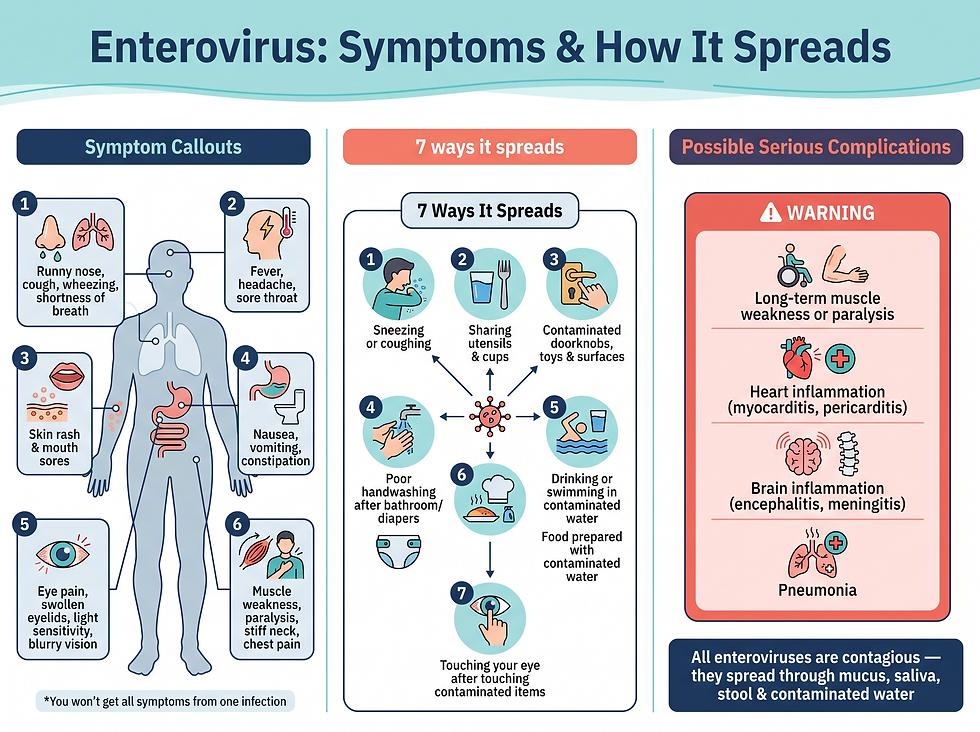
Enteroviruses cause different symptoms depending on which kind you have. You will not experience all of these symptoms with a single infection. Possible symptoms include:
Respiratory: runny nose, cough, wheezing, shortness of breath.
Skin and mouth: skin rash, sores in the mouth.
General: fever, headache, sore throat.
Digestive: nausea, vomiting, constipation.
Eye: eye pain, swollen eyelids, sensitivity to light, blurry vision.
Neurological and muscle: muscle weakness, paralysis, stiff neck.
Chest: chest pain.
Are enteroviruses contagious?
Yes, all enteroviruses are contagious. They spread through mucus, spit (saliva), poop and contaminated water.
How does enterovirus spread?
The specific ways enteroviruses spread include:
Sneezing or coughing
Sharing eating utensils and cups
Touching contaminated doorknobs, toys and other objects or surfaces
Not washing your hands well enough after going to the bathroom or touching poop (including changing diapers)
Drinking or swimming in contaminated water, or getting it in your mouth
Eating foods prepared with contaminated water
Touching your eye after touching something contaminated with the virus
What are the complications of enterovirus?
Some enterovirus infections can lead to:
Long-term muscle weakness or paralysis
Inflammation of your heart or brain
Diagnosis and Tests
How is enterovirus diagnosed?
A healthcare provider diagnoses enteroviruses based on your symptoms and by testing samples of body fluids to look for signs of infection. These samples could include:
Spit (saliva) from your throat
Poop (stool)
Blood
Cerebrospinal fluid, collected via a lumbar puncture (spinal tap)
Management and Treatment
How are enterovirus infections treated?
There is no specific treatment that cures enterovirus infections. They usually get better on their own.
If you are severely ill, a provider may treat you with:
Corticosteroids to reduce inflammation.
Bronchodilators to open your airways.
Oxygen therapy or a ventilator to help you breathe.
If you have long-term muscle weakness or paralysis, physical therapy might help.
Can enterovirus infections be prevented?
Yes — you can reduce your risk of catching and spreading enterovirus infections with these habits:
Cover sneezes and coughs with the bend of your elbow.
Disinfect surfaces such as toys, phones, countertops and other frequently touched surfaces.
Don't share personal items like eating utensils, cups, towels or makeup.
Keep sick children home away from school and other people while sick.
Wash hands thoroughly with soap and water for at least 20 seconds, especially after the bathroom, diaper changes, and before eating or preparing food.
Avoid swimming with diarrhea: don't swim in public pools or lakes with diarrhea, and keep children with recent diarrhea out of water.
Use safe water: drink and cook with bottled water in areas without access to clean water.

When Should You Seek Care?
Go to the emergency room or see a healthcare provider right away if you or your child has severe symptoms, including:
Difficulty breathing
Severe weakness or paralysis
Blurred vision or other eye issues
Stiff neck
Chest pain
Confusion
Because enteroviruses can cause heart inflammation, brain inflammation and paralysis, these warning signs should never be ignored.
Conclusion and Next Steps
Most enterovirus infections are mild and resolve on their own — but this virus family is capable of causing some of the most serious conditions in medicine, from polio to encephalitis to heart inflammation. Knowing what the viruses can do, how they spread, and when symptoms demand urgent care is the best protection you and your family can have.
What to do next:
Practice the seven prevention habits — especially 20-second handwashing with soap and water after bathroom use, diaper changes and before food preparation.
Watch for the red-flag symptoms — difficulty breathing, severe weakness, blurred vision, stiff neck, chest pain or confusion warrant immediate emergency care.
Keep sick children home and disinfect high-touch surfaces at home to stop the virus from moving through your household.
"Enteroviruses are common. You've almost certainly had one of the many types at some point or another in your life — and your kids are bound to get one, too (if they haven't already). Most of the time, they cause mild symptoms and go away on their own. But don't hesitate to see a provider if you have concerning symptoms."
This article is for general informational purposes only and is not a substitute for professional medical advice, diagnosis or treatment. Always consult a qualified healthcare provider with questions about a medical condition.
Frequently Asked Questions (FAQ)
Is enterovirus the same as a stomach bug?
No. Although infections usually start in the digestive tract or throat, enteroviruses do not often cause digestive symptoms, and they produce many other types of illness including colds, hand, foot and mouth disease and polio.
How many types of enterovirus are there?
The family includes five named subtypes: Coxsackievirus, Echovirus, Enterovirus (named EV types like EV-D68, EV-A6 and EV-A71), Poliovirus and Rhinovirus.
Is every enterovirus contagious?
Yes. All enteroviruses are contagious and spread through mucus, saliva, stool and contaminated water.
Can enterovirus cause paralysis?
Yes. Some infections can cause long-term muscle weakness or paralysis, and polio — an enterovirus disease — can sometimes lead to paralysis.
Does enterovirus cause a cold?
Some types cause respiratory illnesses similar to a cold, with symptoms like runny nose, cough, wheezing and shortness of breath.
What is EV-D68?
EV-D68 is one of the named enterovirus types that causes respiratory illness.
Can enterovirus affect the heart?
Yes. Enteroviruses can cause myocarditis (inflammation of the heart muscle) and pericarditis (inflammation of the sac around the heart), and chest pain is among the possible symptoms.
Can enterovirus affect the brain?
Yes. Enteroviruses can cause encephalitis (brain inflammation), aseptic (viral) meningitis, acute flaccid myelitis and the nervous system damage underlying polio.
What is acute hemorrhagic conjunctivitis?
It is a severe type of pink eye often caused by the EV-A70 enterovirus. Symptoms can include eye pain, swollen eyelids, sensitivity to light and blurry vision.
Is enterovirus the same as polio?
Polio is one disease caused by an enterovirus. Poliovirus is one of the five subtypes in the enterovirus family.
How do children catch enterovirus?
Common routes include sneezing or coughing, sharing utensils and cups, touching contaminated toys or doorknobs, poor handwashing after diaper changes, and swimming in contaminated water.
Can you get enterovirus from a swimming pool?
Yes. Drinking or swimming in contaminated water — or getting it in your mouth — is a listed transmission route.
Why doesn't enterovirus always cause digestive symptoms?
Even though infections usually start in the digestive tract or throat, they do not often cause digestive symptoms and can spread to other parts of the body.
Is there a cure for enterovirus?
No. There is no specific treatment that cures enterovirus infections. They usually get better on their own.
When do you need emergency care for enterovirus?
Go to the emergency room for difficulty breathing, severe weakness or paralysis, blurred vision or other eye issues, stiff neck, chest pain or confusion.
Can enterovirus cause a stiff neck?
Yes. Stiff neck is a possible symptom and can signal meningitis, one of the serious complications — seek emergency care.
How long does an enterovirus infection last?
Duration varies by the type of infection, but most infections get better on their own.
Can adults get enterovirus?
Yes. You have almost certainly had one of the many enterovirus types at some point in your life.
How do you stop enterovirus from spreading at home?
Disinfect toys, phones and countertops; don't share utensils, cups, towels or makeup; wash hands for at least 20 seconds; cover sneezes and coughs with your elbow; and keep sick children home from school.
Should a child with diarrhea swim?
No. Do not swim in public pools or lakes if you have diarrhea, and do not let children swim if they have recently had diarrhea.
What tests detect enterovirus?
Providers test samples of throat saliva, stool, blood or cerebrospinal fluid (via lumbar puncture), interpreted alongside your symptoms.
Can enterovirus cause chest pain?
Yes. Chest pain is a possible symptom, and pleurodynia (inflammation of the chest muscles), myocarditis and pericarditis are all enterovirus diseases.
What is herpangina?
It is an enterovirus infection that causes sores in the mouth.
Is physical therapy used for enterovirus?
If you have long-term muscle weakness or paralysis from an enterovirus infection, physical therapy might help.
When should you see a doctor for enterovirus?
See a provider or go to the emergency room for any severe symptoms — difficulty breathing, severe weakness or paralysis, blurred vision, stiff neck, chest pain or confusion.
References
Cleveland Clinic — Enterovirus (last updated December 10, 2025)
Clark E.H., Ashley P., Shandera W.X. (2025). Enteroviruses that produce several syndromes. In Papadakis MA, Rabow MW, McQuaid KR, Gandhi M, eds. Current Medical Diagnosis & Treatment 2025. McGraw-Hill Education.
Picornaviruses (Enterovirus and Rhinovirus Groups). In: Riedel S, Hobden JA, Miller S, et al, eds. Jawetz, Melnick, & Adelberg's Medical Microbiology. 28th ed. McGraw-Hill Education; 2019.
Centers for Disease Control and Prevention (CDC) — Enterovirus
Comments