Pink Eye: Complete Guide to Symptoms, Causes, and Treatment

Updated: 2 days ago
Medically reviewed by Dr. Baraa Alnahhal, MD · Last reviewed: September 2026
Pink Eye: Complete Guide to Symptoms, Causes, and Treatment
TL;DR
Pink eye (conjunctivitis) is the inflammation or infection of the transparent membrane lining your eyelid and eyeball. It is most commonly caused by a virus, but can also result from bacteria, allergies, or irritation. Symptoms include redness, itchiness, and a gritty feeling. Treatment focuses on symptom relief, such as artificial tears and cold compresses. Because it can be highly contagious, practicing good hygiene is essential to prevent spreading it.
Quick Answer
Pink eye is an inflammation or infection of the transparent membrane that lines the eyelid and eyeball. The four main causes are viruses, bacteria, allergies, and chemical irritation. It is highly contagious when caused by viruses or bacteria. Most cases resolve on their own within 2 to 3 weeks. Treatment focuses on symptom relief, including artificial tears, compresses, and avoiding contact lenses.
What Is Pink Eye?
Pink eye, medically known as conjunctivitis, is the inflammation or infection of the transparent membrane that lines your eyelid and covers the white part of your eyeball. This membrane is called the conjunctiva.
The condition gets its name from its most visible symptom: when the small blood vessels in the conjunctiva become swollen and irritated, they become more visible, giving the eyes a reddish or pink appearance. While it can be irritating, pink eye rarely affects vision and typically resolves with time and basic care.

What Are the Main Causes of Pink Eye?
Pink eye can be triggered by several different factors, which dictate how it is treated and whether it is contagious.
Viral Conjunctivitis
Most cases of pink eye are caused by adenovirus, though other viruses like herpes simplex can also be responsible. This type is highly contagious and often spreads through direct or indirect contact with eye discharge. It may accompany a cold or respiratory infection. Viral pink eye typically begins in one eye and may infect the other within a few days.
Bacterial Conjunctivitis
Bacteria can cause pink eye, particularly in people who wear contact lenses that aren't cleaned properly. Like the viral form, bacterial conjunctivitis is highly contagious and spreads easily through contact.
Allergic Conjunctivitis
Allergic pink eye affects both eyes and is a response to allergens like pollen. The body releases histamines, leading to intense itching, tearing, and inflammation. Unlike viral and bacterial forms, allergic conjunctivitis is not contagious.
Irritation and Chemical Exposure
A chemical splash or a foreign object in the eye can also cause conjunctivitis. Symptoms usually clear up on their own within a day if the eye is flushed properly. However, caustic chemicals like lye can cause permanent damage and require immediate medical attention.

What Are the Symptoms of Pink Eye?
The symptoms of pink eye are usually easy to identify and often affect one or both eyes.
| Symptom | Description | |---|---| | Redness | Visible irritation in one or both eyes. | | Itchiness | A persistent urge to rub the eyes. | | Grittiness | A feeling that sand or debris is in the eye. | | Discharge | Fluid that forms a crust during the night, sometimes making it hard to open the eyes in the morning. | | Tearing | Excessive production of tears. | | Light sensitivity | Known as photophobia, causing discomfort in bright environments. |
Who Is at Risk for Pink Eye?
Risk factors for developing pink eye include exposure to someone infected with the viral or bacterial forms, exposure to environmental allergens, and the use of contact lenses, especially extended-wear lenses. Proper hygiene and lens care are the most effective ways to reduce risk.
How Is Pink Eye Treated?
Treatment for pink eye usually focuses on symptom relief rather than a cure, as most cases resolve on their own.
General Treatment and Home Remedies
For most types of pink eye, healthcare professionals recommend using artificial tears, cleaning the eyelids with a wet cloth, and applying cold or warm compresses several times a day. A cool compress is often the most soothing. Viral pink eye usually needs time to run its course, which typically takes around 2 to 3 weeks for symptoms to gradually clear on their own.
Treatment by Cause
Viral: Since viruses cause most cases, antibiotics won't help and may cause harm. The condition must run its course. In rare cases caused by herpes simplex, antiviral medicines may be an option.
Bacterial: Antibiotic eye drops are sometimes prescribed, though many mild cases resolve without them.
Allergic: Treatment includes allergy eye drops containing antihistamines, mast cell stabilizers, or decongestants to control inflammation and allergic reactions.
Contact Lens Care During Pink Eye
If you wear contact lenses, you must stop wearing them immediately when symptoms begin. Continuing to wear them can lead to more serious eye infections.
You should throw away soft disposable contacts, clean non-disposable lenses thoroughly, and disinfect hard lenses overnight. It is also important to replace your lens case and any eye makeup used before or during the illness to prevent reinfection.
How Can Pink Eye Be Prevented?
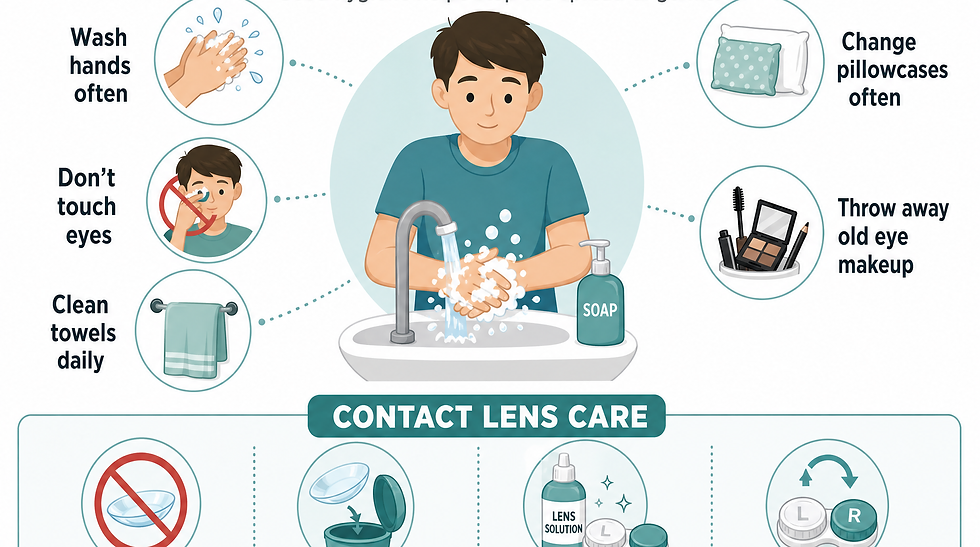
Because pink eye is highly contagious, practicing good hygiene is the best prevention strategy.
Effective prevention measures include:
Washing your hands frequently.
Avoiding touching your eyes with unwashed hands.
Using a clean towel and washcloth daily.
Changing your pillowcases often.
Throwing away old eye cosmetics like mascara.
For newborns, an antibiotic ointment is applied shortly after birth to prevent a serious form of bacterial conjunctivitis known as ophthalmia neonatorum, which can be contracted from bacteria in the mother's birth canal.
When to See a Doctor
While most pink eye cases are minor, certain symptoms indicate a more serious condition that requires urgent care. Seek urgent medical care if you experience eye pain, a feeling that something is stuck in your eye, blurred vision, or severe light sensitivity.
Prompt evaluation is especially important for contact lens wearers. If your symptoms don't improve within 12 to 24 hours of removing your lenses, make an appointment with an eye care professional to rule out a more serious infection.
Conclusion
Pink eye is a common, highly contagious, and often annoying condition, but it is usually manageable with proper hygiene and symptom relief. Understanding the difference between viral, bacterial, and allergic forms is the first step toward effective treatment.
If you suspect you have pink eye, stop wearing contact lenses, practice strict hand hygiene, and use artificial tears for comfort. If your symptoms are severe, involve eye pain, or do not improve within 24 hours, consult an eye care professional immediately.
Frequently Asked Questions
What causes pink eye?
Pink eye is most often caused by a viral infection (usually adenovirus), but it can also be caused by bacteria, allergies, chemical splashes, or a foreign object in the eye.
How contagious is pink eye?
Viral and bacterial pink eye are very contagious and spread easily through direct or indirect contact with eye discharge. Allergic pink eye is not contagious.
How long does pink eye last?
Most cases of pink eye clear on their own within 2 to 3 weeks as the virus runs its course.
Does pink eye affect my vision?
Pink eye rarely affects vision. However, if you experience blurred vision, severe eye pain, or extreme light sensitivity, you should seek urgent medical attention.
Can I use eye makeup while I have pink eye?
No. You should throw away any eye makeup, such as mascara, used before or during your infection to prevent reinfection or spreading it to others.
What should I do if I wear contact lenses?
Stop wearing your contact lenses immediately. Throw away disposable soft lenses, disinfect hard lenses, and replace your lens case and cleaning solution.
How can I prevent spreading pink eye?
Wash your hands frequently, avoid touching your eyes, use clean towels daily, change pillowcases often, and do not share personal items like washcloths or eye drops.
Do I need antibiotics for pink eye?
Because most cases are viral, antibiotics usually won't help and aren't prescribed. Antibiotics are only effective for bacterial infections.
Further Reading
Editorial note: This article is for educational purposes only and does not replace professional medical advice. Always consult a qualified healthcare professional for diagnosis and treatment decisions. Content based on current clinical guidance and published medical sources; reviewed August 2026.
Health information, not medical advice. This article is for general education and is not a substitute for professional diagnosis or treatment. Always consult a qualified healthcare provider about your own health, and seek emergency care for urgent symptoms.
Comments