DSRCT (Desmoplastic Small Round Cell Tumor): Symptoms, Causes, Diagnosis, Treatment and Outlook

Updated: 2 days ago
Medically reviewed by Dr. Baraa Alnahhal, MD · Last reviewed: September 2026
Quick answer
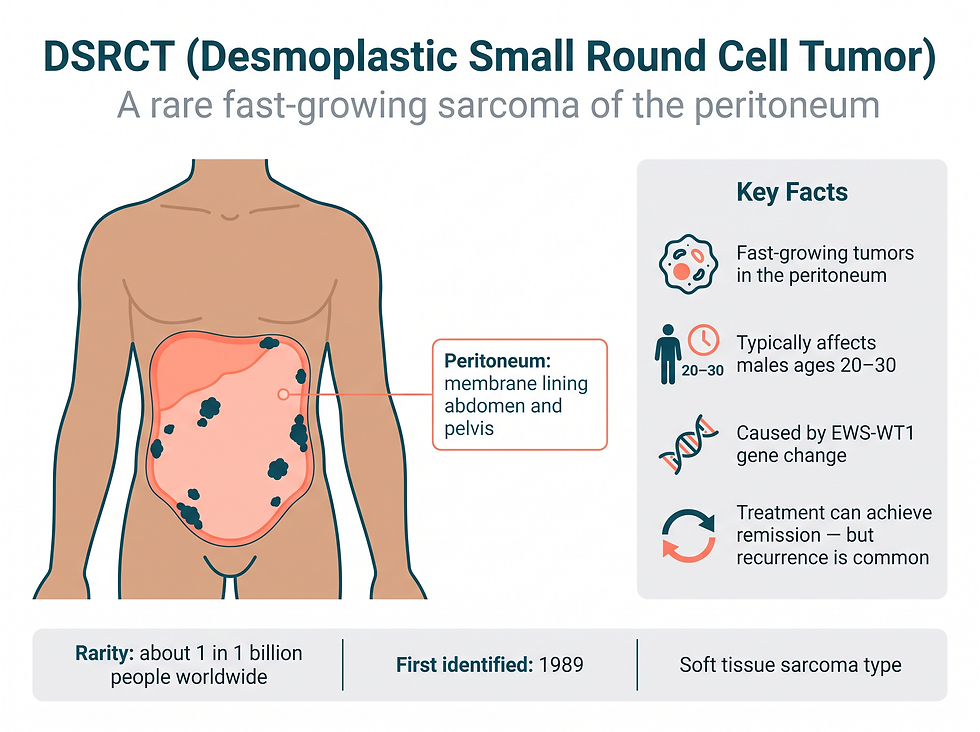
DSRCT (desmoplastic small round cell tumor) is a very rare type of soft tissue sarcoma in which fast-growing tumors develop in the peritoneum, the membrane lining the inside of the abdomen and pelvis. It typically affects males between ages 20 and 30 and is caused by a chromosomal change that creates an abnormal gene called EWS-WT1. Providers treat it with surgery, chemotherapy, radiation, and sometimes HIPEC (heated chemotherapy circulated in the abdominal cavity). Treatment can put DSRCT into remission, but it often comes back, and prognosis depends heavily on whether the tumors have spread and how much can be surgically removed.
TL;DR
DSRCT is one of the rarest cancers known, affecting roughly 1 in 1 billion people worldwide since it was first identified in 1989. It starts as fast-growing tumors in the lining of the abdomen (peritoneum), most often in men in their twenties and early thirties. Symptoms (abdominal pain, a swollen belly, digestive problems, and unexplained weight loss) usually appear only after tumors grow large. Diagnosis combines a physical exam, imaging (CT, MRI, ultrasound), and genetic testing for the EWS-WT1 gene change. Treatment involves surgery, chemotherapy, radiation, and sometimes HIPEC, and can achieve remission, but recurrence is common, often within months to a year. Five-year survival data range from 15% to 38% overall, with 60% for those treated before the cancer spread.
What this guide can and cannot tell you: This article draws its facts and figures from a single clinical reference (Cleveland Clinic, listed below). DSRCT is so rare that published research is limited, and the statistics quoted here come directly from that source's reporting of current survival data.
What is DSRCT?
Desmoplastic small round cell tumor (DSRCT) is a rare type of soft tissue sarcoma. In DSRCT, fast-growing tumors develop in the peritoneum, the membrane that lines the inside of your abdomen and pelvis.
The name describes the tumor under a microscope: "desmoplastic" refers to the dense fibrous (connective tissue) stroma surrounding the tumor cells, "small round cell" describes the shape of the cancer cells, and "tumor" is the mass itself.
How rare is DSRCT?
DSRCT is exceptionally rare. It has affected about 1 in 1 billion people worldwide since researchers first identified it in 1989. Because so few people develop it, there is comparatively little published research for providers to draw on when predicting outcomes, a limitation the clinical source states openly.
Who typically gets DSRCT?
Anyone may develop DSRCT, but it typically affects males between ages 20 and 30.
Key fact | Detail |
Type of cancer | Soft tissue sarcoma |
Where it starts | Peritoneum (membrane lining the abdomen and pelvis) |
First identified | 1989 |
Estimated rarity | About 1 in 1 billion people worldwide |
Typical patient | Males between ages 20 and 30 |
Tumor behavior | Fast-growing; often recurs after treatment |
Remission possible? | Yes, but remission often doesn't last |
What are the symptoms of DSRCT?
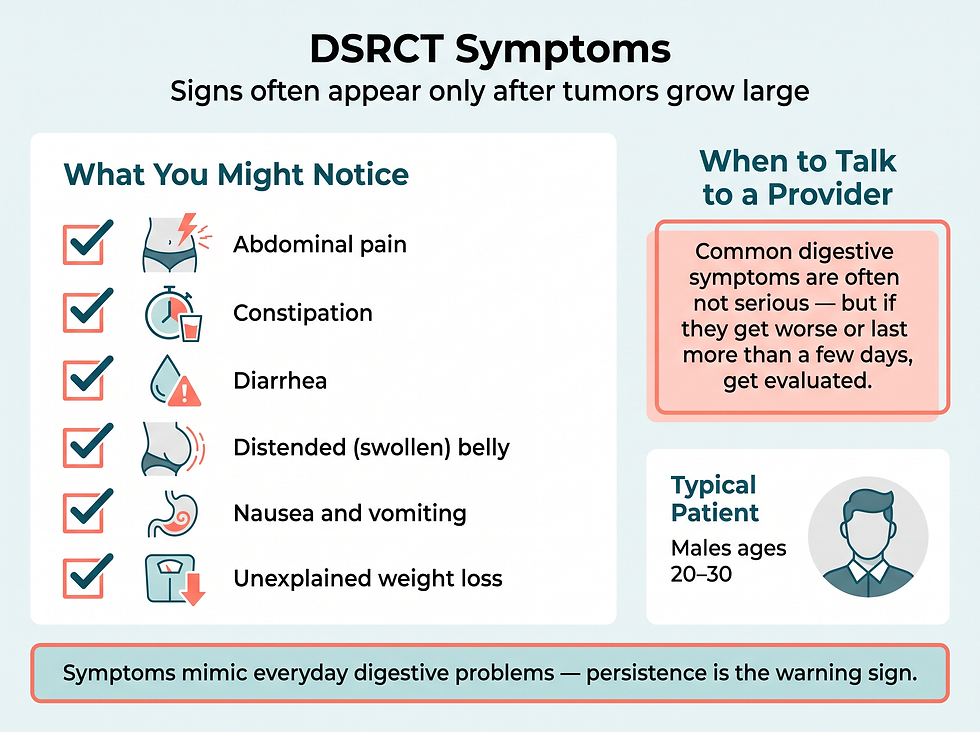
You may not develop symptoms until tumors get large enough to affect your abdomen and digestive system. This is one reason DSRCT is frequently discovered at an advanced stage. Common DSRCT symptoms include:
Abdominal pain
Constipation
Diarrhea
Distended (swollen) belly
Nausea and vomiting
Unexplained weight loss
Why these symptoms can be misleading
Many DSRCT symptoms, like constipation, diarrhea, nausea and vomiting, are common ones that happen for many different reasons and may not be signs of a serious illness. However, the clinical source recommends talking to a healthcare provider if you have symptoms like these that get worse or last for more than a few days.
What causes DSRCT?
Researchers know this condition happens when changes in certain chromosomes create an abnormal gene known as EWS-WT1. They don't know what triggers the change. This means DSRCT is not known to be caused by lifestyle factors, diet, or anything a person does, and there are no known prevention strategies reported in the clinical source.
How is DSRCT diagnosed?
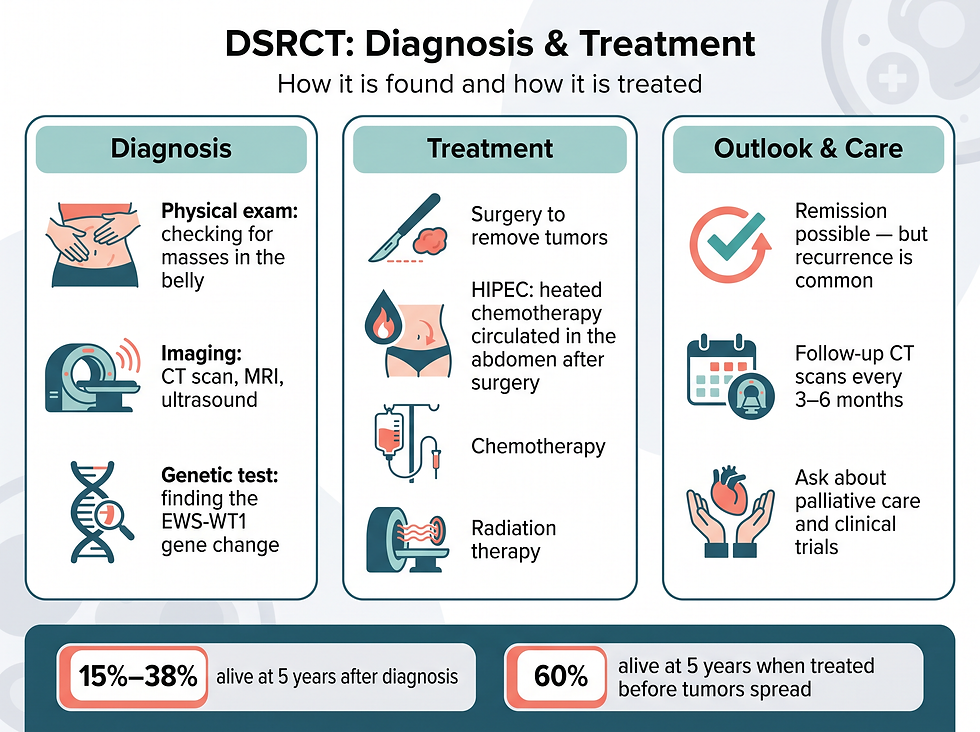
Healthcare providers diagnose this condition by doing a combination of a physical examination, imaging tests, and genetic tests.
Diagnostic step | What happens |
Physical examination | Provider checks for masses (lumps) in your belly |
CT scan | Imaging to look for tumors in the stomach lining and other areas of the body |
MRI scan | Detailed imaging of abdominal and pelvic tumors |
Ultrasound | Additional imaging to locate tumors |
Genetic test | Looks for the EWS-WT1 chromosomal change that causes DSRCT |
The genetic test is particularly important for DSRCT: detecting the EWS-WT1 gene change helps confirm the diagnosis and distinguish it from other abdominal tumors and sarcomas.
How are DSRCTs treated?
Healthcare providers may treat desmoplastic small round cell tumors with four main approaches, often in combination. (For how cancer surgery works in general, see our guide to cancer surgery.)
Treatment | What it involves |
Surgery | Removes the tumor(s) from the abdomen |
HIPEC (hyperthermic intraperitoneal chemotherapy) | Circulates heated chemotherapy drugs in the abdominal cavity after surgery |
Chemotherapy | Systemic anti-cancer drugs |
Radiation therapy | Targeted high-energy treatment of tumor areas |
Treatment may put the condition into remission, meaning you don't have symptoms and tests don't find signs of disease. But remission often doesn't last, and you'll probably need new or different treatment for recurring tumors.
What about palliative care?
Regardless of treatment type, the clinical source advises asking your healthcare team about palliative care. In palliative care, you receive medical, social and emotional support that may help you cope with living with a serious illness. It is about quality of life and support, and it can accompany any stage of treatment, not only end-of-life care.
What are the treatment side effects?
Surgery, chemotherapy and radiation therapy cause different side effects. Surgery to remove DSRCTs may cause a reaction to general anesthesia and bleeding. Common radiation and chemotherapy side effects are diarrhea, fatigue, and nausea and vomiting.
What is the prognosis for DSRCT?
Your prognosis is what healthcare providers believe you can expect to happen after treatment. Providers base prognoses on tumor locations, whether tumors spread, and how much of the tumor they were able to remove during surgery. Because these are very rare tumors, there isn't a lot of research that providers can evaluate to develop a prognosis. That makes it hard for them to say what you can expect, including how long you may live.
Survival rate data
Current survival rate data show that between 15% and 38% of people with DSRCT were alive five years after diagnosis. That said, one analysis showed treatment cured a small percentage of people with metastatic DSRCT, meaning tumors had spread from the peritoneum to other areas of their bodies. That same analysis showed 60% of people treated before tumors spread were alive five years after diagnosis. These figures make clear that treatment before the cancer spreads substantially improves outlook.
How do I take care of myself after diagnosis?
DSRCTs are rare and serious cancerous tumors that may come back within months or a year after treatment. It's not easy to live knowing that cancer may come back. The clinical source offers four practical suggestions:
Understand your prognosis: DSRCTs are rare, and you may have trouble finding accurate, up-to-date information about them. Don't hesitate to ask your healthcare team what you can expect.
Ask about participating in clinical trials: Researchers are evaluating different ways to treat DSRCT.
Consider cancer survivorship: You're a survivor from the day you received your diagnosis and for the rest of your life. Talk to your healthcare team about programs for people with recurrent cancer.
Find support: Ask your healthcare team about support groups for people with rare cancers. Spending time with others going through similar experiences can make living with DSRCT a bit less lonely.
When should I see my healthcare provider?
DSRCT often comes back. Your healthcare provider may recommend imaging tests, like CT scans, every three to six months to check for new tumors in the lining of your abdomen or other areas of your body.
What questions should I ask my healthcare provider?
How do you know this condition is causing my symptoms?
Can treatment cure it?
What are your treatment recommendations?
What are the treatment side effects?
Should I consider participating in a clinical trial?
A note from the clinical source: "Tests show you have desmoplastic small round cell tumor (DSRCT). This is a rare condition where you have fast-growing cancerous tumors in your abdomen. That's life-changing news. You may feel caught in a whirlwind of emotions. You may feel anxious about what will happen next, from treatment to your prognosis. And you may feel frustrated because it can be hard to find information about a disease that appears to affect a handful of people worldwide. Your healthcare team understands all those feelings. They'll take as much time as you need to process what's happening to you and what may happen next."
Conclusion
DSRCT is one of the rarest cancers known, roughly 1 in 1 billion people worldwide since 1989, but it is a real diagnosis with a defined treatment path. It strikes most often in young men aged 20 to 30, grows quickly in the peritoneum, and is driven by the EWS-WT1 gene change. Because symptoms mimic common digestive complaints, getting persistent abdominal pain, swelling, or unexplained weight loss evaluated promptly matters. Surgery, chemotherapy, radiation, and HIPEC can achieve remission, and outcomes are meaningfully better when treatment happens before the cancer spreads. If you or a loved one is facing this diagnosis, lean on your care team, ask about clinical trials, and connect with support groups for rare cancers. (For broader background, see our complete guide to cancer.)
Your next step: If you have abdominal symptoms that worsen or last more than a few days, talk to a healthcare provider. If you've been diagnosed with DSRCT, keep every scheduled surveillance scan. Your team is your best resource.
Frequently asked questions
What does DSRCT stand for?
DSRCT stands for desmoplastic small round cell tumor. The name describes the tumor's appearance under a microscope: dense fibrous tissue ("desmoplastic") surrounding small, round cancer cells.
What is desmoplastic small round cell tumor?
DSRCT is a rare type of soft tissue sarcoma in which fast-growing tumors develop in the peritoneum, the membrane that lines the inside of your abdomen and pelvis.
Is DSRCT a cancer?
Yes. DSRCTs are cancerous tumors (a malignant neoplasm) that grow quickly and often return after treatment.
Where does DSRCT start?
DSRCT starts in the peritoneum, the membrane lining the inside of the abdomen and pelvis. Tumors can also appear in other areas of the body lining as they spread.
How rare is DSRCT?
DSRCT is exceptionally rare. About 1 in 1 billion people worldwide have been affected since researchers first identified the condition in 1989.
Who typically gets DSRCT?
Anyone may develop DSRCT, but it typically affects males between ages 20 and 30.
Is DSRCT hereditary?
The clinical source does not describe DSRCT as inherited. It is caused by chromosomal changes that create the abnormal EWS-WT1 gene, and researchers don't know what triggers the change.
What is the EWS-WT1 gene?
EWS-WT1 is the abnormal gene created when certain chromosomes change. Finding this chromosomal change through genetic testing helps confirm a DSRCT diagnosis.
Can DSRCT be prevented?
The clinical source identifies no known prevention strategies. The chromosomal change that causes DSRCT isn't linked to anything a person does, and the trigger for the change is unknown.
What are the symptoms of DSRCT?
Common symptoms include abdominal pain, constipation, diarrhea, a distended (swollen) belly, nausea and vomiting, and unexplained weight loss. Symptoms typically appear only after tumors grow large enough to affect the abdomen and digestive system.
Why do DSRCT symptoms mimic common digestive problems?
Symptoms like constipation, diarrhea, nausea and vomiting happen for many different reasons and often aren't signs of serious illness. The key difference is persistence: if symptoms worsen or last more than a few days, you should talk to a provider.
How is DSRCT diagnosed?
Providers diagnose DSRCT through a combination of a physical examination (checking for masses in the belly), imaging tests (CT scans, MRI scans, and/or ultrasound), and genetic tests looking for the EWS-WT1 chromosomal change.
How is DSRCT treated?
Providers may treat DSRCT with surgery to remove tumors, HIPEC (heated chemotherapy circulated in the abdominal cavity after surgery), chemotherapy, and radiation therapy, often in combination.
What is HIPEC?
HIPEC (hyperthermic intraperitoneal chemotherapy) is a treatment that circulates heated chemotherapy drugs through the abdominal cavity after surgery removes the tumors.
Can DSRCT go into remission?
Yes. Treatment may put the condition into remission, meaning you don't have symptoms and tests don't find signs of disease. But remission often doesn't last, and new or different treatment is usually needed for recurring tumors.
Does DSRCT come back after treatment?
Often, yes. DSRCT frequently recurs, sometimes within months or a year after treatment, which is why providers typically recommend surveillance CT scans every three to six months.
What are the side effects of DSRCT treatment?
Surgery may cause a reaction to general anesthesia and bleeding. Common chemotherapy and radiation side effects include diarrhea, fatigue, and nausea and vomiting.
What is the survival rate for DSRCT?
Most survival rate data show that between 15% and 38% of people with DSRCT were alive five years after diagnosis. However, 60% of people treated before tumors spread were alive five years after diagnosis, and one analysis showed a small percentage of people with metastatic DSRCT were cured by treatment.
Is DSRCT curable?
Rarely, yes. One analysis showed treatment cured a small percentage of people even with metastatic DSRCT (where tumors spread beyond the peritoneum). Outcomes are considerably better, with 60% five-year survival, when treatment happens before tumors spread.
What affects my DSRCT prognosis?
Providers base prognosis on tumor locations, whether tumors have spread, and how much of the tumor could be removed during surgery. Because DSRCT is so rare, research data are limited, making precise predictions difficult.
Should I ask about clinical trials for DSRCT?
Yes. The clinical source recommends asking about participating in clinical trials, since researchers are actively evaluating different ways to treat DSRCT.
What is palliative care for DSRCT?
In palliative care you receive medical, social and emotional support that may help you cope with living with a serious illness. The source advises asking your healthcare team about palliative care regardless of which treatment type you receive.
How often should I get follow-up scans after DSRCT treatment?
Your provider may recommend imaging tests, like CT scans, every three to six months to check for new tumors in the lining of your abdomen or other areas of your body.
When should I call my doctor about abdominal symptoms?
Talk to a healthcare provider if abdominal symptoms, such as pain, constipation, diarrhea, nausea, vomiting, or a swollen belly, get worse or last for more than a few days.
External references
Disclaimer: This article provides general educational information and is not a substitute for professional medical advice, diagnosis, or treatment. Always seek the advice of a qualified healthcare provider with any questions about a medical condition.
Comments