Cancer Surgery

Updated: 2 days ago
Medically reviewed by Dr. Baraa Alnahhal, MD · Last reviewed: September 2026
TL;DR
Cancer surgery involves medical procedures designed to diagnose, remove, or prevent cancerous tumors and tissue. As a cornerstone of oncology, surgery can be a primary treatment for localized tumors, a tool for symptom relief through debulking, or a preventative measure for high-risk individuals, utilizing both traditional open methods and modern minimally invasive techniques.
Quick Answer
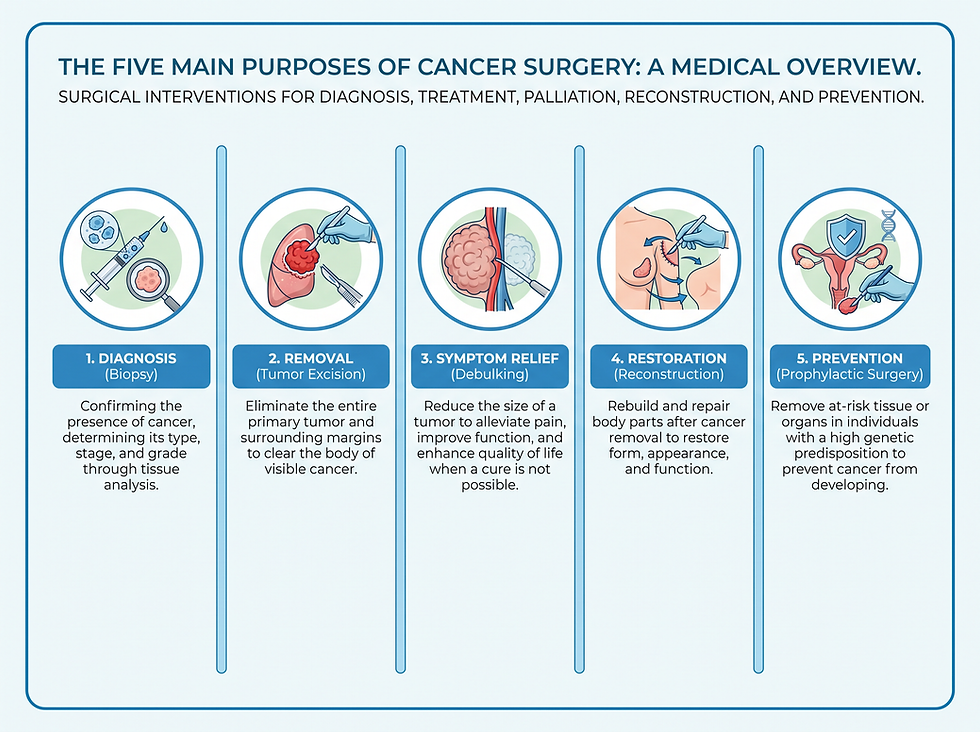
Cancer surgery is a medical intervention performed by a surgical oncologist to remove part or all of a cancerous tumor or tissue. It serves multiple purposes, including diagnosing cancer through biopsies, curing localized disease by removing isolated tumors, easing symptoms by reducing tumor pressure (debulking), and preventing cancer in high-risk patients. Modern approaches range from traditional open surgery to minimally invasive procedures, electrosurgery, and cryoablation, with the specific choice depending on the cancer type, stage, and the patient's overall health.
The Role of Surgery in Cancer Treatment
Surgery has long been a fundamental component of cancer care. While its primary association is with the removal of tumors, modern surgical oncology encompasses a broad spectrum of clinical objectives. Surgeons utilize various techniques to address the unique needs of each patient, ensuring that surgery contributes effectively to the overall treatment plan. For a broader overview of the disease itself, see our complete guide to cancer.
Beyond tumor removal, surgery is essential for accurate diagnosis and staging. Through procedures like biopsies, surgeons obtain tissue samples that are analyzed under a microscope to determine the presence and severity of cancer. Furthermore, surgery can be restorative, helping to rebuild or repair the body after primary tumor removal, or preventative, such as a prophylactic mastectomy for individuals with a high genetic risk of developing breast cancer.
Types of Cancer Surgery
Advances in medical technology have led to the development of several distinct surgical approaches. The choice of technique is determined by factors such as the location and size of the tumor, as well as the patient's physical condition and individual needs.
Traditional open surgery remains a common approach, particularly for large tumors or complex cases, requiring a larger incision to provide the surgeon with direct access to the affected area. In contrast, minimally invasive surgery utilizes smaller cuts and specialized instruments, often resulting in faster recovery times and less postoperative discomfort. Other specialized methods include electrosurgery, which uses electricity to destroy cancer cells, and cryoablation, which employs extreme cold to freeze and kill malignant tissue.
Comparison of Cancer Surgery Techniques
Open surgery: a large incision through the skin to reach and remove tumors. Common applications: lung cancer, large breast tumors, complex colon surgeries.
Minimally invasive surgery: small incisions using specialized cameras and tools. Common applications: lumpectomies, video-assisted thoracic surgery (VATS), polyp removal.
Electrosurgery: use of electrical currents to kill cancer cells. Common applications: skin cancer treatment, dermatological oncology.
Cryoablation: use of extremely cold gas to freeze and destroy cancer cells. Common applications: lung, prostate, and various other localized cancers.
Common Cancers Treated with Surgery
Surgery is a primary treatment option for many of the most common types of cancer. The specific procedure performed is tailored to the organ involved and the extent of the disease.
Breast cancer: treatment may involve a mastectomy to remove all or part of the breast or a lumpectomy for smaller, localized tumors.
Colon cancer: surgeons may remove precancerous polyps (see our guide to colon polyps) or segments of the colon containing malignant growth.
Lung cancer: procedures range from removing a small portion of the lung to an entire lobe, often utilizing VATS or cryoablation.
Prostate cancer: a prostatectomy may be performed through open or minimally invasive methods, or cryoablation may be used to treat the gland. If the disease returns, see prostate cancer recurrence.
Skin cancer: specialized techniques like Mohs surgery and electrosurgery are standard for removing skin tumors while preserving healthy tissue.
Preparing for and Recovering from Surgery
The preparation for cancer surgery varies based on the complexity of the procedure. For many patients, the process begins with "prehabilitation"—physical and nutritional preparation to ensure the body is in the best possible shape for surgery and recovery. In some cases, neoadjuvant therapy, such as chemotherapy or radiation, is used before surgery to shrink the tumor and make it easier to remove.
Recovery is a gradual process that involves diligent wound care, pain management, and activity restrictions. Patients may also receive adjuvant therapy after surgery to kill any remaining cancer cells and reduce the risk of recurrence. It is crucial to follow the cancer care team's instructions and monitor for signs of infection, such as fever or uncontrolled bleeding, which require immediate medical attention.

Surgical Recovery Milestones
Immediate post-op: hospital stay ranging from hours (outpatient) to several days. Care focus: pain management and monitoring for bleeding.
Early recovery: the first 1–2 weeks at home with limited activity. Care focus: wound care, avoiding heavy lifting, and nutrition.
Long-term follow-up: ongoing monitoring and potential adjuvant therapy. Care focus: surveillance for recurrence and managing late side effects.
Risks and Considerations
Like all medical procedures, cancer surgery carries inherent risks, including anesthesia complications, infection, and potential damage to nearby organs or tissues. However, the benefits of removing a malignant tumor often far outweigh these risks. It is a common misconception that surgery causes cancer to spread; in reality, surgery is one of the most effective ways to contain and cure the disease when the tumor is localized.
Factors such as the tumor's location near major blood vessels or the patient's overall health can sometimes make surgery a less viable option. In these instances, the cancer care team will explore alternative treatments or use debulking surgery to improve the patient's quality of life without attempting a full cure.

Conclusion
Cancer surgery is a vital and evolving field that offers hope and healing to millions of patients. Whether it is used to diagnose a new condition, remove a threatening tumor, or prevent disease in those at high risk, surgery remains a primary line of defense in the fight against cancer. By working closely with their surgical oncology team, patients can navigate the complexities of treatment with confidence and a clear path toward recovery.
Consult Your Oncology Team
If you have been diagnosed with cancer or are at high risk, discuss your surgical options with an oncologist. They can provide a personalized assessment of the most effective procedures to meet your specific medical needs.
Frequently Asked Questions
1. What is cancer surgery?
It is a medical procedure to diagnose, remove, or prevent cancerous tumors and tissue.
2. Can surgery cure cancer?
Yes, if a tumor is small and localized, removing it entirely can often cure the disease.
3. What is a biopsy?
A diagnostic procedure where a small piece of tissue is removed and examined to determine if cancer is present.
4. Does surgery cause cancer to spread?
No, surgery does not cause cancer to spread. Surgeons take extensive precautions to prevent any cell displacement.
5. What is debulking surgery?
A procedure to remove as much of a tumor as possible to ease pain or pressure on other organs.
6. What is the difference between open and minimally invasive surgery?
Open surgery uses a large incision, while minimally invasive surgery uses small cuts and specialized tools for faster recovery.
7. What is cryoablation?
A technique that uses extreme cold to freeze and kill cancer cells.
8. What is neoadjuvant therapy?
Treatment like chemotherapy or radiation given before surgery to shrink a tumor.
9. What is adjuvant therapy?
Treatment given after surgery to kill any remaining cancer cells and prevent recurrence.
10. Is cancer surgery an outpatient procedure?
It depends on the surgery; some skin cancer removals are outpatient, while lung or colon surgeries require hospital stays.
11. What are the common risks of cancer surgery?
Risks include infection, bleeding, pain, anesthesia complications, and damage to nearby tissues.
12. What is prehabilitation?
A program of exercise and nutrition to prepare the body physically for surgery and recovery.
13. Can surgery be used to prevent cancer?
Yes, prophylactic surgeries can be performed on high-risk organs to prevent cancer from developing.
14. What should I do if I see signs of infection after surgery?
Contact your cancer care team immediately if you experience fever, chills, or pus at the incision site.
15. Why might a doctor recommend against surgery?
Surgery may be avoided if a tumor is too close to vital organs or if the patient is not strong enough for the procedure.
Medical Disclaimer: The information provided is for educational purposes only and should not be used as a substitute for professional medical advice, diagnosis, or treatment. Always seek the advice of your physician or other qualified health provider with any questions you may have regarding a medical condition.
Comments