Droopy Eyelid Guide: Identifying and Managing Ptosis Symptoms

Updated: 2 days ago
Medically reviewed by Dr. Baraa Alnahhal, MD · Last reviewed: September 2026
Ptosis, also known as blepharoptosis or droopy eyelid, is a condition where the upper eyelid sags or falls over the eye. It can be present at birth (congenital) or acquired later in life due to aging, injury, or underlying medical conditions. While mild cases may only affect appearance, severe ptosis can block vision and lead to complications like astigmatism or lazy eye. Treatment options range from specialized prescription eye drops to surgical repair, depending on the severity and underlying cause.
Quick answer: Ptosis is the drooping of the upper eyelid, primarily caused by dysfunction of the levator muscle. It can affect one or both eyes and is classified as either congenital or acquired. Symptoms include visible sagging, impaired vision, and eye achiness. Diagnosis involves a physical exam and specialized eye tests. Management options include monitoring, prescription eye drops like oxymetazoline, or surgical tightening of the eyelid muscle to restore vision and improve appearance.
Overview of Ptosis
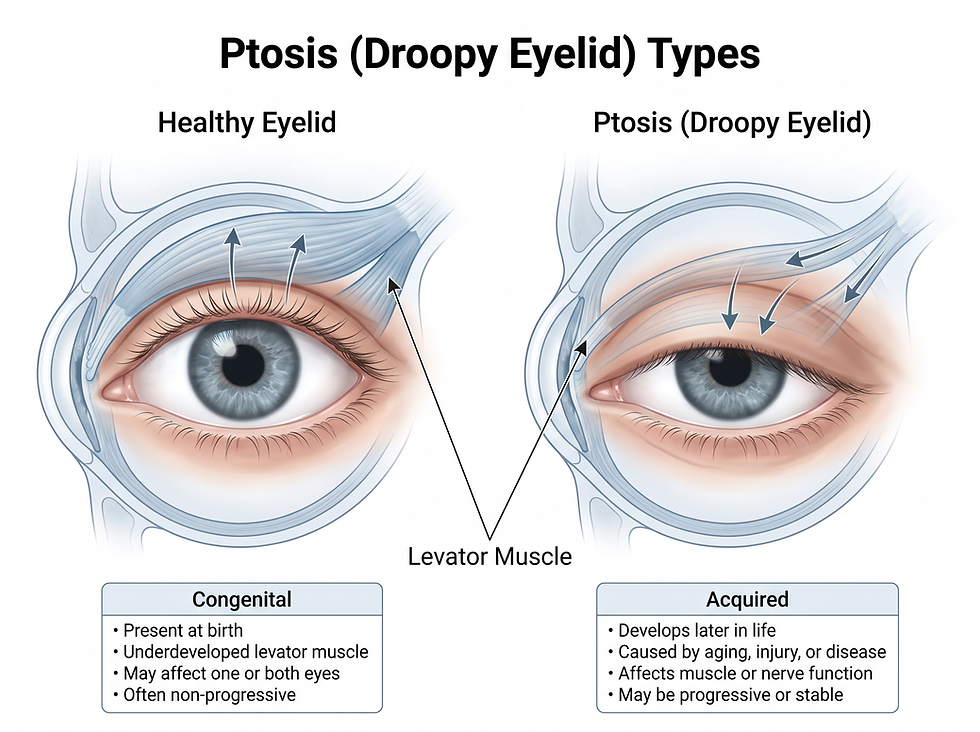
Ptosis, clinically referred to as blepharoptosis, is a condition characterized by the drooping or sagging of one or both upper eyelids. This occurs when the levator muscle, responsible for lifting the eyelid, fails to function correctly. The degree of drooping varies significantly; in some individuals, it is barely noticeable, while in others, the eyelid may sag low enough to cover the pupil, partially or completely obstructing the field of vision.
The condition is broadly categorized into two types: congenital and acquired. Congenital ptosis is present at birth and typically results from improper development of the levator muscle during fetal growth. Acquired ptosis, which is more common, develops later in life. While aging is the most frequent cause of acquired ptosis, it can also stem from trauma, neurological disorders, or previous ocular surgeries that have weakened the eyelid's supporting structures.
Symptoms and Clinical Presentation
The most obvious sign of ptosis is the visible drooping of the upper eyelid. However, the condition often presents with a range of secondary symptoms that can impact daily comfort and visual performance. Individuals with ptosis may experience a constant feeling of tiredness around the eyes or a persistent achiness due to the effort required to keep the eyes open.
Symptom Category | Common Manifestations | Visual Impact |
Physical Appearance | Visible sagging of one or both upper eyelids | Cosmetic and Functional |
Visual Performance | Impaired or blocked field of vision | Moderate to Severe |
Compensatory Behavior | Tilting the head back or raising eyebrows to see | Developmental/Postural |
Ocular Discomfort | Increased tearing and excessive eye rubbing | Constant Irritation |
Associated Sensations | Tiredness and achiness around the eye area | Physical Fatigue |
Causes and Risk Factors
Understanding the underlying cause of ptosis is critical for determining the appropriate treatment plan. In adults, the most common cause is the natural aging process, where the skin and muscles of the eyelids gradually stretch and lose their elasticity. In some cases, the levator muscle may even separate away from the eyelid entirely.
Beyond aging, several medical conditions and external factors can lead to acquired ptosis:
Neurological Disorders: Conditions like stroke or Horner syndrome can damage the nerves controlling the eyelid.
Muscle Diseases: Myasthenia gravis is a notable cause that affects muscle strength.
Injury and Trauma: Physical damage to the eye area can weaken the levator muscle or its ligaments.
Previous Eye Surgery: Procedures such as cataract surgery may inadvertently stretch the eyelid.
Underlying Growths: In rare cases, tumors or styes can put pressure on the eyelid, causing it to sag.
Complications of Untreated Ptosis
If left untreated, especially in children, ptosis can lead to permanent vision problems. When a drooping eyelid puts pressure on the front of the eye, it can alter the eye's shape, leading to astigmatism and distorted vision. In children, this can interfere with normal vision development, resulting in amblyopia, commonly known as lazy eye. Furthermore, children who constantly tilt their heads to see may develop neck problems and forehead muscle tension.
Diagnostic Pathway
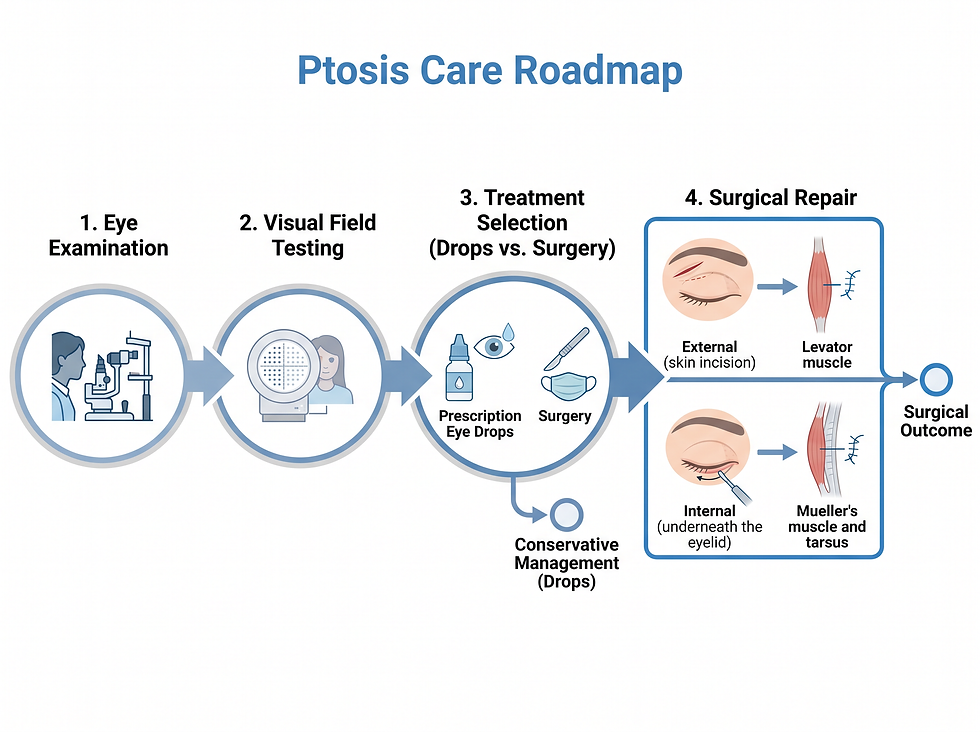
Diagnosing ptosis typically begins with a physical examination by an eye care specialist, such as an ophthalmologist. The provider will assess the eyelid's height and its impact on the pupil. To rule out underlying neurological or muscular diseases, several specialized tests may be performed.
Diagnostic Method | Procedure | Purpose |
Slit Lamp Exam | Detailed microscope inspection of the eye | Assessing the health of the eye's front structures |
Visual Field Test | Mapping the peripheral and central vision | Determining the extent of vision obstruction |
Motility Test | Measuring eye movement in various directions | Evaluating nerve and muscle function |
Tensilon Test | Administering medication to check muscle response | Specifically diagnosing Myasthenia gravis |
Management and Treatment Strategies
The treatment for ptosis depends on the severity of the droop and its impact on the patient's quality of life. If the condition is mild and does not interfere with vision or cause cosmetic distress, a healthcare provider may simply recommend regular monitoring through annual eye exams.
For those requiring intervention, the following options are available:
Prescription Eye Drops: Oxymetazoline is a recently developed medication for some forms of acquired ptosis that targets the levator muscle to lift the eyelid.
Surgical Repair: This is the most common treatment for significant ptosis. Surgeons can tighten the levator muscle through an external skin incision or an internal approach from underneath the eyelid.
Disease Management: If the ptosis is a symptom of an underlying condition like Myasthenia gravis, treating the primary disease may improve the eyelid droop.
Conclusion
Ptosis is a common condition that, while often related to the natural aging process, can sometimes indicate more serious underlying health issues. Whether it is a congenital concern in a child or a newly acquired droop in an adult, early evaluation by an eye care specialist is essential. With modern surgical techniques and new medical treatments, the prognosis for restoring both vision and appearance is excellent for the vast majority of patients.
Next Steps
If you or your child are experiencing a drooping eyelid that affects vision or causes discomfort, schedule a comprehensive eye exam today. Early diagnosis and personalized treatment can prevent long-term complications and help you maintain clear, unobstructed vision.
Frequently Asked Questions
Is ptosis the same as a lazy eye?
No, but ptosis can cause a lazy eye (amblyopia) if the drooping eyelid blocks vision during childhood.
Can ptosis be prevented?
Congenital ptosis cannot be prevented. Acquired ptosis is also difficult to prevent as it is often related to aging or injury.
Is ptosis surgery considered cosmetic?
It can be both. While many undergo surgery to improve appearance, it is often medically necessary to restore a clear field of vision.
How long does ptosis surgery take?
The procedure typically takes about 45 to 60 minutes and is performed on an outpatient basis.
Are the results of ptosis surgery permanent?
Most surgeries are very successful and provide long-lasting results, though the eyelid may sag again over time due to continued aging.
Can I use over-the-counter drops for ptosis?
No, standard lubricating drops will not lift the eyelid. Only specific prescription drops like oxymetazoline can target the levator muscle.
Does ptosis affect both eyes?
It can affect one (unilateral) or both (bilateral) eyes. It is often asymmetrical, appearing worse in one eye.
What is the best age for a child to have ptosis surgery?
This depends on the severity. If vision development is at risk, surgery may be performed early in childhood.
Can a stye cause ptosis?
Yes, the swelling and weight of a stye can cause a temporary droop in the eyelid.
Is ptosis a sign of a stroke?
A sudden drooping eyelid can be a symptom of a stroke or other neurological issues and requires immediate medical attention.
Will my insurance cover ptosis surgery?
Insurance often covers the procedure if a visual field test proves that the drooping eyelid significantly impairs vision.
What is the "chin-up" position?
It is a compensatory posture where a person tilts their head back to see underneath a drooping eyelid.
Can contact lenses cause ptosis?
Long-term wear of hard contact lenses has been linked to a higher risk of developing acquired ptosis.
Is ptosis painful?
Generally, ptosis itself is not painful, though it can cause achiness from the strain of trying to lift the eyelid.
What happens if ptosis surgery is overcorrected?
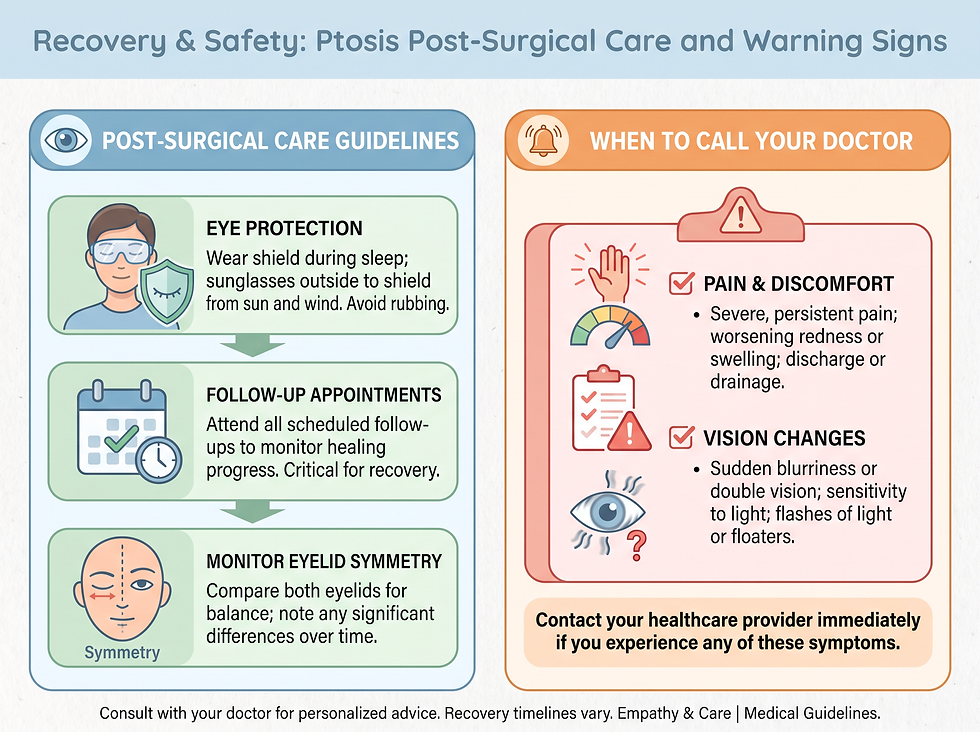
If the eyelid is lifted too high, it may not close properly, leading to dry eye or corneal damage, which may require further adjustment.
Helpful Resources
Medical Disclaimer: This content is for informational purposes only and does not constitute medical advice. Always seek the advice of a qualified healthcare professional regarding any medical condition or treatment.
Comments