Diabetes and Your Mouth: Managing Risks and Preventing Complications

Updated: 2 days ago
Medically reviewed by Dr. Baraa Alnahhal, MD · Last reviewed: September 2026
TL;DR: Diabetes is a systemic disease that significantly impacts oral health, primarily through the effects of high blood sugar. Unmanaged diabetes weakens the body's immune response, specifically white blood cells, making the mouth more vulnerable to bacterial and fungal infections. Common complications include dry mouth, gingivitis, periodontitis, and thrush. Furthermore, diabetes can slow the healing process after dental procedures. However, the risk of oral health problems for individuals with well-managed diabetes (HbA1C < 7%) is no higher than for those without the condition. Maintaining strict blood sugar control, practicing rigorous oral hygiene, and regular dental visits are essential strategies for preventing serious complications like tooth loss and systemic infections.
Medical Emergency Warning
Acute oral infections can escalate rapidly in individuals with diabetes. Seek immediate dental or medical care if you experience:
Severe swelling in the gums, face, or neck
Fever or chills accompanying a toothache or gum pain
Persistent bleeding from the gums that does not stop
A painful abscess (pus-filled pocket) in the mouth
Difficulty breathing or swallowing due to oral swelling
Quick answer: The primary link between diabetes and oral health is high blood sugar (glucose). When blood sugar is poorly managed, it creates an environment where bacteria and fungi can thrive. High glucose levels in saliva provide fuel for infection-causing organisms. Additionally, unmanaged diabetes weakens white blood cells—the body's primary defense against bacteria—and causes blood vessels to thicken, which slows the delivery of nutrients to and the removal of waste from oral tissues. This combination makes gum disease more frequent, more severe, and harder to treat. While people with diabetes face higher risks for dry mouth, thrush, and periodontal disease, those who maintain good blood sugar control and oral hygiene have no more tooth decay or gum issues than non-diabetics.
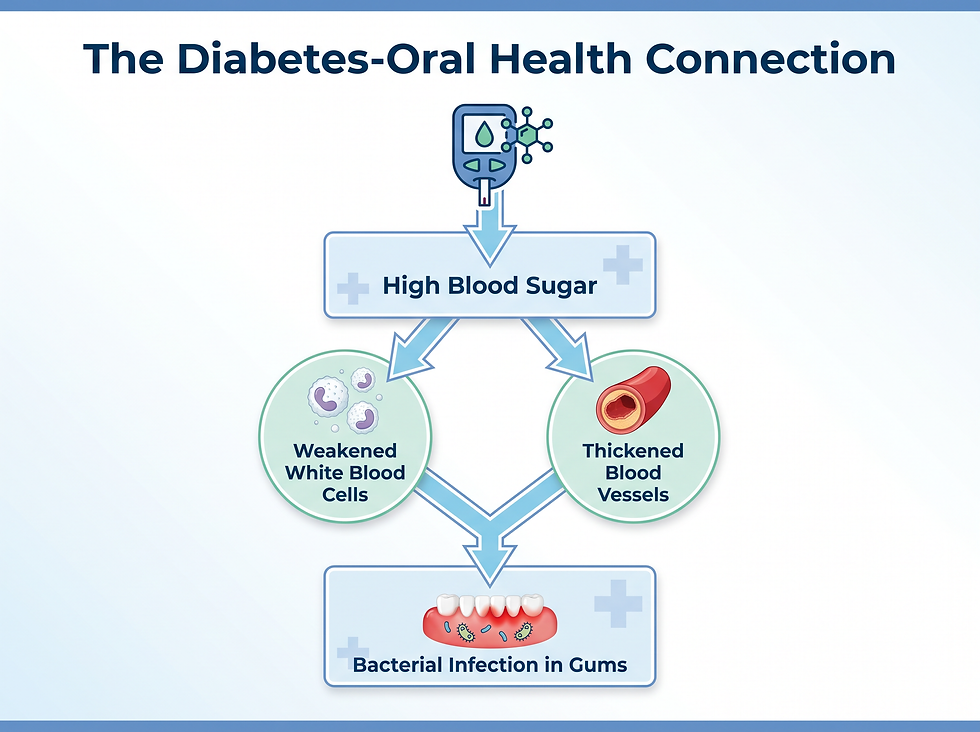
The Diabetes-Oral Health Connection
The physiological changes caused by diabetes create a "perfect storm" for oral infections.
Weakened WBCs: Reduces the body's ability to fight off bacterial infections in the gums.
Thickened Vessels: Slows nutrient delivery and waste removal from mouth tissues, impairing healing.
High Salivary Glucose: Provides a constant food source for bacteria and fungi (like thrush).
Reduced Saliva Flow: Leads to dry mouth, which increases the risk of ulcers, decay, and infection.
Common Oral Complications of Diabetes
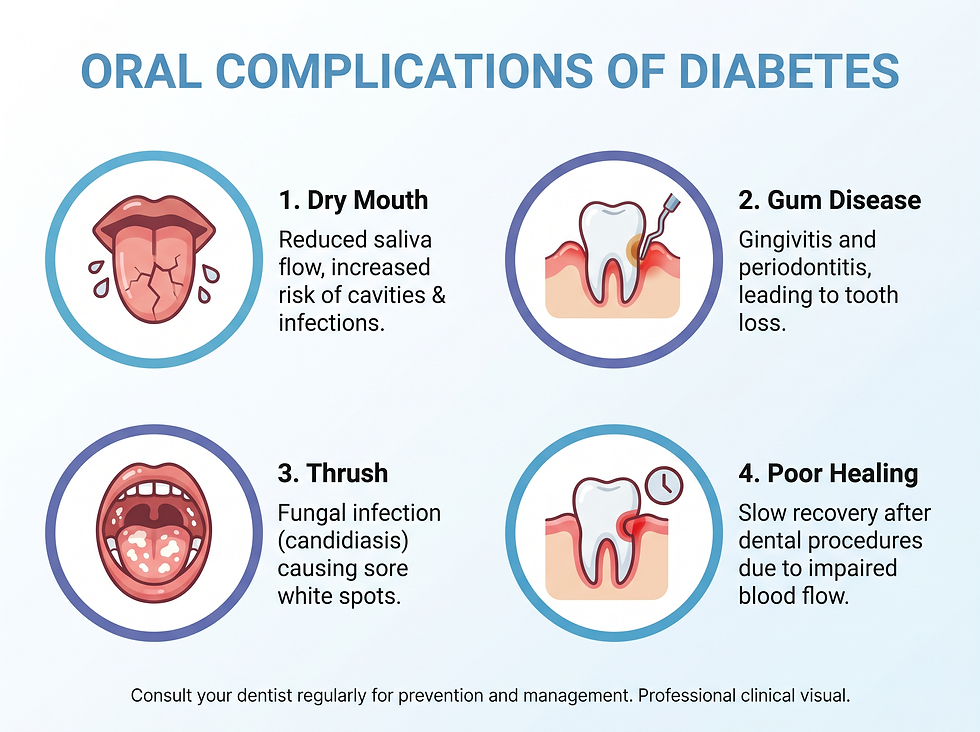
People with unmanaged diabetes face a significantly higher risk of several specific oral conditions.
Periodontal (Gum) Disease: Bacterial infections of the gums that can spread to the bone anchoring the teeth.
Dry Mouth (Xerostomia): A lack of saliva that causes soreness, ulcers, and rapid tooth decay.
Thrush (Candidiasis): A fungal infection of the mouth and tongue that thrives on high sugar levels.
Burning Mouth Syndrome: A painful sensation often caused by the presence of thrush.
Poor Wound Healing: Slow recovery after oral surgery or dental extractions due to impaired blood flow.
Dental Cavities: Increased decay risk if frequent meals are consumed or if dry mouth is present.
Risk Factors and Misconceptions
Understanding the true risks is essential for effective management.
The Impact of Smoking
Smoking significantly worsens the oral health risks for diabetics. Individuals with diabetes who smoke are up to 20 times more likely to develop thrush and periodontal disease than non-smokers. Smoking further impairs blood flow to the gums, making healing nearly impossible.
Common Misconceptions
Higher Cavity Risk: Those with well-managed diabetes have no higher risk of cavities than others.
Inevitable Tooth Loss: Tooth loss is preventable with good hygiene and blood sugar control.
Surgery is Dangerous: With managed blood sugar, post-surgical risks are the same as for non-diabetics.
Prevention and Management Checklist
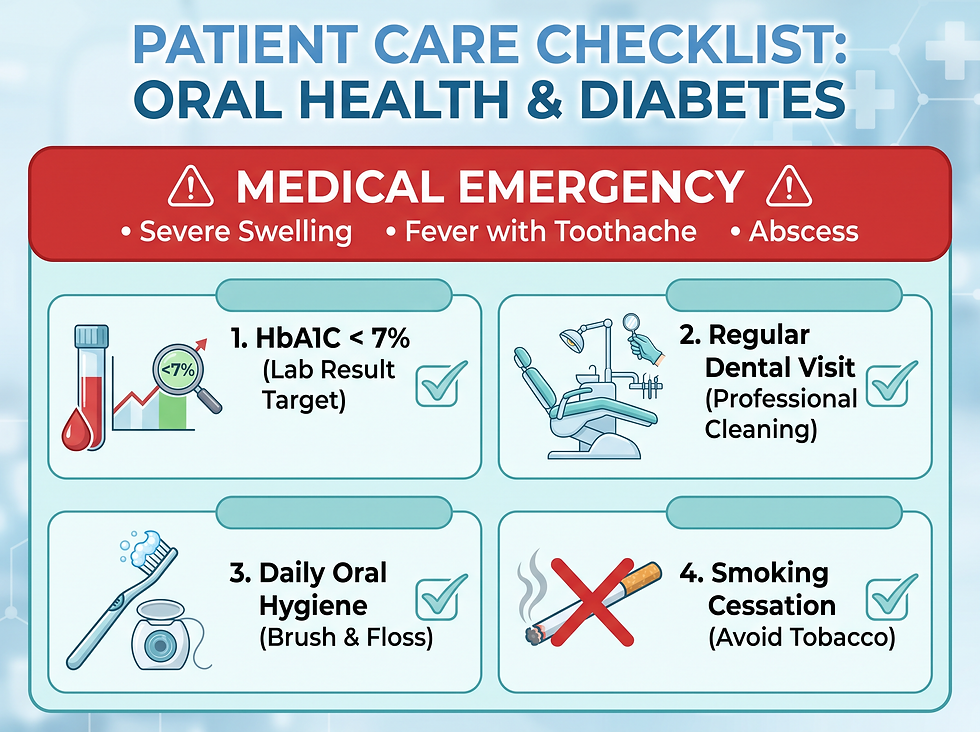
Preventing oral health problems requires a partnership between the patient, their doctor, and their dentist.
Blood Sugar Targets
HbA1C Management: Aim for a glycosylated hemoglobin level under 7% for optimal oral health protection.
Monitoring: Keep your dentist informed of your current diabetes status and recent blood sugar readings.
Daily Oral Hygiene
Brushing: Brush after every meal using a soft-bristled toothbrush and fluoride toothpaste.
Flossing: Use dental floss at least once a day to prevent plaque buildup between teeth.
Denture Care: If you wear dentures, remove and clean them daily to prevent fungal growth.
Professional Care
Regular Checkups: See your dentist at least twice a year for professional cleanings and exams.
Medical Coordination: Ensure your dentist has your primary doctor's contact information and a full list of your medications.
Pre-Surgical Planning: Discuss any necessary antibiotic use or insulin dosage changes with your doctor before oral surgery.
Outlook and Prognosis
The outlook for oral health in people with diabetes is generally excellent, provided that the disease is well-managed. Modern dental and medical care allows individuals with diabetes to maintain their natural teeth and healthy gums for a lifetime. The key is consistent self-care and professional monitoring to catch and treat minor issues before they become severe infections.
When to See a Dentist
Regular communication with your dental team is vital for managing diabetes-related oral risks.
Bleeding gums when brushing or flossing: Early sign of gingivitis or periodontitis.
Frequent dry mouth or constant thirst: May indicate poorly managed blood sugar.
White patches on the tongue or cheeks: Likely sign of a thrush (fungal) infection.
A loose tooth or change in bite: Sign of advanced bone loss from gum disease.
Slow healing of a sore or cut: Indicates impaired blood flow and infection risk.
A Note from the Care Team
"Just as studies have shown that regulating blood sugar levels lowers the risk of major organ complications of diabetes — such as eye, heart, and nerve damage — so too can diabetes management protect against the development of oral health problems."
Frequently Asked Questions (FAQ)
Why does diabetes cause gum disease?
High blood sugar weakens white blood cells and thickens blood vessels, making it harder for the body to fight the bacteria that cause gum infections.
What is a "good" HbA1C level for oral health?
A glycosylated hemoglobin (HbA1C) level under 7% is generally considered good management and lowers the risk of oral complications.
Can I have oral surgery if I have diabetes?
Yes. If your blood sugar is well-managed, your risk of post-surgical complications is the same as someone without diabetes.
Does diabetes cause dry mouth?
Yes. Unmanaged diabetes can decrease saliva flow, leading to dry mouth, which can cause ulcers and tooth decay.
What is thrush?
Thrush is a fungal infection of the mouth that thrives on the high glucose levels found in the saliva of people with unmanaged diabetes.
Are diabetics more prone to cavities?
Only if their diabetes is unmanaged. Those with well-managed blood sugar have the same cavity risk as the general population.
How often should I see the dentist?
Most people with diabetes should have their teeth cleaned and checked at least twice a year, though your dentist may recommend more frequent visits.
Should I tell my dentist I have diabetes?
Yes. It is vital to tell your dentist your diabetes status, your HbA1C level, and any medications you are taking.
Does smoking make oral problems worse?
Yes. Diabetics who smoke are up to 20 times more likely to develop thrush and periodontal disease.
Can gum disease affect my blood sugar?
Yes. Severe gum disease is a bacterial infection that can make it harder for the body to control blood sugar levels.
What should I do if my braces cut my mouth?
Contact your orthodontist immediately, as people with diabetes may heal more slowly and are at higher risk for infection from minor cuts.
Can I lose my teeth because of diabetes?
Only if periodontal disease is left untreated. Good hygiene and blood sugar control eliminate the extra risk of tooth loss.
Should I change my insulin dose before a dental visit?
You should consult your primary doctor. They will tell you if you need to adjust your meal schedule or insulin timing for dental procedures.
What are the signs of thrush?
Common signs include white patches on the tongue or inside of the cheeks, and a burning sensation in the mouth.
Why do I heal slowly after a dental extraction?
Thickened blood vessels from diabetes slow the flow of nutrients to the treatment site, which can delay the healing process.
References
Medical disclaimer: The information provided in this article is for educational purposes only and should not be considered medical advice. Always seek the advice of a qualified healthcare provider with any questions you may have regarding a medical condition. If you are experiencing a medical emergency, call 911 or your local emergency services immediately.
Source date: August 29, 2019. This article is current based on the most recent available data from the primary source.
Comments