Dacryocystorhinostomy (DCR): A Guide to Tear Duct Surgery

Updated: 4 hours ago
Medically reviewed by Dr. Baraa Alnahhal, MD · Last reviewed: October 2026

Quick answer
Dacryocystorhinostomy, commonly known as tear duct surgery, is a procedure that reroutes the tear drainage system to resolve persistent watery eyes. Surgeons create a new opening between the tear sac and the nasal cavity, often using small stents to keep the passage open during healing. With success rates exceeding 90% for most patients, this outpatient surgery typically takes less than an hour and allows for a return to normal activities within a few weeks.
What the research says
External DCR had higher success than laser endoscopic DCR. A meta-analysis of 11 studies found success in 91.6% after external DCR vs 80.3% after endoscopic laser DCR. The endoscopic approach was quicker and had less bleeding (1.9% vs 13.0%) and infection (Panda et al., Indian Journal of Ophthalmology, 2023).
Technique matters within endonasal surgery. A Cochrane review of 2 trials found laser-assisted endonasal DCR succeeded less often than external DCR (63% vs 91%), while mechanical endonasal DCR matched external DCR (90% in both); the evidence was very low certainty (Jawaheer et al., Cochrane Database of Systematic Reviews, 2017).
TL;DR
Dacryocystorhinostomy (DCR) is a highly successful surgical procedure designed to correct blocked or narrowed tear ducts. By creating a new drainage pathway from the tear sac directly into the nasal cavity, the surgery alleviates excessive tearing and reduces the risk of chronic eye infections. Whether performed through a small facial incision or internally through the nose, DCR offers a reliable path to restoring ocular comfort and health.
Limitation statement: success rates and timelines in this article are general ranges (external DCR 85%–99%, endonasal DCR 91%–96%) from a single clinical overview; individual outcomes depend on anatomy, surgeon, and technique.
Restoring balance to the tear system
Proper tear drainage is essential for maintaining eye health and clear vision. When the natural ducts become blocked — a condition common in both children and older adults — tears accumulate, leading to constant watering, irritation, and potentially serious infections such as dacryocystitis. Dacryocystorhinostomy has emerged as the definitive treatment for these obstructions, offering a surgical way to bypass the blockage and restore natural fluid flow.
The procedure works by establishing a direct connection between the lacrimal (tear) sac and the nasal cavity. This new pathway allows tears to drain directly into the nose, bypassing the original obstructed duct. Depending on the patient's anatomy and the surgeon's recommendation, the procedure can be performed using an external approach or a minimally invasive endonasal method.
Surgical approaches and techniques
Modern medicine offers two primary methods for performing a DCR. The external approach involves a small, precise incision on the side of the nose, providing the surgeon with a direct view of the tear sac and the underlying bone. In contrast, endonasal DCR is performed entirely through the nostrils using an endoscope, leaving no visible external scars. Both methods are highly effective and are often performed by a collaborative team of eye and nasal specialists.
During the surgery, a small opening is created in the bone that separates the tear sac from the nasal cavity. In many cases, a soft silicone tube, or stent, is placed through this new opening to ensure it remains open while the tissues heal. This tube is temporary and is typically removed in a follow-up appointment once the new drainage route has stabilized.
Comparison: external vs. endonasal DCR
Feature | External DCR | Endonasal DCR |
Incision location | Side of the nose (facial) | Inside the nostril (internal) |
Visible scarring | Minimal, fades over time | None |
Success rate | 85% – 99% | 91% – 96% |
Typical duration | 45 – 50 minutes | About 30 minutes |
Special equipment | Standard surgical tools | Nasal endoscope |
Preparation and the day of surgery
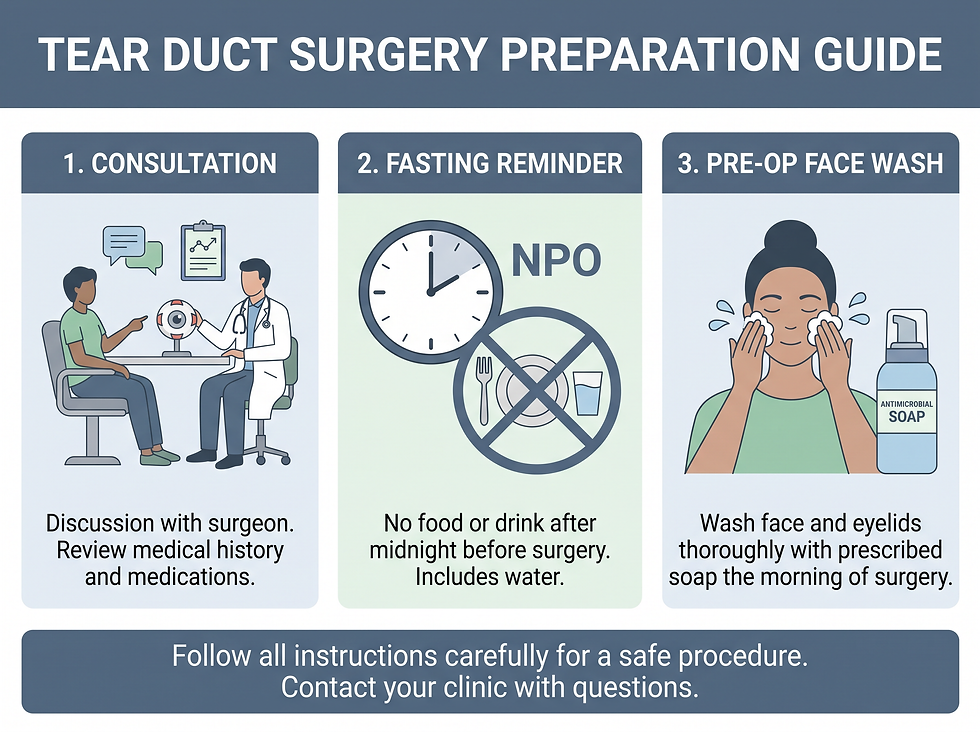
Preparing for a DCR requires careful coordination with the surgical team. Patients are usually instructed to fast for several hours before the procedure to ensure safety during anesthesia. Additionally, surgeons may recommend using a specialized facial soap the night before to minimize the risk of infection. A thorough review of current medications is also conducted, as some may need to be temporarily paused to prevent excessive bleeding during the operation.
On the day of the procedure, patients receive either local or general anesthesia to ensure they remain comfortable. Because DCR is almost always an outpatient surgery, most individuals can return home just a few hours after the operation. It is essential to have a support person available to provide transportation and assist with initial care at home as the anesthesia wears off.
Recovery milestones and best practices
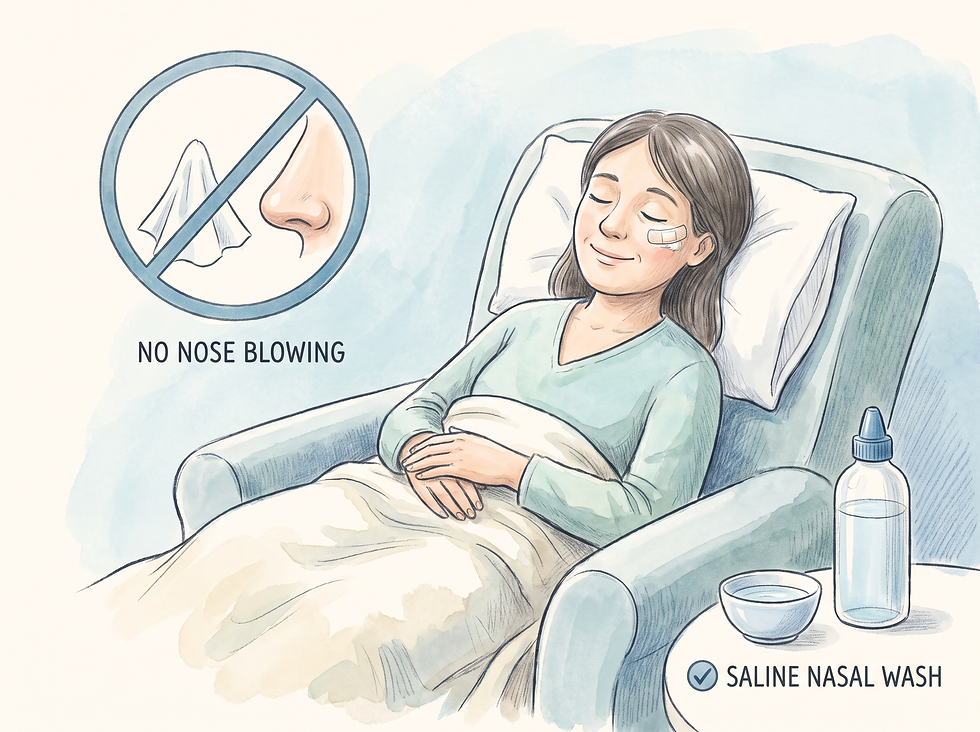
The healing process following a DCR is a gradual one, often taking several weeks as the new bone opening stabilizes. In the first week, patients must be exceptionally careful not to blow their nose, as the resulting pressure could displace the temporary stent or reopen surgical wounds. Surgeons typically prescribe a combination of pain relievers, antibiotics, and decongestants to manage discomfort and prevent complications.
Follow-up care is a critical component of a successful recovery. Approximately one week after surgery, patients return to have their incisions checked and any stitches or nasal packing removed. For those who underwent the endonasal approach, a specialized saline wash is often prescribed to keep the nasal passages clear. Most patients can expect to see a significant improvement in their tearing symptoms within the first few weeks of healing.
Post-surgery activity guidelines
Activity | Timeline | Recommendation |
Blowing nose | Avoid for 7+ days | Essential to prevent complications |
Facial washing | After 24 hours | Gentle cleaning as directed |
Work/school | 2 – 5 days | Depends on the nature of the work |
Stent removal | Several weeks | Performed by the surgeon in-office |
Full healing | 2 – 3 months | Bone and tissue fully stabilized |
Conclusion
Dacryocystorhinostomy is a transformative procedure for those suffering from the persistent discomfort of blocked tear ducts. With its exceptionally high success rates and the availability of minimally invasive techniques, it offers a reliable solution for restoring proper tear drainage. By following the guidance of a specialized surgical team and adhering to postoperative care instructions, patients can achieve lasting relief and maintain optimal eye health.
Consult a specialist: If you are struggling with chronic watery eyes or recurrent eye infections, consult an ophthalmologist or an ENT specialist to discuss whether a DCR is the right solution for you. They can provide a comprehensive evaluation and tailor a treatment plan to your specific needs.
Frequently asked questions (FAQ)
What is a DCR? It is a surgery to create a new drainage path for tears when the natural duct is blocked.
Is tear duct surgery successful? Yes, it has a very high success rate, typically between 85% and 99% depending on the method.
Will I be awake during the surgery? Most procedures are done under general anesthesia, so you will be asleep and feel no pain.
How long does the procedure take? It usually takes between 30 and 50 minutes, depending on whether it is an external or internal approach.
Is there a lot of scarring? External DCR leaves a tiny scar that usually fades, while endonasal DCR leaves no visible scarring at all.
What is the purpose of the tube in my nose? The temporary tube, or stent, keeps the new drainage opening from closing while it heals.
When is the stent removed? The surgeon usually removes the tube in their office several weeks after the surgery.
Can I go home the same day? Yes, DCR is typically an outpatient procedure.
Why can't I blow my nose after surgery? Blowing your nose creates pressure that can move the stent or cause bleeding and wound issues.
How long should I wait before blowing my nose? You must avoid blowing your nose for at least one week following the procedure.
What are the common risks? The most common risks include minor bleeding, pain, and a small chance of infection.
What is a CSF leak? It is a rare but serious complication where brain fluid leaks into the nose; it requires surgical repair.
Will my vision improve immediately? While tearing improves quickly, full healing and stable vision usually take a few weeks.
Do I need to see two different doctors? Often, an eye specialist (ophthalmologist) and a nose specialist (ENT) work together on this surgery.
What happens if the surgery doesn't work? In rare cases where the new path closes, a follow-up procedure may be necessary to reopen it.
References
Panda BB, et al. Success and complications of endoscopic laser dacryocystorhinostomy vs. external dacryocystorhinostomy: A systematic review and meta-analysis. Indian J Ophthalmol. 2023;71(10):3290-3298. PMID 37787224. https://doi.org/10.4103/IJO.IJO_3334_22
Jawaheer L, et al. Endonasal versus external dacryocystorhinostomy for nasolacrimal duct obstruction. Cochrane Database Syst Rev. 2017;2(2):CD007097. PMID 28231605. https://doi.org/10.1002/14651858.CD007097.pub3
Medical disclaimer: The information provided is for educational purposes only and should not be used as a substitute for professional medical advice, diagnosis, or treatment. Always seek the advice of your physician or other qualified health provider with any questions you may have regarding a medical condition.



Comments