Dacryocystitis: What It Is, Symptoms, Causes, Diagnosis, Treatment and Outlook — What You Need to Know

Updated: 2 days ago
Medically reviewed by Dr. Baraa Alnahhal, MD · Last reviewed: September 2026
Quick answer
Dacryocystitis is the inflammation and infection of the tear sac (lacrimal sac), caused by a blockage in the tear drainage pathway — tears can't flow into the nasal passages, so stagnant fluid becomes infected. It occurs in newborns and adults (usually over 40), causing pain, inner-corner eye swelling, redness, pus discharge, and sometimes fever. Treatment is antibiotics (oral or IV, sometimes drops or ointment); surgery called DCR creates a new tear pathway for recurring or chronic cases. It is not contagious.
TL;DR
Dacryocystitis is a tear-duct-area infection triggered by drainage blockage. Symptoms include eye pain, swelling and redness around the eye, pus in the inner corner of the eyelids, and sometimes fever — the chronic form is milder, often just watery eyes. It's rare in newborns (about 1 in 3,884 live births), babies usually outgrow it within a year, and adults respond to antibiotics with symptoms improving within days; DCR surgery treats chronic or recurrent cases. Untreated, it can cause an open sore and possible vision issues — always see a provider.
Limitation statement: this article draws on a single clinical source, which reports only two prevalence figures (6% of babies have congenital nasolacrimal duct obstruction; dacryocystitis occurs in about 1 in 3,884 live births). No other statistics are provided in the source.
What is dacryocystitis?
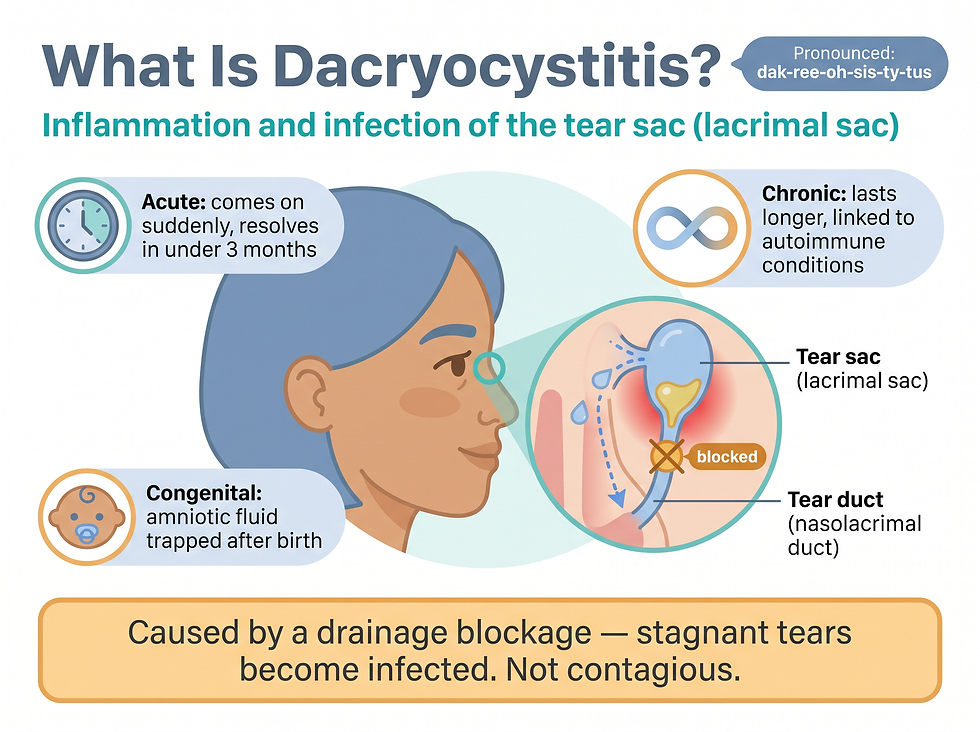
Dacryocystitis (pronounced "dak-ree-oh-sis-ty-tus") is the medical term for the inflammation and infection of your tear sac. The sac is also called the lacrimal sac and leads to your tear duct (nasolacrimal duct). These are all parts of your tear system.
When the system works the way it's supposed to, tears flow from your eyes into the duct and through to your nasal passages. Dacryocystitis happens because the pathway is blocked. The blockages can be found in the sac, in the passages that tears use to move, or in the nasolacrimal duct. When tears can't move, the fluid becomes stagnant and infected.
What are the types of dacryocystitis?
There are two kinds of dacryocystitis — acute and chronic. In general, the difference is one of time. Acute dacryocystitis comes on suddenly and resolves quickly, generally under three months. Chronic dacryocystitis lasts for a long period of time.
Another difference is that chronic dacryocystitis is more often linked to systemic (whole-body) and autoimmune conditions, including granulomatosis with polyangiitis, sarcoidosis, and lupus (systemic lupus erythematosus). People who have chronic dacryocystitis may also have chronic conjunctivitis (pink eye). The types of pathogens may differ between the two types.
Type | How it develops | Key features |
Acute | Sudden blockage and infection | Comes on quickly; resolves quickly (generally under 3 months) |
Chronic | Long-lasting blockage/infection | Linked more often to systemic and autoimmune conditions; may co-occur with chronic pink eye |
Congenital (newborn) | Amniotic fluid doesn't fully leave the tear system after birth | Neonatal dacryocystitis occurs when this fluid becomes infected |
Acquired | Other factors such as trauma, surgery, tumors, or certain medicines | Seen mostly in adults over 40 |
What is dacryocystitis vs. dacryoadenitis?
These conditions are similar, but the inflammation/infection occurs in different locations. The sickness centers in the tear duct in dacryocystitis. The sickness centers in the lacrimal gland in dacryoadenitis.
What are the symptoms of dacryocystitis?
Symptom | Notes |
Eye pain | Often around the inner corner of the eye |
Swelling around the eye | Especially near the tear sac area |
Redness or skin darkening | Around the affected eye |
Abscess or sore with pus discharge | In the inner corner of the eyelids |
Fever | More typical of the acute form |
Signs and symptoms of chronic dacryocystitis may be less severe than those of acute dacryocystitis. With the chronic form, you may have watery eyes and no fever.

What causes dacryocystitis?
A blockage in your tear duct causes dacryocystitis. These blockages disrupt the flow of tears from your eyes into your nasal cavity. A membrane that blocks the duct causes the blockage in newborns. In children and older people, blockages can be caused by many things.
Factors that lead to acquired dacryocystitis include getting older (it often happens in adults over 40), trauma such as broken bones or surgeries on your nose, other medical conditions like those involving your immune system or infections like sinusitis, an unusual nasal structure, tumors, certain drugs, and retained punctal plugs.
Drug category | Specific drugs named |
Blood pressure medication | Timolol |
Glaucoma drugs | Dorzolamide, pilocarpine |
Antiviral | Trifluridine |
Cancer treatments | Fluorouracil, docetaxel, radioactive iodine |
Even though dacryocystitis may involve an infection, you're not likely to be contagious.
How common is dacryocystitis?
About 6% of babies born have congenital nasolacrimal duct obstruction (NLDO). Dacryocystitis happens in about 1 in 3,884 live births. It's more common in females than in males because their passageways are narrower.
How is dacryocystitis diagnosed?
Your healthcare provider may have an idea about your condition by the way your eyes look, if your nose is affected, and the answers you give to questions about your medical history. Testing may include:
Diagnostic method | What it checks |
Eye exam | Overall eye health and appearance |
Gentle pressure on the swollen area | Whether discharge comes out through the punctum (the hole at the corner where tears collect) |
Discharge culture | Which germ is causing the infection |
Blood sample | White blood cell count (higher counts can indicate infection); may also search for the underlying cause |
Yellow dye test | Dye placed in the eye follows the natural tear path — slow disappearance suggests a blockage; dye appearing on a nasal swab suggests a partial blockage |
Imaging tests | Help discover underlying causes |
Extra testing may be especially necessary if you've had blood in your tears (hemolacria) or troubles with your vision.
How is dacryocystitis treated?
If you have acute dacryocystitis caused by bacteria, your provider will prescribe oral or intravenous (IV) antibiotics. They might also suggest antibiotic ointment or drops. Using warm compresses can relieve some of the symptoms. You might also try gently massaging the area. You should feel better a few days after starting antibiotics.
Antibiotics used for tear duct infections include:
Amoxicillin-clavulanate
Cephalexin
Ciprofloxacin
Clindamycin
Trimethoprim-sulfamethoxazole
Babies with neonatal dacryocystitis who have recurrent episodes will likely outgrow the condition in about a year.
Your provider may suggest surgery called dacryocystorhinostomy (DCR) after you take antibiotics if you have acute dacryocystitis. DCR is the primary way providers treat chronic dacryocystitis. The DCR surgery creates a new pathway for your tears. Possible DCR surgery complications include:
Excessive bleeding
Infection
Sinusitis
Injuries to parts of your eyes or nose

Can you prevent dacryocystitis?
There's nothing you can do to prevent most forms of dacryocystitis. However, you can try to avoid infections by practicing good hand washing methods and keeping your hands away from your eyes. You can also take care to avoid being in crowds or around people who are sick.
When should I see my healthcare provider?
Always contact a healthcare provider if you have any of the signs or symptoms of dacryocystitis, or if your child has any of these symptoms.
If you find that you have discomfort around your eye, and a lump forming at the inside corner of your eye near the bridge of your nose, you should contact a healthcare provider. It could be an inflammation and possible infection of your tear duct. You need to see a healthcare provider for prompt treatment — untreated dacryocystitis can lead to an open sore and possible vision issues.
What is the outlook for dacryocystitis?
Some episodes of dacryocystitis will resolve, but you should always check with your healthcare provider or your child's provider if you have any of the symptoms.
Most people improve within a few days of starting antibiotics. Babies with recurrent neonatal dacryocystitis usually outgrow the condition in about a year. For chronic or recurring cases, DCR surgery creates a new drainage pathway, with the goal of stopping recurrences — though the surgery itself carries a small risk of bleeding, infection, sinusitis, or injury to nearby structures.
Conclusion: A treatable tear-duct problem that rewards prompt care
Dacryocystitis is easy to overlook at first — a swollen, tender inner corner of the eye can look like an ordinary irritation. But the underlying cause is mechanical: a blocked drainage pathway that lets tear fluid stagnate and infect. That's why it appears across the entire age range, from newborns (about 1 in 3,884 live births) to adults over 40, with distinct acute and chronic forms.
The good news is that it responds well to care. Antibiotics typically bring relief within a few days, warm compresses and gentle massage soothe symptoms, and most babies outgrow the neonatal form within a year. For stubborn or chronic cases, DCR surgery opens a new tear pathway and is the primary long-term fix.
What matters most is timing. Left untreated, dacryocystitis can produce an open sore and possible vision issues. A lump at the inner corner of your eye near the bridge of your nose deserves a prompt provider visit — for you or for your child.
Your next step: If you notice eye pain, inner-corner swelling, redness, or pus discharge, schedule an evaluation with your healthcare provider or an eye specialist right away. Bring your medication list — a handful of named drugs are known contributors.
Frequently asked questions (FAQ)
What is dacryocystitis? Dacryocystitis is the inflammation and infection of the tear sac (lacrimal sac), caused by a blockage in the tear drainage pathway that lets stagnant fluid become infected.
How do you pronounce dacryocystitis? It's pronounced "dak-ree-oh-sis-ty-tus."
What causes dacryocystitis? A blockage in the tear duct disrupts the flow of tears into the nasal cavity. In newborns, a membrane blocks the duct. In children and adults, blockages can come from aging, trauma, surgery, tumors, unusual nasal structure, certain drugs, or retained punctal plugs.
What are the symptoms of dacryocystitis? Eye pain, swelling around the eye, redness or skin darkening, an abscess or sore with pus discharge in the inner corner of the eyelids, and sometimes fever.
Is chronic dacryocystitis less severe? Yes — signs and symptoms of the chronic form may be less severe than the acute form. With chronic dacryocystitis, you may have watery eyes and no fever.
What's the difference between acute and chronic dacryocystitis? Acute comes on suddenly and resolves quickly, generally under three months. Chronic lasts for a long time and is more often linked to systemic and autoimmune conditions like lupus, sarcoidosis, and granulomatosis with polyangiitis.
What is congenital dacryocystitis? It happens mostly because amniotic fluid doesn't completely leave the tear system after a baby is born. Neonatal dacryocystitis occurs when this trapped fluid becomes infected.
How common is dacryocystitis in newborns? About 6% of babies have congenital nasolacrimal duct obstruction (NLDO), and dacryocystitis happens in about 1 in 3,884 live births.
Is dacryocystitis more common in women? Yes — it's more common in females than in males because their tear passageways are narrower.
Is dacryocystitis contagious? No. Even though it may involve an infection, you're not likely to be contagious.
Can dacryocystitis cause fever? Yes — fever is one of the symptoms, more typical of the acute form. The chronic form often has no fever.
How is dacryocystitis diagnosed? Through an eye exam, gentle pressure on the swollen area to check for discharge through the punctum, discharge culture, blood tests (white blood cell count), a yellow dye test, and imaging. Extra testing is considered if you've had blood in your tears or vision trouble.
What is the dye test for dacryocystitis? A yellow dye is placed in the eye to see if it follows the natural tear path. Slow disappearance suggests a blockage; if dye appears on a swab in your nose, you may have a partial blockage.
How is dacryocystitis treated? With oral or IV antibiotics for bacterial acute cases, sometimes plus antibiotic ointment or drops. Warm compresses and gentle massage relieve symptoms, and most people feel better within a few days of starting antibiotics.
Which antibiotics treat tear duct infections? Amoxicillin-clavulanate, cephalexin, ciprofloxacin, clindamycin, and trimethoprim-sulfamethoxazole.
Will a baby outgrow dacryocystitis? Babies with neonatal dacryocystitis who have recurrent episodes will likely outgrow the condition in about a year.
What is DCR surgery? Dacryocystorhinostomy (DCR) creates a new pathway for tears. It may be offered after antibiotics for acute cases and is the primary treatment for chronic dacryocystitis.
What are the risks of DCR surgery? Possible complications include excessive bleeding, infection, sinusitis, and injuries to parts of the eyes or nose.
Can medications cause dacryocystitis? Yes. Contributing drugs include the blood pressure medication timolol, the glaucoma drugs dorzolamide and pilocarpine, the antiviral trifluridine, and cancer treatments such as fluorouracil, docetaxel, or radioactive iodine.
Can you prevent dacryocystitis? Most forms can't be prevented, but you can reduce infection risk with good hand washing, keeping your hands away from your eyes, and avoiding crowds or sick people.
What happens if dacryocystitis goes untreated? Untreated dacryocystitis can lead to an open sore and possible vision issues.
How is dacryocystitis different from dacryoadenitis? In dacryocystitis, the inflammation/infection centers in the tear duct. In dacryoadenitis, it centers in the lacrimal gland.
When should I contact a healthcare provider about my eye? If you have discomfort around your eye and a lump forming at the inside corner near the bridge of your nose, contact a healthcare provider promptly — it could be an infected tear duct needing prompt treatment.
Can autoimmune conditions cause dacryocystitis? Chronic dacryocystitis is more often linked to systemic and autoimmune conditions, including granulomatosis with polyangiitis, sarcoidosis, and lupus.
Does dacryocystitis cause vision loss? It can threaten vision if untreated — an untreated infection can lead to an open sore and possible vision issues. Prompt treatment is the best protection.
External references
Cleveland Clinic — Dacryocystitis (primary source, medically reviewed, last reviewed Nov 2, 2022)
Disclaimer: This article is for general educational purposes only and does not constitute medical advice. It is based on a single referenced clinical source and should not replace professional diagnosis or treatment. If you notice a painful lump or discharge at the inner corner of your eye, contact your healthcare provider promptly — untreated dacryocystitis can lead to an open sore and possible vision issues.
Comments