Cyst on Penis: What It Is, the 4 Types and Causes, How It's Diagnosed, Treated, and When to See a Provider — What You Need to Know

Updated: 2 days ago
Medically reviewed by Dr. Baraa Alnahhal, MD · Last reviewed: September 2026

Quick answer
A cyst on the penis is a harmless, fluid-filled bump that can appear on the head, shaft, or base. True penile cysts are not contagious, firm to the touch, skin-colored, and rarely change size, unlike STD bumps, which often cluster, recur, hurt, feel soft, or form ulcers. Most penile cysts resolve on their own within about a month with basic hygiene and a warm compress. Any new lump or bump on the penis should be examined by a healthcare provider to rule out an STD or another condition.
TL;DR
Penile cysts are fluid-filled bumps that most often turn out to be harmless. There are four main types (epidermoid, sebaceous, epidermal inclusion, and median raphe cysts), each with distinct causes. Because STD bumps can look similar, professional examination is the only reliable way to tell them apart. Most cysts disappear within a month without treatment; never squeeze or pop one.
Limitation statement: the underlying clinical source contains no prevalence statistics or demographic data for penile cysts; no figures are presented anywhere in this article.
What is a cyst on the penis?
Cysts are fluid-filled bumps. They can appear anywhere on your body, including your penis.
Most of the time, penile cysts are harmless. Still, if you develop a skin cyst on your penis head, shaft, or base, you should have it checked by a healthcare provider. They can determine what caused the cyst and recommend treatment to ease your symptoms.
While some types of penile bumps are quite common, actual cysts on the penis don't develop often. Penile cysts are usually no cause for concern, but it's never a bad idea to see your healthcare provider.
How do I know if a bump is a cyst or something else?
It's important to know the difference between cysts and bumps caused by sexually transmitted diseases (STDs). The two look similar but behave very differently. For a broader overview of infections that can cause bumps or sores, see our guide to sexually transmitted diseases (STDs).
Feature | True cysts | STD-related bumps |
Color | Similar to your skin color | Can vary |
Texture | Similar to your skin texture | Can vary |
Pain | Not painful (but may be tender) | Cause some degree of pain |
Size changes | Not likely to change drastically in size | Come and go periodically |
Surface | Hard or firm to the touch | Feel soft to the touch |
Appearance | Single or occasional | Appear in clusters of small bumps |
Ulcers | No | Form ulcers |
Contagious | No, a true cyst can't spread | Can spread through sexual contact |
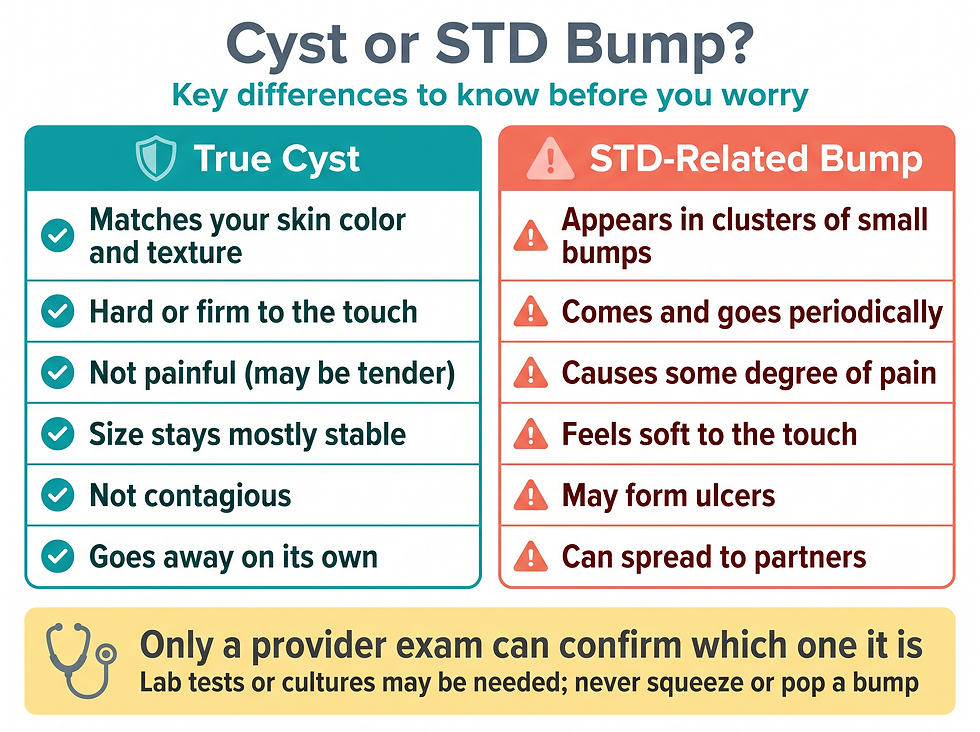
A true cyst isn't contagious and can't spread. However, if you have STD-related bumps, they can spread through sexual contact. If you have an STD-related bump, it's important to tell your sexual partners so they can have testing.
Most of the time, a cyst on your penis doesn't cause pain. However, if the bump becomes inflamed or irritated, it can be tender to the touch.
What causes cysts on the penis?
Causes and symptoms can vary depending on the type of cyst you have on your penis. There are four recognized types.
What are epidermoid cysts?
An epidermoid cyst on your penis is usually harmless. These cysts are filled with keratin, a protein found in skin, hair, and nails. Epidermoid cysts form when skin cells move deeper into your skin instead of sloughing off.
Symptoms may include a small white or yellow bump, a small blackhead in the center of the bump, redness or inflammation, and drainage. Epidermoid cysts are more likely to develop on your scrotum, but they can appear on your penis as well.
What are sebaceous cysts?
Sebaceous cysts occur when your sebaceous glands (oil-producing glands) become damaged or blocked. They usually aren't painful, but if they become inflamed, they may be tender. Symptoms may include a small lump under your skin and drainage.
What are penile epidermal inclusion cysts?
Epidermal inclusion cysts are common overall, but they rarely appear on the penis. When they do occur, they're generally a complication of circumcision. Symptoms may include a movable lump just underneath the skin and a lump that slowly grows larger.
What are median raphe cysts?
Median raphe cysts are rare and congenital (present at birth). They develop when tissue becomes trapped near the median raphe nerve in your penis.
Median raphe cysts usually don't cause problems, but some people may develop symptoms later in life, including swelling in the area, painful urination (pain when you pee), and changes in urinary frequency (how often you pee).
Summary of the 4 cyst types
Cyst type | Cause | Key symptoms |
Epidermoid cyst | Skin cells move deeper into skin instead of sloughing off; filled with keratin | Small white/yellow bump, central blackhead, redness, drainage |
Sebaceous cyst | Oil-producing (sebaceous) glands damaged or blocked | Small lump under skin, drainage |
Epidermal inclusion cyst | Generally a complication of circumcision | Movable lump under skin that slowly grows |
Median raphe cyst | Congenital; tissue trapped near the median raphe nerve | Swelling, painful urination, changes in urinary frequency |
How is a cyst on the penis diagnosed?
Your healthcare provider will perform a physical examination. If they suspect an STD, they'll likely request urinalyses, blood tests, or cultures to confirm the diagnosis. In some cases, they may recommend a biopsy to rule out other conditions like penile cancer.
How do you get rid of a cyst on your penis?
In most cases, a cyst on your penis will go away on its own. However, if the cyst continues to be problematic, your healthcare provider may recommend treatment. Options could include:
Treatment option | Purpose |
Antibiotics | For infection |
Steroid injections | For inflammation |
Excision | Surgical removal of the entire cyst, including the cyst wall and contents |
Drainage | Alleviates pressure buildup |
Can you squeeze out a cyst?
Though it may be tempting, you should never squeeze a cyst or attempt to pop it. This can actually send bacteria deeper into your skin, resulting in the formation of more cysts.

How long does it take for a cyst to go away?
Most of the time, a cyst should go away on its own within one month. However, if the cyst becomes inflamed or irritated, it could last longer.
Can you treat a penile cyst at home?
Yes, a cyst can go away on its own eventually. In most cases, simply keeping the area clean and applying a warm compress can help ease symptoms while your cyst is healing.
Can cysts on the penis be prevented?
While there's no way to completely prevent cysts on your penis, avoiding certain risk factors can reduce your chance of developing them. Recommended steps include practicing good personal hygiene, wearing a protective cup when playing contact sports to avoid injury to your penis, and avoiding extremely vigorous sex.
What is the outlook if I have a cyst on my penis?
If you notice a cyst on your penis, you should see your healthcare provider right away. They'll determine what caused the cyst and tell you whether treatment is necessary. Most of the time, it's nothing to worry about, and several treatment options are available should the bump become problematic.
When should I see my healthcare provider?
Anytime you notice a lump or bump on your penis, you should have it assessed by your healthcare provider. Most of the time, it's nothing to worry about. But it's important to figure out what caused it so you can treat it properly.
When to seek professional evaluation: Schedule an appointment if you notice any new lump or bump on the head, shaft, or base of your penis, especially if the bump clusters, recurs, is painful, feels soft, or forms an ulcer, since these features suggest an STD-related bump rather than a harmless cyst.
What experts say
Finding a cyst on your penis can be alarming. Most of the time, it's not a cause for concern. However, to rule out STDs or other underlying conditions, it's important to have the bump examined by your healthcare provider. If it's not causing painful symptoms, you may not need to do anything. But there are several treatment options available should it become problematic. (Note from the referenced medical source)
Conclusion: most penile cysts are harmless, but get every bump checked
A cyst on the penis is, in most cases, a harmless fluid-filled bump that goes away on its own within about a month. The four types (epidermoid, sebaceous, epidermal inclusion, and median raphe cysts) differ in cause and behavior, but none are contagious.
The most important takeaway is knowing the difference between a benign cyst and an STD-related bump. Because STD bumps cluster, recur, hurt, feel soft, and can form ulcers, only a proper medical examination, and sometimes lab tests or a biopsy, can reliably tell them apart. Until your provider confirms what you're dealing with, keep the area clean, apply a warm compress for comfort, and never squeeze or pop the bump.
Your next step: If you've noticed a lump or bump on your penis, schedule an evaluation with a healthcare provider. It's usually nothing to worry about, but confirming the cause is the only way to treat it properly and rule out anything more serious.
Frequently asked questions
What is a cyst on the penis? A cyst on the penis is a fluid-filled bump that can appear on the head, shaft, or base of the penis. Most penile cysts are harmless.
Are cysts on the penis common? While some types of penile bumps are common, actual cysts on the penis don't develop often.
Is a cyst on the penis dangerous? In most cases, a cyst on the penis is not dangerous and is no cause for concern. A healthcare provider should still confirm the diagnosis.
Is a penile cyst contagious? No. A true cyst isn't contagious and can't spread. However, STD-related bumps can spread through sexual contact.
How do I tell a cyst from an STD bump? Cysts match your skin color and texture, are hard or firm, don't hurt, and don't change size drastically. STD bumps usually appear in clusters, come and go, cause pain, feel soft, and may form ulcers.
Why do STD bumps matter if I have a penile cyst? Because cysts can look similar to STD bumps, a provider needs to rule out sexually transmitted diseases, and if an STD bump is found, your partners should be tested too.
What causes a cyst on the penis? Causes depend on the type: skin cells trapped deeper in the skin (epidermoid), blocked oil-producing glands (sebaceous), a circumcision complication (epidermal inclusion), or congenital tissue trapping near the median raphe nerve (median raphe cyst).
What are the types of penile cysts? The four types are epidermoid cysts, sebaceous cysts, penile epidermal inclusion cysts, and median raphe cysts.
What is an epidermoid cyst on the penis? An epidermoid cyst is a harmless bump filled with keratin that forms when skin cells move deeper into the skin instead of sloughing off. It appears as a small white or yellow bump, sometimes with a small blackhead in the center, redness, or drainage.
What is a sebaceous cyst on the penis? A sebaceous cyst occurs when oil-producing (sebaceous) glands become damaged or blocked. It usually isn't painful and appears as a small lump under the skin, sometimes with drainage.
What is a penile epidermal inclusion cyst? An epidermal inclusion cyst is a lump under the skin that slowly grows larger. These are common overall but rarely appear on the penis; when they do, they're generally a complication of circumcision.
What is a median raphe cyst? A median raphe cyst is a rare, congenital cyst (present at birth) that develops when tissue becomes trapped near the median raphe nerve in the penis. It may later cause swelling, painful urination, or changes in urinary frequency.
Do cysts on the penis hurt? Most of the time, a cyst on your penis doesn't cause pain. If it becomes inflamed or irritated, it can be tender to the touch.
Can a median raphe cyst cause urinary symptoms? Yes. Some people develop symptoms later in life, including painful urination and changes in how often they urinate.
How is a penile cyst diagnosed? A provider performs a physical examination. If an STD is suspected, they may order urinalyses, blood tests, or cultures. In some cases, a biopsy is recommended to rule out other conditions like penile cancer.
Will a cyst on my penis go away on its own? Yes, in most cases a cyst on the penis will go away on its own within about one month.
How long does a penile cyst take to heal? Most of the time, a cyst should go away within one month. If the cyst becomes inflamed or irritated, it could last longer.
How do you treat a cyst on your penis? Most resolve without treatment. For problematic cysts, providers may recommend antibiotics (for infection), steroid injections (for inflammation), excision (surgical removal of the cyst and its wall), or drainage (to relieve pressure).
Can I squeeze or pop a penile cyst? No. Squeezing a cyst can send bacteria deeper into your skin, resulting in the formation of more cysts.
What can I do at home for a penile cyst? Keep the area clean and apply a warm compress to ease symptoms while the cyst heals.
Can cysts on the penis be prevented? There's no way to completely prevent them, but practicing good personal hygiene, wearing a protective cup during contact sports, and avoiding extremely vigorous sex can reduce your risk.
What should I do if I find a lump on my penis? Anytime you notice a lump or bump on your penis, have it assessed by your healthcare provider. Most of the time it's nothing to worry about, but the cause must be confirmed so it can be treated properly.
When do I need to worry about a bump on my penis? Bumps that appear in clusters, come and go periodically, cause pain, feel soft, or form ulcers may be STD-related and warrant prompt professional evaluation, along with testing for sexual partners.
Is a biopsy ever needed for a penile cyst? In some cases, a provider may recommend a biopsy to rule out other conditions such as penile cancer.
External references
Medical disclaimer: This article is for general educational purposes only and is not a substitute for professional medical advice, diagnosis, or treatment. If you notice a new lump or bump on your penis, please consult a qualified healthcare provider for an examination. Do not attempt to squeeze, pop, or self-treat any undiagnosed bump.
Comments