Calciphylaxis: Symptoms, Causes, Diagnosis and Treatment — What You Need to Know

Updated: 2 days ago
Medically reviewed by Dr. Baraa Alnahhal, MD · Last reviewed: September 2026
Quick Answer
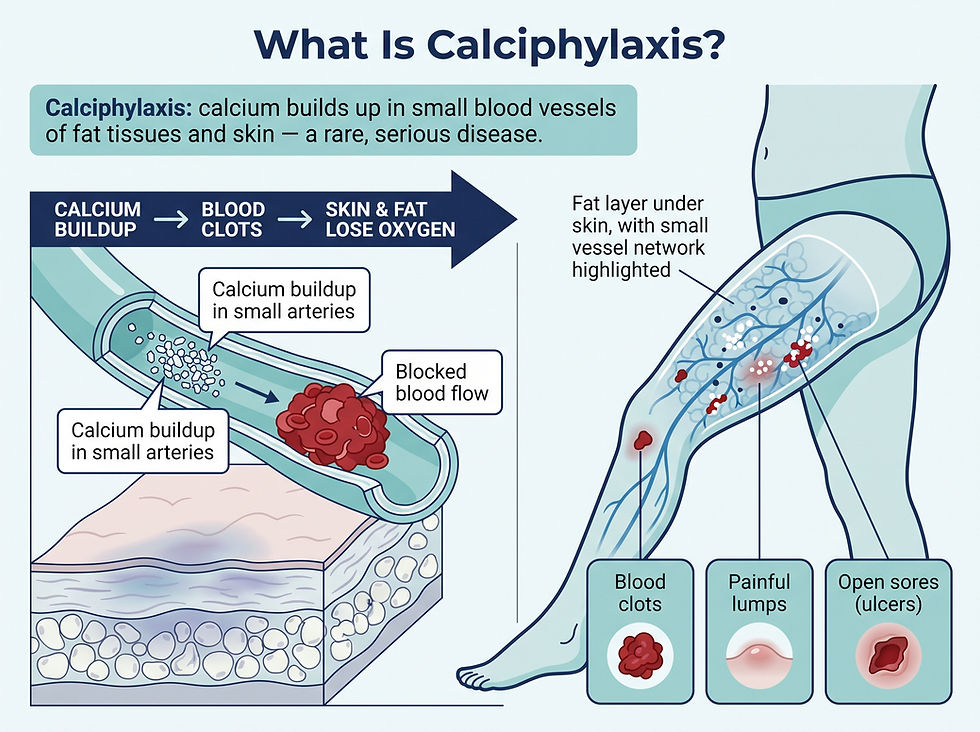
Calciphylaxis (kal-sih-fuh-LAK-sis) is a rare, serious disease in which calcium builds up in the small blood vessels of the fat tissues and skin. This causes blood clots, deep painful lumps under the skin, and open sores (ulcers) that often appear on the stomach, thighs, buttocks, and breasts. If an ulcer becomes infected, it can be life-threatening.
Most people with calciphylaxis have kidney failure or have received dialysis or a kidney transplant, though it can occur without kidney disease. Treatment combines blood-thinning medicines, dialysis adjustments, calcium-lowering medicines such as sodium thiosulfate, intensive wound care, and pain management. Finding and treating infections early is key to preventing serious complications.
TL;DR
Calciphylaxis is a rare, serious disease caused by calcium buildup in the small blood vessels of the skin and fat. It produces netlike purple-pink skin patterns, deep painful lumps, and ulcers with black-brown crusts that do not heal on their own — most often in people with kidney failure or a history of dialysis. Treatment is multi-part: anticoagulants, adjusted dialysis, trigger-medicine changes, calcium-lowering drugs, wound care and debridement, antibiotics, and pain control. Infected ulcers can become life-threatening, so prompt medical evaluation of any suspicious skin sores — especially in people with kidney disease — is essential.
Limitation statement: This article is based exclusively on two expert-reviewed clinical overviews dated July 09, 2024. The sources provide no prevalence, survival-rate, or treatment-success statistics, and none are presented or invented here. Treatment options described reflect what the sources state; availability varies, and a few are experimental.
When Should You Seek Prompt Care?
Calciphylaxis is a serious condition, and infected ulcers can become life-threatening. Seek prompt medical evaluation if you have kidney failure or a dialysis history and develop any of the following:
Netlike purple-pink patterns on your skin: an early skin sign of calcium buildup in small vessels. Contact your healthcare professional promptly.
Deep, painful lumps under the skin: ulcers may be forming. Contact your healthcare professional promptly.
Open sores with a black-brown crust that do not heal: ulcer formation with infection risk. Contact your healthcare professional promptly.
Signs of infection in a wound (increasing pain, redness, warmth, fever): blood infection risk, which can be life-threatening. Seek urgent medical care.
The sources stress that finding and treating any infections early is key to preventing serious complications.
"Calciphylaxis (kal-sih-fuh-LAK-sis) is a rare, serious disease. It involves a buildup of calcium in small blood vessels of fat tissues and skin." — Source overview [1]
What Exactly Is Calciphylaxis?
Calciphylaxis is a rare, serious disease. It involves a buildup of calcium in small blood vessels of fat tissues and skin.
The disease has an alternative clinical name: calcific uremic arteriolopathy. Both names describe the same condition — calcium depositing in the smallest arteries and blocking blood flow to the skin and fat.
The symptoms it produces are distinctive. They include blood clots, lumps under the skin, and painful open sores called ulcers. If an ulcer becomes infected, it can be life-threatening.
What Are the Signs and Symptoms of Calciphylaxis?
Symptoms start on the skin but reflect a deeper problem in the small blood vessels. The three hallmark signs form a progression: calcium buildup causes blood clots, clots cause lumps, and lumps break down into ulcers.
Netlike skin patterns: large netlike patterns on the skin that may look purple-pink in color.
Deep lumps: deep, painful lumps in the skin that can become ulcers.
Crusted ulcers: ulcers often have a black-brown crust that doesn't heal on its own.
Persistent sores: sores that stay open and may become infected.
Where do these ulcers tend to appear? Ulcers tend to appear in areas with high fat content, such as the stomach, thighs, buttocks and breasts. But they can form anywhere.
Ulcers that do not heal create an infection risk. Infections from ulcers that don't heal are listed among the core symptoms, because infection is how this disease most often becomes dangerous.

What Causes Calciphylaxis?
The exact cause of calciphylaxis isn't clear. What is known is the mechanism: the disease involves the buildup of calcium in the smallest parts of the arteries in fat tissues and skin.
The kidney connection is strong but not fully understood. Many people who get calciphylaxis also have kidney failure or receive dialysis. It's not known why people with kidney failure or people receiving dialysis are at higher risk. And importantly, calciphylaxis can happen in people without kidney disease too.
Do the Parathyroid Glands Play a Role?
For some people, the calcium buildup in calciphylaxis is linked with small organs in the neck called parathyroid glands. If the glands release too many parathyroid hormones, that can cause calcium to collect.
But the link isn't clear. Most people with seriously overactive parathyroid glands don't get calciphylaxis. And many people with kidney failure and calciphylaxis don't have overactive parathyroid glands.
What Else Contributes to the Disease?
Beyond calcium itself, several processes seem to play roles in calciphylaxis. Each one affects blood flow or tissue health in the skin and fat.
Greater tendency for blood to clot: blood clots can deprive fat tissues and skin of oxygen and nourishment.
Reduced blood flow in small arteries: can lead to skin lumps and ulcers.
Tissue thickening or scarring (fibrosis): changes tissue structure in affected areas.
Damage to vessel linings (vascular endothelial injury): ongoing damage to the thin layer of cells that lines blood vessels.
Inflammation: swelling in the body that may worsen vessel and tissue damage.
Who Is at Risk for Calciphylaxis?
Calciphylaxis most often affects people who have kidney failure. Beyond that central risk factor, the sources identify a specific set of additional risks.
Kidney failure: the most common risk.
Female sex: being born female raises risk.
Obesity: higher risk.
Diabetes mellitus: higher risk.
Liver failure: when the liver stops working as it should.
Dialysis history: a history of dialysis raises risk.
Hypercoagulable state: a greater tendency for blood to clot.
Mineral or protein imbalance: imbalance of calcium, phosphate, or albumin in the body.
Certain medicines: some medicines, such as warfarin (Jantoven), calcium-binding agents and corticosteroids.
The medicine list matters because it is actionable. If you take warfarin, corticosteroids, or iron and have advanced kidney disease, your healthcare team may weigh these risks when managing your care.
What Complications Can Calciphylaxis Cause?
The complications are serious, and honesty about them matters. Complications of calciphylaxis include:
Serious pain: ongoing, significant pain from ulcers and damaged tissue.
Large, deep ulcers: ulcers that do not heal on their own.
Blood infections: infection entering the bloodstream (see our guide to sepsis).
Death: mainly due to infection or organ failure.
Often, the outlook for people with calciphylaxis isn't hopeful. Finding and treating any infections early is key to preventing serious complications.
This is why the guidance throughout this article emphasizes early evaluation, infection prevention, and close follow-up with a specialist team.
Can Calciphylaxis Be Prevented?
There isn't a clear way to prevent calciphylaxis. But if you are on dialysis or have low kidney function due to advanced chronic kidney disease, it's important to keep blood levels of calcium and phosphorus under control.
Keeping blood levels of phosphorus under control often is a challenge. Your healthcare professional might have you take medicines with meals. You also may need to restrict certain foods that are high in phosphorus. It's very important to follow your healthcare professional's directions and go to all follow-up healthcare checkups.
If you have calciphylaxis, your healthcare team helps you prevent ulcer infections or other complications. You may need to apply special wound dressings or clean the ulcers daily to prevent germs called bacteria from growing.

How Is Calciphylaxis Diagnosed?
Diagnosis involves finding out if calciphylaxis is the cause of your symptoms. The process combines examination and targeted testing. Your healthcare professional reviews your health history, asks about your symptoms and gives you a physical exam. You also may need tests.
Skin biopsy: a small tissue sample is removed from an area of affected skin; a lab checks the sample.
Blood tests: labs measure creatinine, calcium, phosphorus, parathyroid hormone and vitamin D; results help check how well your kidneys are working.
Imaging tests: useful if biopsy results aren't clear or a biopsy can't be done; X-rays may show calcium buildups in the blood vessels, which are common in calciphylaxis and in other advanced kidney diseases.
How Is Calciphylaxis Treated?
Often, more than one treatment is needed for calciphylaxis. Treatments can restore oxygen and blood flow to the skin and reduce calcium buildup. Treatment works in four coordinated tracks.
Track 1: Restoring Oxygen and Blood Flow
Medicine that helps keep blood from clotting can restore blood flow to affected tissues. These blood-thinning medicines are called anticoagulants.
If these don't help, an experimental treatment may be available that can dissolve blood clots in the tiny blood vessels of the skin. This treatment is a type of medicine called a low-dose tissue plasminogen activator.
Another backup treatment option involves breathing pure oxygen in a pressurized chamber. This is called hyperbaric oxygen therapy. It's not available everywhere. A small amount of research suggests that this therapy may help control infections and limit tissue loss while the main treatments take effect.
Wound care is a crucial part of calciphylaxis treatment. So it can be very helpful to have a team of wound care specialists.
Track 2: Reducing Calcium Buildup
Reducing calcium buildup in arteries may be helped by four approaches:
Adjusted dialysis: if you get kidney dialysis treatment, your healthcare professional may change the medicines used and how long and often you get dialysis. It might be helpful to increase the number and length of dialysis sessions.
Changing medicines: your team reviews your current medicines and gets rid of possible triggers: warfarin, corticosteroids and iron. Calcium or vitamin D supplements may be changed or stopped.
Calcium-lowering medicines: sodium thiosulfate can lower calcium buildup in the small arteries; it's given through a needle in a vein three times a week, usually during dialysis. Cinacalcet (Sensipar) can help control parathyroid hormone (PTH), and other medicines may improve the balance of calcium and phosphorus.
Parathyroid surgery: if an overactive parathyroid gland making too much PTH plays a role, surgery called a parathyroidectomy can remove all or part of the parathyroid glands.
Track 3: Intensive Wound Treatment
For sores to heal, some of the tissue damaged by calciphylaxis may need to be removed with surgery. This is called debridement. Sometimes, tissue can be removed using other methods, such as wet dressings.
Medicines called antibiotics can clear up infections caused by germs. Antibiotics can help treat and prevent ulcer infections.
Track 4: Pain Control
You'll likely be offered medicines to manage pain due to calciphylaxis or during wound care. A pain medicine specialist may need to be involved if you're prescribed opioid pain medicines.
What Should You Ask at Your Appointment?
You may start by seeing your healthcare professional. Or you may be referred to a skin doctor called a dermatologist or a kidney doctor called a nephrologist.
Some other healthcare professionals who may become part of your healthcare team include an internal medicine doctor (internist), a surgeon, a wound care specialist, and a pain management expert.
Before the appointment, ask if there's anything you need to do in advance — for example, you may be told not to eat for a certain number of hours before some tests (fasting). It's also a good idea to bring a family member or friend with you; a person you trust can help you remember all of the information from your appointment.
Helpful items to prepare: a list of your symptoms including any that do not seem related to the reason for your appointment, key personal information including major stresses and recent life changes and family medical history, and all medicines, vitamins or other supplements you take including the amounts you take.
Questions worth asking your healthcare team:
What's likely causing my symptoms? Are there other possible causes?
What tests do I need?
What treatment do you recommend?
I have other health conditions. How can I best manage these conditions together?
Do I need to change my diet?
What's the outlook for my health?
Are there brochures or other printed material I can have? What websites do you recommend?
What your healthcare professional may ask you:
When did your symptoms begin?
Have your symptoms been ongoing or do they come and go?
How bad are your symptoms?
Does anything seem to make your symptoms better?
What, if anything, appears to make your symptoms worse?
Conclusion
Calciphylaxis is a rare and serious disease that demands early attention. It begins with calcium building up in the smallest blood vessels of the skin and fat, producing netlike purple-pink patterns, deep painful lumps, and crusted ulcers that do not heal on their own. It most often affects people with kidney failure or a dialysis history, though it can occur in people without kidney disease.
Treatment is comprehensive and team-based: anticoagulants, adjusted dialysis, removal of trigger medicines, calcium-lowering drugs, surgical wound care, antibiotics, and dedicated pain management. Because infected ulcers can become life-threatening, early detection and early infection treatment are the levers that matter most.
If you have kidney failure or a dialysis history and notice new netlike skin patterns, painful lumps, or non-healing sores, contact your healthcare professional promptly — early evaluation is your strongest protection.
Sources
[1] Calciphylaxis — Symptoms & Causes — reviewed by medical experts; dated July 09, 2024.
[2] Calciphylaxis — Diagnosis & Treatment — reviewed by medical experts; dated July 09, 2024.
Frequently Asked Questions
1. What is calciphylaxis in simple terms?
Calciphylaxis is a rare, serious disease in which calcium builds up in the small blood vessels of the skin and fat tissues, causing blood clots, painful lumps, and open sores that may become infected.
2. What does calciphylaxis look like on the skin?
It often starts as large netlike patterns on the skin that may look purple-pink in color. Deep, painful lumps can follow, and these may become ulcers with a black-brown crust that doesn't heal on its own.
3. Where do calciphylaxis ulcers usually appear?
Ulcers tend to appear in areas with high fat content, such as the stomach, thighs, buttocks and breasts, but they can form anywhere on the body.
4. What is the other name for calciphylaxis?
Calciphylaxis is also called calcific uremic arteriolopathy.
5. How do you pronounce calciphylaxis?
It is pronounced kal-sih-fuh-LAK-sis.
6. Is calciphylaxis linked to kidney disease?
Yes. Many people who get calciphylaxis also have kidney failure or receive dialysis, and it most often affects people with kidney failure. However, calciphylaxis can happen in people without kidney disease too.
7. Why do people on dialysis get calciphylaxis?
It is not known why people with kidney failure or people receiving dialysis are at higher risk of calciphylaxis. The exact cause of the disease isn't known.
8. What causes calciphylaxis?
The exact cause isn't known, but the disease involves a buildup of calcium in the smallest parts of the arteries in fat tissues and skin. Contributing factors include a greater tendency for blood to clot, reduced blood flow in small arteries, tissue scarring (fibrosis), damage to blood vessel linings, and inflammation.
9. Can overactive parathyroid glands cause calciphylaxis?
For some people, too much parathyroid hormone can cause calcium to collect. But the link isn't clear — most people with seriously overactive parathyroid glands don't get calciphylaxis, and many people with calciphylaxis don't have overactive parathyroid glands.
10. Who is most likely to get calciphylaxis?
People with kidney failure are most often affected. Additional risk factors include being born female, obesity, diabetes mellitus, liver failure, a history of dialysis, a tendency for blood to clot, imbalances of calcium, phosphate or albumin, and certain medicines such as warfarin, calcium-binding agents and corticosteroids.
11. Is calciphylaxis painful?
Yes. Serious pain is listed among the complications, and the deep lumps and ulcers are painful. Pain management is a dedicated part of treatment.
12. Can calciphylaxis be cured?
There is no stated cure in the sources. Treatment aims to restore oxygen and blood flow to the skin, reduce calcium buildup, heal sores, prevent infections, and ease pain, often using more than one treatment at once.
13. What medicines treat calciphylaxis?
Treatment medicines include anticoagulants (blood thinners), sodium thiosulfate (which can lower calcium buildup in small arteries, usually given intravenously three times a week during dialysis), cinacalcet (which can help control parathyroid hormone), and antibiotics for ulcer infections. Possible trigger medicines such as warfarin, corticosteroids and iron may be stopped or changed.
14. What is sodium thiosulfate used for in calciphylaxis?
Sodium thiosulfate can lower calcium buildup in the small arteries. It is given through a needle in a vein three times a week, usually during dialysis.
15. What is parathyroidectomy and when is it used?
A parathyroidectomy is surgery that removes all or part of the parathyroid glands. It may be a treatment option if an overactive parathyroid gland that makes too much parathyroid hormone (PTH) plays a role in your condition.
16. What is debridement in calciphylaxis treatment?
Debridement is the surgical removal of some of the tissue damaged by calciphylaxis so that sores can heal. Tissue can sometimes also be removed using other methods, such as wet dressings.
17. What is hyperbaric oxygen therapy and does it help calciphylaxis?
Hyperbaric oxygen therapy involves breathing pure oxygen in a pressurized chamber. It is a backup option that isn't available everywhere, and a small amount of research suggests it may help control infections and limit tissue loss while the main treatments take effect.
18. Is calciphylaxis fatal?
Death is listed as a possible complication, mainly due to infection or organ failure, and infected ulcers can be life-threatening. Finding and treating infections early is key to preventing serious complications.
19. Can calciphylaxis be prevented?
There isn't a clear way to prevent calciphylaxis. For people on dialysis or with low kidney function, keeping blood levels of calcium and phosphorus under control is important, along with following your healthcare professional's directions and keeping all follow-up checkups.
20. How do you care for calciphylaxis wounds at home?
Your healthcare team helps you prevent ulcer infections and other complications. You may need to apply special wound dressings or clean the ulcers daily to prevent bacteria from growing.
21. Which doctors treat calciphylaxis?
You may be referred to a dermatologist (skin doctor) or a nephrologist (kidney doctor). The team may also include an internist, a surgeon, a wound care specialist, and a pain management expert.
22. What tests diagnose calciphylaxis?
Diagnosis may include a skin biopsy (a lab checks a small sample of affected skin), blood tests measuring creatinine, calcium, phosphorus, parathyroid hormone and vitamin D, and imaging tests such as X-rays, which may show calcium buildups in blood vessels.
23. Does calciphylaxis only affect people with kidney failure?
No. While it most often affects people with kidney failure, calciphylaxis can happen in people without kidney disease too.
24. What should I do if a calciphylaxis ulcer looks infected?
Seek urgent medical care. Infected ulcers can be life-threatening, and the sources stress that finding and treating any infections early is key to preventing serious complications.
25. Is warfarin linked to calciphylaxis?
Warfarin is listed among medicines that seem to play a role in calciphylaxis, and it is also listed as a possible trigger medicine that healthcare professionals may stop or change during treatment.
Medical Disclaimer: This article is for general informational purposes only and does not constitute medical advice, diagnosis, or treatment. Always seek the advice of your physician or another qualified health provider with any questions you may have regarding a medical condition. Never disregard professional medical advice or delay seeking care because of something you have read here. Calciphylaxis is a serious condition — infected ulcers can be life-threatening, and urgent medical attention may be required.
Comments