Adrenaline: Understanding the Body’s Survival Hormone

Updated: 2 days ago
Medically reviewed by Dr. Baraa Alnahhal, MD · Last reviewed: September 2026
TL;DR
Adrenaline, also known as epinephrine, is a survival hormone produced by the adrenal glands. It triggers the “fight or flight” response, causing rapid changes like increased heart rate and heightened alertness to prepare the body for danger. While essential for survival, chronic adrenaline release from stress or rare tumors can impact long-term health.
Quick Answer Adrenaline is a hormone produced in the adrenal glands, located above the kidneys, that prepares the body for stressful or dangerous situations. Often referred to as an “adrenaline rush,” its sudden release into the bloodstream increases heart rate, speeds up breathing, and redirects blood to muscles. This biological mechanism, known as the fight-or-flight response, ensures maximum alertness and physical readiness when facing immediate threats or participating in extreme activities.
The Biological Function of Adrenaline
Adrenaline serves as a primary chemical messenger that coordinates the body’s rapid response to perceived threats. When the brain detects danger or sudden stress, the adrenal glands quickly discharge this hormone into the bloodstream, initiating a cascade of physiological changes designed for immediate action. This process is commonly described as the fight-or-flight response, a survival mechanism inherited from early human ancestors to deal with predators and environmental hazards.
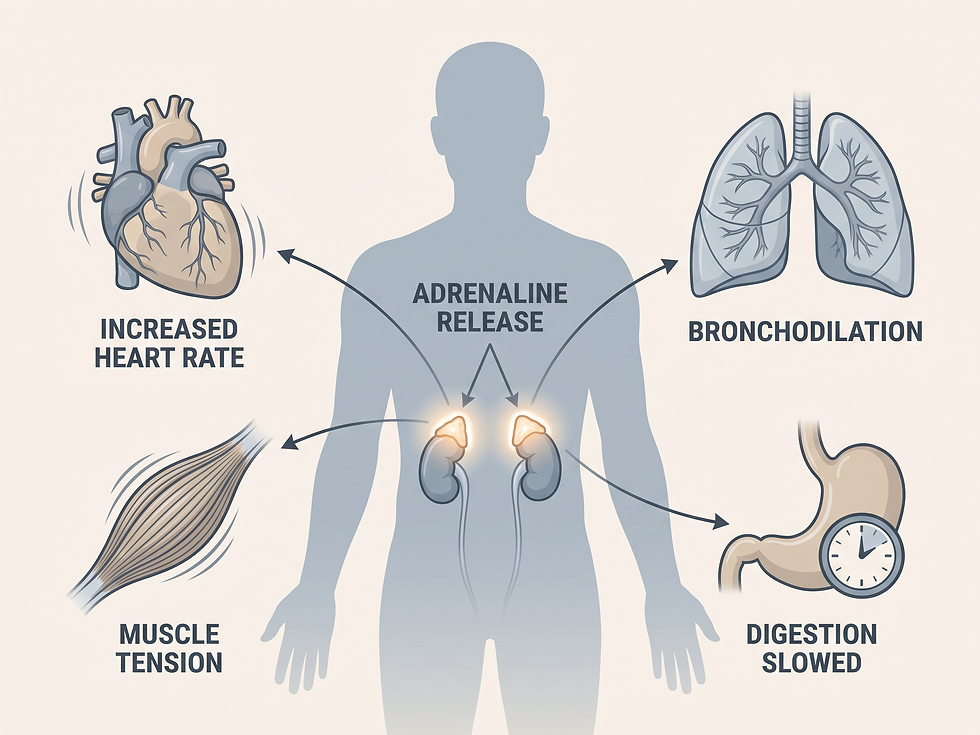
The physiological shift caused by adrenaline is comprehensive, affecting multiple organ systems simultaneously. By prioritizing survival, the body temporarily suppresses non-essential functions to maximize physical output.
Body System | Effect of Adrenaline | Purpose |
Cardiovascular | Increased heart rate | Rapidly delivers oxygenated blood to vital organs and muscles. |
Respiratory | Faster breathing rate | Increases oxygen intake for cellular energy production. |
Digestive | Slowed digestion | Redirects blood flow away from the gut to active skeletal muscles. |
Neurological | Heightened alertness | Sharpens focus and reduces reaction time to environmental stimuli. |
Anatomy and Triggers
The human body contains two adrenal glands, each positioned directly above a kidney. These glands are responsible for synthesizing and storing adrenaline until a stimulus triggers its release. For a deeper look at how the glands are built and the other hormones they make, see our guide to adrenal gland function and health. While dangerous situations are the most common cause of an adrenaline release, rushes can be initiated by various activities and emotional states.
Common Triggers for Adrenaline Release
Adventure-type activities and extreme sports are well-known for inducing intentional adrenaline rushes. Activities such as rock climbing, snowboarding, zip-lining, and BASE jumping provide the high-stress environment required for the glands to activate. However, unplanned rushes are equally common and can occur during frightening experiences, traffic accidents, or sudden panic attacks. In these instances, the body perceives a threat even if no immediate physical danger is present.
Health Implications and Conditions
While adrenaline is essential for reacting to danger, its presence in the body is not always beneficial. Chronic or inappropriate release of the hormone can lead to long-term health complications. For instance, nicotine consumption triggers the release of adrenaline, causing a sustained increase in heart rate and blood pressure, which places undue stress on the cardiovascular system. Similarly, frequent panic attacks subject the heart to repetitive strain, potentially increasing the risk of long-term damage.
Rare Adrenal Conditions
In some cases, the overproduction of adrenaline is caused by a medical condition rather than external stress. A pheochromocytoma is a rare tumor of the adrenal glands that causes the excessive release of adrenaline and norepinephrine. Doctors sometimes use a specialized test called adrenal venous sampling to help locate rare tumors like this. For an overview of other conditions that affect adrenal hormone levels, see our guide to adrenal gland disorders.
Symptom | Description |
Hypertension | Consistently high blood pressure that may require surgical intervention. |
Headaches | Severe and persistent head pain associated with hormone spikes. |
Tachycardia | A rapid pulse or heart palpitations. |
Hyperhidrosis | Excessive sweating, often occurring in episodes. |
Lightheadedness | A feeling of faintness, particularly when standing up quickly. |

Managing Adrenaline Rushes
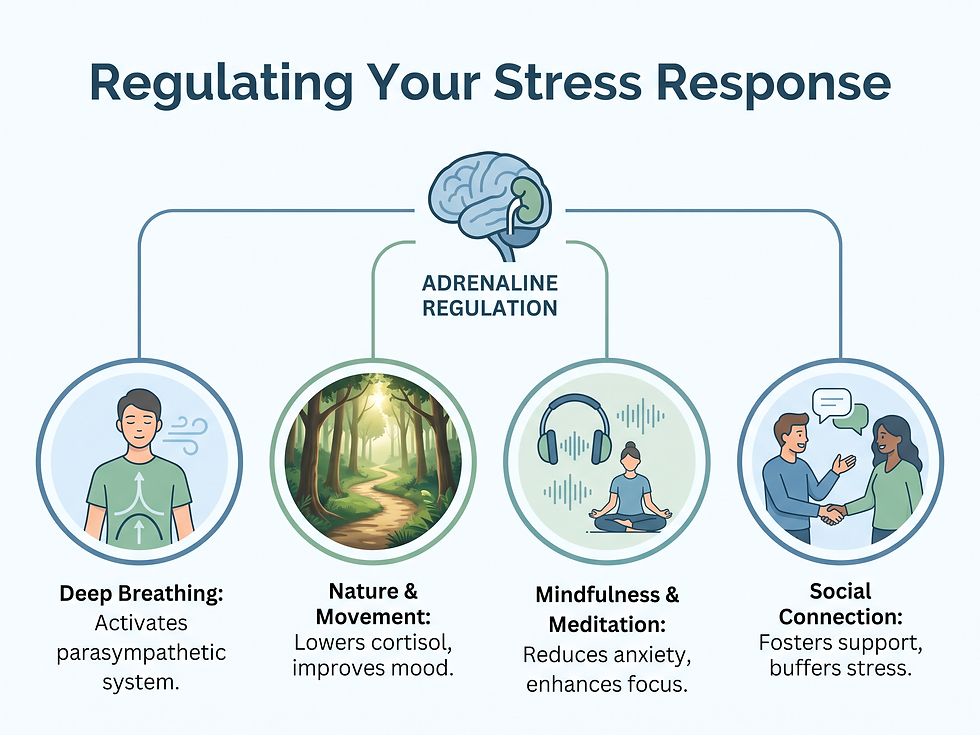
Controlling the body’s response to stress is crucial for maintaining cardiovascular health and emotional well-being. If anxiety or panic triggers frequent adrenaline releases, individuals can employ several techniques to calm the nervous system and counteract the fight-or-flight response.
Deep Breathing: Slow, controlled breaths can signal the brain to reduce stress hormone production.
Nature Walks: Spending time in natural environments is proven to lower cortisol and adrenaline levels.
Meditation: Using calming music or guided meditation apps helps regulate the body’s baseline stress level.
Social Connection: Talking to trusted friends or relatives can provide emotional regulation and reduce the frequency of panic-induced rushes.
Conclusion
Adrenaline is a powerful biological tool that has ensured human survival for millennia. By understanding its function, anatomy, and the triggers that cause its release, individuals can better manage their physiological responses to the modern world. While occasional rushes from adventure or sudden scares are normal, persistent or unexplained rushes should be discussed with a healthcare provider to rule out underlying conditions and protect long-term heart health.
Next Steps for Your Health
If you experience frequent, unexplained adrenaline rushes, high blood pressure, or symptoms of anxiety that interfere with daily life, consult a medical professional. Specialized blood tests and imaging can determine if your hormone levels are within a healthy range or if further intervention is required to manage your endocrine health.
Frequently Asked Questions
What is another name for adrenaline?
Adrenaline is also known as epinephrine.
Where is adrenaline produced?
It is produced in the two adrenal glands located above the kidneys.
What is an adrenaline rush?
It is the sudden, rapid release of adrenaline into the bloodstream in response to stress or danger.
How does adrenaline affect the heart?
It causes the heart to beat faster to deliver more oxygen to the body.
Does adrenaline affect digestion?
Yes, it slows down digestion to redirect blood flow to the muscles.
Can anxiety cause an adrenaline rush?
Yes, panic attacks and high anxiety can trigger the body’s fight-or-flight response.
Is adrenaline release always good?
No, chronic release from stress or nicotine can lead to high blood pressure and heart strain.
What is a pheochromocytoma?
It is a rare, usually non-cancerous tumor of the adrenal gland that overproduces adrenaline.
What are the signs of too much adrenaline?
Symptoms include high blood pressure, bad headaches, sweating, and a rapid pulse.
Can adrenaline rushes be controlled?
Yes, techniques like deep breathing and meditation can help calm the body.
What activities trigger adrenaline?
Extreme sports like rock climbing and BASE jumping are common triggers.
How does adrenaline help in danger?
It increases alertness and physical readiness, allowing for a faster reaction.
Is high blood pressure always caused by adrenaline?
No, but adrenaline overproduction is one rare cause.
Why does adrenaline make you feel alert?
It sharpens the senses and focus as part of the survival response.
When should I see a doctor about adrenaline?
If you have frequent, unexplained rushes or symptoms of a possible adrenal tumor.
Medical Disclaimer: This content is for informational purposes only and does not constitute medical advice. Always seek the advice of a qualified healthcare provider with any questions regarding a medical condition.
Comments