Understanding Parenteral Nutrition: A Guide to Intravenous Feeding

Updated: 1 hour ago
Medically reviewed by Dr. Baraa Alnahhal, MD · Last reviewed: September 2026
TL;DR
Parenteral nutrition is a specialized medical treatment that delivers essential nutrients directly into the bloodstream through a vein, bypassing the digestive system entirely. It is used when a patient cannot absorb nutrients through the gut or requires complete digestive rest. Available as partial (supplementary) or total (complete) nutrition, it involves the surgical placement of a catheter and requires strict sterile protocols and regular blood monitoring to ensure safety and effectiveness.
Quick Answer: What Is Parenteral Nutrition?
Parenteral nutrition is the delivery of nutrients—including water, carbohydrates, proteins, fats, vitamins, and minerals—directly into a vein through an intravenous (IV) catheter. This method is used when the digestive tract is non-functional or requires rest due to surgery, obstruction, or disease. It can be administered as Partial Parenteral Nutrition (PPN) to supplement oral intake or Total Parenteral Nutrition (TPN) to provide all daily caloric and nutritional requirements.

Understanding Parenteral Nutrition
Parenteral nutrition represents a critical clinical intervention for individuals who cannot rely on their digestive systems for sustenance. The term "parenteral" literally translates to "outside of the digestive tract," distinguishing this method from enteral nutrition, which utilizes tubes to deliver food to the stomach or small intestine. By delivering a customized chemical formula directly into the venous system, healthcare providers can maintain a patient's nutritional status even when the gastrointestinal tract is completely bypassed.
This therapy is highly versatile and can be tailored to the specific needs of the patient. Formulas are designed through a collaborative effort involving doctors, nurses, nutritionists, and pharmacists, ensuring that the balance of macronutrients and micronutrients aligns with the patient's laboratory results and physiological demands.
Types of Parenteral Nutrition and Delivery Methods
The classification of parenteral nutrition depends on both the extent of the nutritional support and the type of vein used for delivery. Understanding these distinctions is essential for determining the appropriate clinical path for each patient.
Feature | Partial Parenteral Nutrition (PPN) | Total Parenteral Nutrition (TPN) |
Purpose | Supplements existing oral or enteral intake. | Provides 100% of daily nutritional needs. |
Common Use | Temporary boost for malnourished patients. | Long-term support for non-functional GI tracts. |
Vein Type | Peripheral veins (neck or limbs). | Central veins (superior vena cava). |
Concentration | Lower concentrations and calories. | Higher concentrations and calorie counts. |
The choice of catheter is equally important and is based on the expected duration of the therapy.
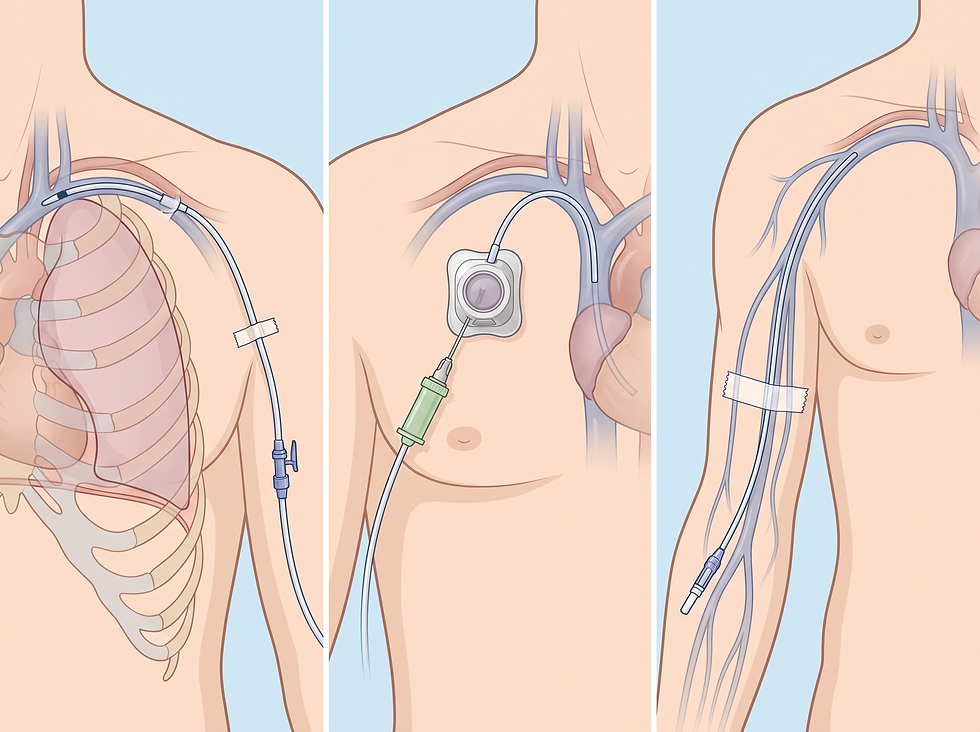
Catheter Type | Description | Duration / Use |
Tunneled Catheter | Tunnels under the skin to a separate exit point. | Long-term use; chosen for patient comfort. |
Implanted Port | Remains entirely under the skin with a needle port. | Long-term use; requires a Huber needle for access. |
PICC Line | Inserted in the upper arm and threaded to the heart. | Short-term use (typically less than six weeks). |
Clinical Indications and Preparation
TPN is often reserved for complex medical situations where the gut must be kept empty to heal or where it is physically blocked. Common conditions requiring this level of support include abdominal surgeries, intestinal obstructions, severe inflammatory bowel disease, and short bowel syndrome. It is also a vital support for extremely premature infants whose digestive systems are not yet fully developed.
Preparation for parenteral nutrition is a data-driven process. Healthcare teams analyze a patient's BMI, health history, and extensive lab results to create a 24-hour dose. These formulas must be refrigerated and brought to room temperature shortly before administration to ensure patient comfort during the 10-to-12-hour infusion process.
Risks, Monitoring, and Safety
While parenteral nutrition is life-saving, it carries inherent risks that necessitate vigilant monitoring. The most significant concern is infection, either at the catheter site or within the bloodstream. Because the formula is delivered directly into a major vein, strict sterile standards must be maintained during every step of the administration process, especially when performed in a home setting.
Long-term use of parenteral nutrition can also impact organ health. Regular blood tests are required to monitor liver function, glucose levels, and electrolyte balance. Providers also screen for potential bone or gallbladder issues that can arise from prolonged intravenous feeding.

Conclusion
Parenteral nutrition is a sophisticated and effective method for sustaining life and promoting healing when traditional feeding is not possible. Through the use of customized formulas and advanced catheter technology, patients can receive complete nutrition in hospitals or the comfort of their own homes. While it requires significant oversight and strict adherence to safety protocols, it remains a cornerstone of modern medical care for complex gastrointestinal and nutritional challenges.
Next Steps
Consultation: Discuss your specific nutritional needs and the potential duration of therapy with your healthcare team.
Training: If receiving home care, ensure you and your caregivers are thoroughly trained in sterile techniques and catheter maintenance.
Monitoring: Adhere to the schedule of regular blood tests and weight checks to allow for formula adjustments.
Observation: Monitor the catheter site daily for signs of redness, swelling, or discharge, and report any fever to your doctor immediately.
Frequently Asked Questions (FAQ)
What is the main difference between parenteral and enteral nutrition?
Parenteral nutrition is delivered directly into a vein, bypassing the digestive system, while enteral nutrition is delivered through a tube into the stomach or small intestine.
Can I receive parenteral nutrition at home?
Yes, many patients receive parenteral nutrition at home after thorough training on how to manage the equipment and maintain sterile conditions.
How long does a daily infusion take?
A typical infusion of parenteral nutrition takes between 10 and 12 hours to complete.
Is total parenteral nutrition permanent?
It can be temporary while the gut heals, or permanent for individuals with chronic conditions that prevent normal digestion.
What are the signs of a catheter infection?
Signs include redness, pain, or swelling at the insertion site, as well as systemic symptoms like fever or chills.
Can I eat while receiving partial parenteral nutrition?
Yes, PPN is designed to supplement the food you are already able to eat.
How is the formula customized?
The formula is tailored based on your BMI, medical history, and regular blood test results to ensure the correct balance of nutrients.
What happens if I miss a dose?
You should contact your healthcare provider immediately for instructions; do not attempt to double the next dose.
Does the catheter insertion hurt?
Providers use anesthesia to numb the area and help you relax during the insertion procedure.
How often do I need blood tests?
Blood tests are performed regularly—often weekly or more frequently at the start—to monitor your body's response to the nutrition.
Can I exercise while on parenteral nutrition?
Most patients can engage in light activity, but you should discuss specific exercise plans with your doctor to avoid dislodging the catheter.
How do I store the nutrition bags?
The bags must be refrigerated and can typically be stored for up to seven days.
What is a PICC line?
A PICC line is a peripherally inserted central catheter that is placed in an arm vein and threaded toward the heart for short-term use.
Are there any long-term side effects?
Long-term risks include potential liver disease, gallbladder issues, and bone density changes, which are monitored through regular testing.
How is the treatment stopped?
Parenteral nutrition is usually tapered off gradually as your ability to eat and digest food improves.
References
Medical Disclaimer: This article is for informational purposes only and does not constitute medical advice. Always seek the guidance of your physician or other qualified health provider with any questions you may have regarding a medical condition or treatment.
Comments