Understanding Negative Pressure Wound Therapy: A Guide to Advanced Healing

Updated: 2 days ago
Medically reviewed by Dr. Baraa Alnahhal, MD · Last reviewed: September 2026
TL;DR: Negative pressure wound therapy (NPWT) is a specialized treatment that uses controlled suction to remove fluid and bacteria from a wound. By creating a clean, moist environment and reducing swelling, this therapy helps complex or non-healing wounds recover significantly faster. It is a common, portable treatment used both in hospitals and at home for various soft tissue injuries.
Quick answer: Negative pressure wound therapy, often called vacuum-assisted therapy, is a medical treatment designed to accelerate healing by removing excess fluid and bacteria from a wound site. A specialized pump creates suction through an airtight dressing, which reduces swelling, improves blood flow, and encourages the formation of healthy new tissue. It is particularly effective for complex, chronic, or acute wounds that are difficult to close.
What Is Negative Pressure Wound Therapy?
Negative pressure wound therapy is a sophisticated medical treatment that pulls fluid and bacteria out of a wound to create an optimal environment for recovery. This system, which healthcare providers sometimes refer to as vacuum-assisted therapy, works by applying controlled suction to the affected area. It is a versatile treatment used for soft tissue wounds across many different parts of the body.
The therapy works through several biological mechanisms. By removing excess fluid, it directly leads to a reduction in edema or swelling. This allows the wound to compress and become smaller over time. Furthermore, the controlled environment encourages the growth of new, healthy tissue while maintaining a clean and moist surface that is essential for proper healing.
Components of the System
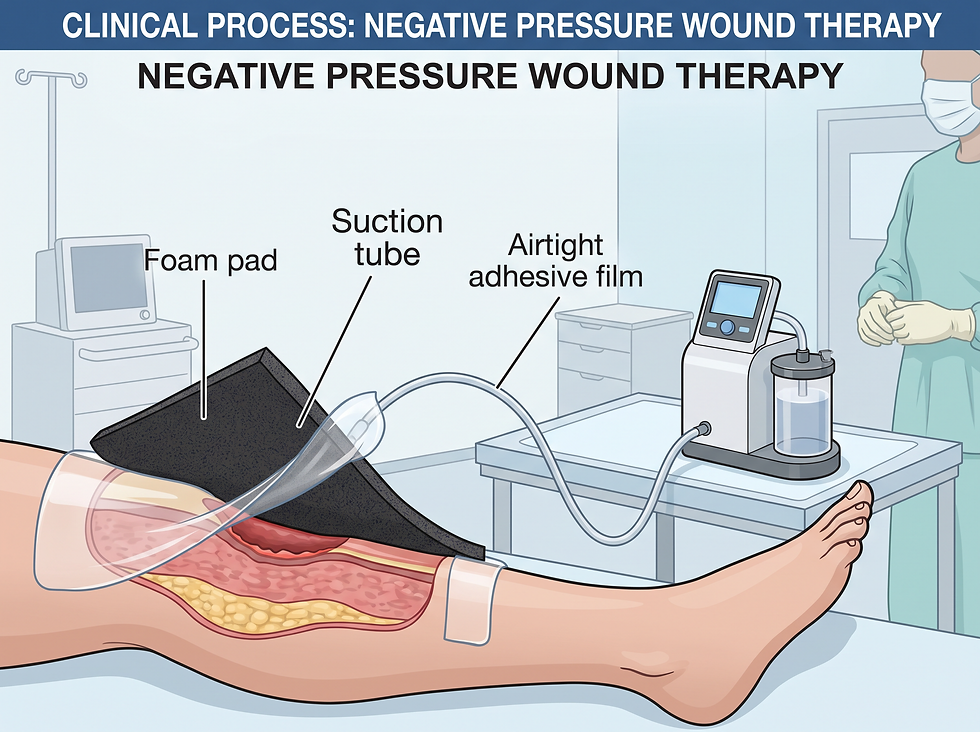
Special foam pad: Placed directly on or in the wound to facilitate fluid transfer.
Airtight film: Creates a seal that allows fluid through while maintaining suction.
Suction tube: Transports fluid from the wound site to a collection canister.
Collection canister: Safely stores drainage removed from the wound.
Specialized pump: Generates the precise negative pressure required for treatment.
The Procedure and Device Operation
Applying negative pressure wound therapy is a structured process performed by healthcare providers. The procedure begins with a thorough cleaning of the wound, which may include removing dead or infected tissue in an operating room setting. Once the wound is prepared, a special foam pad is placed, and an airtight seal is created using see-through tape. A suction tube is then secured on top and connected to a collection canister.
The devices themselves are equipped with small pumps that create the necessary suction. These pumps can be powered by electricity or batteries, and providers can program them to specific pressure settings based on the patient's needs. Safety is a priority, as these devices include alarms that trigger if the battery is low or if the suction is interrupted by a blockage or seal failure.
Benefits and Clinical Indications
The primary benefit of negative pressure wound therapy is significantly improved healing for wounds that might otherwise struggle to recover. By reducing inflammation and enhancing blood flow, the therapy ensures that oxygen and essential nutrients reach the wound more efficiently. Patients often benefit from fewer dressing changes—typically every 48 to 72 hours—and the portability of modern devices can lead to shorter hospital stays.
Fluid removal: Reduces swelling and removes harmful bacteria.
Blood flow: Enhances oxygen delivery to the healing tissue.
Moist environment: Maintains the ideal conditions for new tissue growth.
Portability: Allows patients to continue treatment at home or in a clinic.
Healthcare providers use this therapy for a variety of complex conditions. It is frequently indicated for wounds that are not healing as expected, acute wounds that cannot be closed due to infection risks, and chronic issues such as foot ulcers or burns. However, it is not suitable for everyone; it should not be used if there are unprotected organs, active cancer in the wound, or significant dead tissue present.
Recovery and At-Home Care
Recovery speed depends largely on the type and size of the wound, but many patients find that this therapy accelerates the process faster than traditional methods. When using a device at home, it is essential to follow specific care instructions provided by a healthcare professional. This often includes avoiding full baths in favor of sponge baths to protect the airtight seal and taking prescribed medications as directed.

Regular follow-up appointments are a critical part of the recovery journey. During these visits, providers will change the dressings, ensure the seal remains tight, and monitor the wound for any signs of infection. If the seal comes loose, the machine sounds an alarm, or if there are signs of fever or bleeding, patients must contact their healthcare provider immediately.

Conclusion
Negative pressure wound therapy represents a major advancement in medical care, offering a reliable way to manage complex and slow-healing wounds. By combining the power of controlled suction with a protected environment, it addresses the fundamental challenges of wound recovery. Whether used in a hospital or at home, this therapy provides a clear path toward restored health and improved quality of life for millions of patients.
Next Steps
Consult your provider: Discuss with your healthcare team if negative pressure wound therapy is the right choice for your specific wound type.
Prepare for home use: If treating at home, ensure you have a designated area for the device and understand the alarm system.
Monitor the site: Keep a close eye on the seal and the collection canister, reporting any changes to your clinic.
Follow maintenance protocols: Adhere strictly to the scheduled dressing changes and cleaning instructions provided by your specialist.
Frequently Asked Questions
What is negative pressure wound therapy?
It is a treatment that uses suction to remove fluid and bacteria from a wound to help it heal faster.
How does the suction help?
Suction reduces swelling, pulls the wound edges together, and encourages healthy new tissue to grow.
Does it hurt?
Some patients experience mild discomfort during dressing changes, but the therapy itself is generally well-tolerated.
How often are dressings changed?
Dressings are typically changed every 48 to 72 hours by a healthcare professional.
Can I use it at home?
Yes, many modern NPWT devices are portable and designed for use at home after initial setup.
Can I take a bath with the device?
No, you should avoid submerging the area in water. Sponge baths are recommended instead.
What happens if the machine alarms?
Alarms usually indicate a low battery, a blockage in the tube, or a leak in the airtight seal.
What are the common side effects?
Possible side effects include minor bleeding, localized pain, or skin irritation from the tape.
How long does the treatment last?
The duration depends on the wound's size and healing progress, ranging from days to several weeks.
Is it used for all wounds?
No, it is primarily used for complex, chronic, or acute wounds that are difficult to heal.
What is vacuum-assisted therapy?
It is another name for negative pressure wound therapy, referring to the vacuum or suction used.
Can it treat infections?
It helps remove bacteria, and providers can sometimes deliver antibiotics directly through the system.
Are the devices portable?
Yes, many devices are small, battery-powered, and can be carried in a small bag.
What if my wound starts bleeding?
You should contact your healthcare provider immediately if you notice significant bleeding.
Is this a new treatment?
While advanced, the technology has been commonly used in clinical practice since the 1990s.
Medical Disclaimer
This article is for educational purposes only and is not intended as medical advice. Always consult with a qualified healthcare professional before starting any new treatment or making changes to your medical care routine.
Source date: July 19, 2024.
Comments