Understanding Mild Cognitive Impairment: A Guide to Symptoms and Care

Updated: 1 hour ago
Medically reviewed by Dr. Baraa Alnahhal, MD · Last reviewed: September 2026
TL;DR: Mild cognitive impairment (MCI) is a noticeable decline in memory and thinking skills that exceeds typical age-related changes but does not yet interfere with daily independence. While MCI can be a precursor to dementia, it is not always permanent and can sometimes improve when underlying causes are addressed. Proactive management involves medical assessment, lifestyle adjustments, and brain-stimulating activities to support long-term cognitive health.
Quick answer: Mild cognitive impairment (MCI) is a condition characterized by subtle but noticeable changes in memory, judgment, or reasoning. It acts as a transitional stage between normal aging and more severe conditions such as dementia. Unlike dementia, MCI does not prevent you from managing your daily routine independently. Management focuses on treating underlying health issues, adjusting medications, and maintaining a brain-healthy lifestyle to track and support cognitive function.
What Is Mild Cognitive Impairment?
Mild cognitive impairment (MCI) is a clinical stage that describes a slight but measurable decline in cognitive abilities. For many people it serves as a bridge between the typical memory changes of aging and the more severe impairment found in dementia. The changes are noticeable to the individual or to loved ones, but they are not severe enough to prevent someone from carrying out normal daily activities and maintaining independence.

The Two Primary Types of MCI
Healthcare providers generally categorize mild cognitive impairment into two main types, based on which cognitive skills are most affected.
Amnestic MCI (aMCI): Affects memory. Common observations include forgetting important information, appointments, or recent conversations.
Non-amnestic MCI (naMCI): Affects thinking skills. Common observations include difficulty with judgment, decision-making, or completing complex tasks.
Recognizing the Symptoms
The symptoms of MCI vary from person to person but typically involve a decline in skills such as attention, language, and reasoning. You might become easily distracted, struggle to find the right words during a conversation, or misplace items more often than in the past. Other signs include falling behind on bill payments or missing significant dates and events. In some cases people also notice changes in their sense of smell or in physical movement.
Understanding Causes and Risk Factors
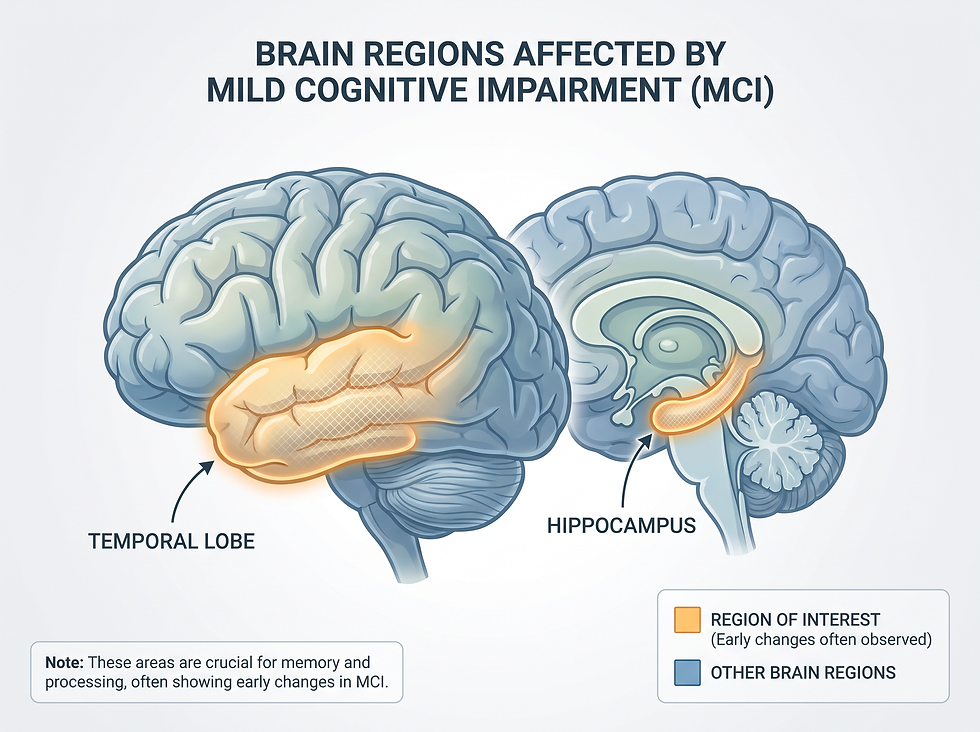
MCI often results from structural changes or damage in specific regions of the brain, such as the hippocampus or temporal lobes. While it can be an early indicator of neurodegenerative diseases such as Alzheimer's or Parkinson's, it can also be triggered by treatable conditions or medication side effects.
Common Risk Factors
Age and genetics: Being over age 65 and having a family history of dementia or the APOE-ε4 gene variant.
Chronic health conditions: Diabetes, high blood pressure, high cholesterol, stroke, and sleep apnea.
Lifestyle and nutrition: Dehydration, vitamin B12 deficiency, and metabolic issues such as hypothyroidism.
Medications: Certain antidepressants, antihistamines, blood pressure medications, and sleep aids.
How MCI Is Diagnosed
Because there is no single test for MCI, providers use a multi-faceted approach to reach a diagnosis. The process is designed to measure cognitive performance and rule out other potential causes for the symptoms.
Clinical exams: A physical and neurological exam, combined with a detailed review of your medical history and current medications.
Cognitive testing: Neuropsychological tests that measure memory, attention, and language skills.
Laboratory and imaging tests: Blood and urine tests, along with CT or MRI scans, to check for structural brain changes or metabolic imbalances.
Management and Treatment Strategies
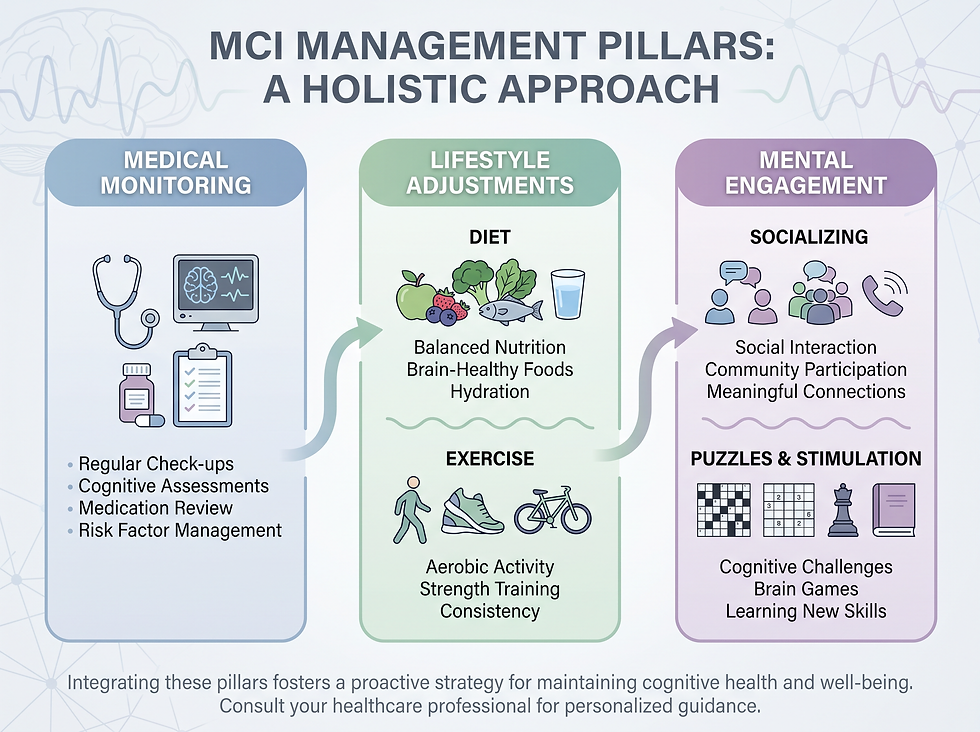
The approach to managing MCI is highly personalized and depends on the underlying cause. If a medication is contributing to the decline, a provider may suggest an adjustment. If a chronic condition such as sleep apnea or a vitamin deficiency is present, treating it can often improve cognitive function.
Lifestyle changes: Support brain health by quitting smoking, reducing alcohol, and eating a healthy diet.
Brain stimulation: Maintain mental agility with puzzles, social engagement, and learning new skills.
Safety planning: Prevent accidents by securing rugs and arranging help with complex tasks.
Proactive planning is also a vital part of management. This includes creating advance directives so your healthcare preferences are respected in the future, and scheduling follow-up visits every six to 12 months to monitor any changes in cognitive status.
Conclusion
Receiving a diagnosis of mild cognitive impairment can be unsettling, but it is a stage where proactive steps can make a significant difference. By identifying risk factors and following a brain-healthy lifestyle, many people can manage their symptoms effectively and maintain their quality of life for years to come.
Talk to your healthcare provider: If you or a loved one is noticing changes in memory or thinking, do not wait to seek professional advice. Early assessment is the key to identifying treatable causes and building a plan that supports long-term brain health. Consult your healthcare provider to begin a comprehensive evaluation.
Frequently Asked Questions
Is MCI the same as dementia?
No. MCI is a milder stage where independence is maintained, whereas dementia involves a more severe decline that interferes with daily life.
Can MCI be reversed?
In some cases, yes. If the cause is a medication side effect or a treatable condition such as a vitamin deficiency, symptoms may improve.
Does MCI always lead to Alzheimer's?
Not always. While MCI increases the risk, some people remain stable or even return to normal cognitive function.
What is the most common symptom of MCI?
Memory loss, such as forgetting recent events or appointments, is the most frequently reported sign.
How is MCI different from normal aging?
MCI involves changes that are more frequent or severe than typical age-related forgetfulness.
Are there medications to treat MCI?
Treatment usually focuses on managing underlying conditions rather than on a specific drug for MCI itself.
Should I tell my doctor about minor memory slips?
Yes. Tracking these changes early helps your provider establish a baseline for your cognitive health.
Can depression cause MCI symptoms?
Yes. Mental health conditions such as depression and anxiety can negatively affect thinking and memory.
Is cognitive testing difficult?
Most cognitive tests are simple verbal or written tasks designed to measure different types of thinking.
How often should I have follow-up exams?
Most providers recommend a follow-up every six to 12 months to monitor for any progression.
Can brain games help?
Activities such as puzzles and social interaction are considered beneficial for maintaining cognitive engagement.
What is the APOE-ε4 gene?
It is a genetic variant associated with an increased risk of developing Alzheimer's disease.
Can sleep apnea affect my memory?
Yes. Untreated sleep apnea can lead to cognitive difficulties and is a recognized risk factor for MCI.
Is a sense of smell related to MCI?
In some cases, a declining sense of smell can be an early sign of the brain changes associated with MCI.
What are advance directives?
These are legal documents that outline your preferences for medical care if you become unable to speak for yourself.
Medical Disclaimer
The information in this article is for educational purposes only and is not a substitute for professional medical advice, diagnosis, or treatment. Always seek the advice of your physician or other qualified health provider with any questions you may have about a medical condition.
Source date: June 27, 2025.
Comments