Understanding Meningioma: Symptoms, Grades, and Treatment Options

Updated: 2 days ago
Medically reviewed by Dr. Baraa Alnahhal, MD · Last reviewed: September 2026
In short: Meningioma is the most common type of brain tumor, arising from the protective layers surrounding the brain and spinal cord. While most are slow-growing and noncancerous (Grade I), they can cause symptoms like headaches or vision changes by pressing on neural structures. Management ranges from active observation to surgical removal or radiation. Early diagnosis via MRI or CT is key for effective treatment and long-term monitoring.
Quick Answer
A meningioma is a tumor that forms in the meninges, the protective tissue layers covering the brain and spinal cord. As the most common primary brain tumor, it is typically noncancerous and slow-growing. Symptoms occur when the tumor compresses nearby brain tissue, leading to headaches, seizures, or sensory changes. Treatment involves active observation, surgical resection, or targeted radiation, depending on the tumor's grade, size, and location.
What Is a Meningioma?
A meningioma is a tumor that develops within the meninges, which are the three protective layers of tissue that envelop and shield the brain and spinal cord. These tumors are recognized as the most common primary brain tumors. While they are frequently found along the outer curve or top of the brain, they can also emerge at the base of the skull or, in rare instances, around the spinal cord.
Most meningiomas are noncancerous (benign) and characterized by slow growth. Because they expand gradually, individuals may not experience symptoms until the tumor reaches a significant size and begins to exert pressure on the brain or surrounding nerves. The clinical presentation of a meningioma is primarily determined by its specific location and the neural structures it affects.
Classification by Location and Grade
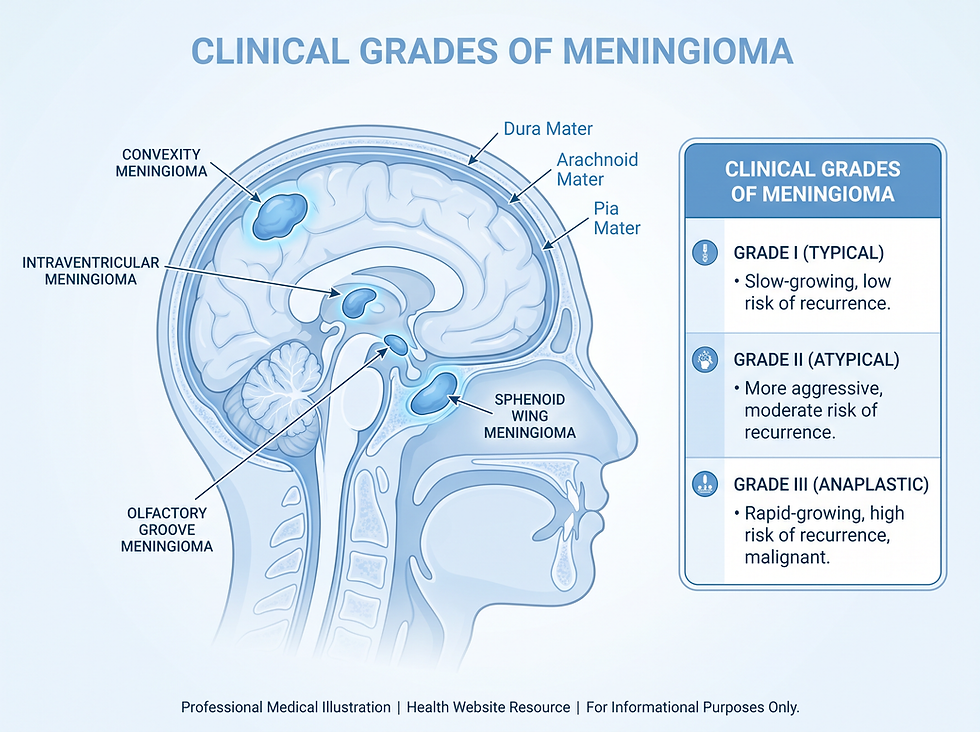
Meningiomas are classified into different types based on where they form in the cranial cavity. For instance, convexity meningiomas grow on the outer surface of the brain, while intraventricular types develop within the brain's fluid-filled ventricles. Olfactory groove meningiomas form near the nerves responsible for smell, and sphenoid wing meningiomas occur along the bone ridge behind the eyes.
Beyond location, these tumors are assigned a grade to indicate their severity and growth behavior. The majority of cases fall into Grade I, representing slow-growing, typical tumors.
Grade I (typical): Noncancerous and slow-growing; the most common form.
Grade II (atypical): Noncancerous but grows more quickly; may be resistant to treatment.
Grade III (anaplastic): Malignant (cancerous); grows and spreads rapidly; rare.
Symptoms and Potential Causes
The symptoms of a meningioma often emerge gradually, sometimes over years, due to the slow-growing nature of the tumor. Many patients remain asymptomatic until the tumor is large enough to displace brain tissue. When symptoms do occur, they vary widely based on the tumor's position.
Common Clinical Signs
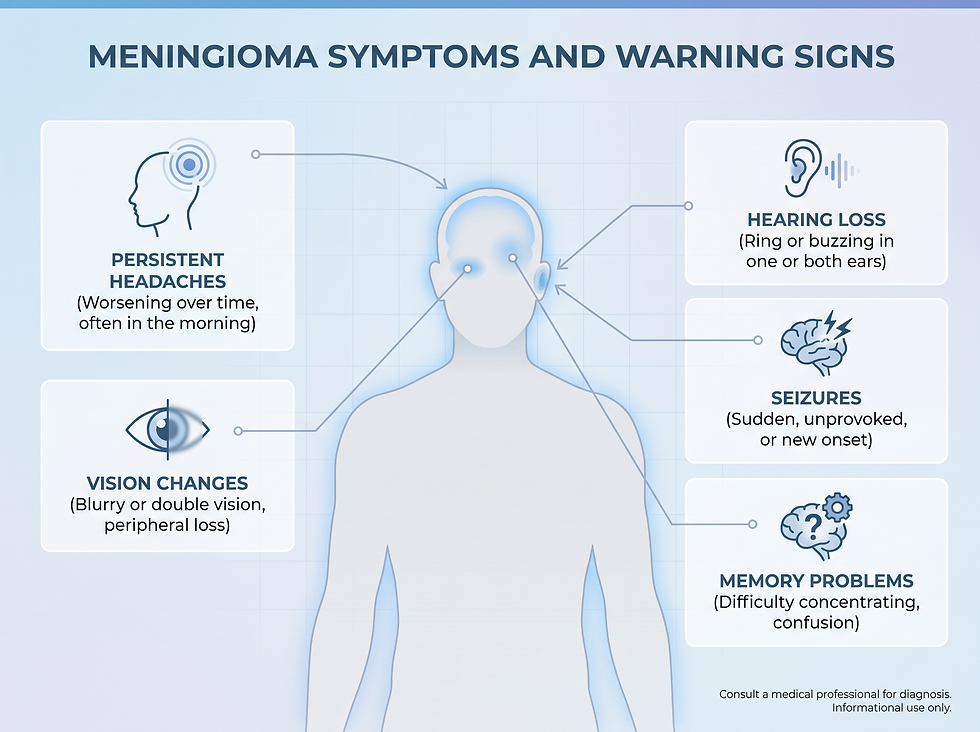
Patients may experience persistent headaches, hearing loss, or a diminished sense of smell. Neurological symptoms such as muscle weakness, memory impairment, or seizures can also indicate the presence of a tumor. Additionally, vision changes, including blurriness, double vision, or bulging eyes, are common when the tumor affects the optic pathways or cranial nerves.
Understanding the Causes
The development of most meningiomas is linked to chromosomal deletions, which are genetic mutations where a portion of a chromosome is missing. These mutations typically occur sporadically and randomly. However, certain inherited genetic conditions can increase the risk of developing these tumors.
Genetic conditions: Cowden syndrome, Li-Fraumeni syndrome, Multiple Endocrine Neoplasia Type 1 (MEN1), Neurofibromatosis Type 2 (NF2), and Von Hippel-Lindau (VHL) disease.
Risk factors: The condition is more prevalent in individuals over the age of 65 and in Black populations. Females are at a higher risk, potentially due to hormonal influences from birth control pills or hormone replacement therapy.
Other factors: A history of breast cancer, prior radiation therapy to the head, or having a biological relative with the condition can also elevate risk. Notably, while benign tumors are more common in females, malignant (Grade III) tumors occur more frequently in males.
Diagnostic and Treatment Pathways
Diagnosing a meningioma involves a comprehensive physical and neurological examination. Because the symptoms can mimic normal signs of aging, especially in older adults, healthcare providers rely heavily on advanced imaging. A CT scan or an MRI is essential to confirm the presence, size, and exact location of the tumor.
Management Strategies
Treatment is highly individualized and depends on the tumor's grade, size, and whether it is causing symptoms. A multidisciplinary approach is typically employed to ensure the best possible outcome.
Observation: A "wait-and-see" approach for small, slow-growing tumors with regular imaging follow-ups.
Surgery: Surgical resection aims to remove the tumor; gross total resection can often be curative.
Radiation therapy: Uses high-energy beams to kill tumor cells; effective for both benign and malignant types. You can read more about radiation therapy planning in our dedicated guide.
Radiosurgery: Targeted radiation (e.g., Gamma Knife) often used for small, benign tumors.
Palliative care: Focuses on managing symptoms and providing support to improve quality of life.
In rare cases where tumors are recurrent or do not respond to standard therapies, chemotherapy may be considered. Advanced molecular analysis of tumor tissue can also help clinicians predict recurrence risks and identify potentially effective drug treatments.

Outlook and Long-Term Care
The prognosis for individuals with meningioma varies based on age, overall health, and the tumor's specific characteristics. For those with Grade II or Grade III tumors, the estimated five-year survival rate is approximately 63.5%. It is important to note that these statistics are estimates and individual outcomes can differ significantly.
Recurrence is a primary concern, particularly if the tumor could not be entirely removed during surgery. Regular follow-up appointments and repeat imaging are critical components of long-term care to monitor for recurrence and manage any persistent side effects from treatment.
Conclusion
A meningioma diagnosis can be a significant life event, but it is important to remember that these tumors are highly treatable. With the majority being benign and slow-growing, modern diagnostic and surgical techniques offer excellent management options. Ongoing monitoring and a proactive approach to care are essential for maintaining neurological health and quality of life.
If you or a loved one are experiencing persistent neurological symptoms such as unusual headaches, vision changes, or memory issues, consult a healthcare professional for a comprehensive evaluation. Early detection through clinical imaging is the most effective way to manage potential brain tumors and ensure appropriate intervention.
Frequently Asked Questions
What is the most common symptom of a meningioma?
Headaches are a frequent symptom, though many meningiomas cause no symptoms at all until they become quite large.
Are all meningiomas cancerous?
No, the vast majority of meningiomas are Grade I, which means they are noncancerous (benign) and slow-growing.
Can a meningioma be cured?
Yes, many meningiomas can be cured through surgical resection, especially if the surgeon is able to perform a gross total removal.
How fast do these tumors grow?
Most meningiomas grow very slowly, sometimes only a few millimeters per year, which is why they may go undetected for a long time.
Who is most at risk for developing a meningioma?
Risk factors include being over age 65, female, Black, or having a history of radiation therapy to the head.
Is surgery always necessary for a meningioma?
Not always. Small, slow-growing tumors that aren't causing symptoms may be managed through active observation ("wait-and-see").
What is Gamma Knife radiosurgery?
It is a form of highly targeted radiation that can stop the growth of small, benign tumors without traditional open surgery.
Can meningiomas come back after surgery?
Yes, recurrence is possible, particularly if the tumor was not fully removed or if it is a higher-grade (Grade II or III) tumor.
Are there genetic conditions linked to meningioma?
Yes, conditions like Neurofibromatosis Type 2 (NF2) and Von Hippel-Lindau (VHL) disease are known to increase risk.
How is a meningioma diagnosed?
Diagnosis typically involves a neurological exam followed by imaging tests like an MRI or CT scan.
Can hormones affect meningioma growth?
Yes, research suggests a link between female hormones and tumor growth, including those from birth control or hormone replacement therapy.
What is the difference between Grade I and Grade II?
Grade I tumors are slow-growing and benign, while Grade II (atypical) tumors grow faster and may be harder to treat.
Can a meningioma cause seizures?
Yes, if the tumor presses on certain areas of the brain, it can trigger seizure activity.
What are the complications of an untreated meningioma?
Potential complications include vision loss, memory impairment, speech difficulties, and muscle paralysis.
Is chemotherapy common for meningioma?
No, chemotherapy is rare and usually reserved for recurrent or aggressive tumors that don't respond to surgery or radiation.
Medical Disclaimer: The information provided in this article is for educational purposes only and should not be used as a substitute for professional medical advice, diagnosis, or treatment. Always seek the advice of a qualified healthcare provider with any questions you may have regarding a medical condition.
Comments