Understanding Leigh Syndrome: A Comprehensive Guide to Mitochondrial Health

Updated: 2 days ago
Medically reviewed by Dr. Baraa Alnahhal, MD · Last reviewed: September 2026
TL;DR: Leigh syndrome, also known as Leigh's disease, is a rare and fatal genetic condition that primarily affects the central nervous system. It occurs when mutations in genes or mitochondrial DNA prevent cells from producing the energy (ATP) they need to function, leading to cell death. While most common in infants, it can occasionally affect adults. Symptoms include developmental regression, seizures, and respiratory issues. Currently, there is no cure, and treatment focuses on managing symptoms and improving comfort.
Quick Answer: Leigh syndrome is a rare mitochondrial disorder where inherited genetic changes disrupt cellular energy production, causing the progressive breakdown of the nervous system. Most symptoms appear in infants between 3 months and 2 years old, often following a period of normal development. The condition is typically fatal, with most children passing away by age three. Management involves symptom relief and metabolic support, as no curative treatment exists.
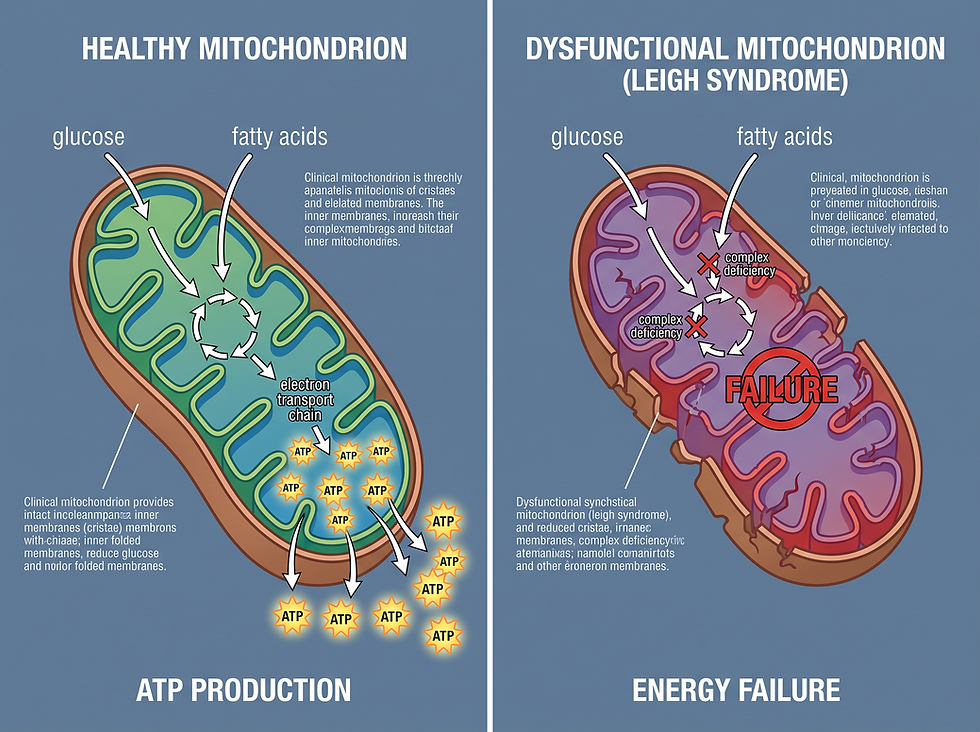
Leigh syndrome, or subacute necrotizing encephalomyelopathy, is a rare genetic disorder that significantly impacts the central nervous system. This condition is classified as a mitochondrial disease, meaning it stems from a failure in the body's "energy factories," the mitochondria. These cellular structures are responsible for converting fatty acids and glucose into adenosine triphosphate (ATP), the primary energy source for nearly all human cells. When this process fails, the high-energy demands of the brain, nerves, and spinal cord cannot be met, leading to progressive cell damage and death.
While the condition is most frequently diagnosed in early infancy, its impact varies depending on the specific genetic mutation involved and the age of onset. Understanding the mechanisms of inheritance and the primary symptoms is essential for families navigating this challenging diagnosis.
Types and Prevalence of Leigh Syndrome
Leigh syndrome is categorized based on the age at which symptoms first appear and the clinical presentation of the disease. The most common form is early-onset, or infantile Leigh syndrome, which typically manifests before a child reaches two years of age.
Type of Leigh Syndrome | Typical Age of Onset | Key Characteristics |
Early-Onset (Infantile) | Before age 2 | Most common form; affects boys and girls equally; rapid progression. |
Late-Onset (Adult) | After age 2 (Adolescence/Adulthood) | Rare; affects more males than females; slower disease progression. |
Leigh-Like Syndrome | Varies | Symptoms are present, but imaging does not show classic brain lesions. |
Worldwide, the condition affects approximately 1 in 40,000 newborns. However, certain geographic regions show significantly higher prevalence rates due to genetic clusters. For instance, in the Saguenay Lac-Saint-Jean region of Quebec, the rate is as high as 1 in 2,000, while the Faroe Islands report a prevalence of 1 in 1,700.
Genetic Causes and Inheritance Patterns
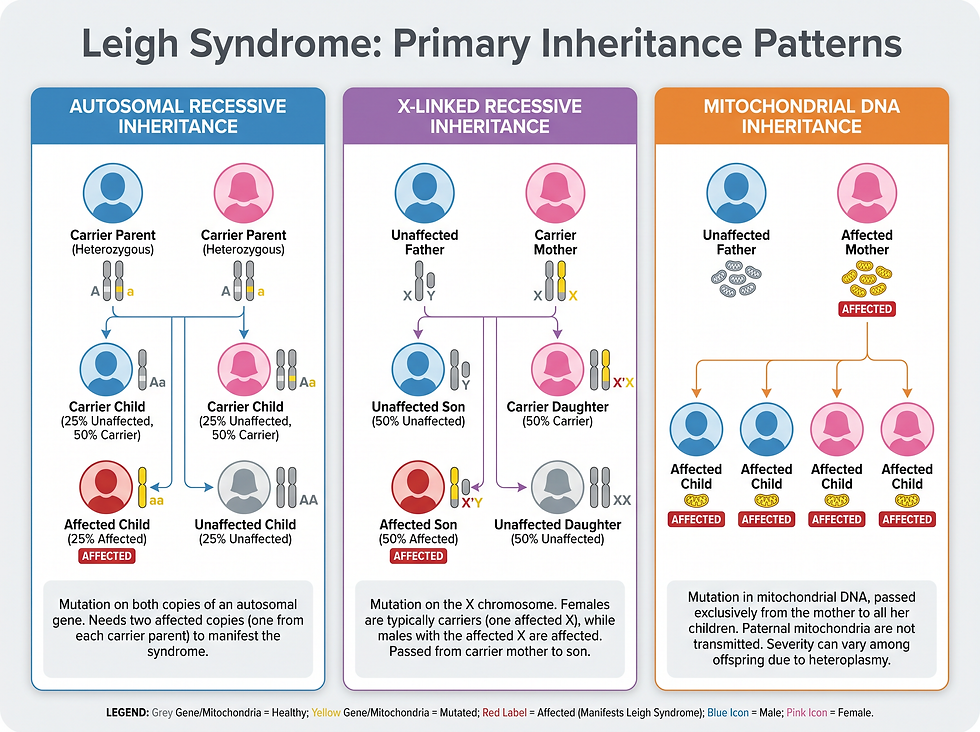
Leigh syndrome is caused by mutations in more than 75 different genes, all of which interfere with the production of ATP. The majority of cases (approximately 80%) are inherited through nuclear DNA changes, while the remaining 20% involve mitochondrial DNA (mtDNA).
The inheritance patterns for Leigh syndrome are complex. In autosomal recessive cases, a child must inherit a mutated gene from both parents, who are typically asymptomatic carriers. X-linked recessive cases involve mutations on the X chromosome; boys who inherit this change will develop the disease, while girls may become carriers. Mitochondrial DNA mutations are inherited exclusively from the biological mother and can affect every generation of a family.
Recognizing Symptoms and Progression
Infants with Leigh syndrome often appear healthy at birth and may even meet early developmental milestones, such as holding their head up. However, as the disease progresses, these abilities are often lost, a process known as developmental regression.
Symptom Category | Common Signs and Observations |
Early Infantile Signs | Difficulty swallowing, feeding problems, irritability, and low muscle tone (hypotonia). |
Neurological Issues | Seizures, dementia, balance problems (ataxia), and involuntary muscle contractions. |
Vision and Eye Health | Crossed eyes (strabismus), optic nerve deterioration, and rapid eye movements (nystagmus). |
Physical Growth | Slowed growth and delays in reaching physical milestones. |
As the condition advances, complications such as lactic acidosis may occur. This buildup of lactic acid in the bloodstream happens when cells lack enough oxygen to aid metabolism, leading to severe breathing difficulties, heart muscle thickening (hypertrophic cardiomyopathy), and kidney dysfunction.
Diagnosis and Supportive Management
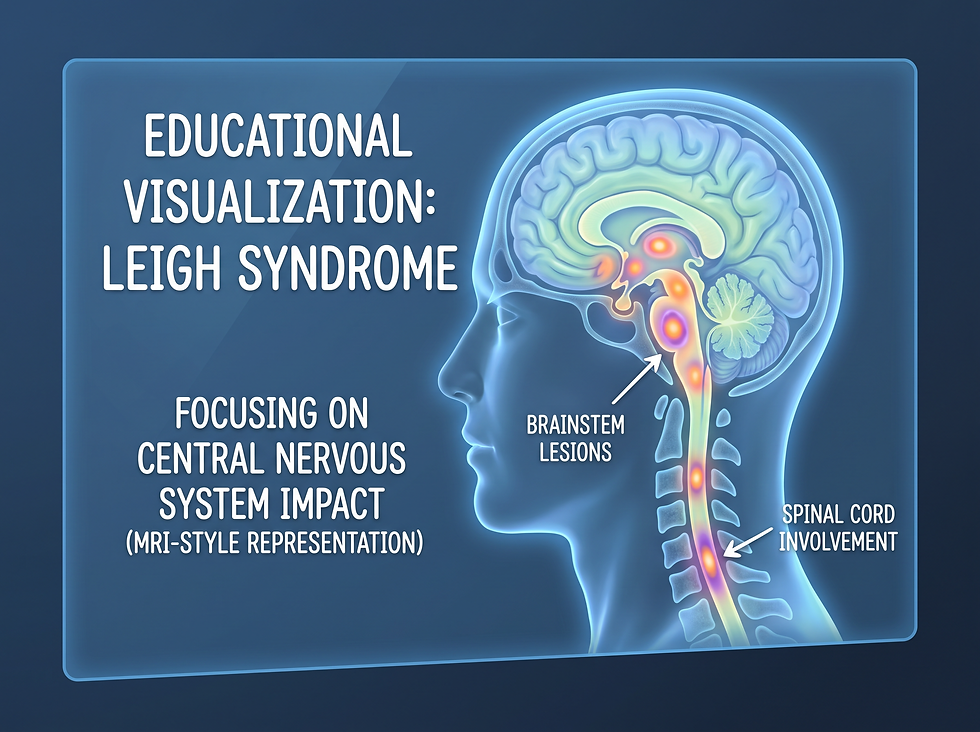
Diagnosing Leigh syndrome requires a combination of clinical observation and specialized testing. Healthcare providers typically use blood tests to check for lactic acidosis and specific enzyme markers. Magnetic Resonance Imaging (MRI) is essential for identifying lesions or damaged tissue in the brain and spinal cord, which are characteristic of the disease. Genetic testing is then performed to pinpoint the exact mutation responsible.
Currently, there is no cure for Leigh syndrome, and the condition is considered fatal. Management focuses entirely on easing symptoms and maintaining the child's comfort. Some children may benefit from citric acid or sodium bicarbonate to treat lactic acidosis, or thiamine (Vitamin B1) injections to potentially slow the progression of the disease. In specific cases involving enzyme deficiencies, a high-fat, low-carbohydrate diet may be recommended to support metabolic function.
Conclusion
Leigh syndrome is a profound and challenging condition that affects the very core of cellular energy production. While the prognosis is difficult, early diagnosis and supportive care are vital for managing symptoms and providing comfort to affected children and their families. Ongoing research into mitochondrial health and genetic therapies continues to be a focus for specialists worldwide, offering hope for future breakthroughs in treating this rare disease.
If you have concerns about your child's developmental milestones or notice signs of regression, consult a pediatric neurologist or a genetic specialist immediately. Early intervention and a comprehensive management plan are essential for providing the best possible supportive care for children with mitochondrial disorders.
Frequently Asked Questions
1. What is the primary cause of Leigh syndrome?
Leigh syndrome is caused by genetic mutations that prevent mitochondria from producing ATP, the energy required for cells to function.
2. Is Leigh syndrome always fatal?
Yes, it is currently considered a fatal condition with no known cure, though life expectancy varies based on the type and onset.
3. At what age do symptoms usually appear?
Symptoms most commonly appear between the ages of 3 months and 2 years.
4. Can adults develop Leigh syndrome?
Yes, though rare, adult-onset Leigh syndrome can occur, typically progressing more slowly than the infantile form.
5. How is the condition inherited?
It can be inherited through autosomal recessive, X-linked recessive, or mitochondrial DNA patterns.
6. What is developmental regression?
It is the loss of previously acquired skills or milestones, such as head control or crawling, which is a hallmark of Leigh syndrome.
7. What are mitochondria?
Mitochondria are the "energy factories" within cells that convert nutrients into ATP.
8. What is lactic acidosis?
It is a dangerous buildup of lactic acid in the blood that occurs when cells cannot properly metabolize energy.
9. Does Leigh syndrome affect vision?
Yes, it can cause optic atrophy, crossed eyes, rapid eye movements, and eventual vision loss.
10. Are there any treatments available?
Treatments focus on symptom management, such as treating lactic acidosis and providing vitamin supplements like thiamine.
11. Is there a specific test for Leigh syndrome?
Diagnosis involves a combination of blood tests, brain MRIs, and genetic testing.
12. Why is the nervous system affected most?
The nervous system requires a high amount of energy to function, making it highly susceptible to ATP production failures.
13. What is subacute necrotizing encephalomyelopathy?
This is the original medical name for Leigh syndrome, referring to the characteristic lesions it causes in the brain and spinal cord.
14. Can diet help manage the condition?
In some cases, a high-fat, low-carbohydrate diet may be used to support energy production in children with specific enzyme deficiencies.
15. How common is this disease?
It affects approximately 1 in 40,000 newborns worldwide, though it is more common in certain genetic clusters.
Medical Disclaimer: The information provided in this article is for educational purposes only and is not intended as medical advice, diagnosis, or treatment. Always seek the advice of your physician or other qualified health provider with any questions you may have regarding a medical condition. Never disregard professional medical advice or delay in seeking it because of something you have read here.
Comments