Understanding Langya Henipavirus: Symptoms, Transmission, and Risks

Updated: 2 days ago
Medically reviewed by Dr. Baraa Alnahhal, MD · Last reviewed: September 2026
TL;DR
Langya henipavirus (LayV) is a newly identified zoonotic virus transmitted from shrews to humans, causing mild flu-like symptoms. While no deaths have been reported, health officials monitor it closely due to its similarity to more severe viruses and its potential to mutate.
Quick Answer
Langya henipavirus is a newly identified zoonotic virus primarily transmitted to humans through contact with shrews. First discovered in China, the infection typically causes mild, flu-like symptoms such as fever, cough, and fatigue. While no fatalities have been reported, the virus is closely monitored due to its similarity to more severe henipaviruses. Management focuses on supportive care at home, though rare complications like liver or kidney failure require professional medical intervention to ensure patient safety.
What is Langya Henipavirus?
Langya henipavirus, often referred to as Langya virus or LayV, is a recently discovered virus that belongs to the henipavirus genus. It was first identified in humans between 2018 and 2021 in China during routine health screenings of individuals with fevers and recent animal exposure. Scientists categorized the virus as zoonotic, meaning it originates in animals and can cross over to infect humans.
While the current identified cases have primarily involved mild illness, researchers are monitoring the virus with significant interest. This vigilance is due to its genetic similarity to the Nipah and Hendra viruses, both of which are known to cause severe respiratory and neurological disease in humans. The primary concern is the potential for the virus to mutate into a form that could spread more easily between people or cause more significant health complications.
Transmission and Risk Factors
The primary source of Langya henipavirus transmission to humans is the shrew, a small rodent-like mammal. Most confirmed cases have occurred in individuals who work on farms or have frequent contact with these animals in their natural habitats. While other animals such as dogs and goats have tested positive for the virus in affected regions, it remains unconfirmed whether these domestic animals can transmit the infection to humans.
Currently, there is no evidence to suggest that Langya virus can spread from person to person. However, because other members of the henipavirus family possess this capability, health experts remain cautious. The following table summarizes the known transmission characteristics and risks associated with the virus.
Factor | Description |
Primary Reservoir | Shrews (small rodents) |
Confirmed Locations | China (Eastern regions) |
High-Risk Groups | Farmers and those with frequent animal exposure |
Human-to-Human Spread | Not currently observed |
Mutational Potential | High (monitored for increased transmissibility) |
Recognizing the Symptoms
For the majority of patients, a Langya virus infection presents as a mild, flu-like illness. Symptoms typically develop following exposure to an infected animal and can last for several days. Because these signs overlap with many other common respiratory infections, clinical testing is required for a definitive diagnosis.
Commonly reported symptoms include:
Persistent low-grade fever
Dry cough and fatigue
Loss of appetite and headache
Muscle pain (myalgia)
Nausea and vomiting

Potential Complications and Diagnosis
Although most cases remain mild, a small percentage of patients have experienced more significant health issues. These complications affect vital organ systems and blood composition, requiring closer medical supervision. The diagnostic process involves specific laboratory tests to identify the presence of the virus in bodily fluids.
Complication | Clinical Impact |
Liver Function | Potential for acute liver failure |
Kidney Function | Risk of renal impairment or failure |
White Blood Cells | Leukopenia (low counts, reducing immune response) |
Platelets | Thrombocytopenia (low counts, increasing bleeding risk) |
Diagnosis is primarily achieved through throat and nose swabs in regions where the virus is known to circulate. In some clinical settings, blood or urine samples may also be used to detect viral genetic material or antibodies.
Management and Supportive Care
There are currently no specific antiviral medications approved for the treatment of Langya henipavirus. Management is entirely supportive, focusing on relieving symptoms while the body's immune system clears the infection. Patients are generally advised to rest, maintain adequate hydration, and use over-the-counter medications to manage fever and pain.
If symptoms become severe, immediate medical attention is necessary. Emergency indicators include a high fever exceeding 103°F (40°C), significant difficulty breathing, persistent chest or abdominal pain, confusion, or seizures. In these instances, hospitalization may be required to manage organ failure or provide respiratory support.

Outlook and Prevention
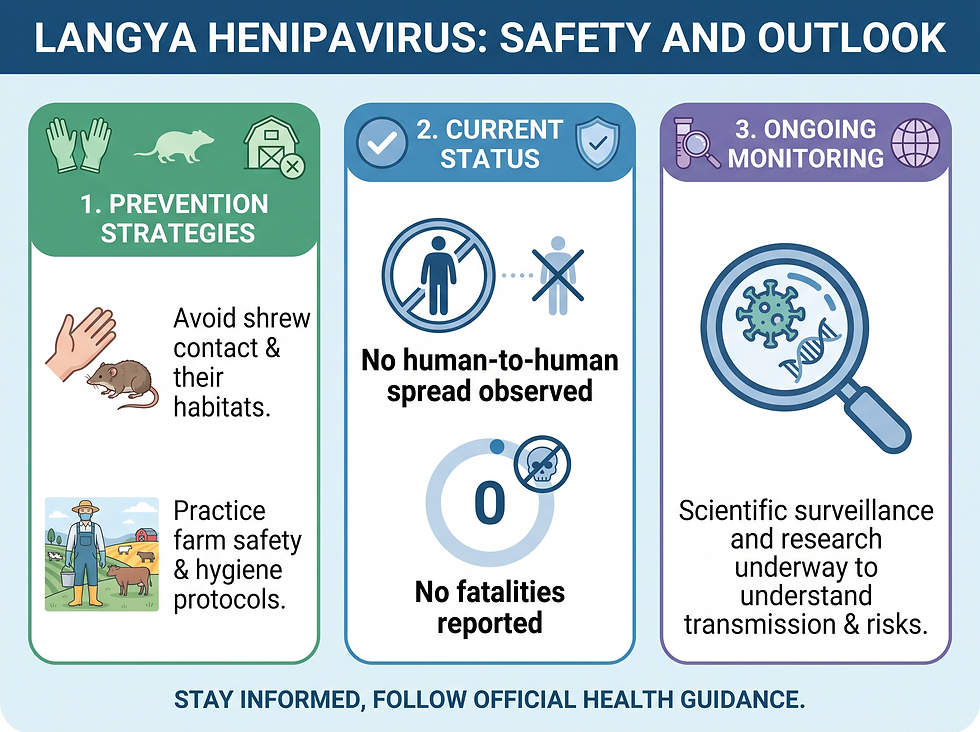
The prognosis for individuals diagnosed with Langya henipavirus is currently very positive, as no fatalities have been reported among the initial 35 confirmed cases. The primary goal of current public health efforts is to prevent further zoonotic transmission and monitor the virus for any changes in its behavior.
Prevention focuses on reducing contact with shrews and other potentially infected animals in agricultural settings. As the virus is not currently spreading between humans, standard hygiene and animal safety protocols remain the most effective tools for prevention.
Conclusion
Langya henipavirus represents a newly identified challenge in the study of zoonotic diseases. While it currently causes only mild illness in most people, its relationship to more severe viruses necessitates ongoing vigilance. By understanding the symptoms and transmission risks, individuals in affected areas can take appropriate steps to protect their health.
Call to Action: If you have recently traveled to regions where Langya virus has been identified and are experiencing persistent fever or respiratory symptoms, contact a healthcare professional for guidance and monitoring.
Frequently Asked Questions
What is Langya henipavirus?
It is a newly identified zoonotic virus that causes mild, flu-like symptoms in humans.
How is the virus transmitted to people?
The virus spreads primarily through contact with shrews, which are small rodents.
Can Langya virus spread from person to person?
Currently, there is no evidence of human-to-human transmission, though scientists are monitoring for mutations.
Where have cases of Langya virus been found?
All 35 confirmed cases to date have been identified in China.
What are the most common symptoms?
Fever, cough, fatigue, loss of appetite, and muscle aches are the most frequent signs.
Is Langya henipavirus fatal?
No deaths have been reported among the individuals diagnosed with the virus so far.
How is the infection diagnosed?
Healthcare providers use throat and nose swabs, as well as blood or urine tests, to detect the virus.
Are there specific medications for Langya virus?
No specific antivirals exist; treatment focuses on managing symptoms with over-the-counter options.
What are the potential complications?
Rarely, the virus can cause liver failure, kidney failure, or low blood cell counts.
Who is at the highest risk for infection?
Individuals working on farms or those with frequent exposure to shrews in affected areas.
Is there a vaccine for Langya virus?
There is currently no vaccine available for this newly identified virus.
Why are scientists monitoring this virus so closely?
It is genetically similar to Nipah and Hendra viruses, which have high mortality rates.
Can pets like dogs or cats spread the virus?
While some dogs and goats have tested positive, their ability to spread it to humans is unconfirmed.
When should I see a doctor for these symptoms?
Seek medical advice if you have a fever and cough following exposure to animals in known affected regions.
What should I do if I have a high fever or trouble breathing?
Seek emergency medical care immediately, as these may indicate serious complications.
Medical Disclaimer: The information provided in this article is for educational purposes only and should not be used as a substitute for professional medical advice, diagnosis, or treatment. Always seek the advice of your physician or other qualified health provider with any questions you may have regarding a medical condition.
Comments