Understanding Hydrocelectomy: Procedure, Recovery, and Clinical Benefits

Updated: 1 hour ago
Medically reviewed by Dr. Baraa Alnahhal, MD · Last reviewed: September 2026
TL;DR
Hydrocelectomy is a common outpatient surgery used to remove or repair a hydrocele, a fluid-filled sac surrounding the testicle. The procedure typically takes less than an hour and involves a small incision to drain the fluid and remove the sac. While highly successful with a low risk of complications, patients should expect a recovery period of two to four weeks, during which strenuous activity and heavy lifting must be avoided to ensure proper healing.
Quick Answer
A hydrocelectomy is a surgical procedure performed to treat a hydrocele, which is a fluid-filled sac that causes swelling in the scrotum. The surgery involves making a small incision in the groin or scrotum to remove the sac and drain the accumulated fluid. It is a standard treatment for persistent or painful swelling in both infants and adults, offering a high success rate and long-term relief from discomfort and physical limitations.
Overview and Clinical Indications
A hydrocelectomy is the primary surgical intervention for a hydrocele, a condition characterized by the accumulation of fluid within a sac surrounding the testicle. This buildup leads to noticeable swelling in the scrotum, which can range from a minor cosmetic concern to a significant cause of physical discomfort. While hydroceles are particularly common in newborn males, affecting approximately 10% at birth, they can also develop in adult men due to injury, infection, or localized inflammation.
In infants, the condition often arises from the incomplete closure of the processus vaginalis, a thin membrane between the abdomen and the scrotum. While many pediatric cases resolve spontaneously within the first year of life, surgical intervention becomes necessary if the swelling persists beyond 12 months. For adults, a hydrocelectomy is typically recommended when the swelling becomes painful, interferes with daily activities like walking, or causes psychological distress due to its appearance.
When Surgery Is Recommended
Infants: The cause is usually incomplete membrane closure. Doctors monitor for 12 months and recommend surgery if the swelling persists.
Adults: Causes include injury, infection, or inflammation. Surgery is recommended if the swelling is painful, obstructive, or enlarging.
The Surgical Procedure
The hydrocelectomy is usually performed as an outpatient procedure, meaning most patients return home on the same day. The operation is conducted under general anesthesia, ensuring the patient remains asleep and pain-free throughout the process. A specialized surgical team, including a specialist surgeon and an anesthesiologist, manages the procedure, which typically lasts less than one hour.
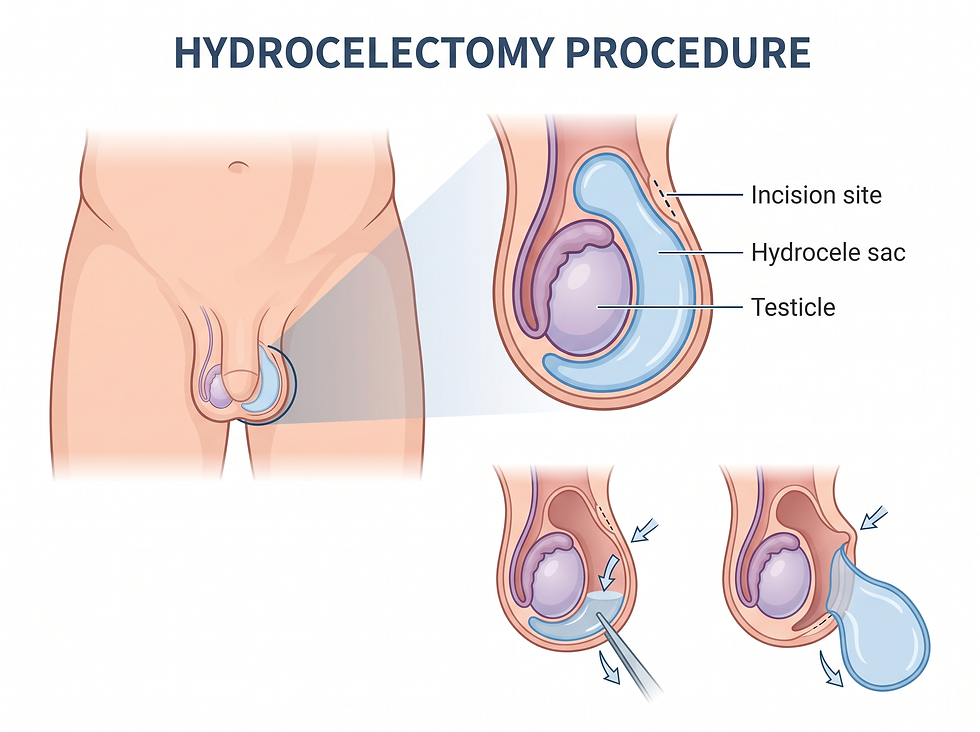
During the surgery, a small incision is made in either the scrotum or the groin area. The surgeon then carefully removes the hydrocele sac. In some cases, the tissue may be turned inside out to significantly reduce the risk of the fluid sac recurring. If a hernia is present, a condition that sometimes occurs alongside a hydrocele, it is repaired during the same session. In some instances, a small silicone tube known as a surgical drain may be placed to prevent the buildup of blood or other fluids during the initial healing phase.
Procedure Phases
Preparation: Physical exam, health history review, and localized shaving.
Execution: Incision, sac removal, and optional hernia repair.
Closing: Suture application and placement of sterile bandages.
Preparation and Safety
Preparation for a hydrocelectomy involves a thorough medical evaluation to ensure the patient is fit for surgery. This includes a physical examination and a review of all current medications, particularly blood thinners, which may need to be adjusted to minimize bleeding risks. Patients are often instructed to wash the surgical area thoroughly with soap the day before and the morning of the procedure to reduce the risk of infection.
While hydrocelectomy is considered a safe and standard procedure, it does carry certain clinical risks common to most surgeries. These include potential reactions to anesthesia, localized infection, hematoma (clotted blood), and temporary swelling or bruising. In rare cases, there is a risk of injury to the testicle or surrounding structures, which could impact future fertility or hormone production. There is also a small possibility that the hydrocele may return even after a successful repair.
Recovery and Aftercare
The initial recovery from a hydrocelectomy is relatively rapid, with most patients able to resume light daily activities within approximately two days. If a surgical drain was placed, it is typically removed in a clinical setting within 24 to 48 hours. Patients are advised to use ice packs and wear supportive underwear, such as a jockstrap, to manage swelling and provide comfort during the first few weeks of healing.
Long-term recovery requires a more disciplined approach to physical activity. Strenuous exercise, swimming, and heavy lifting should be avoided for two to four weeks to prevent complications and ensure the incision heals correctly. Sexual activity and masturbation should also be postponed for several weeks following the surgery. If the hydrocele was large, the scrotal skin may appear loose initially, but it typically recoils to its standard size within a month.

Long-Term Benefits and Outcomes
Hydrocelectomy is a highly effective solution for persistent scrotal swelling. By addressing the underlying fluid accumulation, the surgery relieves discomfort, resolves swelling, and helps prevent complications associated with untreated hydroceles.

Conclusion
Hydrocelectomy stands as a highly effective and safe solution for persistent scrotal swelling caused by hydroceles. By addressing the underlying fluid accumulation through a brief surgical procedure, patients can achieve long-term relief from pain and physical limitations. With proper preparation and a disciplined approach to recovery, the vast majority of individuals experience successful outcomes and a full return to their typical quality of life.
What you can do now: If you or your child are experiencing persistent scrotal swelling, discomfort, or difficulty with daily activities, consult with a healthcare professional to discuss whether a hydrocelectomy is the right clinical path. Early evaluation can ensure proper diagnosis and prevent potential complications associated with untreated hydroceles.
Frequently Asked Questions (FAQ)
1. What exactly is a hydrocelectomy?
It is a surgical procedure performed to remove or repair a hydrocele, which is a fluid-filled sac surrounding the testicle.
2. How long does the surgery take?
The procedure is relatively quick, typically taking less than one hour to complete.
3. Is the surgery performed as an outpatient?
Yes, most patients are able to return home on the same day as their surgery.
4. What type of anesthesia is used?
General anesthesia is used, so the patient is completely asleep and feels no pain during the operation.
5. How long is the recovery period?
While light activities can resume in two days, full recovery and return to strenuous activity usually take two to four weeks.
6. Will I have a surgical drain?
Some patients require a small silicone tube to drain fluids for 1 to 2 days, but this is not necessary in every case.
7. What are the most common risks?
Common risks include temporary swelling, bruising, and localized infection at the incision site.
8. Can a hydrocele come back after surgery?
While the success rate is very high, there is a small chance that a hydrocele can recur.
9. When can I resume heavy lifting?
You should avoid heavy lifting for at least two to four weeks following the procedure.
10. How do I manage pain at home?
Pain is typically managed with ice packs, supportive underwear, and over-the-counter pain relievers as directed.
11. Why should I avoid aspirin after surgery?
Aspirin can increase the risk of bleeding; use acetaminophen or ibuprofen instead if approved by your provider.
12. What if the scrotal skin looks loose after surgery?
This is common if the hydrocele was large; the skin usually shrinks back to its typical size within a month.
13. Are there non-surgical alternatives?
For many adults, a hydrocele can be monitored, but surgery is the only definitive way to remove the sac.
14. Does the surgery affect fertility?
Injury to fertility structures is a rare risk; most patients experience no impact on their ability to have children.
15. When should I call my doctor during recovery?
Contact your healthcare provider if you experience high fever, excessive redness, or drainage that does not stop.
References
Medical disclaimer: The information provided is for educational purposes only and should not be used as a substitute for professional medical advice, diagnosis, or treatment. Always seek the advice of your physician or other qualified health provider with any questions you may have regarding a medical condition. Based on information dated October 1, 2024.
Comments