Understanding Fenestrated Capillaries: Anatomy, Function, and Health

Updated: 2 days ago
Medically reviewed by Dr. Baraa Alnahhal, MD · Last reviewed: September 2026
TL;DR
Fenestrated capillaries are specialized, ultra-thin blood vessels characterized by tiny pores or "windows" called fenestrae. These openings significantly increase the efficiency of nutrient, waste, and hormone exchange between the bloodstream and vital organs such as the kidneys and intestines. Maintaining overall vascular health through lifestyle choices is essential for preserving the integrity of these critical filtration pathways.
Quick Answer: What Are Fenestrated Capillaries?
Fenestrated capillaries are microscopic blood vessels featuring small pores in their inner endothelial layer. These "windows" allow larger molecules and proteins to pass between the blood and surrounding tissues more easily than in standard capillaries. Primarily located in the kidneys, small intestines, and endocrine glands, they are essential for filtration, nutrient absorption, and hormone distribution. Proper management of blood pressure and diet is key to preventing damage to these specialized vessels.
The human circulatory system relies on various types of capillaries to facilitate the exchange of life-sustaining substances. Among these, fenestrated capillaries stand out due to their unique structural adaptations. Derived from the Latin word fenestrae, meaning windows, these vessels are engineered to handle high-volume filtration and absorption tasks that standard, continuous capillaries cannot manage as efficiently.
Anatomical Structure and Appearance
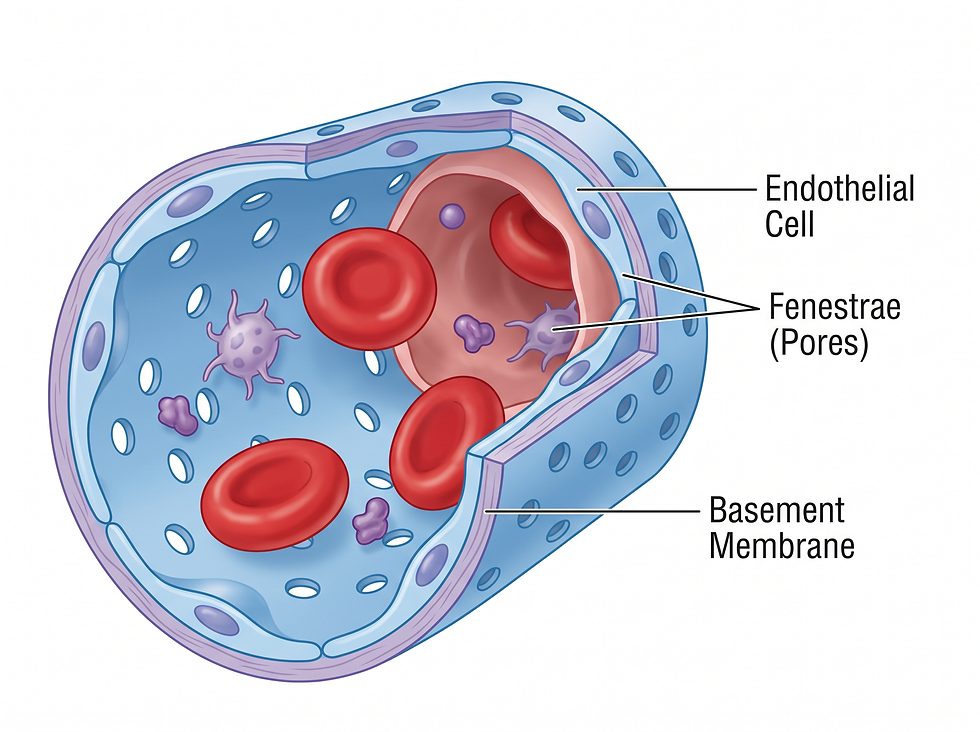
Fenestrated capillaries are remarkably small, typically measuring between 3 and 4 micrometers in diameter, roughly the thickness of a single thread in a spider's web. Their wall structure consists of two primary layers: an inner layer of endothelial cells and an outer layer known as the basement membrane or epithelial cells. The defining characteristic of these vessels is the presence of tiny pores within the endothelial layer.
Each pore is typically covered by a thin membrane that functions similarly to a diaphragm, opening and closing to regulate the passage of substances. This specialized design allows minerals, proteins, and other large molecules to transition seamlessly from the blood into the surrounding organs. This high permeability is what makes them indispensable to organs with high metabolic or filtration demands.
Diameter: 3 to 4 micrometers.
Inner layer: endothelial cells with pores (fenestrae).
Outer layer: epithelial cells (basement membrane).
Pore mechanism: diaphragm-like membrane for regulated passage.
Primary Locations and Functions
Fenestrated capillaries are strategically located in organs where continuous and rapid exchange of blood and fluids is necessary. Their distribution reflects their specialized roles in filtration, absorption, and endocrine regulation.
Renal Filtration
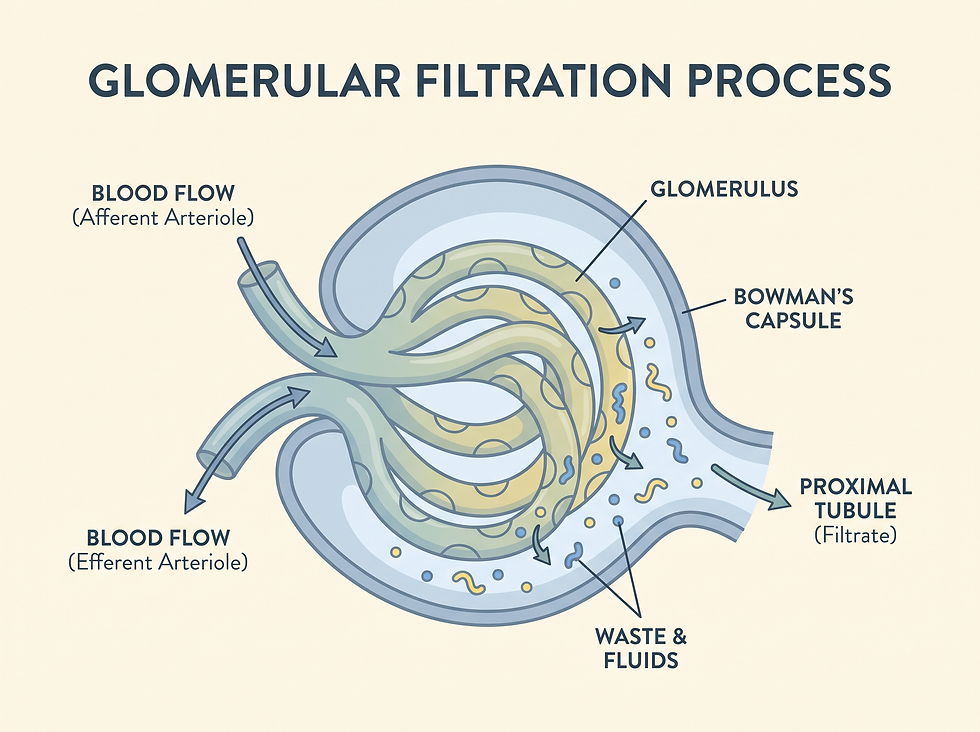
In the kidneys, these capillaries are found within the glomeruli, which serve as the primary filtering units. Each kidney contains approximately one million nephrons, where fenestrated capillaries work in tandem with other structures to filter waste from the blood and initiate the creation of urine. They also surround the tubes within the nephrons to help reabsorb essential nutrients back into the body.
Nutrient Absorption and Hormone Delivery
The small intestines utilize fenestrated capillaries to absorb vital vitamins and minerals from digested food. Similarly, the pancreas and various endocrine glands rely on these vessels to distribute hormones throughout the body. These hormones are critical for regulating everything from growth and development to mood and metabolism.
Kidneys: blood filtration, waste removal, and urine production.
Small intestine: absorption of nutrients, vitamins, and minerals.
Pancreas: facilitating the digestion of sugars and fats.
Endocrine glands: rapid distribution of hormones for systemic regulation.
Clinical Conditions and Vascular Disorders
The health of fenestrated capillaries is closely linked to systemic wellness. When these vessels are damaged or lose their density, significant health complications can arise. One common issue is capillary rarefaction, where the density of capillaries decreases due to inflammation, disease, or vitamin D deficiency. This condition is frequently observed in patients with chronic kidney disease (CKD) and can contribute to the development of hypertension.
Other serious conditions include glomerulonephritis, which involves widespread inflammation of the kidney's filtration system. A far rarer but life-threatening condition is Systemic Capillary Leak Syndrome (SCLS). In SCLS, the capillary walls become compromised, leading to a sudden and dangerous drop in blood pressure, accompanied by symptoms such as abdominal pain, nausea, and severe swelling (edema) in the limbs.
Maintaining Capillary Health
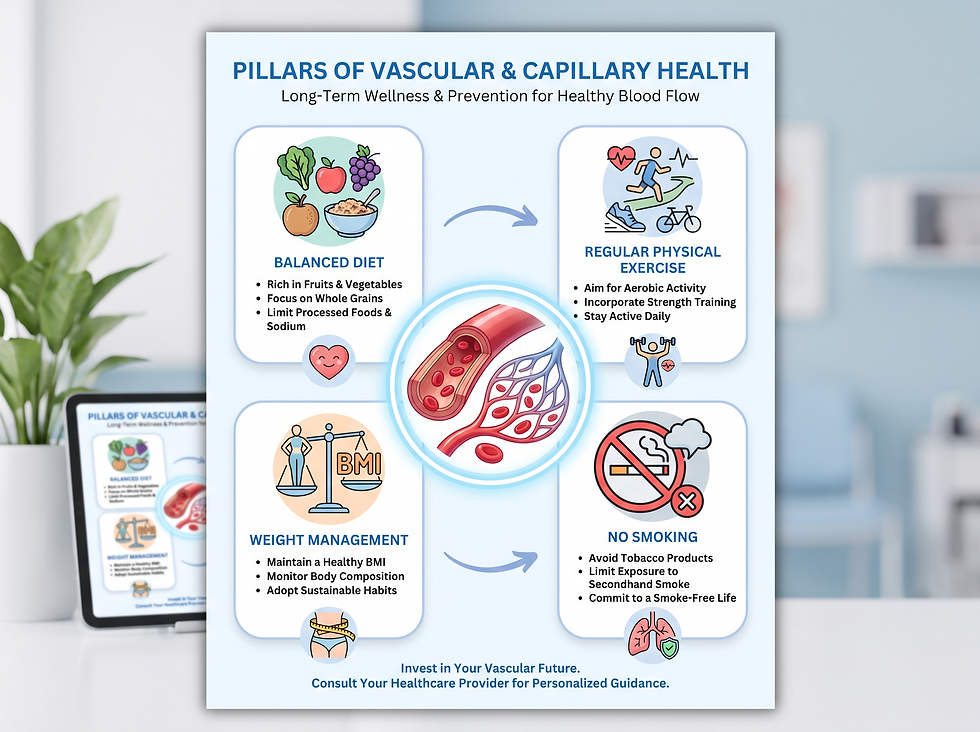
Preserving the function of fenestrated capillaries requires a comprehensive approach to vascular health. Because these vessels are part of the larger circulatory network, the same habits that protect the heart and major arteries also benefit these microscopic pathways.
Key strategies for maintaining healthy capillaries include:
Physical activity: regular exercise supports efficient circulation and vessel elasticity.
Nutritional balance: a heart-healthy diet low in sodium and alcohol helps manage blood pressure.
Weight management: maintaining a healthy weight reduces the overall strain on the circulatory system.
Chronic condition management: actively managing diabetes and hypertension prevents long-term vascular damage.
Smoking cessation: quitting smoking is one of the most impactful steps for protecting the endothelial lining of all blood vessels.
Conclusion
Fenestrated capillaries are the unsung heroes of the body's filtration and absorption systems. Their specialized "windowed" structure allows for the rapid exchange of essential molecules, ensuring that the kidneys can filter waste and the intestines can absorb nutrients effectively. By understanding their role and prioritizing vascular health, individuals can support the longevity of these vital microscopic structures.
When to See a Healthcare Professional
If you notice persistent changes in your urine, unexplained swelling around the eyes, or sudden lightheadedness, consult a healthcare professional. Early detection of vascular or kidney-related issues is critical for maintaining long-term health.
Frequently Asked Questions
What does "fenestrated" mean?
It comes from the Latin word fenestrae, which means "windows," referring to the pores in the capillary walls.
Where are these capillaries most commonly found?
They are primarily located in the kidneys, small intestines, pancreas, and endocrine glands.
How large are fenestrated capillaries?
They are roughly 3 to 4 micrometers in diameter, about the size of a spider web thread.
What is the main function of the pores in these vessels?
The pores allow larger molecules and proteins to pass between the blood and tissues more easily.
How do they help the kidneys?
They form the glomerulus, which filters waste from the blood to create urine.
What role do they play in digestion?
In the small intestine, they absorb vitamins and minerals from the food you eat.
Can fenestrated capillaries help regulate mood?
Yes, by facilitating the transport of hormones from endocrine glands that regulate mood and growth.
What is capillary rarefaction?
It is the loss of capillary density, often caused by inflammation or vitamin D deficiency.
How does chronic kidney disease affect these capillaries?
It can damage peritubular capillaries, leading to reduced filtration efficiency and high blood pressure.
What is Systemic Capillary Leak Syndrome (SCLS)?
A rare, life-threatening condition where capillary walls leak, causing a sudden drop in blood pressure.
What are the warning signs of kidney-related capillary issues?
Signs include blood or protein in the urine, persistent fatigue, and swelling around the eyes.
Can diet affect capillary health?
Yes, a heart-healthy diet low in salt and alcohol supports overall vascular integrity.
Is smoking harmful to these capillaries?
Absolutely; smoking damages the endothelial cells that form the inner layer of the capillaries.
How are these capillaries different from regular ones?
Regular (continuous) capillaries lack the specialized pores found in fenestrated ones.
What is the basement membrane?
It is the outer epithelial layer of the capillary that provides structural support.
Medical Disclaimer: This content is for informational purposes only and is not a substitute for professional medical advice, diagnosis, or treatment.
Comments