Understanding DNA: The Biological Blueprint of Life

Updated: 2 days ago
Medically reviewed by Dr. Baraa Alnahhal, MD · Last reviewed: September 2026

Quick answer
DNA is a complex molecule found in the nucleus of almost every cell, acting as a master instruction manual for the body. It is composed of building blocks called nucleotides, which form a spiral staircase structure known as a double helix. Its primary function is to store and transmit genetic information, providing the necessary codes to create proteins that drive biological processes. DNA is inherited equally from both biological parents and constitutes the entire genome of an individual.
TL;DR
DNA, or deoxyribonucleic acid, serves as the fundamental set of instructions for building the proteins that allow the human body to function. Organized into a double helix structure, it contains the genetic code inherited from biological parents. By directing protein synthesis through transcription and translation, DNA determines everything from physical appearance to organ operation, making it the essential library of human life.
The foundation of biological identity
Every living organism carries a sophisticated set of instructions that dictate its development, appearance, and functional capabilities. This biological blueprint is known as DNA, an abbreviation for deoxyribonucleic acid. Found within the nucleus of nearly all human cells, DNA operates as a vast internal library, containing the specific "instruction manuals" required to build tissues, organs, and complex biological systems. It uses a specialized molecular language that cells can read and execute with remarkable precision.
Inheritance plays a central role in the composition of an individual's DNA. Each person receives exactly half of their genetic material from their biological mother and the other half from their biological father. This unique combination ensures that while every human shares a common biological framework, each individual possesses a distinct genetic story. Beyond simple physical traits, DNA governs the intricate internal processes that maintain health and sustain life on a daily basis. To see how errors in this inherited material can arise, read our guide on the chromosome counting error behind most miscarriages and conditions like Down syndrome.
The architecture of the genome
The total collection of an individual's DNA is referred to as the genome. To ensure this massive amount of information remains organized and accessible, the body packages DNA into specific hierarchical structures. These structures allow cells to manage the vast library of genetic data without errors or confusion during cellular processes.
Component | Description | Functional analogy |
Chromosomes | Threadlike structures that divide DNA into manageable segments. | Individual books in a library. |
Genes | Specific sections of chromosomes that code for individual traits. | Chapters within a book. |
Non-coding DNA | The material between genes that supports genetic regulation. | Punctuation and formatting. |
Molecular structure and composition
The physical form of DNA is characterized by its iconic double helix shape. This structure resembles a winding spiral staircase or a twisty zipper, consisting of two strands that are connected in the middle. The integrity of this structure is maintained by building blocks called nucleotides, each consisting of a nitrogenous base, a sugar molecule (deoxyribose), and a phosphate group.
The center of the spiral is formed by base pairs, which are specific combinations of four nitrogen-containing compounds. These bases follow a strict pairing rule: Adenine (A) always pairs with Thymine (T), while Cytosine (C) always pairs with Guanine (G). The specific sequence of these letters creates the genetic code, much like how the arrangement of letters in a word determines its meaning.
Functional roles in protein synthesis
The primary purpose of DNA is to provide the instructions for creating proteins, which are the workhorses of the body. Proteins are responsible for nearly every biological task, from structural support to chemical signaling. The process of turning genetic instructions into functional proteins occurs through a highly regulated two-step mechanism.
Transcription: A single-stranded molecule called RNA copies the necessary instructions from the DNA within the nucleus and carries them out into the cell.
Translation: Specialized cellular machines known as ribosomes read the RNA message and link together amino acids to build the specific protein required by the body.
Location and cellular distribution
While DNA is the master blueprint for the entire body, it is not distributed uniformly across all cell types. The vast majority of DNA is housed within the cell nucleus, often described as the brain of the cell. However, there are notable exceptions and secondary locations that are critical for human physiology.
Location | Characteristics | Inheritance pattern |
Nucleus | Contains the majority of the genome in almost all cells. | Bi-parental (mother and father). |
Mitochondria | Small structures that provide energy to the cell. | Maternal (mother only). |
Red blood cells | These cells lack a nucleus and do not contain DNA. | N/A |
Genetic health and maintenance
The integrity of DNA is essential for long-term health, yet it is susceptible to damage and errors. The body possesses natural "proofreading" mechanisms to identify and correct mistakes that may occur during DNA replication. When these corrective processes fail, mutations can arise, potentially leading to significant health complications, including cancer.
Environmental factors and lifestyle choices also play a significant role in DNA stability. External stressors can cause direct damage to the genetic code, overwhelming the body's natural repair systems. Protecting DNA from these influences is a cornerstone of preventative health and disease management.
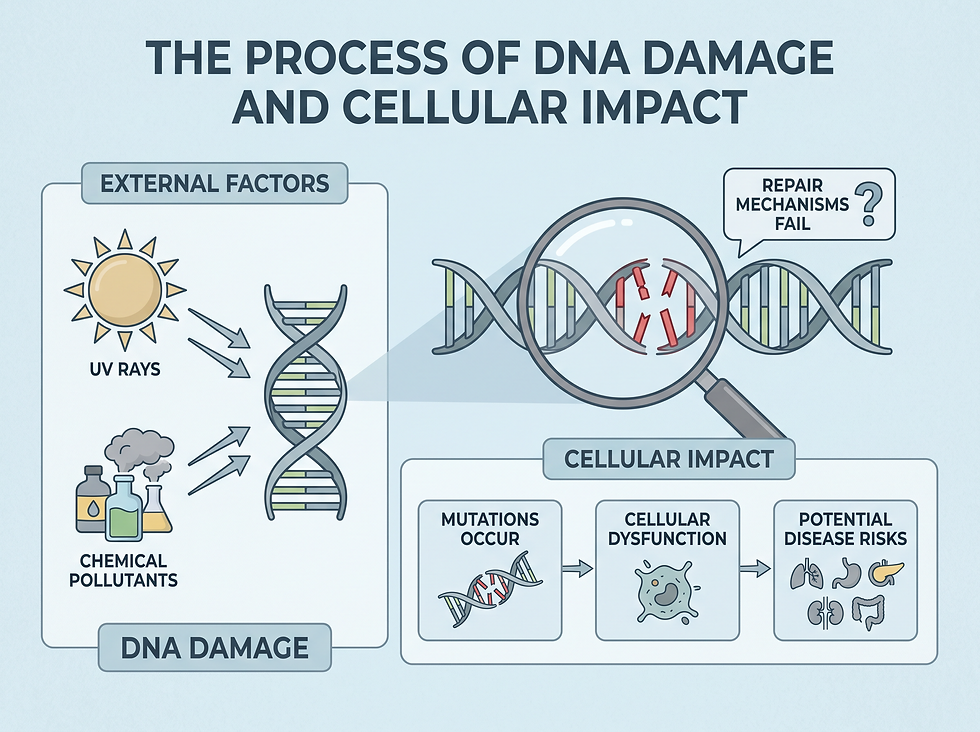
Factors influencing DNA integrity
Ultraviolet exposure: Prolonged sun exposure can damage the molecular bonds in DNA.
Environmental pollutants: Inhaling unhealthy air or harmful chemicals can introduce toxins.
Lifestyle choices: The consumption of alcohol and tobacco products is linked to genetic damage.
Biological errors: Spontaneous mutations can occur during the cell division process.
Conclusion
DNA stands as the most fundamental element of human biology, serving as the definitive source of information for every physical and functional trait. By understanding its structure, location, and the vital role it plays in protein synthesis, individuals can better appreciate the complex systems that maintain their health. Protecting this biological blueprint through healthy lifestyle choices remains one of the most effective ways to support long-term wellness and prevent genetic-related disorders.
Take action for genetic wellness
Maintaining the health of your DNA is a lifelong commitment that involves both proactive protection and regular health monitoring.
Prioritize protection: Use sun protection and avoid environmental toxins to minimize direct DNA damage.
Adopt healthy habits: Eliminate smoking and limit alcohol consumption to support cellular repair mechanisms.
Consult professionals: If you have concerns about inherited conditions, speak with a healthcare provider or a genetic counselor.
Stay informed: Understanding your family health history can provide valuable insights into your own genetic predispositions.

Frequently asked questions
What exactly is DNA? DNA is a molecule that carries the genetic instructions for the development, functioning, and reproduction of all living organisms.
How do we inherit DNA? You inherit half of your DNA from your biological mother and the other half from your biological father.
What is the double helix? The double helix is the spiral staircase-like structure formed by two strands of DNA connected by base pairs.
What are the four bases in DNA? The four nitrogenous bases are Adenine (A), Thymine (T), Cytosine (C), and Guanine (G).
How do the bases pair up? Adenine always pairs with Thymine (A-T), and Cytosine always pairs with Guanine (C-G).
Where is DNA located in the body? Most DNA is found in the cell nucleus, though a small amount exists in the mitochondria.
Do all cells have DNA? Most do, but mature red blood cells and platelets lack a nucleus and therefore do not contain DNA.
What is a genome? A genome is the complete set of DNA, including all genes, within an organism.
What is the difference between a gene and a chromosome? A chromosome is a large package of DNA, while a gene is a specific section of that DNA that codes for a trait.
What does non-coding DNA do? It does not code for traits but helps regulate genes and supports other essential cellular functions.
How does DNA make proteins? Through a process called transcription (copying to RNA) and translation (building proteins using ribosomes).
What causes DNA damage? Damage can be caused by sun exposure, smoking, alcohol, and environmental pollutants.
Can the body repair its own DNA? Yes, the body has "proofreading" and repair mechanisms, though they are not always perfect.
What happens if DNA mutations occur? Mutations can lead to various health issues, including cancer, heart disease, and congenital conditions.
What is mitochondrial DNA? It is DNA found in the mitochondria that is typically inherited only from the biological mother.
Medical disclaimer: The information provided in this article is for educational purposes only and should not be considered medical advice. Always consult with a qualified healthcare professional or genetic counselor for concerns related to your health or genetic history.
Comments