Shigella Infection (Shigellosis): Symptoms, Causes, and Treatment

Updated: 2 days ago
Medically reviewed by Dr. Baraa Alnahhal, MD · Last reviewed: September 2026
TL;DR
Shigella infection, also called shigellosis, is an intestinal illness caused by shigella bacteria. Children under 5 are most affected. Germs spread through an infected person's stool via hands, surfaces, food, and water. The main symptom is diarrhea that can be bloody or long lasting, with fever and stomach pain. Most cases clear up on their own within about a week, and serious illness may need antibiotics.
Quick Answer
What is shigella infection and how is it treated? Shigella infection (shigellosis) is an intestinal illness caused by swallowing shigella bacteria. The main symptom is diarrhea that can be bloody or long lasting, often with fever and stomach cramps. Most cases clear up on their own within seven days with fluids alone. Serious cases may need antibiotics, and certain anti-diarrhea medicines such as loperamide (Imodium A-D) and Lomotil should be avoided because they make the infection worse.
What Is Shigella Infection?
Shigella infection is an illness that affects the intestine. Another name for it is shigellosis. It is caused by a group of germs called shigella bacteria.
Children under age 5 are most likely to get shigella infection. But the illness can happen at any age. The germs that cause it spread easily through an infected person's stool. The germs can get on fingers, on surfaces, or into food or water. Infection happens after the germs are swallowed.
The main symptom of shigella infection is diarrhea that can be bloody or long lasting. Other symptoms can include fever and stomach pain.

Symptoms of Shigella Infection
Symptoms of shigella infection usually start a day or two after contact with the germs that cause it. Sometimes, the illness takes up to a week to start.
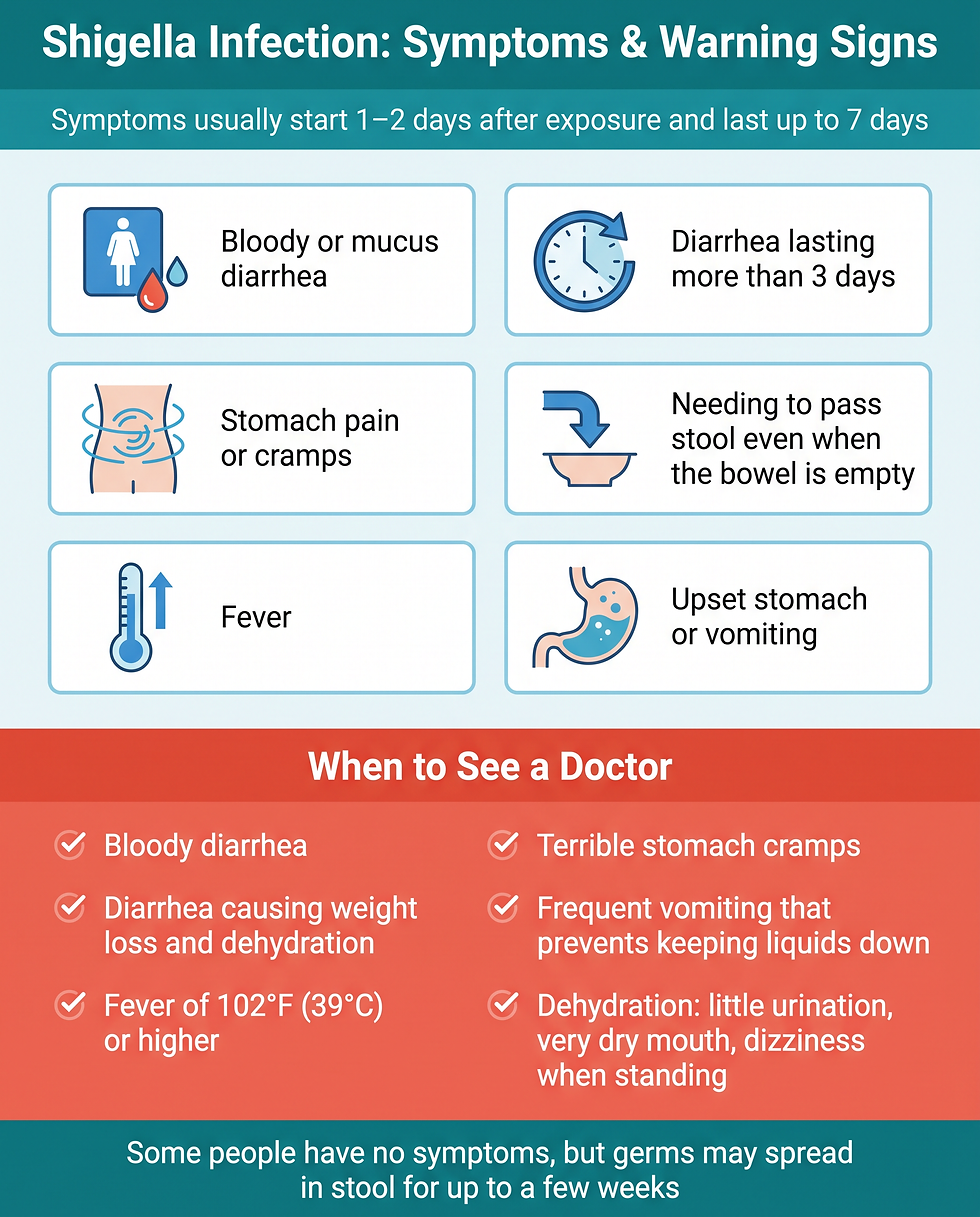
The key sign to watch for is diarrhea that may contain blood or mucus and may last more than three days. Most people also experience stomach pain or cramps.
A distinctive symptom is a feeling of needing to pass stool even when the bowel is empty. Fever and upset stomach or vomiting are also common.
Symptom Timeline
When It Happens | What Occurs |
|---|---|
Start of symptoms | Usually a day or two after contact with the germs; sometimes up to a week |
Main symptom | Diarrhea that may contain blood or mucus, may last more than 3 days |
Other symptoms | Stomach pain or cramps, feeling of needing to pass stool when the bowel is empty, fever, upset stomach or vomiting |
Duration | Symptoms tend to last up to seven days; sometimes longer |
After recovery | Bowel habits may take weeks or months to return to typical |
Some people have no symptoms after they have been infected with shigella. But the germs may be able to spread through the stool for up to a few weeks.
When to See a Doctor
Call your healthcare professional or seek urgent care if you or your child has any of the following warning signs.
Warning Sign | Why It Matters |
|---|---|
Bloody diarrhea | A hallmark of serious shigella infection |
Diarrhea causing weight loss and dehydration | Constant fluid loss can become dangerous |
Fever of 102°F (39°C) or higher | High fever signals a more serious illness |
Terrible stomach cramps or tenderness | Can signal complications |
Frequent vomiting that prevents keeping down liquids | Rapid dehydration risk |
Little or no urination, very dry mouth and throat, dizziness when standing | Signs of dehydration |
If you have a weakened immune system, call your healthcare professional if you have any shigella infection symptoms. The illness is more likely to make you sick for a longer time.
What Causes Shigella Infection?
Shigella infection is caused by swallowing shigella bacteria. This can happen in three main ways.
Touching your mouth. This poses a risk because there are many ways for shigella germs to get on your hands. You might change the diaper of a child who has shigella infection. Or you might touch an object that has germs on it, such as a toy or changing table. The germs also can spread from hand to mouth during sexual contact with someone who has the infection.
Eating tainted food. A person with a shigella infection who handles food can spread the germs to people who eat the food. Food also can become tainted if it grows in a field that contains sewage.
Swallowing tainted water. Water can become tainted with shigella germs from sewage. Water also can become tainted if a person with shigella infection swims in it.
Who Is at Risk?
Risk factors for shigella infection include the following.
Risk Factor | How It Raises Risk |
|---|---|
Being a child | Children under age 5 are most likely to get shigella infection |
Living in group housing or doing group activities | Close contact spreads germs; outbreaks are more common in child care centers, schools, public pools, water parks, and nursing homes |
Living or traveling in areas that lack clean water and sewage disposal services | People in developing countries are more likely to get shigella infection |
Sexual contact that involves the anus | Germs spread from stool or soiled fingers to the mouth of another partner; men who have sex with men are at higher risk |
Experiencing homelessness | Crowded areas and less access to clean water and toilets raise risk |
Having a weakened immune system | Conditions such as HIV or treatments such as chemotherapy raise the risk of more-serious infection |
Complications of Shigella Infection
It may take weeks or months before you return to your typical bowel habits. And most often, shigella infection clears up without leading to other health conditions called complications.
Dehydration
Constant diarrhea can cause dehydration. Symptoms include dizziness, lack of tears in children, sunken eyes, and dry diapers. Serious dehydration can lead to shock and death.
Seizures
Some children with shigella infections have seizures. Seizures can cause changes in behavior, jerking movements, and loss of consciousness. They are more common in children who have high fevers. But they also can happen in children who do not have high fevers.
It is not known whether the seizures are a result of the fever or the shigella infection itself. If your child appears to have a seizure, call your healthcare professional right away.
Rectal Prolapse
This condition happens when part of the large intestine's lowest section slips outside the anus. It may be more common in children with shigella who don't get enough nutrition.
Hemolytic Uremic Syndrome
This rare complication of shigella affects the blood and blood vessels. It can lead to kidney failure.
Toxic Megacolon
This rare complication prevents the colon from passing stool and gas. The colon becomes bigger as a result. Symptoms include stomach pain and swelling, fever, and weakness. Without treatment, the colon may burst. This causes a life-threatening infection called peritonitis that needs emergency surgery.
Reactive Arthritis
This condition can happen weeks after shigella infection. Symptoms include joint pain and swelling, usually in the ankles, knees, feet, and hips. Other symptoms include painful urination and redness, itching, and discharge in one or both eyes.
Bloodstream Infection
This is also known as bacteremia. Shigella infection can damage the lining of the intestines. Rarely, shigella germs enter the blood through the damaged lining and cause a bloodstream infection. These infections are more common in adults with weakened immune systems and in children.
Complication | What Happens |
|---|---|
Dehydration | Constant diarrhea; can lead to shock and death |
Seizures | Behavior changes, jerking movements, loss of consciousness, mostly in children |
Rectal prolapse | Lowest part of the large intestine slips outside the anus |
Hemolytic uremic syndrome | Rare; affects blood and blood vessels; can lead to kidney failure |
Toxic megacolon | Rare; colon cannot pass stool and gas; may burst and cause peritonitis |
Reactive arthritis | Weeks after infection; joint pain and swelling, painful urination, eye redness |
Bloodstream infection | Germs enter blood through damaged intestinal lining; rare |
How Shigella Infection Is Diagnosed
Diagnosis of shigella infection involves a physical exam and testing to find out if you have the illness. Many other health conditions can cause diarrhea or bloody diarrhea.
You or your healthcare professional collects a sample of your stool. Then a lab checks the sample for shigella germs or for harmful substances called toxins that the germs make.
Diagnostic Step | What It Involves |
|---|---|
Physical exam | Healthcare professional may press on parts of the stomach area to check for pain or tenderness |
Stool sample | Collected with a cotton swab or by instructions for collecting and sending a sample to a lab |
Lab testing | Checks the stool for shigella germs or the toxins the germs make |
Treatment for Shigella Infection
Treatment for shigella infection depends on how serious the illness is. Most often, the illness is mild and gets better within seven days. You may only need to replace lost fluids from diarrhea, especially if your overall health is good.
Medicines Sold Without a Prescription
Talk to your healthcare professional before you take any diarrhea medicine that is sold without a prescription. Many conditions can cause diarrhea, and these medicines could make some conditions worse.
If a lab test has confirmed that you have shigella infection, medicine that contains bismuth subsalicylate (Pepto-Bismol, Kaopectate) may help. This is available without a prescription. It may help you pass stool less often and shorten the length of your illness. But it isn't recommended for children, pregnant or breastfeeding people, or people who are allergic to aspirin.
Do not take diarrhea medicines such as loperamide (Imodium A-D). Also, do not take medicines that contain the combination of diphenoxylate and atropine (Lomotil). These aren't recommended for shigella infection. They can lower the body's ability to clear shigella germs and make your condition worse.
Antibiotics
For a serious shigella infection, your healthcare professional may recommend medicines called antibiotics that help get rid of germs. Antibiotics may shorten the length of the illness. But some shigella bacteria resist the effects of these medicines. So your healthcare professional may not recommend antibiotics unless your shigella infection is very bad.
Antibiotics also may be needed to treat infants, older adults, and people with weakened immune systems. Antibiotics also may be used if there's a high risk of spreading the disease.
If you're given antibiotics, take them exactly as prescribed. Finish taking all the pills even if you start to feel better.
Fluid and Salt Replacement
For adults in good health overall, drinking water may be enough to prevent dehydration caused by diarrhea.
Children may benefit from a treatment called oral rehydration solution, such as Pedialyte. This is sold in drugstores and taken by mouth. Many pharmacies carry their own brands.
Children and adults who are very dehydrated need treatment in a hospital emergency room. Treatment involves salts and fluids given through a vein rather than by mouth. This is called intravenous hydration. It provides the body with water and essential nutrients much more quickly than oral solutions do.

How to Prevent Shigella Infection
Take the following steps to help prevent shigella infection.
Wash hands often. Use soap and water, and scrub for at least 20 seconds. This is key before you prepare or eat food, and before sexual activity. It's also important to wash after you use the bathroom or change a diaper.
Throw away soiled diapers in a covered, lined garbage can. Disinfect diaper-changing areas right after use, especially if the diaper leaks or spills. Try not to swallow water from ponds, lakes, or untreated pools. Do not have sexual contact with anyone who has diarrhea or who recently recovered from diarrhea. Wait at least two weeks.
If you or your child has diarrhea or a known shigella infection, take these steps to prevent spreading germs. Keep washing hands often, and watch small children when they wash their hands. Don't prepare food for others if possible. Stay home from healthcare, food service, or child care jobs while sick. Keep children with diarrhea home from child care, play groups, or school. Don't go swimming until you have fully recovered.
Prevention Step | When to Do It |
|---|---|
Wash hands with soap, scrub at least 20 seconds | Before preparing or eating food, before sexual activity, after bathroom, after diaper change |
Dispose of soiled diapers properly | In a covered, lined garbage can |
Disinfect diaper-changing areas | Right after use, especially if the diaper leaks or spills |
Avoid swallowing pond, lake, or pool water | While swimming in untreated water |
Wait two weeks before sexual contact | After diarrhea or recovering from diarrhea |
Stay home from healthcare, food service, or child care jobs | While sick |
Keep children with diarrhea home | From child care, play groups, or school until fully recovered |
Preparing for Your Appointment
Many people who have shigella infection get better without medicines. But if you or your child has serious symptoms or a high fever, call your healthcare professional. You may need treatment.
Before talking with your healthcare professional, write a list of answers to the following questions.
Questions to Consider | Questions to Consider |
|---|---|
What are the symptoms? | When did the symptoms start? |
Have you or your child been exposed to a person who has or had shigella infection? | Do you or your child have a fever? If so, how high is it? |
During the physical exam, your healthcare professional may press on parts of your stomach area to check for pain or tenderness. Your healthcare professional also may use a cotton swab to get a stool sample. Or you may be given instructions on how to collect and send a sample of your stool to a lab for testing.
Conclusion
Shigella infection is a common intestinal illness caused by bacteria that spread through contaminated hands, food, and water. Most cases clear up on their own within a week with fluids alone, but bloody diarrhea, high fever, and signs of dehydration should always prompt a call to your healthcare professional. Washing hands thoroughly, disinfecting diaper-changing areas, and avoiding tainted water are the best ways to protect yourself and your family.
Take the next step: If you or your child has diarrhea lasting more than three days, blood in stool, or signs of dehydration, make an appointment with a healthcare professional. Learn more in our related guide on food poisoning.
Frequently Asked Questions
What is shigella infection?
Shigella infection, also called shigellosis, is an intestinal illness caused by shigella bacteria. The main symptom is diarrhea that can be bloody or long lasting, often with fever and stomach pain. Children under 5 are most affected, and the illness usually clears up on its own within a week.
How do you get shigella?
You get shigella by swallowing the bacteria. The germs spread from an infected person's stool to your mouth through contaminated hands, objects such as toys or changing tables, tainted food handled by an infected person, or contaminated water from ponds, lakes, pools, or sewage.
How long does shigella last?
Most cases are mild and get better within seven days. Symptoms usually start a day or two after exposure, though it can take up to a week for them to begin. Some people have no symptoms at all, and bowel habits may take weeks or months to return to typical.
Is shigella infection contagious?
Yes. Shigella is highly contagious and spreads easily through stool. Even people with no symptoms can spread the germs through their stool for up to a few weeks after infection.
Should you take Imodium for shigella?
No. Medicines such as loperamide (Imodium A-D) and those containing diphenoxylate and atropine (Lomotil) are not recommended for shigella infection. They can lower the body's ability to clear shigella germs and make the condition worse.
When should you see a doctor for shigella?
Seek urgent care for bloody diarrhea, diarrhea causing weight loss and dehydration, fever of 102°F (39°C) or higher, terrible stomach cramps, frequent vomiting that prevents keeping liquids down, or signs of dehydration such as little urination, very dry mouth, and dizziness when standing.
Do you need antibiotics for shigella?
Not always. Because many cases are mild and resolve within a week, antibiotics may not be recommended unless the infection is very bad. They are more often needed for infants, older adults, people with weakened immune systems, or when there is a high risk of spreading the disease.
Can shigella come back or cause long-term problems?
Most cases clear up without complications. Rare complications include hemolytic uremic syndrome (kidney failure), toxic megacolon, reactive arthritis weeks after infection, and bloodstream infection. Some children have seizures, and bowel habits may take weeks or months to normalize.
Related Resources
Internal reading on Rinnit:
External resources from authoritative health organizations:
Disclaimer: This article is for general informational purposes only and is not a substitute for professional medical advice, diagnosis, or treatment. Always seek the advice of your physician or other qualified health provider with any questions you may have regarding a medical condition. Never disregard professional medical advice or delay in seeking it because of something you have read on this website.
Comments