Rare Benign Brain Tumors: A Guide to Gangliocytoma and Pineocytoma

Updated: 2 days ago
Medically reviewed by Dr. Baraa Alnahhal, MD · Last reviewed: September 2026
Gangliocytoma and pineocytoma are rare, benign (non-cancerous), and slow-growing tumors that affect the central nervous system (CNS). Gangliocytomas typically develop in the temporal lobes, brainstem, or spinal cord, most often in individuals aged 10 to 30. Pineocytomas form in the pineal gland, primarily affecting adults with an average diagnosis age of 38. While often asymptomatic and discovered incidentally, they can cause symptoms like movement changes, headaches, and vision disturbances. Treatment usually involves surgical removal, and once removed, these tumors rarely recur.
Quick answer: What are gangliocytomas and pineocytomas?
These are rare, benign brain tumors characterized by slow growth. They are not cancerous but can cause significant symptoms depending on their location and size.
Key distinctions include:
Gangliocytoma: Affects various parts of the CNS, most commonly the temporal lobes. It is frequently diagnosed in people between 10 and 30 years old.
Pineocytoma: Originates in the pineal gland deep within the brain. It typically affects adults between 20 and 64 years of age.
Symptoms range from none (incidental discovery) to serious neurological issues like seizures, paralysis, or increased brain pressure (hydrocephalus). Diagnosis relies on imaging (MRI, CT) and biopsies. The primary treatment is surgical removal, sometimes supplemented by radiation therapy. The long-term outlook is generally excellent, as recurrence is rare following successful surgery.
Locations and Symptoms
The symptoms of these rare tumors depend heavily on where they are located within the central nervous system.
Tumor Locations and Functions
Location | Primary Function Affected |
Temporal Lobes | Sensory input, memory, hearing, and emotion. |
Brainstem | Vital signals like breathing and heart rate. |
Cerebellum | Balance, movement, and vision. |
Pineal Gland | Sleep regulation (via melatonin). |
Spinal Cord | Nerve signals between the brain and body. |
Common Symptoms
Movement Changes: Loss of muscle control, tremors, weakness, or paralysis.
Sensation Changes: Numbness or tingling.
Neurological Issues: Speech difficulties, vision changes, and seizures.
Increased Pressure: Headaches, nausea, vomiting, and confusion (often due to hydrocephalus).
Sleep Disruption: Specifically linked to pineocytomas affecting the pineal gland.

Causes and Diagnosis
While the exact trigger for these tumors is unknown, researchers have identified certain genetic links.
Potential Causes
Genetic Mutations: Tumors form when cells receive faulty genetic instructions and multiply uncontrollably.
Cowden Syndrome: A genetic disorder linked to the mutation of the PTEN gene, which normally controls cell growth. This is specifically associated with Lhermitte-Duclos disease (a type of gangliocytoma).
Diagnostic Pathway
Neurologic Exam: Checking eye movement, muscle strength, and reflexes.
Imaging (MRI & CT): Visualizing the tumor's size, location, and impact on surrounding tissue.
Blood Tests: Checking for unusual melatonin levels (for pineocytomas).
Lumbar Puncture (Spinal Tap): Examining cerebrospinal fluid for tumor cells.
Biopsy: Removing a small tissue sample to confirm the tumor type.

Treatment and Outlook
Treatment strategies focus on monitoring or removal, depending on the severity of symptoms.
Treatment Options
Observation: For asymptomatic tumors, regular imaging and check-ups may be sufficient.
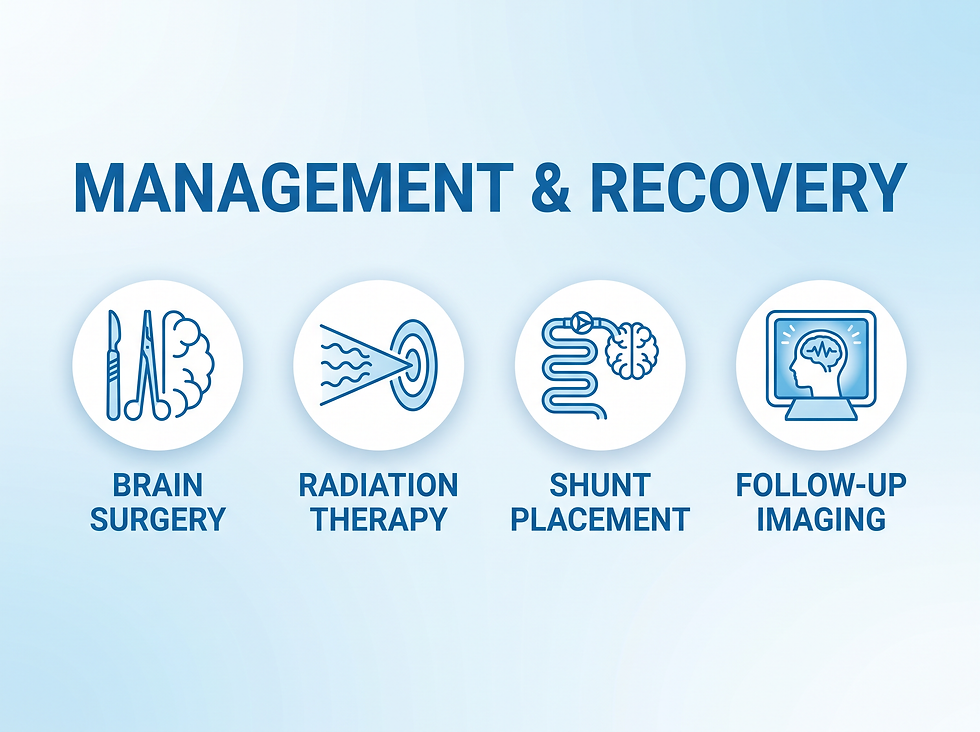
Brain Surgery: The primary treatment to remove the tumor. Once removed, gangliocytomas and pineocytomas rarely return.
Radiation Therapy: May be used in combination with surgery, particularly for pineocytomas.
Shunt Placement: Used to drain excess fluid and relieve pressure if hydrocephalus is present.
Prognosis
The outlook for patients with these tumors is generally very positive. Because they are slow-growing and benign, successful surgical removal typically leads to a full recovery with a very low risk of recurrence.
Conclusion
Gangliocytomas and pineocytomas are rare, benign, slow-growing brain tumors with an excellent outlook once treated. Symptoms depend on the tumor's location, and many are found by accident on imaging. Surgery is the main treatment, with radiation or a shunt used in select cases. If you have new headaches, vision changes, seizures, or balance problems, see a healthcare provider for a neurological evaluation. For a broader overview, see our guide to brain tumors.
Next Steps
If you or a loved one has persistent neurological symptoms or an unexpected finding on a brain scan, schedule an appointment with a neurologist or neurosurgeon to discuss monitoring and treatment options.
Frequently Asked Questions (FAQ)
Are gangliocytomas and pineocytomas cancerous?
No. They are benign, meaning they are not cancerous and do not spread to other parts of the body, though they can still be serious due to their location in the brain.
What is the difference between a pineal cyst and a pineocytoma?
A pineal cyst is a fluid-filled sac that rarely grows, while a pineocytoma is a mass of abnormal cells that grows slowly over time.
Can these tumors be found by accident?
Yes. Many people have no symptoms, and the tumors are discovered during imaging tests for unrelated health issues.
What age group is most affected?
Gangliocytomas are most common in people aged 10 to 30, while pineocytomas typically affect adults, with an average diagnosis age of 38.
Can a brain tumor cause seizures?
Yes, gangliocytomas are specifically linked to seizures, especially when they form in the temporal lobes.
What is hydrocephalus?
It is an abnormal buildup of fluid pressure in the brain, which can be caused by a tumor blocking the normal flow of cerebrospinal fluid.
How do doctors treat increased brain pressure?
If a tumor causes hydrocephalus, doctors may insert a small tube called a shunt to drain the excess fluid and reduce pressure.
What is Cowden syndrome?
It is a rare genetic disorder that increases the risk of certain tumors and is linked to Lhermitte-Duclos disease (dysplastic gangliocytoma of the cerebellum).
Is radiation always necessary?
No. Surgery is the primary treatment. Radiation is typically reserved for specific cases or as a follow-up to surgery.
How long do these tumors take to grow?
Both gangliocytomas and pineocytomas are classified as slow-growing tumors.
Can these tumors affect my vision?
Yes. Tumors in the cerebellum or those causing hydrocephalus can lead to vision disturbances or eye movement issues (Parinaud syndrome).
Will I need regular check-ups after surgery?
Yes. Even though recurrence is rare, healthcare providers usually schedule follow-up imaging to ensure the tumor has not returned.
What is a neurologic exam?
It is a physical exam where a doctor tests your reflexes, muscle strength, and how well your eyes and mouth move to check your brain function.
Can these tumors be prevented?
No. They are caused by spontaneous genetic mutations, and there are currently no known ways to prevent them.
What should I do if my symptoms return?
You should contact your healthcare provider immediately if you experience new or returning symptoms like headaches, balance problems, or vision changes.
Helpful Resources
Hydrocephalus: Symptoms, Causes & Treatment: Shunts and pressure relief.
Brain Tumor: Symptoms, Causes, Diagnosis and Treatment: A guide to brain tumor types, grades, and treatment.
National Brain Tumor Society: Research and patient support.
American Brain Tumor Association: Information on rare tumor types.
Medical Disclaimer: The information provided in this article is for educational purposes only and is not intended as medical advice. Always seek the advice of your physician or other qualified health provider with any questions you may have regarding a medical condition. Never disregard professional medical advice or delay in seeking it because of something you have read here. If you think you may have a medical emergency, call your doctor or 911 immediately.
Comments