Pulmonary Embolism (PE): Recognizing the Signs of a Medical Emergency

Updated: 28 minutes ago
Medically reviewed by Dr. Baraa Alnahhal, MD · Last reviewed: September 2026
Pulmonary Embolism (PE) is a life-threatening medical emergency caused by a blood clot that travels to the lungs, typically from the legs or pelvis. This blockage disrupts blood flow and oxygen exchange, leading to sudden symptoms like shortness of breath and sharp chest pain. Risk factors include major surgery, prolonged immobility, and genetic clotting disorders. Immediate treatment with anticoagulants or advanced procedures is critical, as PE accounts for over 100,000 deaths annually in the U.S. Long-term management focuses on blood thinners and lifestyle adjustments to prevent future occurrences.
Quick answer: Pulmonary Embolism (PE) is a sudden blockage in a lung artery, usually caused by a blood clot (Deep Vein Thrombosis) traveling from the leg. It is a medical emergency characterized by sudden shortness of breath, sharp chest pain, and rapid heart rate. Diagnosis involves D-dimer blood tests and CT scans. Treatment centers on anticoagulants to prevent clot growth, or surgical removal in severe cases. Recovery requires at least three months of blood thinners and lifelong monitoring to manage recurrence risks.
Overview of Pulmonary Embolism
Pulmonary Embolism (PE) represents a critical failure in the body's circulatory and respiratory systems. It occurs when a blood clot, or embolus, becomes lodged in one of the pulmonary arteries, which are responsible for carrying deoxygenated blood from the heart to the lungs. This blockage prevents the lungs from performing their essential task of oxygenating the blood, creating a rapid and potentially fatal chain reaction. In the United States alone, PE is estimated to cause at least 100,000 deaths each year, with approximately one-third of patients dying within hours of the initial symptoms if they do not receive immediate care.
The journey of a pulmonary embolism almost always begins elsewhere in the body, most commonly as Deep Vein Thrombosis (DVT) in the deep veins of the legs or pelvis. When a portion of this clot breaks free, it travels through the venous system, passes through the right side of the heart, and finally gets stuck in the narrowing vessels of the lungs. This obstruction not only starves lung tissue of blood flow—a condition known as pulmonary infarction—but also puts immense strain on the heart as it struggles to pump blood past the blockage.
Identifying the Symptoms of PE
The symptoms of a pulmonary embolism often appear with terrifying speed and can vary in intensity depending on the size and location of the clot. Because PE is a medical emergency, recognizing these signs and seeking immediate assistance is the most critical step in survival.
Symptom Category | Common Manifestations | Clinical Significance |
Respiratory | Sudden shortness of breath, wheezing, rapid breathing | Indicates impaired oxygen exchange in the lungs |
Cardiovascular | Sharp chest pain, fast heartbeat, fainting, dizziness | Reflects heart strain and dropping blood pressure |
Physical Signs | Pale, clammy, or bluish skin (cyanosis), coughing up blood | Signals severe lack of oxygen and potential lung tissue damage |
In addition to these acute symptoms, patients should be vigilant for signs of the precursor condition, DVT. These include unexplained pain, swelling, and warmth in one leg, which often signal that a clot is present and could potentially dislodge.
Risk Factors and Underlying Causes
While anyone can develop a pulmonary embolism, certain situations and medical conditions significantly increase the likelihood of abnormal clot formation. The common thread among these risks is the "pooling" of blood or a biological predisposition to clotting.
Immobility and Hospitalization: Major surgeries, particularly on the hips or legs, are leading causes of PE due to the required bed rest. Hospital stays longer than three days, regardless of surgery, increase risk as blood flow slows down in the legs.
Genetic and Medical Conditions: Disorders like Factor V Leiden or prothrombin mutations make the blood naturally more prone to clotting. Chronic illnesses such as cancer, heart failure, and kidney disease also elevate the risk.
Hormonal Influences: Pregnancy and the postpartum period involve hormonal shifts that increase clotting activity. Similarly, medications like oral contraceptives and hormone replacement therapy (HRT) carry documented risks.
Lifestyle Factors: Long periods of sitting, whether at a desk or during extended travel by car or plane, can lead to blood stasis in the lower extremities.

The Diagnostic Pathway
When a patient presents with suspected PE, healthcare providers must act quickly to confirm the diagnosis and assess the severity of the blockage.
Diagnostic Tool | Function | Role in Care |
D-dimer Test | Blood test measuring clot breakdown fragments | Used as a primary screening tool to rule out PE |
CT Pulmonary Angiogram | Specialized imaging of lung blood vessels | The gold standard for locating and visualizing the clot |
VQ Scan | Measures air and blood flow in the lungs | An alternative for patients who cannot undergo a CT scan |
Treatment and Management Strategies
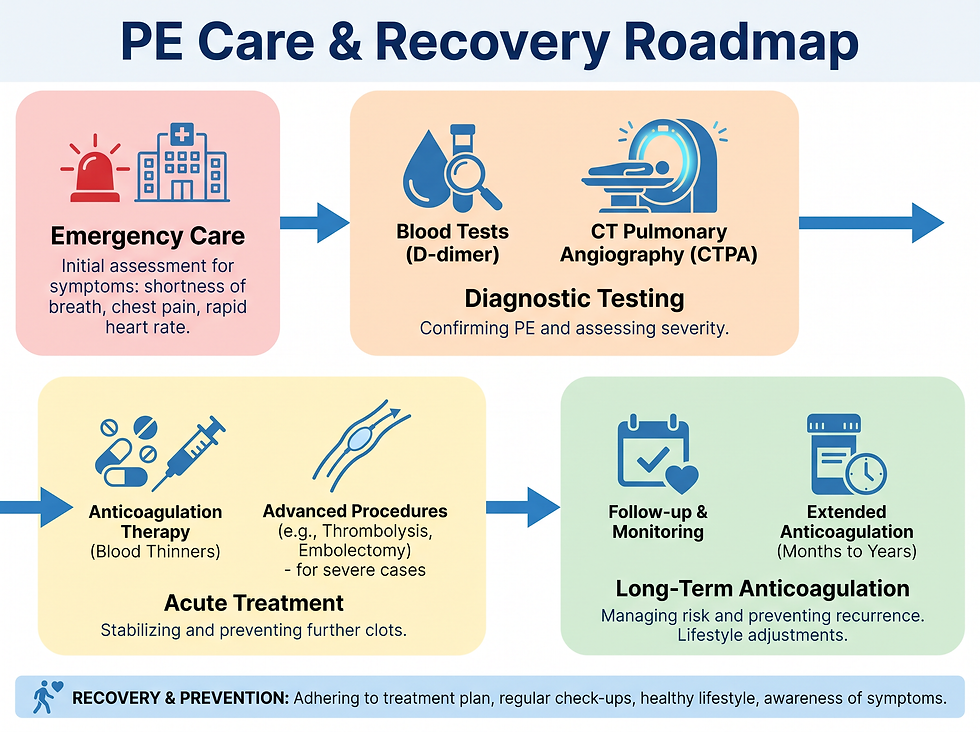
The immediate goal of treatment is to stabilize the patient, prevent the existing clot from growing, and stop new clots from forming. Depending on the severity of the PE, doctors may employ several different interventions.
Anticoagulation (Blood Thinners): This is the most common treatment. These medications do not dissolve the clot themselves but prevent it from enlarging while the body naturally breaks it down over time.
Thrombolysis: For severe or life-threatening cases, "clot-busting" medications are administered via IV or catheter to rapidly dissolve the blockage.
Embolectomy: In cases where medications are insufficient or contraindicated, a procedure may be performed to physically remove the clot from the artery.
IVC Filter: For patients who cannot safely take blood thinners, a small filter is placed in the inferior vena cava to catch clots before they can reach the lungs.
Long-Term Recovery and Prevention
Recovery from a pulmonary embolism is a long-term process that extends well beyond the initial hospital stay. Most patients will require blood thinner medication for at least three months, while those with chronic risk factors may need them indefinitely.
During this period, patients must be vigilant for signs of internal bleeding, a side effect of anticoagulants, which can manifest as severe headaches, blood in the stool or urine, or vomiting blood. Furthermore, approximately 2% to 3% of survivors may develop Chronic Thromboembolic Pulmonary Hypertension (CTEPH), a long-term complication involving high blood pressure in the lungs.

Conclusion
A pulmonary embolism is a formidable medical challenge, but with rapid intervention and dedicated long-term management, the risk of fatal outcomes can be significantly reduced. Understanding your personal risk factors and recognizing the early warning signs of DVT and PE are the most effective tools for protecting your vascular health.
Next Steps
If you experience sudden shortness of breath or sharp chest pain, call 911 or your local emergency number immediately. Do not wait for symptoms to worsen. If you have upcoming surgery or a history of clotting issues, talk to your doctor about a personalized prevention plan.
Frequently Asked Questions
Is a pulmonary embolism the same as a heart attack?
No. A heart attack is a blockage in the heart's arteries, while a PE is a blockage in the lung's arteries. Both are emergencies.
Can a PE happen without warning?
Yes, symptoms often appear suddenly, though they are frequently preceded by leg pain or swelling from a DVT.
How long does it take to recover from a PE?
The initial recovery takes weeks, but most patients stay on medication for 3 to 6 months or longer.
Can I travel after having a PE?
You should consult your doctor first. Long flights or car rides require special precautions like compression socks and frequent movement.
What is "clot-busting" medicine?
These are powerful drugs called thrombolytics that are used to quickly dissolve large, life-threatening clots.
Are blood thinners safe?
They are generally safe but carry a risk of bleeding. Patients must be monitored closely by their healthcare provider.
Can a PE cause permanent lung damage?
Yes, a severe PE can cause pulmonary infarction, where a portion of the lung tissue dies from lack of blood.
Why is surgery a risk factor for PE?
Surgery involves immobility, anesthesia, and potential vessel trauma, all of which make blood more likely to clot.
What is a D-dimer test?
It is a blood test that looks for a specific protein produced when blood clots dissolve in the body.
Is PE hereditary?
Some underlying causes, like Factor V Leiden, are genetic and can be passed through families.
Can COVID-19 cause a PE?
Yes, severe viral infections can cause inflammation that makes the blood more prone to clotting.
What is an IVC filter?
It is a small, umbrella-like device placed in a large vein to catch clots before they reach the heart and lungs.
Can I exercise after a PE?
Yes, and it is encouraged, but you must follow your doctor's specific guidance on when and how to start.
What is CTEPH?
It is a chronic condition where old clots cause high blood pressure in the lungs, leading to long-term shortness of breath.
Does everyone with DVT get a PE?
No, but DVT is the most common cause of PE, so treating DVT is the best way to prevent a pulmonary embolism.
Helpful Resources
References
Medical Disclaimer: This content is for informational purposes only and does not constitute medical advice. Always seek the advice of a qualified healthcare professional regarding any medical condition or treatment.
Comments