Pouchitis: Symptoms, Causes, and Treatment After J-Pouch Surgery

Updated: 2 days ago
Medically reviewed by Dr. Baraa Alnahhal, MD · Last reviewed: September 2026
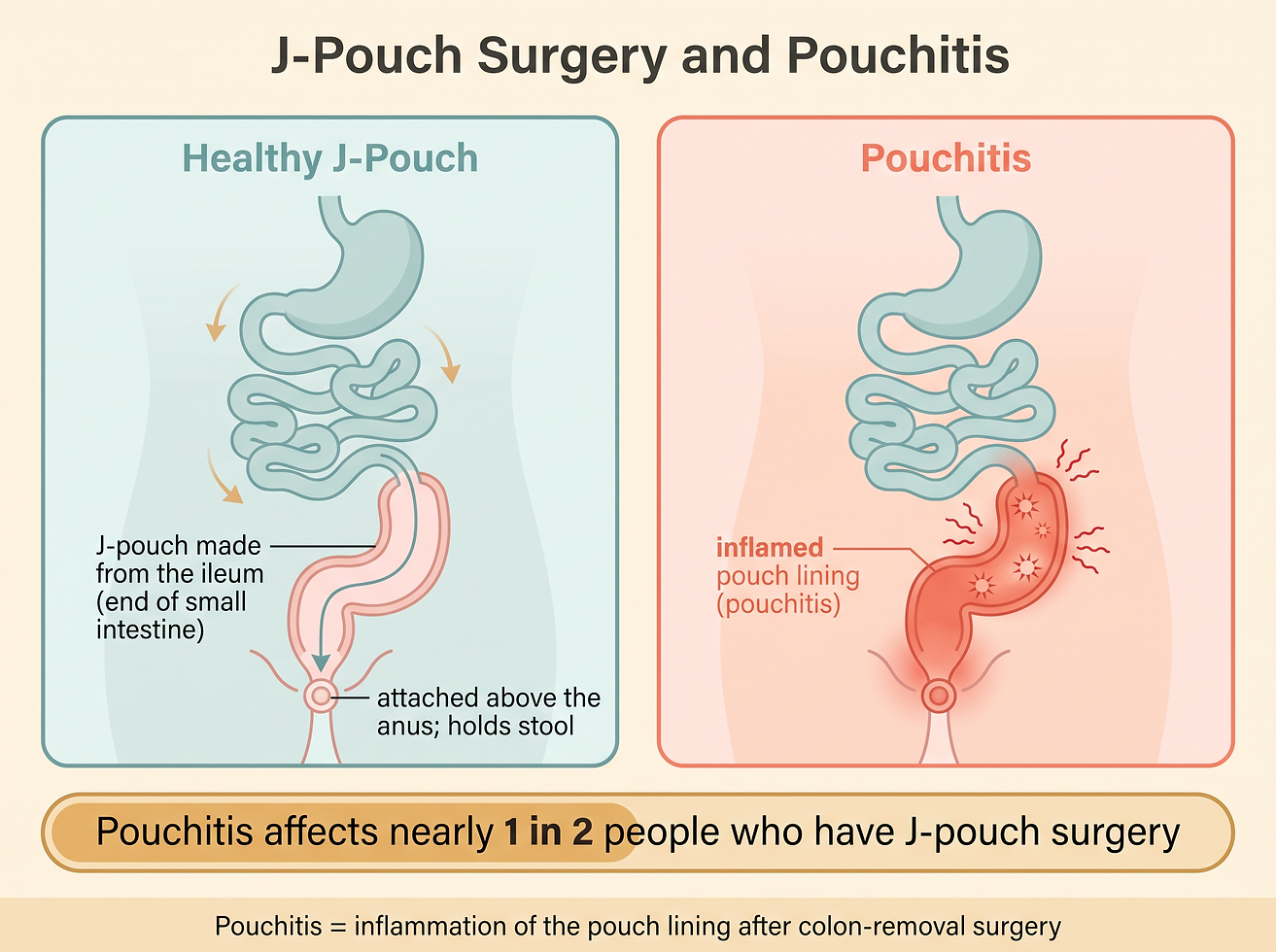
Pouchitis is inflammation of the lining of a J-pouch — the reservoir surgeons create from the end of the small intestine after removing the colon, most often to treat ulcerative colitis. It is the most common complication of J-pouch surgery, affecting nearly half of people who have the procedure. Symptoms include diarrhea, belly pain, cramps, fever, stool leakage at night, and trouble controlling stool passage. The cause is unknown but appears to involve pouch bacteria and immune system function. Antibiotics are the most common treatment, and most people improve within 1 to 2 days.
What Is Pouchitis?
Pouchitis is swelling and irritation — called inflammation — in the lining of a pouch made during surgery to remove the colon. The pouch is made to treat a bowel disease called ulcerative colitis and some other diseases.
Many people with ulcerative colitis need to have their colons taken out. Surgeons use a procedure called ileoanal anastomosis, commonly known as J-pouch surgery, to connect the bowel again after taking out the colon.
In J-pouch surgery, surgeons use the end of the small intestine, called the ileum, to make a pouch shaped like the letter J. They attach the pouch inside the body to the area just above the anus. The pouch holds stool before it leaves the body.
Pouchitis is a complication of J-pouch surgery. It happens in nearly one-half of the people who have the procedure.

What Are the Symptoms of Pouchitis?
Symptoms of pouchitis can include diarrhea, belly pain, joint pain, cramps, and fever. Other symptoms include passing stool more often, stool leakage at night, trouble controlling stool passage, and a strong urge to pass stool.
Symptom | What it looks like in daily life |
Diarrhea | Loose, watery stools |
Belly pain | Discomfort in the abdomen |
Joint pain | Aching in the joints |
Cramps | Painful tightening in the belly |
Fever | Elevated body temperature |
Passing stool more often | Increased frequency of bowel movements |
Stool leakage at night | Leaking stool while sleeping |
Trouble controlling stool passage | Difficulty with continence |
Strong urge to pass stool | Sudden urgency |
If you have had J-pouch surgery and any of these symptoms appear, they deserve attention — especially new or worsening diarrhea and nighttime leakage.

What Causes Pouchitis?
The cause of pouchitis is unknown. The condition appears to be due to an interaction between bacteria in the pouch and an underlying issue with the immune system.
This is a helpful way to think about it: the pouch is made from small intestine tissue that was never designed to hold stool. Its lining lives in constant contact with bacteria, and in some people, that interaction — combined with immune system behavior — tips into inflammation.
Who Is at Risk?
Some factors can increase the risk of developing pouchitis. The table below covers the three established risk factors and how each contributes.
Risk factor | How it raises risk |
Having inflammatory bowel disease (IBD) | Pouchitis happens more often in people with underlying IBD, such as ulcerative colitis |
Using NSAIDs | Taking nonsteroidal anti-inflammatory drugs such as ibuprofen (Advil, Motrin IB) and naproxen sodium (Aleve) can contribute to pouchitis |
Having pelvic radiation therapy | Radiation therapy in the pelvic area increases the risk of pouchitis |
The strongest risk factor is the underlying disease itself. Because J-pouch surgery is usually done for ulcerative colitis, nearly everyone at risk already has IBD — and pouchitis happens more often in people who have it.
How Is Pouchitis Diagnosed?
To diagnose pouchitis, a healthcare professional will likely start by taking a medical history and doing a physical exam.
Confirming the diagnosis may include tests, such as the following.
Test | What it does |
Lab tests — blood | Looks for other medical conditions that could explain symptoms |
Lab tests — stool | Looks for infection; results help determine what type of antibiotics are best |
Endoscopy | A tiny camera on the end of a flexible tube visually examines the ileal pouch |
Biopsy | A tissue sample collected during endoscopy for testing |
Imaging | MRI or CT scanning to find out what is causing symptoms |
The stool test deserves special attention. Because infection can mimic or complicate pouchitis, stool results directly guide which antibiotics are chosen for treatment.
How Is Pouchitis Treated?

Antibiotics
Antibiotics are the most common treatment for pouchitis. The treatment response is notably fast: most people improve within 1 to 2 days of starting antibiotics and do not develop pouchitis again.
The full course of treatment is usually 10 to 14 days, although longer courses are sometimes needed.
Ongoing Care for Recurrent Pouchitis
Someone who has regular flare-ups of pouchitis may need ongoing maintenance antibiotic therapy. Using probiotics may help prevent pouchitis from coming back.
Surgery
On rare occasions, pouchitis doesn't respond to daily treatment. Then surgeons may need to remove the pouch and do a permanent ileostomy.
Conclusion and Next Steps
Pouchitis is the most common complication of J-pouch surgery, affecting nearly half of people who have the procedure. It is inflammation of the pouch lining that shows up as diarrhea, belly pain, cramps, fever, urgency, and nighttime leakage. While the cause is unknown, bacteria in the pouch and immune system interaction appear to drive it. The good news is that treatment works quickly for most people — antibiotics bring improvement in as little as 1 to 2 days.
If you've had J-pouch surgery and are experiencing new or worsening diarrhea, belly pain, cramps, fever, nighttime stool leakage, or trouble controlling stool passage, contact your healthcare professional promptly. Before the appointment, note when symptoms started, how often they occur, any recent NSAID use, and any past flare-up treatments that helped.
Frequently Asked Questions
What is pouchitis, in simple terms?
Pouchitis is swelling and irritation (inflammation) of the lining of a pouch created during surgery to remove the colon. The pouch — called a J-pouch — is made from the end of the small intestine and attached above the anus to hold stool before it leaves the body.
How common is pouchitis after J-pouch surgery?
Pouchitis is a complication of J-pouch surgery. It happens in nearly one-half of the people who have the procedure.
What are the symptoms of pouchitis?
Symptoms include diarrhea, belly pain, joint pain, cramps, and fever, plus passing stool more often, stool leakage at night, trouble controlling stool passage, and a strong urge to pass stool.
What causes pouchitis?
The cause of pouchitis is unknown. The condition appears to be due to an interaction between bacteria in the pouch and an underlying issue with the immune system.
What increases the risk of pouchitis?
Three factors raise risk: having underlying inflammatory bowel disease such as ulcerative colitis, using NSAIDs like ibuprofen and naproxen, and having had radiation therapy in the pelvic area.
How is pouchitis treated?
Antibiotics are the most common treatment. Most people improve within 1 to 2 days of starting antibiotics and do not develop pouchitis again. The full course is usually 10 to 14 days.
Can pouchitis come back?
Yes. People with regular flare-ups may need ongoing maintenance antibiotic therapy, and probiotics may help prevent pouchitis from coming back.
What happens if pouchitis doesn't respond to treatment?
On rare occasions, pouchitis doesn't respond to daily treatment. In those cases, surgeons may need to remove the pouch and do a permanent ileostomy.
Disclaimer: This article is for general informational purposes only and is not a substitute for professional medical advice, diagnosis, or treatment. Always seek the advice of a qualified healthcare provider with questions about a medical condition. In an emergency, call 911 or your local emergency number.
Comments