Plantar Fasciitis Surgery: Procedure, Recovery, and Long-Term Relief

Updated: 2 days ago
Medically reviewed by Dr. Baraa Alnahhal, MD · Last reviewed: September 2026
Plantar fasciitis surgery is a specialized procedure used to treat chronic heel pain when nonsurgical methods fail. The most common technique, plantar fasciotomy, involves releasing tension in the plantar fascia tissue. While recovery requires several weeks of limited weight-bearing and physical therapy, the surgery offers a pathway to long-term relief for those with persistent symptoms.
Quick answer: Plantar fasciitis surgery, primarily plantar fasciotomy, is an elective procedure to treat severe heel pain by cutting the plantar fascia to relieve tension. It is typically considered after months of unsuccessful nonsurgical treatment. The surgery can be performed through open or endoscopic techniques, sometimes involving heel spur removal. Recovery involves a structured four-week timeline, transitioning from crutches to supportive footwear and physical therapy to restore full foot function.
Understanding Plantar Fasciitis Surgery
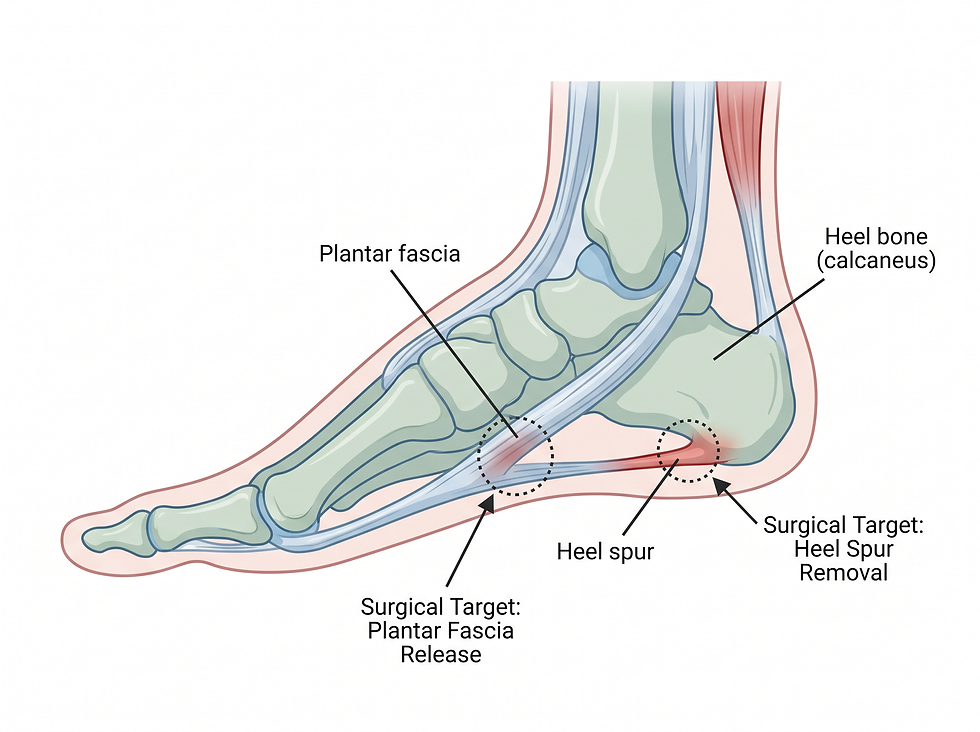
Plantar fasciitis is a common condition characterized by sharp, stabbing pain in the heel, often caused by inflammation of the plantar fascia—a thick band of tissue connecting the heel to the toes. While most cases resolve with physical therapy and conservative care, approximately 10% of individuals do not find relief after several months of treatment. In these instances, surgical intervention becomes a viable option to restore mobility and reduce pain.
The primary goal of the procedure is to ease the tension that has built up in the inflamed tissue. By strategically cutting into the fascia, surgeons can loosen the band, allowing the foot to function more comfortably. This intervention is often referred to as plantar fascia release and can be performed using various surgical approaches tailored to the individual's needs and the severity of their condition.
Common Surgical Techniques
Surgeons utilize several methods to address plantar fasciitis, with the choice of technique depending on the patient's anatomy and specific symptoms. The two most frequent approaches are open surgery and endoscopic surgery. Open surgery involves a single, longer incision on the side or bottom of the foot, providing direct access to the tissue. In contrast, endoscopic surgery uses smaller incisions and a thin tube with specialized tools, often resulting in less immediate tissue disruption.
Beyond the standard fasciotomy, other specialized procedures may be employed. Gastrocnemius recession focuses on lengthening the calf muscle to reduce the mechanical pressure exerted on the plantar fascia. Another innovative option is radiofrequency microtenotomy, which uses targeted energy to create microscopic tears in the tissue. These tiny tears stimulate the body's natural healing response, promoting the growth of new, healthy tissue in the affected area.
Surgery Type | Description | Primary Goal |
Plantar Fasciotomy | Cutting the plantar fascia band | Relieve tension and inflammation |
Gastrocnemius Recession | Lengthening the calf muscle | Reduce pressure on the foot |
Radiofrequency Microtenotomy | Using energy to create micro-tears | Stimulate new tissue growth |
Heel Spur Removal | Removing bony growths | Eliminate secondary pain sources |
Preparation and Procedure Details
Preparing for surgery involves both medical and practical steps to ensure a smooth recovery. Patients may receive local, regional, or general anesthesia depending on the complexity of the procedure and personal health factors. If general anesthesia is used, fasting for several hours prior to the operation is typically required. Because mobility will be significantly limited immediately following the procedure, arranging for transportation and home support is essential.
During the procedure, the surgeon makes the necessary incisions to access the plantar fascia. Once the tissue is reached, a precise cut is made to release the tension. If a heel spur is present and contributing to the patient's discomfort, it may be removed at this stage. The incisions are then carefully closed, and the foot is often placed in a protective boot or cast to begin the healing process.
Recovery and Postoperative Care
The recovery process is structured to gradually reintroduce weight-bearing while protecting the surgical site. During the first 24 hours, rest, icing, and elevation are critical for managing swelling. Most patients will require crutches for the first two weeks to avoid putting any weight on the operated foot. By the third week, partial weight-bearing is often permitted, typically with the use of orthotic inserts to support the foot's arch.
Physical therapy usually begins around the fourth week, focusing on restoring strength and flexibility. For active individuals, such as runners, returning to high-impact activities may take several months. During this transition, low-impact exercises like swimming or cycling are often recommended to maintain cardiovascular health without straining the healing tissue. Following the surgeon's specific timeline is vital for a successful outcome.
Recovery Phase | Duration | Activity Level |
Initial Rest | Day 1 | Elevation, icing, and complete rest |
Non-Weight Bearing | Weeks 1–2 | Use of crutches; no weight on foot |
Partial Weight Bearing | Week 3 | Limited weight with supportive orthotics |
Rehabilitation | Week 4+ | Start of physical therapy and soft tissue work |

Potential Risks and Considerations
While plantar fasciitis surgery is generally effective, it carries certain risks common to surgical procedures. These include infection, excessive bleeding, and nerve injury. A specific consideration for this surgery is the potential for the foot's arch to collapse, as the plantar fascia provides critical structural support. Surgeons carefully weigh these risks against the potential benefits of long-term pain relief before recommending the procedure.
Patients should monitor their recovery closely and contact their surgical team if they experience signs of complications. These signs include a high fever, opening of the stitches, excessive drainage or pus, or pain that does not respond to prescribed medication. Addressing these issues early can prevent more serious infections or healing delays.

Long-Term Outlook
For the majority of patients who undergo surgery, the long-term outlook is positive. Releasing the tension in the plantar fascia often eliminates the sharp pain that made daily activities difficult. However, surgery is considered a final step in a comprehensive treatment plan. Maintaining foot health through proper footwear and continued stretching can help prevent future issues and ensure the longevity of the surgical results.
Conclusion
Plantar fasciitis surgery offers a significant opportunity for relief for those who have exhausted nonsurgical treatment options. By understanding the procedure, preparing effectively for recovery, and following a structured rehabilitation plan, patients can move toward a life free from chronic heel pain.
When to See a Specialist
If you are struggling with persistent heel pain that has not responded to conservative treatments, consult with a foot and ankle specialist to discuss whether surgical intervention is the right path for you. Early evaluation and a tailored treatment plan are key to restoring your mobility and quality of life.
Frequently Asked Questions
What is the success rate for plantar fasciitis surgery?
Surgery is generally effective for the 10% of patients who do not find relief through nonsurgical methods, though individual results vary based on the technique used and adherence to recovery protocols.
Is the surgery performed as an outpatient procedure?
Yes, most plantar fasciotomy procedures are performed on an outpatient basis, allowing patients to return home the same day.
What is the difference between open and endoscopic surgery?
Open surgery uses a single larger incision for direct access, while endoscopic surgery uses smaller incisions and a camera-equipped tube for a less invasive approach.
Will I need general anesthesia?
While some patients have general anesthesia, others may receive local or regional anesthesia to numb only the foot or a section of the leg.
How long will I be on crutches?
Typically, patients use crutches for the first two weeks to avoid putting weight on the healing foot.
Can a heel spur be removed during the same surgery?
Yes, if a heel spur is present, the surgeon can remove it after releasing the plantar fascia.
When can I start physical therapy?
Physical therapy usually begins around the fourth week after surgery to help restore strength and range of motion.
Are there risks to my foot's arch?
Because the plantar fascia supports the arch, cutting it can sometimes cause the arch to flatten or collapse.
How soon can I return to work?
This depends on your job's physical demands. Desk work may be possible sooner, while jobs requiring standing or walking may require several weeks of recovery.
What are the signs of a postoperative infection?
Signs include a fever over 101°F, pus drainage, excessive redness, or pain that worsens despite medication.
Can I drive after the surgery?
You will need someone to drive you home after the procedure. Your ability to drive later depends on which foot was operated on and your level of mobility.
What exercises are safe during recovery?
Low-impact activities like swimming or stationary cycling are often recommended once initial healing has progressed.
Will the pain come back after surgery?
While the surgery addresses the current tension, maintaining foot health and using proper support can help prevent the recurrence of inflammation.
What is gastrocnemius recession?
It is a procedure to lengthen the calf muscle, which reduces the overall pressure and strain on the plantar fascia.
Is radiofrequency microtenotomy invasive?
It is a minimally invasive option that uses a probe to create tiny tears in the tissue, stimulating the body's natural healing process.
Medical Disclaimer: This content is for informational purposes only and does not constitute medical advice. Always seek the advice of a qualified healthcare professional regarding any medical condition or treatment.
Comments