Osteoblastoma: Symptoms, Causes, Diagnosis, Treatment, and Outlook — What You Need to Know

Updated: 2 days ago
Medically reviewed by Dr. Baraa Alnahhal, MD · Last reviewed: September 2026
TL;DR: The Essentials
Osteoblastoma is a rare, benign (noncancerous) bone tumor that primarily affects the spine and long bones of young adults. While not life-threatening, these tumors are fast-growing and replace healthy bone with weak osteoid tissue, significantly increasing the risk of fractures and nerve damage. Most cases are successfully cured through surgical removal, though long-term monitoring is required to watch for potential recurrence.
Quick Answer: What is Osteoblastoma?
Osteoblastoma is a type of benign bone tumor that creates a new, weaker form of tissue called osteoid. This process attacks and destroys healthy bone structures, making them highly susceptible to fractures. Although it can occur in any bone, approximately 40% of these tumors develop in the spine, where they often compress nearby nerves and cause neurological symptoms.
Unlike some other benign growths, osteoblastomas are relatively aggressive and fast-growing, often reaching an average size of 4 centimeters, roughly the size of a cherry tomato. They are most frequently diagnosed in males under the age of 30. The primary treatment is surgical excision, which typically provides a permanent cure. However, if tumor cells are left behind during surgery, there is a risk that the growth may return.

Understanding the Mechanics of Osteoblastoma
Osteoblastoma functions by disrupting the natural lifecycle of bone tissue. The tumor cells produce osteoid, a protein matrix that has not yet mineralized into hard bone. This results in a localized area of structural weakness.
"The tumor attacks your healthy bone tissue and creates a new kind of tissue called osteoid. Osteoid is weaker than healthy bone tissue, so it weakens your bones and makes them more prone to fractures." (Cleveland Clinic)
Anatomical Distribution
While the spine is the most frequent site, these tumors can manifest in various skeletal regions. The table below outlines common locations:
Body Region | Common Bone Sites |
Spine (40%) | Vertebrae, spinal column structures |
Lower Extremities | Legs, feet |
Upper Extremities | Arms, hands |
Head and Torso | Jawbone, ribcage, collarbone, breastbone |
Symptoms and Clinical Presentation
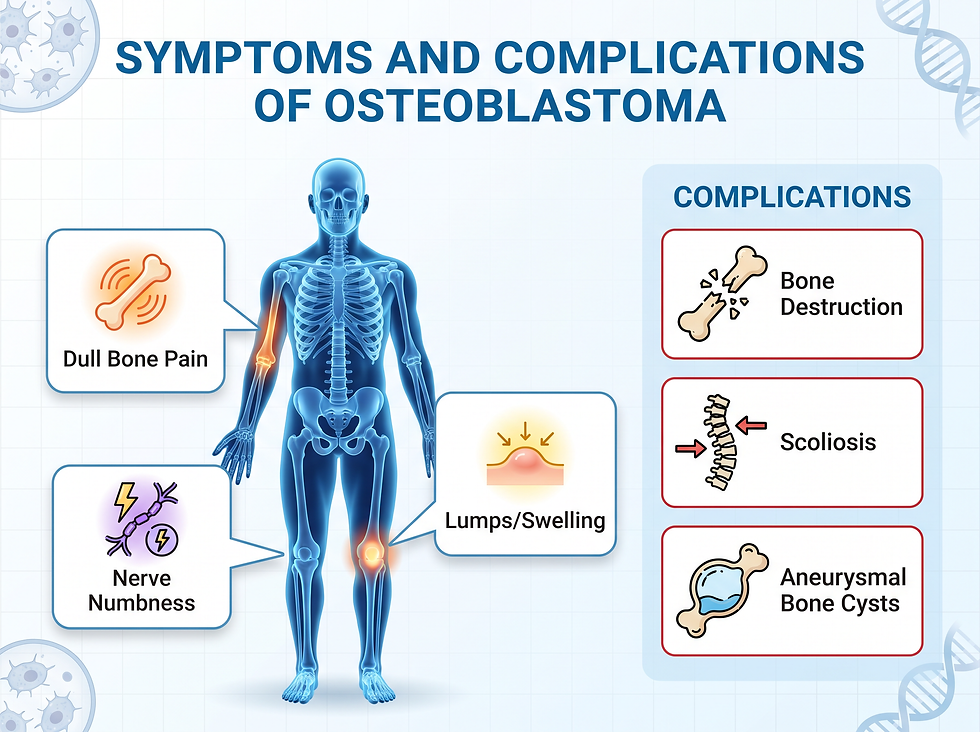
The most distinctive symptom is a deep, dull, aching bone pain that does not typically respond well to over-the-counter pain relievers.
Symptom Category | Specific Signs and Sensations |
Localized Pain | Dull, aching pain deep within the body; tender to the touch. |
Visible Changes | Lumps or swelling under the skin. |
Mobility Issues | Limping or changes in gait (when legs or feet are affected). |
Neurological | Numbness, weakness, or tingling in limbs; muscle spasms. |
Spinal Signs | Chronic back or neck pain; temporary curvature (scoliosis). |
Complications and Long-Term Risks
If left untreated, the rapid growth of an osteoblastoma can lead to significant structural and neurological damage.
Complication | Impact on Health |
Bone Destruction | Weakens healthy tissue, leading to pathological fractures. |
Secondary Growths | May trigger the formation of aneurysmal bone cysts. |
Nerve Compression | Can result in permanent neuropathy or loss of function. |
Scoliosis | Spinal tumors can cause the spine to curve abnormally. |
Toxic Reaction | Rare "toxic osteoblastoma" causes fever, weight loss, and widespread inflammation. |
Causes and Risk Factors
The exact cause of osteoblastoma remains unknown to the medical community. However, statistical data shows a clear demographic preference.
Factor | Statistical Observation |
Age | Most common in individuals under 30 years old. |
Biological Sex | Twice as common in males as in females. |
Genetics | No specific hereditary link has been definitively established. |
Diagnostic Procedures
Diagnosis begins with a physical examination and a review of the patient's history, followed by advanced imaging to visualize the tumor's impact on surrounding tissues.
X-rays: The initial step to identify bone abnormalities.
CT Scans: Provide detailed cross-sectional views to locate the tumor precisely.
MRI: Useful for assessing nerve compression and soft tissue involvement.
Biopsy: A tissue sample is analyzed in a lab to confirm the diagnosis.
Immunostaining: A specialized lab process used to distinguish osteoblastoma from cancerous osteosarcoma.
Treatment and Management Strategies
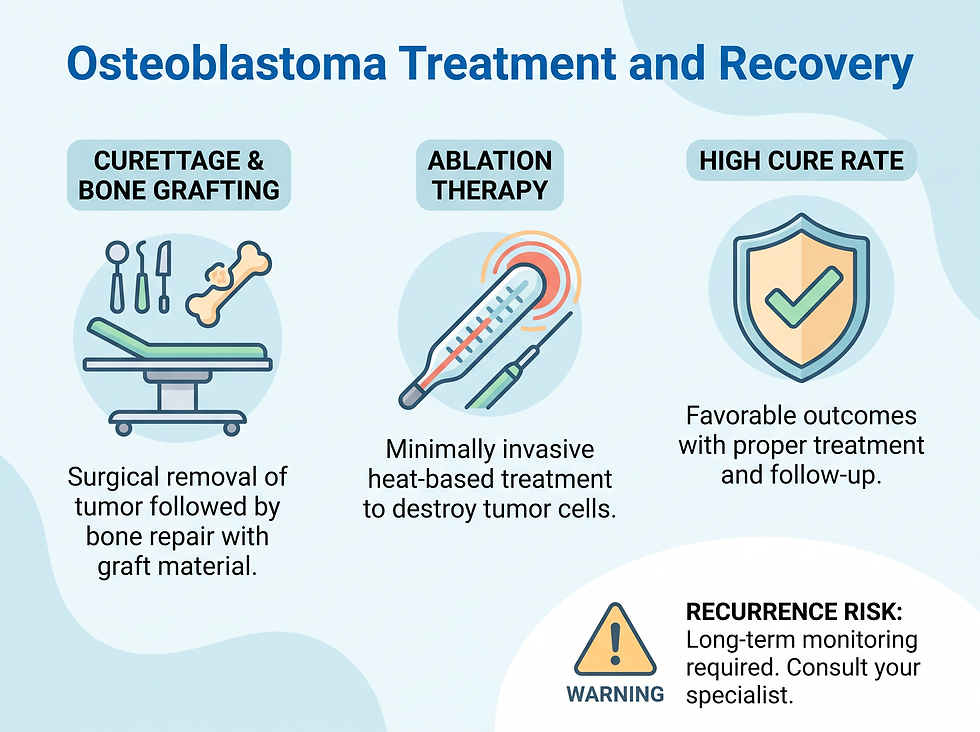
Surgery is the standard treatment for osteoblastoma. The goal is complete removal to prevent recurrence and restore bone strength.
Treatment Method | Description and Application |
Curettage & Grafting | Scraping out abnormal tissue and filling the void with donor or patient bone. |
En Bloc Resection | Removing the entire section of bone containing the tumor (for aggressive cases). |
Ablation Therapy | Using extreme cold (cryoablation) or heat (radiofrequency) to destroy the tumor. |
Observation | Only used for tumors in extremely high-risk spinal locations. |
Outlook and Recovery
The prognosis for osteoblastoma is generally excellent. Once the tumor is removed, the body typically repairs the bone damage over time.
Cure Rate: Most patients are permanently cured after their first surgery.
Recurrence: More common after curettage than en bloc resection; may require a second, more aggressive surgery.
Bone Repair: Healthy bone tissue usually regrows to fill the area affected by the tumor.
Conclusion and Next Steps
If you are experiencing persistent, deep bone pain or have noticed an unexplained lump, it is critical to seek a professional evaluation. While osteoblastoma is noncancerous, its fast-growing nature makes early intervention the best way to prevent fractures and nerve damage.
Frequently Asked Questions (FAQ)
Is osteoblastoma a form of cancer?
No, osteoblastoma is a benign (noncancerous) tumor. However, it can be aggressive and destructive to healthy bone tissue.
What is the difference between osteoblastoma and osteoid osteoma?
While related, osteoblastomas are larger (usually over 2 cm) and grow more aggressively than osteoid osteomas.
Can an osteoblastoma turn into cancer?
Malignant transformation is extremely rare and controversial; most experts believe such cases were actually osteosarcoma from the beginning.
Who is most at risk for developing this tumor?
Males under the age of 30 are the most frequently affected demographic.
Where is the most common place for these tumors to grow?
Approximately 40% of all osteoblastomas occur in the spine.
Does osteoblastoma cause scoliosis?
Yes, when located in the spine, the tumor can cause a temporary curvature known as scoliosis.
How is the tumor diagnosed?
Diagnosis involves X-rays, CT or MRI scans, and a biopsy for laboratory confirmation.
What is osteoid tissue?
Osteoid is a weak, unmineralized bone matrix produced by the tumor that replaces healthy, hard bone.
Is surgery always necessary?
In almost all cases, surgery is the recommended treatment to stop the tumor's growth and prevent complications.
What is curettage?
Curettage is a surgical technique where the surgeon scrapes out the abnormal tumor tissue from the bone.
Can the tumor come back after surgery?
Yes, recurrence is possible if any tumor cells remain, particularly after a curettage procedure.
What are the symptoms of nerve compression?
Symptoms include numbness, tingling, weakness in the limbs, and muscle spasms.
What is toxic osteoblastoma?
A very rare complication involving widespread inflammation, fever, and unexplained weight loss.
How long does recovery take?
Recovery varies by the location and size of the tumor, but most bones eventually repair themselves after the growth is removed.
Should I be worried about a dull ache in my bones?
Persistent bone pain should always be evaluated by a healthcare provider to rule out conditions like osteoblastoma.
External Resources
Medical Disclaimer
The information provided in this article is for educational purposes only and should not be used as a substitute for professional medical advice, diagnosis, or treatment. Always seek the advice of your physician or other qualified health provider with any questions you may have regarding a medical condition.
Comments