Nipple-Sparing Mastectomy: Benefits, Candidacy, and Procedure Details

Updated: 2 days ago
Medically reviewed by Dr. Baraa Alnahhal, MD · Last reviewed: September 2026
TL;DR: Nipple-sparing mastectomy (NSM) is a specialized surgical procedure that removes breast tissue while preserving the skin, nipple, and areola. This approach offers a more natural post-operative appearance and higher patient satisfaction compared to traditional mastectomies. While it is an effective option for many, candidacy depends on tumor location, overall health, and reconstruction plans.
Quick Answer: A nipple-sparing mastectomy is a surgical procedure where all breast tissue is removed while the outer skin "envelope," including the nipple and areola, is left intact. This technique is primarily used for individuals with isolated tumors or those seeking prophylactic surgery who plan to have immediate breast reconstruction. By preserving the original skin and nipple, the procedure aims to provide a more natural cosmetic result and maintain self-esteem following surgery.
Overview of Nipple-Sparing Mastectomy
Nipple-sparing mastectomy (NSM) represents a significant advancement in breast surgery, focusing on achieving both oncological safety and superior cosmetic outcomes. In this procedure, the surgeon removes all underlying breast tissue but preserves the entire skin pocket, the nipple, and the areola. This preservation creates a natural "envelope" that can be filled during reconstructive surgery, which typically occurs simultaneously with the mastectomy.
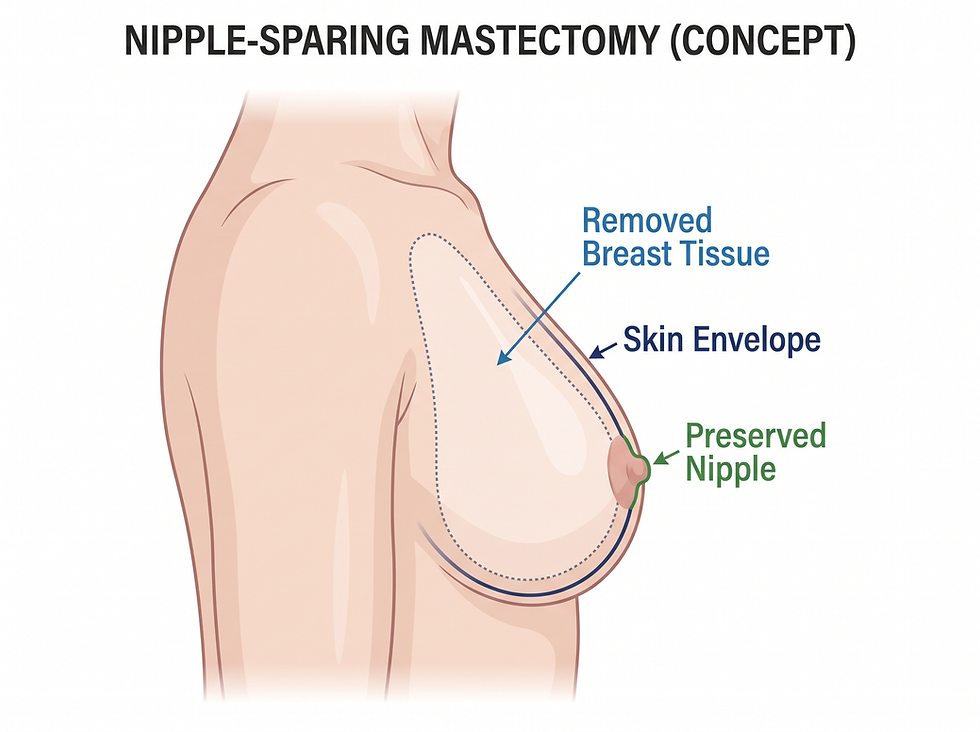
This technique is often favored by patients who wish to maintain their body image and self-esteem after a mastectomy. Because the procedure keeps the patient's original skin and nipple, the reconstructed breast often looks more like the original breast than with other mastectomy types. While the primary goal is the removal of potentially cancerous or high-risk tissue, the preservation of the nipple complex can also lead to the eventual return of some sensation in about 50% of cases.
Candidacy and Surgical Planning
Not every patient is a candidate for a nipple-sparing approach. The most critical factor is the location and stage of the cancer; tumors must be well-isolated from the nipple and areola to ensure that no cancerous cells are left behind. Surgeons also evaluate the patient's overall health, as conditions like unmanaged diabetes or heavy smoking can significantly impair blood flow and healing, potentially leading to the loss of the preserved nipple.
Candidacy Factor | Ideal Candidate Profile |
Tumor Location | Well-isolated from the nipple, areola, and skin. |
Cancer Stage | Early-stage or prophylactic (preventative) cases. |
Overall Health | Non-smoker, managed blood sugar, no major clotting disorders. |
Reconstruction Plan | Planning immediate reconstruction during the same surgery. |
Before the procedure, patients undergo extensive imaging, such as mammograms, ultrasounds, or MRIs, to map the breast tissue and tumor locations. Surgeons also discuss the "nipple delay" technique for those with larger breasts, which involves a preliminary breast reduction to improve blood flow and the eventual success rate of the nipple-sparing procedure.
The Surgical Procedure
During the operation, a cancer surgeon works in tandem with a plastic surgeon. The cancer surgeon removes the breast tissue through carefully placed incisions, leaving a thin layer of fat to maintain the blood supply to the skin and nipple. For those seeking even less visible scarring, an endoscopic nipple-sparing mastectomy (E-NSM) may be an option. This minimally invasive version uses a small incision near the armpit or under the breast, where an endoscope—a camera-equipped tube—guides the removal of tissue.
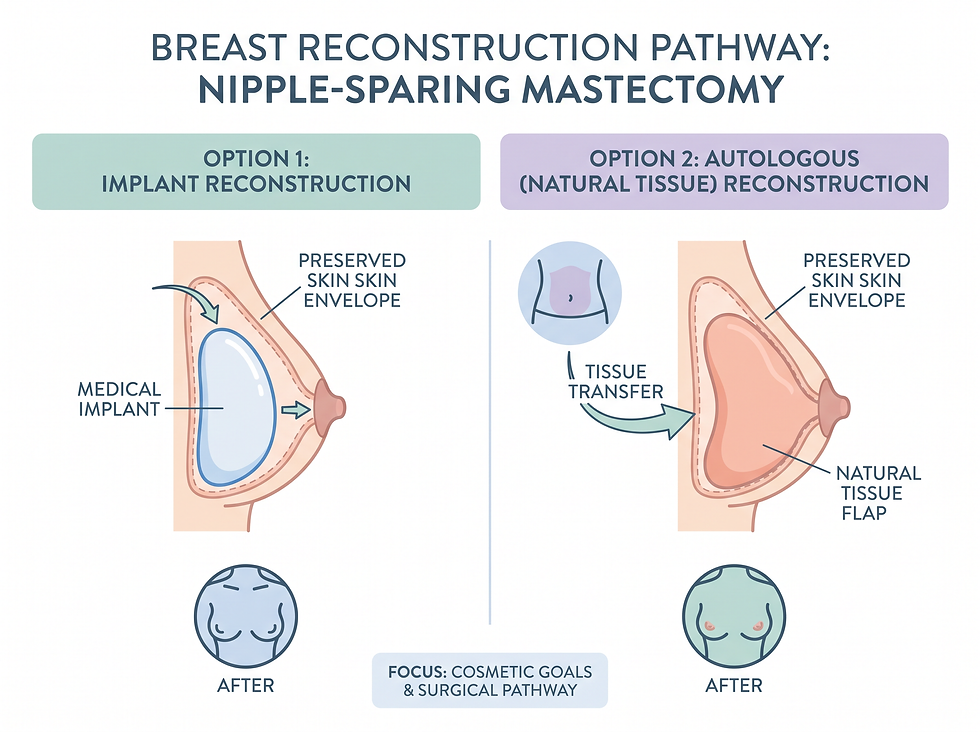
Once the tissue is removed, the plastic surgeon begins the reconstruction process. The preserved skin pocket can be filled with a silicone or saline implant, or with the patient's own tissue taken from another part of the body. If a patient chooses not to have reconstruction, they can opt to go "flat," though the preserved skin envelope is most commonly utilized for immediate rebuilding of the breast form.
Recovery and Long-Term Outlook
Recovery from a nipple-sparing mastectomy is often managed on an outpatient basis, allowing many patients to return home the same day. Surgical drains are typically required for about two weeks to prevent fluid buildup, and bruising or swelling generally subsides within the first week. Most individuals can return to their normal daily activities within one to two months, provided they follow a regimen of gentle arm exercises to prevent shoulder stiffness.
Recovery Milestone | Typical Timeline |
Hospital Discharge | Same day or overnight stay. |
Initial Healing | Swelling and bruising subside in 7 days. |
Drain Removal | Approximately 14 days post-surgery. |
Full Activity Return | 4 to 8 weeks, depending on reconstruction. |
The long-term risks primarily involve the potential loss of the nipple if blood flow is not adequately restored during the healing process. However, when successful, the procedure offers the same level of cancer protection as traditional mastectomies while providing a significantly better cosmetic result. Patients are advised to monitor their recovery closely and contact their healthcare provider if they notice signs of infection, such as fever or increased heat and redness around the incision sites.

Conclusion
Nipple-sparing mastectomy is a valuable surgical option that balances the necessity of tissue removal with the desire for a natural post-operative appearance. By preserving the skin and nipple complex, it provides a foundation for high-quality reconstruction and supports a patient's psychological well-being. While it requires careful patient selection and specialized surgical expertise, NSM remains a cornerstone of modern, patient-centered breast cancer care.
Next Steps
If you are considering a mastectomy, discuss the possibility of a nipple-sparing approach with your surgical team. Ask about your specific candidacy based on your tumor location and overall health. Inquire about the types of reconstruction available and whether an endoscopic approach might be suitable for your goals. Seeking a second opinion from a center experienced in nipple-sparing techniques can also provide additional clarity for your treatment journey.
Frequently Asked Questions
What is the main advantage of a nipple-sparing mastectomy?
The primary advantage is a more natural appearance after surgery, as it preserves the patient's original skin, nipple, and areola for reconstruction.
Is the cancer recurrence risk higher with this procedure?
No, studies indicate that the risk of cancer recurrence with NSM is the same as with other types of mastectomies.
Can anyone have a nipple-sparing mastectomy?
No, it depends on the tumor's proximity to the nipple, the stage of cancer, and the patient's overall health and healing ability.
Will I have sensation in my nipple after surgery?
Sensation returns in less than 50% of cases, and it may take significant time to reappear.
How long does the surgery take?
The duration varies but typically takes several hours, especially when combined with immediate reconstruction.
Is this an outpatient procedure?
Yes, many nipple-sparing mastectomies are performed as outpatient surgeries, meaning you go home the same day.
What is an endoscopic nipple-sparing mastectomy?
It is a minimally invasive version that uses small incisions and a camera (endoscope) to remove breast tissue with less visible scarring.
What are surgical drains, and how long do they stay in?
Drains are tubes that remove excess fluid from the surgical site; they are usually removed after about two weeks.
What happens if the nipple doesn't heal properly?
If blood flow is not restored, the nipple tissue may die, which might require further surgery or reconstruction alternatives.
Can I choose not to have reconstruction?
Yes, you can choose to go "flat," though the procedure is most often paired with reconstruction to utilize the preserved skin pocket.
What is the "nipple delay" technique?
It is a preliminary procedure, such as a breast reduction, performed to improve blood flow and success rates for a later NSM.
Are the scars very noticeable?
NSM typically results in less noticeable scarring compared to traditional mastectomies, as incisions are often placed in less visible areas.
When can I return to exercise?
Most people can return to normal activities in one to two months, but intense activity should be avoided until cleared by a doctor.
What are the signs of a post-operative infection?
Signs include fever, increased swelling, heat around the incision, or unusual skin discoloration.
What if I am not a candidate for NSM?
Alternatives include skin-sparing mastectomy with nipple reconstruction, nipple tattoos, or silicone nipple prostheses.
Medical Disclaimer
This content is for informational purposes only and does not constitute medical advice. Always seek the advice of your physician or other qualified health provider with any questions you may have regarding a medical condition or surgical procedure.
Content date: January 13, 2026
Review status: Based on the supplied material.
Comments