Navigating the World of Prosthetic Legs: A Comprehensive Guide to Mobility and Independence

Updated: 2 days ago
Medically reviewed by Dr. Baraa Alnahhal, MD · Last reviewed: September 2026
TL;DR: A prosthetic leg is an artificial replacement for part or all of a lower limb, designed to restore mobility and independence for individuals with amputations or congenital limb differences. Modern prosthetics utilize advanced materials like carbon fiber and titanium, ranging from durable mechanical models to sophisticated bionic versions with microprocessors. The process of obtaining and mastering a prosthetic leg involves a collaborative effort between medical providers, prosthetists, and therapists. While the transition requires patience and rehabilitation, a well-fitted prosthesis significantly improves quality of life and long-term physical health.
Quick answer: A prosthetic leg is a custom-built assistive device that mimics the function of a human limb. It is used by people who have lost a leg due to surgery, injury, or birth defects. These devices range from simple below-the-knee models to complex above-the-knee versions featuring computerized joints. By restoring the ability to walk and perform daily activities, prosthetic legs help users maintain physical health, balance their body’s workload, and achieve a more active, independent lifestyle.
What Is a Prosthetic Leg?
A prosthetic leg, also known as a lower limb prosthesis, serves as a functional replacement for a missing portion of the leg. Whether a person was born with a congenital limb deficiency or underwent an amputation, these devices are engineered to restore the ability to stand, walk, and participate in physical activities. Beyond simple mobility, a prosthesis plays a vital role in maintaining musculoskeletal health by ensuring the body’s weight and workload are distributed evenly across both sides.
Modern technology has transformed these devices from basic skeletal frames into highly sophisticated tools. They are constructed from strong, lightweight materials such as carbon fiber, fiberglass, titanium, and aluminum. Depending on the user's needs, a prosthetic leg can replace anything from a single foot and ankle to an entire hip and thigh assembly.
Types of Prosthetic Legs and Amputation Levels
The design of a prosthetic leg is primarily determined by the level of the limb deficit. The higher the amputation or deficiency, the more complex the required device becomes, particularly when it must replace functional joints like the knee or hip.
Transtibial: Amputation through the lower leg (below the knee).
Knee disarticulation: Amputation directly at the knee joint.
Transfemoral: Amputation above the knee and through the femur.
Hip disarticulation: Amputation at the hip joint.
Hindquarter: Removal of the entire leg and part of the pelvis.
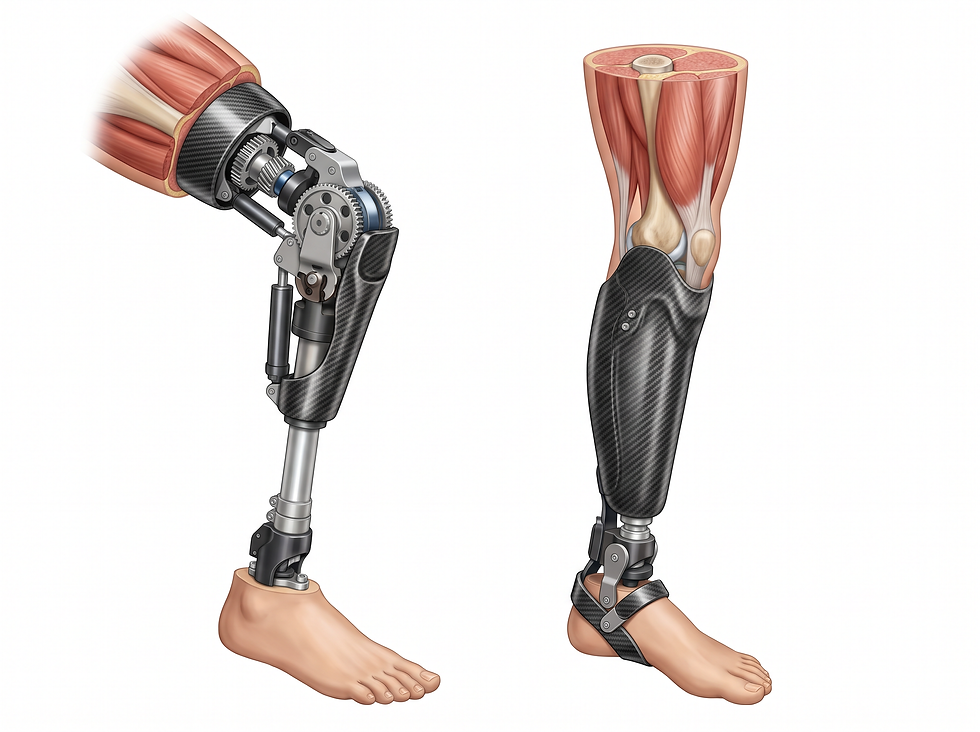
Above-the-knee prosthetics (AKA) are significantly more complex than below-the-knee models (BKA) because they must incorporate a functioning knee joint. This joint is central to walking mechanics, stability, and balance across various terrains.
The Technology Behind the Joints
The joints in a prosthetic leg are the engines of movement. Users can choose between different mechanisms based on their activity levels, durability requirements, and budget.
Mechanical: Durable, lightweight, and affordable; suitable for basic walking and sitting.
Bionic (microprocessor): Computerized parts that adjust to terrain in real-time; often programmable for specific activities.
Pneumatic/hydraulic: Uses compressed air or fluid to provide resistance, resulting in a more natural gait.
Bionic legs use sensors and microprocessors to provide real-time feedback, allowing the device to adjust to different environments much like a natural leg would. This technology is particularly beneficial for users who navigate uneven surfaces or participate in sports.
Essential Components of a Prosthesis
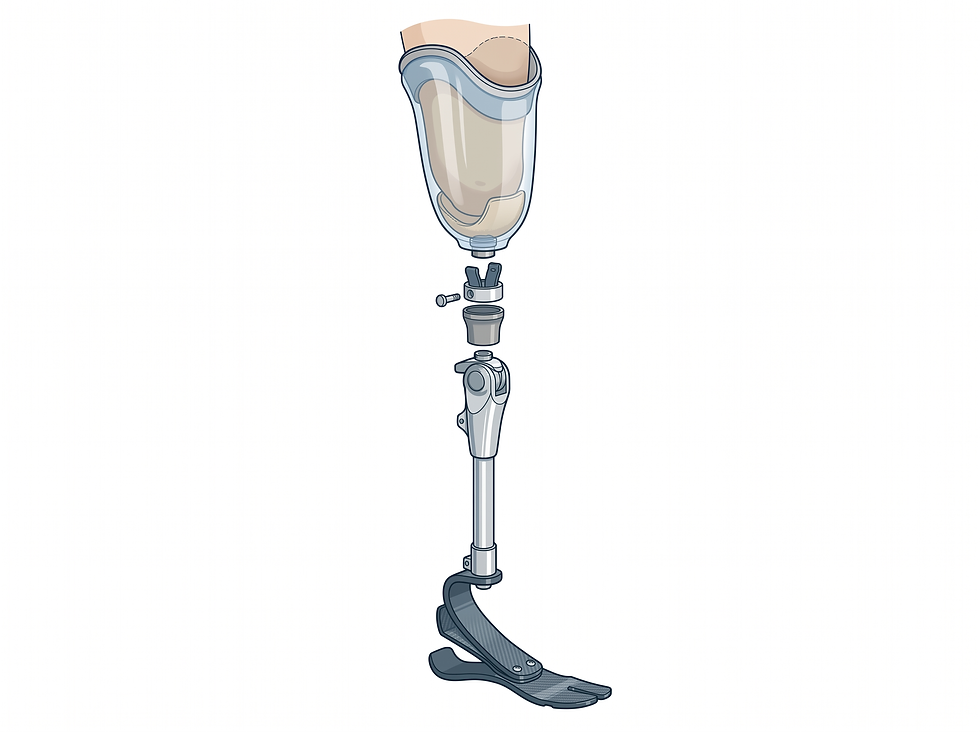
Every prosthetic leg is a custom-designed assembly of several key parts, each serving a specific purpose in the user's comfort and functionality.
The socket: This is the most critical component, as it connects the prosthesis to the user's existing limb. It must be custom-fitted through multiple appointments to ensure a secure and comfortable fit.
Suspension system: This mechanism keeps the prosthesis attached to the socket. Common methods include straps, suction liners, pin-locking systems, or even electric vacuum pumps.
The pylon (skeleton): Acting as the "bone" of the leg, the pylon is a strong metal pipe that connects the socket to the joint and foot components.
The terminal device (foot): The prosthetic foot can range from basic models to high-tech versions designed for running, swimming, or skiing.
The Process of Obtaining a Prosthetic Leg
Getting a new prosthetic limb is a major undertaking that requires time and a multidisciplinary support team. The journey begins with a thorough consultation to assess the user's physical condition and mobility goals. Following this, a prosthetist takes precise measurements—often using 3D scans or casts—to build the custom device.
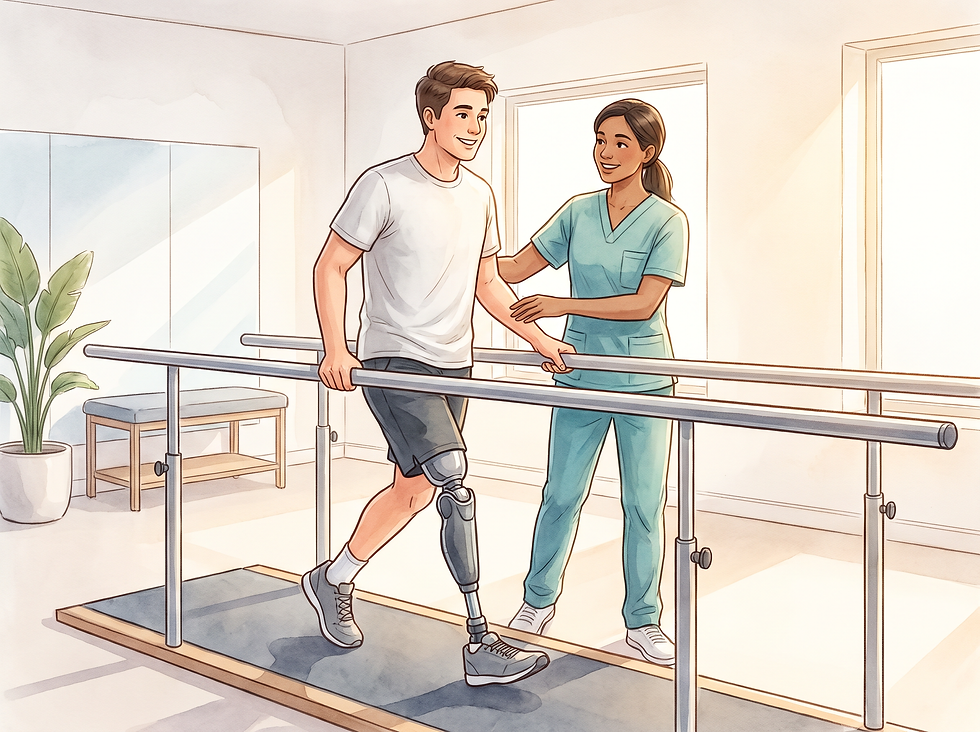
Once the prosthesis is ready, the user undergoes basic training to learn how to put it on, take it off, and maintain the equipment. This is followed by intensive physical and occupational therapy to master walking and daily tasks. Mental health support and peer groups also play a crucial role, helping users navigate the psychological adjustments that accompany limb loss.
Conclusion
A prosthetic leg is far more than a simple replacement part; it is a gateway to a more active and independent life. While the path to mastering a prosthesis involves significant physical and emotional effort, the rewards are substantial. Modern advancements in materials and microprocessor technology continue to narrow the gap between artificial and natural limbs, offering users unprecedented levels of mobility. By working closely with a dedicated team of medical professionals and staying committed to the rehabilitation process, individuals with limb differences can achieve their goals and maintain their long-term health and well-being.
Next Steps
Consult a professional: Schedule an assessment with a prosthetist to determine the best type of prosthetic leg for your lifestyle.
Review your goals: Identify the specific activities you want to resume, such as walking, running, or swimming, to guide the device selection.
Engage in therapy: Commit to a consistent physical therapy routine to build the strength and balance needed to use your new limb.
Build a support network: Join a peer support group to share experiences and gain practical advice from others living with prosthetic limbs.
Frequently Asked Questions
How long does it take to learn to walk on a prosthetic leg?
It varies by individual, but most people spend several weeks to months in physical therapy to gain confidence and a natural gait.
Can I shower with my prosthetic leg?
Most standard prosthetics are not waterproof. Special water-resistant models are available for showering or swimming.
How often does a prosthetic leg need to be replaced?
On average, a prosthetic leg lasts between three to five years, though the socket may need more frequent adjustments as your limb changes.
Is it painful to wear a prosthetic leg?
While there may be initial discomfort during the fitting process, a properly fitted socket should not be painful. Regular adjustments help maintain comfort.
Can I drive with a prosthetic leg?
Many people drive successfully with a prosthesis, though some may require vehicle modifications depending on which leg is affected.
What is a "bionic" leg?
A bionic leg uses computer microprocessors and sensors to adjust the joint's movement and resistance in real-time based on the terrain.
Do I need to wear a sock with my prosthesis?
Yes, most users wear a specialized prosthetic liner or sock to protect the skin and improve the fit within the socket.
Can children use prosthetic legs?
Yes, children can use prosthetics, but they require more frequent replacements and adjustments as they grow.
Will insurance cover the cost of a prosthetic leg?
Many insurance plans provide coverage, but the extent depends on the specific policy and the medical necessity of the device.
Can I run or play sports with a prosthetic leg?
Yes, there are specialized "running blades" and other high-activity feet designed specifically for athletics.
What materials are used to make modern prosthetics?
They are primarily made of lightweight, high-strength materials like carbon fiber, titanium, and fiberglass.
What is phantom limb pain?
It is a sensation of pain or discomfort that feels like it is coming from the limb that was removed.
How do I clean my prosthetic leg?
The socket and liners should be cleaned daily with mild soap and water to prevent skin irritation and bacteria buildup.
Can I customize the look of my prosthetic leg?
Yes, you can choose cosmetic covers that match your skin tone or use fun fabrics and designs to express your personality.
What is a prosthetist?
A prosthetist is a healthcare professional who specializes in designing, fitting, and maintaining artificial limbs.
Medical Disclaimer
This article is for informational purposes only and does not constitute medical advice. Always seek the guidance of your physician or other qualified health provider with any questions you may have regarding a medical condition or treatment.
Source date: August 7, 2024.
Comments