MicroTESE: A Comprehensive Guide to Microsurgical Sperm Extraction

Updated: 2 days ago
Medically reviewed by Dr. Baraa Alnahhal, MD · Last reviewed: September 2026
TL;DR: MicroTESE is a precise surgical procedure designed to retrieve high-quality sperm directly from testicular tissue. Primarily used to treat male infertility caused by azoospermia, it utilizes a high-powered microscope to identify healthy sperm with minimal organ damage. With a success rate of up to 60%, it offers a viable path for individuals seeking to conceive biological children when natural release is not possible.
Quick answer: MicroTESE, or microsurgical testicular sperm extraction, is a specialized surgery that retrieves sperm directly from the testes. It is typically recommended for men with azoospermia who cannot produce or release enough sperm naturally. During the two-hour procedure, a urologist uses a surgical microscope to locate and extract sperm from fine tissue tubes. This high-precision method increases the likelihood of finding viable sperm for use in fertility treatments like in vitro fertilization (IVF).
Overview of MicroTESE
Microsurgical testicular sperm extraction represents a significant advancement in reproductive medicine. This surgical intervention targets the testicular tissue within the male reproductive system to obtain reproductive cells that are otherwise absent from semen. By focusing on the testes, the procedure aims to secure the highest quality sperm necessary for successful fertilization while prioritizing the preservation of reproductive organ health.
The procedure is particularly relevant for those diagnosed with nonobstructive azoospermia, where sperm production is extremely low or absent. Unlike standard extraction methods, this microsurgical approach allows for a more detailed examination of the testicular environment, increasing the probability of locating viable sperm even in challenging cases.
Indications and Candidacy
Healthcare providers typically recommend this procedure when traditional methods of conception or sperm collection have proven unsuccessful. The primary indication is the absence of sperm in the ejaculate, a condition that can stem from various underlying health factors.
Primary indication: absence of sperm in semen (azoospermia).
Main goal: successful retrieval of healthy sperm for biological conception.
Common use case: nonobstructive azoospermia or inability to release healthy sperm.
Alternative: Testicular Sperm Extraction (TESE), often for obstructive cases.
Pre-Operative Preparation
Preparation for the procedure involves a thorough clinical assessment to ensure patient safety and optimize outcomes. This typically includes a detailed review of medical history, a physical examination, and the monitoring of vital signs such as blood pressure and heart rate.
Patients must disclose all allergies and provide a comprehensive list of current medications and supplements. Certain substances can interfere with blood clotting and may need to be adjusted prior to surgery. Additionally, a strict fasting protocol is required, typically starting at midnight the day before the procedure, to prepare for the administration of general anesthesia.
The Surgical Process
The procedure is performed in a controlled operating environment by a specialized care team, including a urologist and an anesthesiologist. Under general anesthesia, the patient remains asleep and comfortable throughout the duration of the surgery, which generally lasts less than two hours.
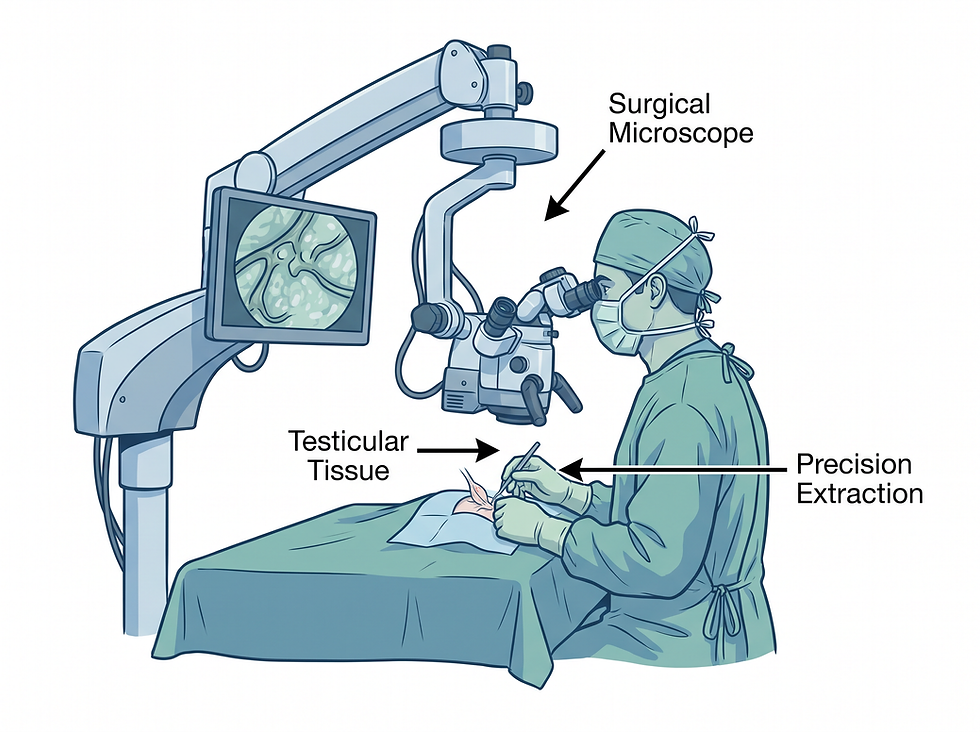
The urologist makes a single, precise incision in the scrotum to access the testicular tissue. Using a high-powered surgical microscope, a lab technologist examines the fine tubes within the tissue to identify and extract viable sperm. Once found, these cells can be used immediately for fertilization or frozen through cryopreservation for future use in fertility treatments.
Recovery and Post-Operative Care
Most individuals experience a full recovery within a few weeks of the procedure. The initial 48 hours are often characterized by the most significant discomfort, which can be managed effectively with rest and clinical guidance.
Pain management: use of ice packs and approved over-the-counter relievers.
Activity level: avoid strenuous exercise and heavy lifting for several days.
Work resumption: typically possible after a few days, depending on job demands.
Sexual activity: abstain from intercourse or masturbation for at least a few days.

Risks and Success Rates
While the procedure is highly effective, it is important to understand the potential risks and the realistic expectations for success. The primary challenge is the possibility that no viable sperm are found during the extraction process.
General surgical risks include minor bleeding, infection, or discomfort at the incision site. In very rare instances, permanent damage to the testicular tissue can occur. However, the use of microsurgical techniques significantly reduces these risks compared to traditional methods. Success rates for healthy sperm retrieval are reported at up to 60%, though this depends heavily on the specific cause of infertility.
Long-Term Outlook
For many, a successful extraction provides the necessary foundation for starting a biological family through assisted reproductive technologies. If all extracted sperm are used during a single fertilization attempt, the procedure may need to be repeated for future pregnancies. In such cases, a waiting period of six to twelve months is generally recommended between surgeries to allow for proper healing and tissue recovery.
Conclusion
MicroTESE stands as a cornerstone treatment for male infertility, offering hope to those facing complex reproductive challenges. By combining surgical expertise with advanced microscopic technology, it provides a highly targeted and effective means of sperm retrieval. While the journey through fertility treatment can be demanding, this procedure represents a significant step toward achieving the goal of biological parenthood.
Next Steps
If you are considering this procedure, the first step is to consult with a fertility specialist or urologist who specializes in male reproductive health. They can perform the necessary diagnostic tests to determine if you are a suitable candidate. It is also helpful to discuss the financial aspects and insurance coverage early in the process, as policies regarding fertility treatments vary widely.
Frequently Asked Questions
What is MicroTESE?
It is a microsurgical procedure that retrieves sperm directly from the testicles using a high-powered microscope.
Who needs this procedure?
Men with azoospermia who cannot naturally release enough healthy sperm for conception.
How long does the surgery take?
The procedure typically lasts less than two hours.
Is general anesthesia used?
Yes, patients are placed under general anesthesia to ensure they are asleep and pain-free.
What is the success rate?
Healthy sperm are successfully retrieved in up to 60% of cases.
How is MicroTESE different from TESE?
MicroTESE uses a microscope for higher precision, while TESE does not.
Is the procedure painful?
Discomfort is common for the first 1-2 days but can be managed with ice and medication.
When can I return to work?
Most people return to work within a few days, depending on their physical activity level.
Can the sperm be frozen?
Yes, extracted sperm can be used immediately or frozen for future use.
Are there any risks?
Potential risks include bleeding, infection, and the possibility that no sperm are found.
How long is the full recovery?
Most patients fully recover within a few weeks.
When can I resume sexual activity?
It is generally recommended to wait at least a few days after the procedure.
Can the procedure be repeated?
Yes, but it is usually best to wait 6 to 12 months between surgeries.
Does insurance cover the cost?
Coverage varies; it is often not covered unless specific medical criteria are met.
What happens if no sperm are found?
This is a known risk, and your care team will discuss alternative options for building a family.
Medical disclaimer: This content is for informational purposes only and does not constitute medical advice. Always seek the advice of a qualified healthcare provider with any questions regarding a medical condition or treatment.
Content date: March 26, 2024. Based on the supplied source material.
Comments