Marasmus: Understanding Severe Protein-Energy Undernutrition

Updated: 2 days ago
Medically reviewed by Dr. Baraa Alnahhal, MD · Last reviewed: September 2026
In short: Marasmus is a severe form of protein-energy undernutrition caused by a total deficiency in calories and all macronutrients (carbohydrates, fats, and proteins). It results in visible muscle and fat wasting, giving the body an emaciated appearance. Treatment requires a staged medical approach to avoid refeeding syndrome, focusing first on stabilization and then on gradual nutritional rehabilitation.
Quick Answer
Marasmus is a life-threatening form of malnutrition characterized by a severe deficiency in all macronutrients, including proteins, fats, and carbohydrates. Unlike other forms of undernutrition, it causes total body wasting, leading to an emaciated appearance and stunted growth in children. Recovery involves a strictly supervised three-stage medical process: stabilization and rehydration, followed by gradual nutritional rehabilitation, and finally, long-term prevention through education and support to ensure sustained health and prevent recurrence.
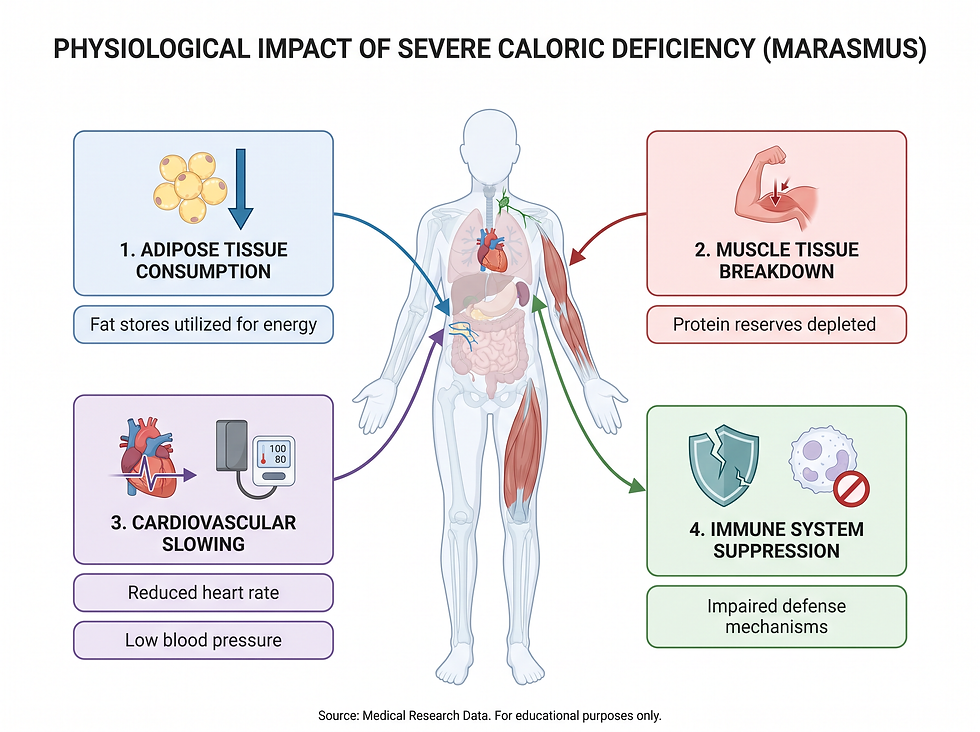
Marasmus is a critical state of protein-energy undernutrition (a severe form of malnutrition) that arises when the body lacks sufficient calories to maintain basic biological functions. This condition represents a total deficiency in all essential macronutrients: carbohydrates, fats, and proteins. Without these fuels, the body is forced to consume its own tissues, beginning with adipose fat and progressing to muscle, to sustain life.
This condition primarily affects infants and young children who require high caloric intake for development, though it can impact individuals of any age who face extreme food scarcity or underlying wasting diseases. In advanced stages, marasmus leads to starvation as the body shuts down non-essential functions to conserve its remaining energy resources.
Distinguishing Marasmus from Kwashiorkor
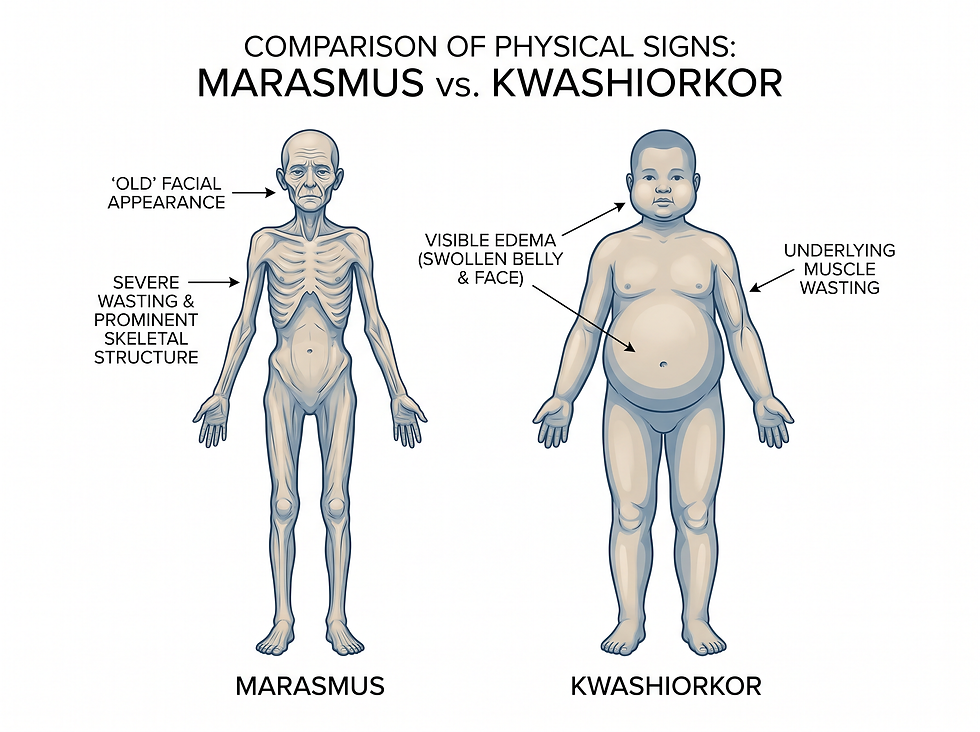
While both are forms of severe malnutrition, marasmus and kwashiorkor differ in their nutritional profiles and physical presentations. Marasmus is a total caloric deficiency, whereas kwashiorkor is primarily a protein deficiency despite some carbohydrate intake.
Primary deficiency: Marasmus involves all macronutrients (total calories), while kwashiorkor is predominantly a protein deficiency.
Physical appearance: Marasmus looks shriveled, emaciated, and "wasted," while kwashiorkor looks swollen, especially in the belly and face.
Fluid retention: Edema is absent in marasmus, while it is a hallmark of kwashiorkor.
Muscle wasting: It is severe and visible in marasmus, and present but often hidden by swelling in kwashiorkor.
Identifying the Symptoms of Marasmus
The symptoms of marasmus are largely defined by the visible depletion of the body's energy stores. As fat and muscle disappear, the skeletal structure becomes prominent, and the skin may hang in loose folds due to atrophy.
Common clinical signs include:
Visible wasting of fat and muscle tissues.
A head that appears disproportionately large for the body.
A wizened or "old" facial appearance due to loss of subcutaneous fat.
Dry, brittle hair or significant hair loss.
Extreme lethargy, apathy, and physical weakness.
In infants, sunken fontanelles (the soft spots on the skull).
Beyond appearance, marasmus causes systemic changes. The body enters a conservation mode, leading to a slow heart rate (bradycardia), low blood pressure (hypotension), and a reduced body temperature (hypothermia). These changes significantly increase the risk of heart failure and compromise the immune system, making infections more frequent and difficult to treat.
Causes and Risk Factors
The primary driver of marasmus is extreme poverty and food scarcity, which prevents access to necessary calories. However, several medical and social factors can also trigger or worsen the condition.
Medical conditions: AIDS, chronic diarrhea, malabsorption, anorexia, and dementia.
Pediatric factors: Inadequate breastfeeding, early weaning, or child neglect.
Elderly factors: Social isolation, lack of resources, or elder neglect.
Environmental factors: Food scarcity, lack of safe drinking water, and infectious diseases.
Diagnostic Procedures
Diagnosis is primarily clinical, relying on physical examinations and body measurements. Healthcare providers assess the severity of undernutrition by measuring height-to-weight ratios and the circumference of the upper arm. A BMI score below 16 is a standard indicator of marasmus in adults.
Laboratory tests are conducted to identify the secondary effects of the condition. Blood tests reveal deficiencies in specific vitamins, minerals, and electrolytes, while a complete blood count (CBC) can detect underlying infections. Stool samples may also be analyzed to check for parasites that could be contributing to nutrient loss.
Clinical Management and Recovery
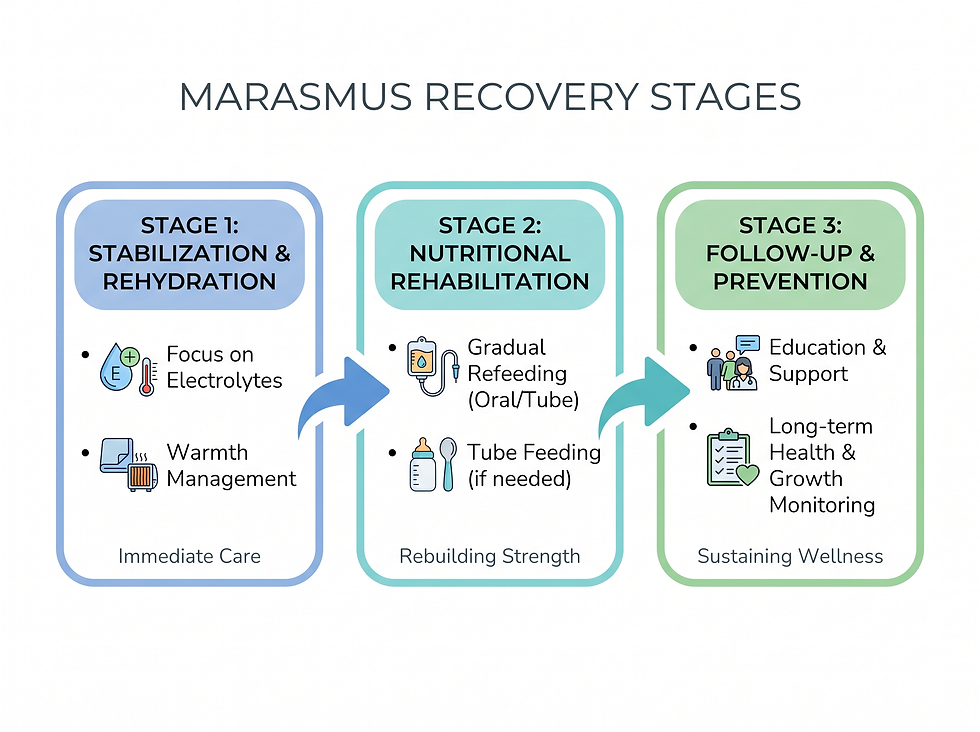
Treating marasmus is a delicate process because the body is at risk of refeeding syndrome, a life-threatening complication that occurs when an undernourished system is reintroduced to food too quickly. Treatment typically occurs in a hospital setting through three distinct stages.
Stage 1: Stabilization and Rehydration
The initial priority is correcting dehydration and electrolyte imbalances. Patients are often given a specialized formula known as REhydration SOlution for MALnutrition (ReSoMal). During this stage, it is critical to keep the patient warm to prevent hypothermia and to treat any concurrent infections.
Stage 2: Nutritional Rehabilitation
Once stable, nutritional refeeding begins slowly. Liquid formulas are introduced, often via tube feeding to ensure a gradual and continuous supply of nutrients. Initial caloric intake starts at approximately 70% of the recommended daily value for the patient's age, eventually increasing to 140% for children to support catch-up growth. This phase usually lasts between two and six weeks.
Stage 3: Follow-up and Long-Term Prevention
Before discharge, caregivers receive education on nutritional needs and hygiene. This includes support for breastfeeding, guidance on safe food preparation, and instructions for identifying early signs of recurring malnutrition.
Conclusion
Marasmus is a severe medical emergency that requires immediate and staged intervention. By understanding the critical need for all macronutrients and the risks associated with rapid refeeding, clinical teams can safely guide patients toward recovery. Long-term success depends on addressing the underlying causes of caloric deficiency and providing sustained nutritional support.
If you or someone you care for shows signs of severe weight loss, lethargy, or visible muscle wasting, seek immediate medical evaluation. Early intervention in cases of protein-energy undernutrition is vital for preventing permanent developmental delays and life-threatening complications.
Frequently Asked Questions
What is the main cause of marasmus?
The main cause is a severe and prolonged lack of total calories, including carbohydrates, fats, and proteins, often due to food scarcity or poverty.
How does marasmus differ from kwashiorkor?
Marasmus is a total caloric deficiency leading to a shriveled appearance, while kwashiorkor is primarily a protein deficiency that causes fluid swelling (edema).
Can adults get marasmus?
Yes, while it is most common in children, it can affect adults, particularly the elderly or those with wasting diseases like AIDS or anorexia.
What are the first signs of marasmus?
Visible wasting of body fat and muscle, extreme weakness, and a shriveled facial appearance are among the earliest visible signs.
What is refeeding syndrome?
It is a dangerous complication that occurs when an undernourished person is fed too much too quickly, causing the body's metabolism to reboot in a way that can lead to heart failure.
Is marasmus reversible?
Yes, with proper staged medical treatment, marasmus can be reversed, although chronic cases in children may lead to some lasting developmental issues.
How is marasmus diagnosed?
Diagnosis is based on physical exams, height-to-weight measurements, upper arm circumference, and blood tests to check for nutrient levels.
Why does the heart slow down in marasmus?
The body slows down the heart rate and other non-essential functions to conserve the very limited energy it has left.
What is ReSoMal?
ReSoMal stands for REhydration SOlution for MALnutrition, a specialized formula used to treat dehydration and electrolyte imbalances in the first stage of recovery.
Can breastfeeding prevent marasmus in infants?
Yes, adequate breastfeeding is a key preventive measure, as it provides the essential macronutrients an infant needs for growth.
Does marasmus affect the brain?
In children, chronic marasmus can lead to developmental delays and intellectual disabilities due to the lack of nutrients needed for brain growth.
What role do infections play in marasmus?
Infections like chronic diarrhea can deplete calories and nutrients, either causing marasmus or making an existing case much worse.
How long does treatment take?
The nutritional rehabilitation phase typically lasts two to six weeks, following an initial stabilization period that can take several days.
Why is tube feeding used during recovery?
Tube feeding allows for a very slow, continuous, and controlled introduction of nutrients, which helps prevent the risks of refeeding syndrome.
Can marasmus happen in developed countries?
Yes, it can occur in developed nations, often affecting elderly individuals who live in isolation or people suffering from severe eating disorders or neglect.
Medical Disclaimer: This content is for informational purposes only and does not constitute medical advice. Always seek the advice of a qualified healthcare provider with any questions regarding a medical condition.
Comments