Macrophages: The Essential Defenders of Human Tissue

Updated: 2 days ago
Medically reviewed by Dr. Baraa Alnahhal, MD · Last reviewed: September 2026
TL;DR
Macrophages are versatile immune cells present in every organ, acting as the body's primary defense and cleanup crew. They identify and "eat" pathogens, dead cells, and debris through a process called phagocytosis. Beyond protection, they are essential for tissue repair, fetal development, and maintaining homeostasis. When they malfunction, they can contribute to chronic conditions like autoimmune diseases and cancer, making their balanced function vital for total health.
Quick Answer
Macrophages are specialized white blood cells that live in all your body's tissues. Their primary job is to find and destroy harmful germs, damaged cells, and cancer cells by swallowing them—a process known as phagocytosis. They also act as the body's repair crew, releasing signals to heal wounds, reduce inflammation, and activate other immune cells like B cells and T cells. By maintaining balance in every organ, they ensure your body functions properly and recovers from injury.
The Versatile Functions of Macrophages
Macrophages are often called the body's "cleanup crew" because of their remarkable ability to identify and eliminate waste. They are the only immune cells present in every single organ, from the brain to the bones. Their most famous role is phagocytosis, where they physically engulf and digest foreign invaders like bacteria and viruses, as well as aging or dead cells. This process not only keeps the body clean but also recycles essential nutrients, such as iron from old red blood cells, back into the system.
These cells are also master communicators. When they detect a threat, they release proteins called cytokines that alert the rest of the immune system. They can even display pieces of the germs they have "eaten" on their surface to help activate more specialized defenders like B cells and T cells. This dual role of direct action and systemic signaling makes them indispensable for both immediate defense and long-term immunity.
Phagocytosis: Engulfing and digesting pathogens and debris. This clears infections and removes cellular waste.
Immune activation: Releasing cytokines and displaying antigens. This coordinates a full-body immune response.
Tissue repair: Promoting wound healing and clearing dead tissue. This accelerates recovery after injury or surgery.
Homeostasis: Balancing inflammation and anti-inflammation. This prevents healthy tissue damage from overactivity.

Specialized Macrophages and Their Locations
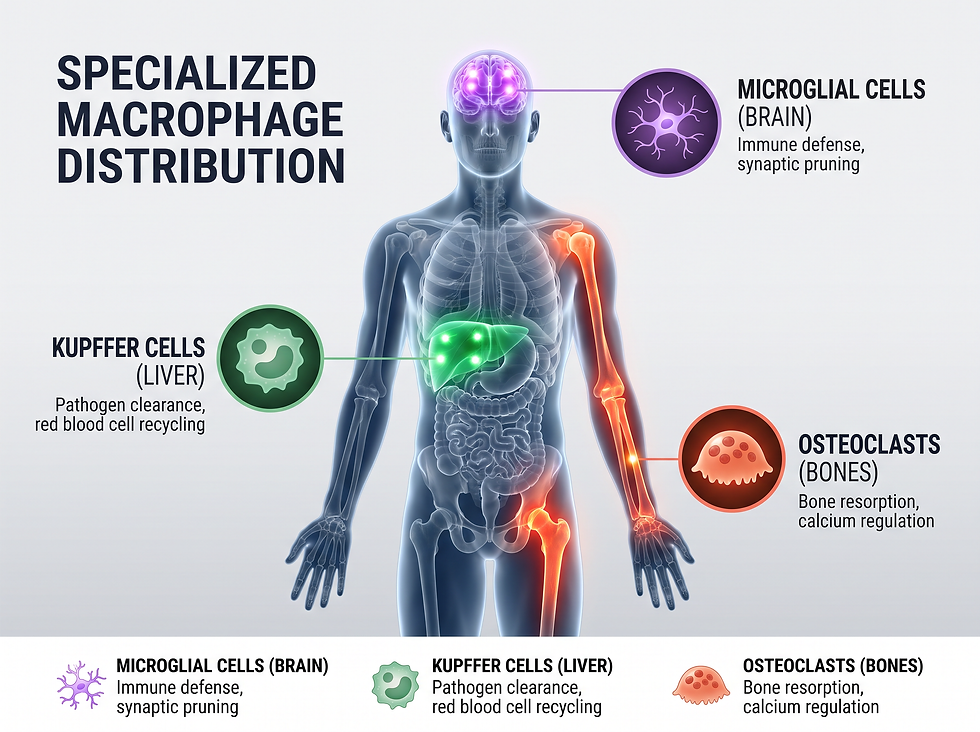
While all macrophages share common traits, many take on specialized roles depending on where they live. For example, in the liver, they are known as Kupffer cells, where they filter blood and protect the gut microbiome. In the brain, they are called microglial cells, tasked with repairing nerve cells and pruning inactive synapses. This specialization allows them to support the unique physiological needs of different organs while maintaining their core defensive capabilities.
Macrophages originate from two sources. Some are formed during fetal development and remain in their assigned organs for life. Others begin as monocytes in the bone marrow and travel through the bloodstream into tissues, where they mature into active macrophages. They can live for months or even years, constantly monitoring their environment for signals that indicate a need for either an inflammatory response (M1 mode) or a healing response (M2 mode).
Kupffer cells (liver): Filter blood and protect beneficial gut germs.
Microglial cells (brain and nerves): Regulate nerve repair and synapse maintenance.
Osteoclasts (bones): Reabsorb minerals and repair bone damage.
Alveolar macrophages (lungs): Clear inhaled particles and pathogens.
When Macrophages Malfunction
The health of the body depends on the delicate balance of macrophage activity. If these cells become overactive or fail to switch from an inflammatory mode (M1) to a healing mode (M2), they can contribute to chronic disease. Persistent inflammation caused by macrophages is a key factor in autoimmune disorders like lupus and rheumatoid arthritis, where the body's own tissues are mistakenly targeted.
Furthermore, malfunctioning macrophages are linked to cardiovascular issues like atherosclerosis, where they contribute to the buildup of plaque in arteries. In the context of cancer, tumor cells can sometimes "hijack" macrophages, causing them to promote tumor growth instead of destroying it. Understanding these pathways is critical for modern medicine, as many new therapies focus on "reprogramming" macrophages to restore their natural protective functions.
Autoimmune diseases: Macrophages cause excessive inflammation and target healthy tissue.
Atherosclerosis: Macrophages contribute to plaque formation in blood vessels.
Osteoporosis: Overactive bone-resorbing macrophages weaken bone structure.
Alzheimer’s disease: Failure to clear cellular debris in the brain.

Conclusion
Macrophages are far more than simple "eaters" of germs; they are sophisticated regulators of the body's internal environment. By balancing defense, communication, and repair, they ensure that every organ remains functional and resilient. Supporting your overall health through proper nutrition, hydration, and exercise provides these tiny defenders with the environment they need to thrive, protecting you from the microscopic level upward.
Frequently Asked Questions
What are macrophages? They are specialized immune cells that live in tissues and destroy pathogens, dead cells, and debris.
How do macrophages "eat" germs? Through a process called phagocytosis, where the cell engulfs a particle and breaks it down using internal enzymes.
Where are macrophages found? They are present in every organ and all tissues of the human body.
What is the difference between M1 and M2 modes? M1 is the inflammatory mode used to destroy germs, while M2 is the anti-inflammatory mode used for healing and repair.
What are monocytes? Monocytes are precursor cells made in the bone marrow that turn into macrophages once they move into body tissues.
Do macrophages help with cancer? Yes, they normally destroy cancer cells, but in some cases, tumors can trick them into supporting cancer growth.
What are Kupffer cells? They are specialized macrophages located in the liver that filter blood and protect the gut microbiome.
How do macrophages help with bone health? Specialized macrophages called osteoclasts help repair bone damage and recycle minerals.
Can macrophages cause autoimmune diseases? If they remain in an inflammatory state too long, they can mistakenly attack healthy tissues, leading to autoimmune conditions.
How long do macrophages live? Depending on their location and role, they can live for several months to several years.
What are cytokines? They are proteins released by macrophages to alert other immune cells to an infection or injury.
Do macrophages play a role in fetal development? Yes, they help regulate the growth and development of tissues in the fetus before birth.
What happens to the "waste" after a macrophage eats it? The macrophage breaks it down into harmless components that the body can either recycle or eliminate.
What are microglial cells? They are the specialized macrophages of the brain and nervous system that repair nerves and maintain synapses.
How can I improve my macrophage function? Maintaining a healthy lifestyle with regular exercise, hydration, and a balanced diet supports overall immune cell health.
Medical Disclaimer: This content is for informational purposes only and does not constitute medical advice. Always seek the guidance of a qualified healthcare professional regarding any medical condition or treatment.
Comments