Loiasis (African Eye Worm): Causes, Symptoms, and Treatment

Updated: 2 days ago
Medically reviewed by Dr. Baraa Alnahhal, MD · Last reviewed: September 2026
TL;DR: Loiasis, also known as African eye worm, is a parasitic infection transmitted by deer flies in West and Central Africa. Many people have no symptoms, but common signs include localized, itchy swellings (Calabar swellings) and visible worms migrating under the skin or across the eye. Diagnosis involves blood tests, and treatment typically consists of antiparasitic medications or surgical removal of adult worms.
Quick Answer: Loiasis is a parasitic infection caused by the Loa loa roundworm and spread mainly through the bites of infected deer flies in specific regions of Africa. The condition is characterized by migrating adult worms and localized swellings near joints. Diagnosis is confirmed through blood analysis, and management involves targeted antiparasitic drugs such as albendazole or ivermectin. Most cases resolve with proper medical care, though multiple treatment rounds may be needed for full recovery.
Understanding Loiasis and Its Origins
Loiasis is a type of filariasis caused by the Loa loa roundworm. It is endemic to the tropical rainforests and mangrove swamps of West and Central Africa. Unlike many other infections, loiasis typically requires repeated exposure to infected vectors over several months, so short-term travelers face a much lower risk than long-term residents.
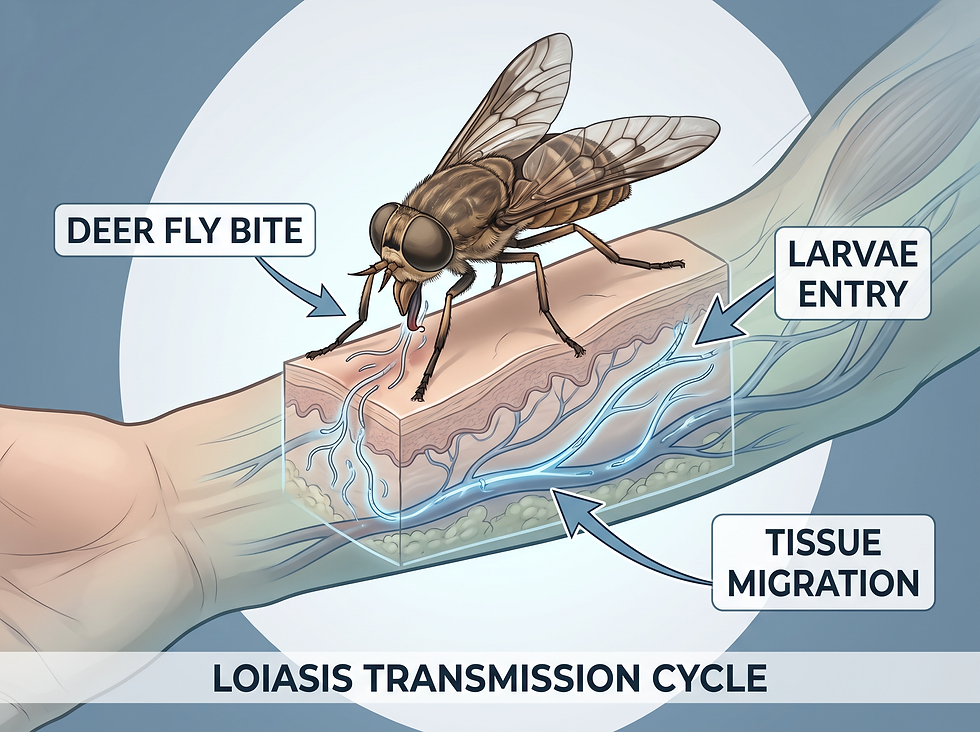
The infection cycle begins when a person is bitten by an infected deer fly or mangrove fly of the Chrysops genus. These flies carry the larvae of the Loa loa worm, which enter the body through the bite wound. Once inside, the larvae mature into adult worms over several months and eventually migrate through various tissues and organs.
Recognizing the Symptoms of Infection
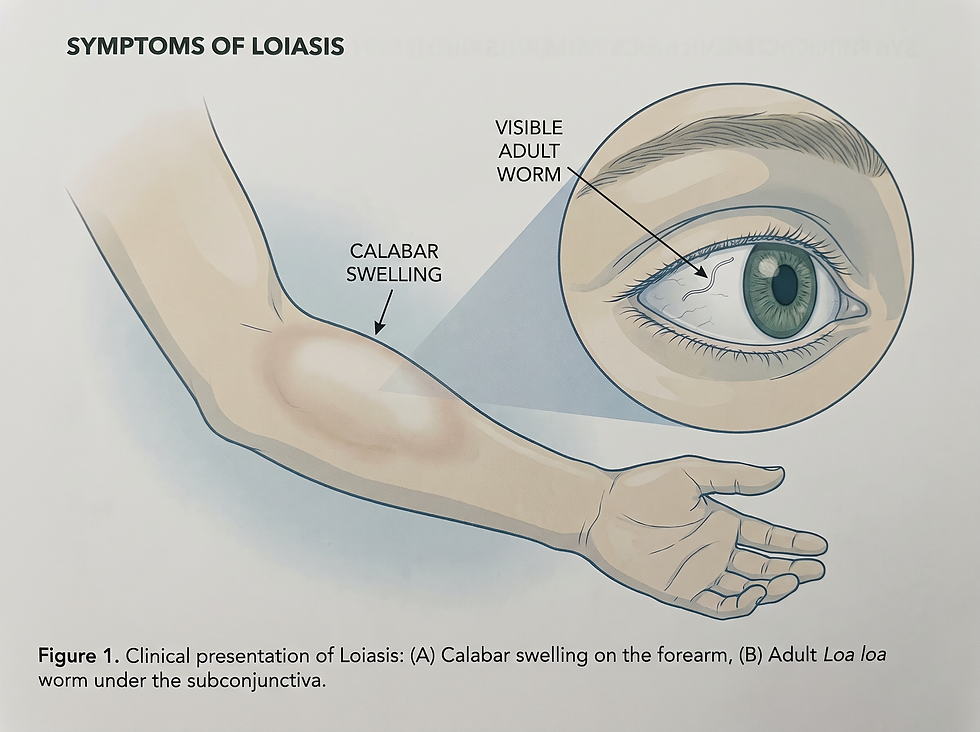
Many people infected with loiasis have no immediate or obvious symptoms. The most distinctive sign is the development of Calabar swellings. These are localized, itchy, and usually painless areas of swelling that appear and disappear as the adult worms move through the tissue under the skin. They are most often seen near joints such as the elbows and knees.
Beyond swelling, the parasite itself can become visible. Adult worms may be seen moving under the surface of the skin or across the white of the eye (the subconjunctiva). This can cause significant irritation and distress, and it is a key clinical clue used for diagnosis.
Symptom Category | Common Manifestations |
Localized Reactions | Calabar swellings (migratory edema), localized itching |
Visible Indicators | Adult worms moving under the skin or across the eye |
Systemic Effects | Fatigue, generalized body itching, muscle aches |
Joint & Muscle | Joint pain, muscle soreness near swelling sites |
Diagnostic Procedures and Clinical Testing
Accurate diagnosis of loiasis relies on a combination of clinical observation and laboratory testing. Healthcare providers typically use blood tests to look for microfilariae, the larval form of the worm, in the bloodstream. Because the number of larvae in the blood can fluctuate, the timing of the blood draw is important for an accurate result.
In many cases, the diagnosis is made by direct observation. A provider may see the characteristic movement of an adult worm during an examination of the eye or skin. A detailed travel history is essential, because the parasite is limited to specific parts of Africa, which is a key diagnostic clue.
Effective Management and Treatment Strategies
The main goal of treating loiasis is to eliminate both the adult worms and the microfilariae from the body. This is done with antiparasitic medications. Depending on the severity of the infection and the presence of other co-infections, a specialist in infectious diseases or tropical medicine may prescribe specific drug regimens.
When an adult worm is visible on the surface of the eye, physical removal is often the preferred immediate approach. This minor surgical procedure quickly relieves local irritation. For patients with very high levels of parasites in the blood (high microfilaremia), advanced procedures such as apheresis may be used to filter the blood and reduce the parasite load before medication is started, to help prevent severe inflammatory reactions.
Treatment Type | Description and Purpose |
Medication | Albendazole, ivermectin, or diethylcarbamazine to kill parasites |
Surgery | Manual removal of adult worms from the subconjunctival space |
Apheresis | Blood filtering to reduce parasite load in severe cases |
Specialist Care | Consultation with tropical medicine or infectious disease experts |
Prevention and Risk Reduction
For people living in or traveling to endemic regions of West and Central Africa, prevention focuses on avoiding bites from Chrysops flies. These flies are most active during the day and are often found in shaded, humid areas near water or dense vegetation.

Protective measures include wearing long-sleeved shirts and long pants to minimize exposed skin. Insect repellents containing DEET are highly recommended, as is treating clothing with permethrin. For people at high risk because of a prolonged stay, healthcare providers may recommend preventive medication taken on a regular schedule to stop the infection from establishing itself.
Conclusion
Loiasis is a complex parasitic condition that, while often symptom-free, can cause significant physical discomfort and visible distress. By understanding the transmission cycle and recognizing early signs such as Calabar swellings, people can seek timely medical care. With modern antiparasitic medications and preventive strategies, the impact of the African eye worm can be effectively managed and minimized.
If you have recently traveled to West or Central Africa and are experiencing unusual skin swellings or eye irritation, consult an infectious disease specialist promptly. Early diagnosis and a tailored treatment plan are essential for a full recovery and for preventing complications.
Frequently Asked Questions
1. What is the African eye worm?
The African eye worm is a parasitic roundworm called Loa loa that causes an infection known as loiasis.
2. How do humans get loiasis?
The infection is spread through the bite of infected deer flies or mangrove flies found in specific regions of Africa.
3. Where is loiasis most commonly found?
It is found only in the tropical rainforests and mangrove areas of West and Central Africa.
4. Can I get loiasis from a short vacation?
It is possible but unlikely. Most infections occur after repeated bites over several months of residence in an endemic area.
5. What are Calabar swellings?
These are temporary, itchy swellings that appear near joints as the adult worms move through the body's tissues.
6. Are the worms always visible in the eye?
No. Adult worms only occasionally move across the surface of the eye, which is why the condition is nicknamed "eye worm."
7. Is loiasis a painful condition?
The swellings are typically itchy rather than painful, though a worm in the eye can cause significant irritation.
8. How do doctors test for loiasis?
Diagnosis is primarily confirmed through specialized blood tests that look for the microscopic larvae of the worm.
9. What medications are used for treatment?
Common treatments include antiparasitic drugs such as albendazole, ivermectin, and diethylcarbamazine.
10. Can the worms be physically removed?
Yes. If an adult worm is visible on the surface of the eye, a healthcare provider can remove it surgically.
11. Is surgery the only way to cure it?
No. Medication is required to kill the larvae and the adult worms that are not visible or accessible.
12. What is apheresis in the context of loiasis?
It is a blood-filtering procedure used in severe cases to reduce the number of parasites before starting drug therapy.
13. How long does the treatment process take?
A standard course of medication typically lasts about three weeks, though some patients need additional rounds.
14. Can loiasis be prevented?
Yes, by using insect repellents, wearing protective clothing, and in some cases taking preventive medication.
15. What is the best insect repellent for deer flies?
Repellents containing DEET are considered the most effective for preventing bites from the flies that carry the parasite.
Medical Disclaimer: The information provided in this article is for educational purposes only and is not intended as medical advice, diagnosis, or treatment. Always seek the advice of your physician or other qualified health provider with any questions you may have regarding a medical condition. Never disregard professional medical advice or delay in seeking it because of something you have read here.
Comments