Henoch-Schönlein Purpura: Symptoms, Causes, Treatment and Outlook for IgA Vasculitis

Updated: 2 days ago
Medically reviewed by Dr. Baraa Alnahhal, MD · Last reviewed: September 2026
Henoch-Schönlein purpura (also called IgA vasculitis) is an illness where small blood vessels in the skin, joints, intestines, and kidneys become inflamed and bleed. The most noticeable sign is a raised purple-red rash, usually on the legs and feet, that can look like bruises. It most often affects children ages 3 to 10, usually clears on its own within about a month with no lasting problems, and typically needs only rest, fluids, and over-the-counter pain relievers. Rarely, it can cause kidney damage or a serious bowel blockage, so a child with this rash should be seen by a healthcare provider promptly.
Quick Answer
What it is: inflammation and bleeding of the small blood vessels in the skin, joints, intestines, and kidneys. Also known as IgA vasculitis.
Main symptom: a rash of raised purple-red spots (purpura), typically on the legs and feet, that may look like bruises.
Who gets it: most common in children ages 3–10; anyone can be affected, and it is slightly more common in males.
Cause: not fully understood; likely an immune system response, often after a cold, strep throat, COVID-19, or other infection.
Usual treatment: none needed — rest, plenty of fluids, and over-the-counter pain relievers while the illness runs its course.
Recovery time: symptoms typically go away within a month without lasting problems.
When to act: see a provider as soon as possible for any child with this rash — and right away if the rash comes with serious belly pain, vomiting, or bloody stools.
What Is Henoch-Schönlein Purpura (IgA Vasculitis)?
Henoch-Schönlein purpura — pronounced HEN-uhk SHUN-line PUR-pyuh-ruh — is a condition in which some of the body's small blood vessels become inflamed. The inflammation can cause bleeding in the skin, belly, and kidneys. Because of this, doctors also call it IgA vasculitis ("vasculitis" means inflammation of blood vessels, and IgA refers to a specific immune-system protein).
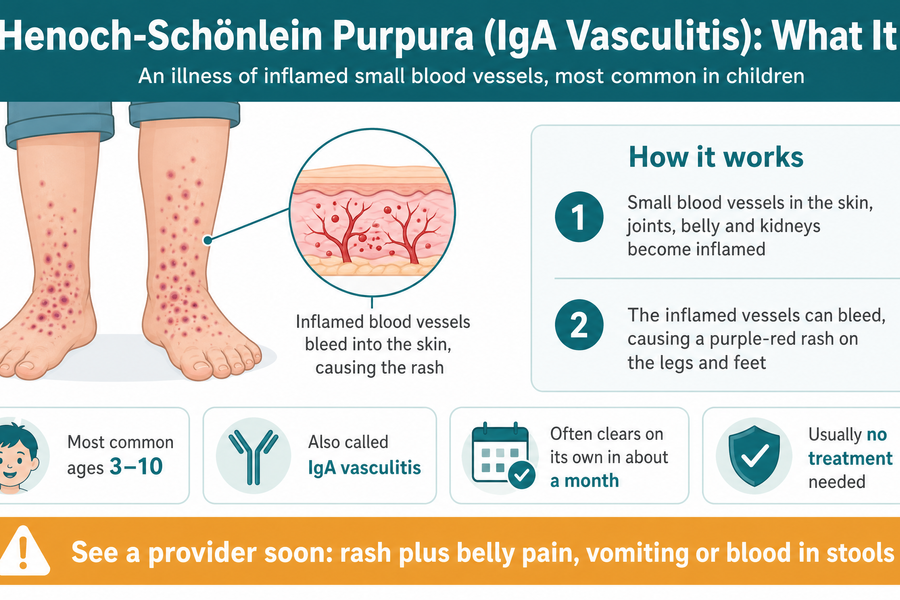
Henoch-Schönlein purpura (IgA vasculitis) works by inflaming small blood vessels, which bleed into the skin and create the characteristic rash.
The most noticeable symptom is a rash that often appears on the legs and feet. But the condition can also cause belly pain and aching joints. Rarely, it may cause serious kidney damage. Anyone can get it, though it is most common in children between the ages of 3 and 10. The good news is that the illness often goes away on its own without treatment. Medical care may be needed only if the condition affects the kidneys or leads to other health concerns.
What Does the Rash Look Like? Symptoms Explained
The Main Symptom: Purpura Rash
The hallmark sign is a rash made up of raised spots called purpura (small bleeding under the skin). Patches of the rash can look like bruises, and the color may be shades of red or purple depending on skin color. The rash typically forms on the legs and feet, but it can also appear on the buttocks, arms, face, chest, back, and belly. It may be more noticeable in areas where clothing presses on the skin, such as the sock line and waistline.
Four Areas the Condition Can Affect
Skin (most common): raised purple-red spots (purpura) that may look like bruises; usually on legs and feet; can spread to buttocks, arms, face, chest, back, and belly. Often the first noticeable sign.
Joints: pain and swelling, typically in the knees and ankles. Joint pain may develop 1–2 weeks before the rash.
Digestive tract: belly pain, nausea, vomiting; black, tarry, or bloody stools. Sometimes happens before the rash appears.
Kidneys: usually no noticeable symptoms; a urine test may show protein or blood. Usually goes away when the illness passes.
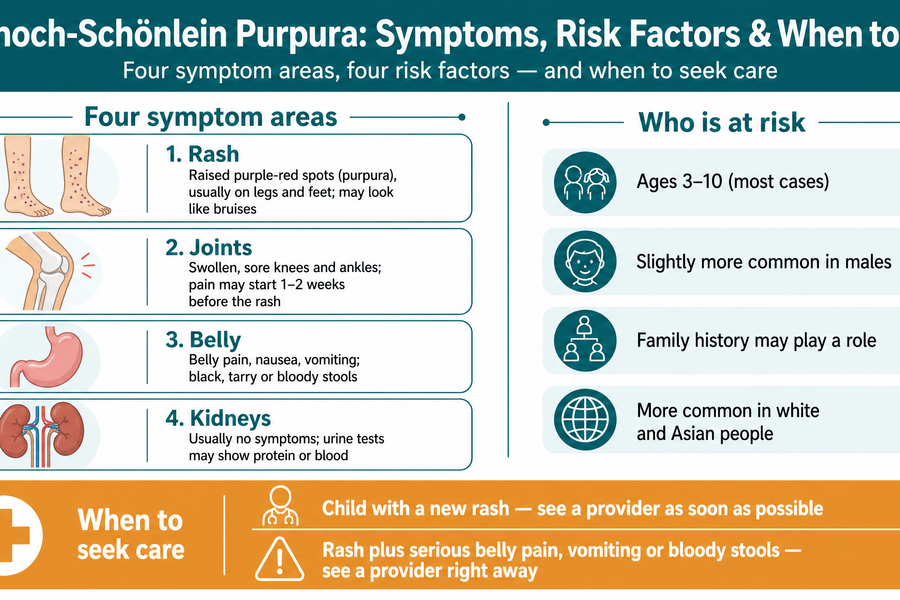
Henoch-Schönlein purpura affects four main areas — skin, joints, digestive tract, and kidneys — with the purple-red rash being the most visible sign.
A reassuring detail for parents: joint soreness and swelling typically go away without any lasting damage once the illness passes.
Why Does It Happen? Causes and Risk Factors
Causes
In henoch-schönlein purpura, some of the body's small blood vessels become inflamed, and that can cause bleeding in the skin, belly, and kidneys. It is not clear why the inflammation develops — it may be the result of an immune system response in the body.
Many people who develop the condition get it after an upper respiratory illness, such as a cold. Other possible triggers include strep throat, COVID-19 and other infections, insect bites and cold weather, as well as some medicines and foods.
Respiratory infections: common cold, upper respiratory illness
Throat infection: strep throat
Viral infections: COVID-19 and other infections
Environmental: insect bites, cold weather
Other: some medicines and foods
Risk Factors
Age: mainly affects children and young adults; most cases occur between ages 3 and 10
Sex: slightly more common in males
Family history: sometimes runs in families, suggesting genetics may play a role
Race: more likely to develop in white and Asian people than in others
How Long Does It Last? Outlook and Complications
For most people, symptoms go away within a month without any lasting problems. However, it is common for people who have had the illness to get it again within 4 to 6 months. If it does come back, symptoms are often milder than before.
Two complications deserve attention, though they are uncommon:
Kidney damage is the most serious health issue linked to henoch-schönlein purpura, and the risk is greater in adults than in children. Sometimes the damage is serious enough that dialysis or a kidney transplant is needed.
Bowel blockage (intussusception) can occur when the condition causes a section of the bowel to fold into itself like a telescope. This prevents anything from moving through the bowel. The risk of this complication is greater in children than in adults.
When Should You See a Doctor?
See a healthcare professional if you have a rash you think may be henoch-schönlein purpura and you also have serious belly pain, nausea, vomiting, or bloody stools.
If your child develops a rash that you think may be henoch-schönlein purpura, make an appointment for your child to see a healthcare professional as soon as possible. Early evaluation matters because a simple urine test can check whether the kidneys are involved — and kidney damage is the complication most worth catching early.
Child develops a rash that may be henoch-schönlein purpura: make an appointment as soon as possible
Rash plus serious belly pain, nausea, or vomiting: see a healthcare professional promptly
Rash plus black, tarry, or bloody stools: see a healthcare professional right away
Rash with signs of kidney trouble (swelling, changes in urination): seek care promptly; ask for a urine test
How Is Henoch-Schönlein Purpura Diagnosed?
A healthcare professional typically can diagnose henoch-schönlein purpura based on the rash, especially if there are also joint pain and digestive tract symptoms. But sometimes one or more additional tests are needed.

Most cases are diagnosed from the rash alone; blood and urine tests, biopsies, and ultrasound are used only when the diagnosis isn't clear or complications are suspected.
No single laboratory test can confirm the condition, but some tests can help rule out other conditions and make a diagnosis more likely.
Physical exam: the rash, plus joint pain and digestive symptoms — usually all that is needed for diagnosis
Blood tests: help rule out other conditions, if the diagnosis isn't clear from symptoms
Urine tests: check for protein or other substances; show whether kidneys are working properly, to detect kidney involvement
Skin biopsy: small skin sample tested for the IgA protein, which is often found in affected body parts, to support the diagnosis
Kidney biopsy: sample of kidney tissue, only if kidney involvement is serious
Ultrasound: uses sound waves to make pictures of the body; rules out other causes of belly pain; can check for bowel obstruction, when belly symptoms are significant
How Is It Treated?
Henoch-schönlein purpura usually goes away on its own within a month with no lasting health concerns. For most people with mild disease, self-care steps at home are all that's needed while the illness runs its course.
Self Care at Home
Rest: supports the body while the illness runs its course
Plenty of fluids: keeps the body hydrated during recovery
Over-the-counter pain relievers: eases joint soreness and discomfort
Medicines
If joint pain or belly pain is serious, your healthcare professional may suggest taking a corticosteroid medicine, such as prednisone, to ease the pain. Because these medicines can have serious side effects, talk about the risks and benefits of using them with your healthcare professional before starting.
Surgery (Rarely)
If the condition causes a section of the bowel to fold into itself or develop a hole, surgery may be needed. This complication — intussusception — is uncommon but most often seen in children.
Preparing for Your Appointment
You will likely first see your family healthcare professional or your child's pediatrician. You may later be referred to a nephrologist (kidney specialist) if health concerns in the kidneys develop.
When you make the appointment, ask if there's anything to do beforehand, such as not eating or drinking before a specific test. Before the visit, make a list of:
Symptoms you or your child has, including any that seem unrelated
Key personal information, including major stresses, recent life changes, and family medical history
All medicines, vitamins, or other supplements taken, including doses
Questions to ask your healthcare professional
If possible, take along a family member or friend to help you remember the information you're given.
Questions to Ask Your Healthcare Professional
What might be causing these symptoms?
What tests are needed to confirm the diagnosis?
Is this condition temporary or will it last a long time?
How will I know if there's kidney damage? What if it develops later?
How is henoch-schönlein purpura treated?
What are the side effects of treatment?
What self-care steps might help?
Are there brochures or other printed material I can take with me? What websites do you recommend?
Questions Your Doctor May Ask
Did the symptoms start slowly or quickly?
Did the rash appear after an illness?
What did the rash look like when it first started?
Is the rash painful? Does it itch?
Are other symptoms involved, such as belly pain or aching joints?
Bottom Line
Henoch-Schönlein purpura looks alarming — a purple-red spotted rash that resembles bruising — but for most children it is a temporary, self-limiting illness. The rash usually clears within about a month, joints recover without lasting damage, and treatment rarely involves more than rest, fluids, and pain relievers. The two things to watch closely are the kidneys (a urine test is a simple check) and the belly (severe pain, vomiting, or bloody stools need prompt care). A provider visit as soon as possible after the rash appears gives you the best chance of catching any complications early.
Your next step: If your child has developed a new rash that looks like bruising — especially on the legs or feet — schedule an appointment with their healthcare provider as soon as possible. And if the rash comes with serious belly pain, vomiting, or bloody stools, seek care right away.
Frequently Asked Questions
Is henoch-schönlein purpura serious?
For most people, no. Symptoms typically go away within a month without lasting problems. However, it can rarely cause kidney damage or a bowel blockage, which is why a child with this rash should be seen by a healthcare provider promptly.
What causes the rash in henoch-schönlein purpura?
Small blood vessels become inflamed and can bleed into the skin, creating raised purple-red spots called purpura. The rash most often appears on the legs and feet and may look like bruises.
Is henoch-schönlein purpura the same as IgA vasculitis?
Yes. IgA vasculitis is the newer medical name for henoch-schönlein purpura. "IgA" refers to an immune-system protein found in the affected tissues, and "vasculitis" means inflammation of blood vessels.
Does henoch-schönlein purpura go away on its own?
Usually yes. The illness often clears within about a month with no lasting health concerns. For mild cases, self care — rest, plenty of fluids, and over-the-counter pain relievers — is all that's typically needed.
Can adults get henoch-schönlein purpura?
Yes, anyone can get it, though it is most common in children ages 3 to 10. Adults face a higher risk of kidney complications than children do, so kidney monitoring matters even more in adults.
Can henoch-schönlein purpura come back?
Yes, it is common for people to get it again within 4 to 6 months after the first episode. Recurrences are often milder than the first bout.
How is henoch-schönlein purpura treated?
Most cases need no specific treatment — just rest, fluids, and over-the-counter pain relievers. For serious joint or belly pain, a corticosteroid such as prednisone may be prescribed. Surgery is needed only in rare cases, such as when the bowel becomes blocked or develops a hole.
Will my child's joints be damaged by henoch-schönlein purpura?
Typically not. Joint soreness and swelling usually go away without any lasting damage once the illness passes. In some cases, joint pain develops 1 to 2 weeks before the rash appears.
References
This article is for informational purposes only and is not a substitute for professional medical advice, diagnosis, or treatment. This article is based on clinical information reviewed as of September 19, 2025.
Comments