Granulomatosis with Polyangiitis (GPA): Symptoms, Causes, Diagnosis, and Treatment Explained

Updated: 2 days ago
Medically reviewed by Dr. Baraa Alnahhal, MD · Last reviewed: September 2026
TL;DR
Granulomatosis with polyangiitis (GPA) is a rare disease that inflames small blood vessels, mainly in the nose, sinuses, throat, lungs, and kidneys. Early symptoms often feel like a cold or flu and can last for weeks — including a runny nose that does not improve with cold medicines, nosebleeds, sinus infections, and sometimes a bloody cough. The exact cause is unknown, but the immune system appears to play a role. Early diagnosis and treatment are critical because untreated GPA can cause organ damage that is sometimes fatal, while early treatment can help most people get better and lead full lives [1] [2].
Quick Answer: What Is Granulomatosis with Polyangiitis?
GPA is a rare type of vasculitis (blood vessel disease) that causes inflammation of small blood vessels, mainly affecting the nose, sinuses, throat, lungs, and kidneys. The body can form inflamed tissue masses called granulomas, which damage organs, while narrowed blood vessels reduce blood and oxygen flow to tissues. A blood test can detect antineutrophil cytoplasmic antibodies (ANCA) in most people with GPA, and a biopsy can confirm the diagnosis. Treatment uses corticosteroids and immune-suppressing medicines such as rituximab, azathioprine, mycophenolate, methotrexate, cyclophosphamide, and avacopan; plasma exchange may be used in very serious cases. With early treatment, many people get better and lead full lives [1] [2].
Important: If you have symptoms of GPA — especially a bloody cough, nosebleeds with pus-like drainage, or signs of kidney trouble — see a healthcare professional promptly. GPA can worsen quickly, and early treatment can prevent organ damage that is sometimes fatal [1].
What Exactly Is Granulomatosis with Polyangiitis?
Granulomatosis with polyangiitis, often called GPA, is a rare disease that causes swelling, also called inflammation, of small blood vessels. This condition mainly affects blood vessels in the nose, sinuses, throat, lungs, and kidneys, but it can affect any organ [1].
GPA used to be called Wegener granulomatosis. You may still see the older name on some health pages. It is one of a group of blood vessel diseases called vasculitis.
The disease works in two harmful ways. GPA slows blood flow to some organs, so the affected tissues can develop inflamed areas called granulomas. Granulomas can damage these organs and affect how they work. At the same time, the inflamed, narrowed blood vessels lower the amount of blood and oxygen that reaches tissues and organs [1] [2].
Vasculitis: A group of diseases that cause inflammation of blood vessels.
Granuloma: An inflamed tissue mass that can damage organs and affect how they work.
Wegener granulomatosis: The former name of GPA.
ANCA: Antibodies found in the blood of most people with GPA that attack healthy white blood cells by mistake.
What Are the First Signs of GPA?
Symptoms of GPA vary widely from person to person. Symptoms can start quickly, or they can develop over months [1].
In the earliest stage, GPA often produces general symptoms that feel like a common cold or flu, including fever, tiredness and not feeling well (malaise), unexplained weight loss, muscle aches and pain, and joint stiffness. Because these early symptoms can last for weeks or longer, the disease is frequently mistaken for a routine illness [1].
Specific symptoms then depend on which organs the disease affects.

What does GPA look like in the ears, nose, and throat?
If GPA affects the ears, nose, or throat, symptoms can include pus-like drainage with crusts from the nose, sores in the nose or mouth, stuffiness, recurring sinus infections, nosebleeds, earaches or fluid draining from the ear, and inflammation of the cartilage of the ears or bridge of the nose [1].
What happens when GPA affects the lungs?
If GPA affects the lungs or windpipe, symptoms can include coughing, sometimes with bloody phlegm, shortness of breath or wheezing, a high-pitched breathing sound called stridor, and a hoarse voice. For some people, the disease affects only the lungs. Without treatment, GPA can lead to lung bleeding and scarring over time [1].
How does GPA affect the kidneys?
If GPA affects the kidneys, you might not have any symptoms at all. When symptoms do appear, they can include high blood pressure, leg swelling, and blood in the urine [1].
This symptom-free kidney involvement is one reason GPA deserves a proper medical evaluation rather than home care — the organ most at risk may not send an obvious signal.
What about the eyes, nerves, skin, and digestion?
Eye symptoms can include redness, burning or pain, a feeling of something stuck in the eye, blurry or double vision, bulging of the eyes, and swollen eyelids [1].
Other symptoms of GPA can include loss of feeling, tingling, or deep aching in the limbs, fingers, or toes due to nerve damage; skin rashes such as purple patches or spots that may be harder to see on Black or brown skin; and digestive issues including stomach pain, diarrhea, and bloody stool [1].
When should you see a doctor?
GPA symptoms can seem like those of some other health conditions, and early symptoms may feel like a cold or flu and last for weeks or longer. The sources give clear signals for acting promptly [1]:
See your healthcare professional if you have a runny nose that doesn't get better with cold medicines. Be sure to get a healthcare checkup if you have a runny nose along with nosebleeds and pus-like fluid, a bloody cough, or any other symptoms of granulomatosis with polyangiitis. The disease can become worse quickly. Without treatment, it can lead to other serious health conditions called complications.

What Causes Granulomatosis with Polyangiitis?
The exact cause of GPA is not clear, but the immune system may play a role. Some white blood cells may not function as they should, and they may be involved in the disease [1].
The immune system normally makes proteins called antibodies that protect the body from germs such as viruses and bacteria. GPA has been linked with the presence of certain antibodies that attack healthy cells by mistake — in this case, immune system proteins that attack healthy white blood cells called neutrophils. These appear in the blood of most people who have GPA [1] [2].
Two important reassurance points come directly from the sources. GPA does not spread from person to person, and it likely does not pass from parents to children through genes [1].
Is GPA contagious? No. It does not spread from person to person.
Is GPA inherited? It likely does not pass from parents to children through genes.
What role does the immune system play? Some white blood cells may not function as they should; antibodies that attack healthy cells by mistake are linked to the disease.
What does the disease physically do? It produces inflamed, narrowed blood vessels and inflamed tissue masses (granulomas) that damage healthy tissue and reduce blood and oxygen flow.
Who Is Most at Risk?
Age is the main risk factor described in the sources. GPA most often affects people between the ages of 40 and 65, but it can happen at any age [1].
What Complications Can GPA Cause?
GPA can lead to complications that depend on which organs or body parts the disease affects. The potential complications are a large part of why early treatment matters so much [1].
Ears: Hearing loss.
Nose: Loss of height in the bridge of the nose from weakened cartilage.
Skin: Skin sores or scarring.
Kidneys: Kidney damage or kidney failure.
Lungs: Bleeding and scarring of the lungs.
Circulation: Blood clot in one or more deep veins, usually in the leg.
Heart: Conditions such as swelling of the sac surrounding the heart.
Brain and eyes: Rarely, stroke or vision loss.
How Is Granulomatosis with Polyangiitis Diagnosed?
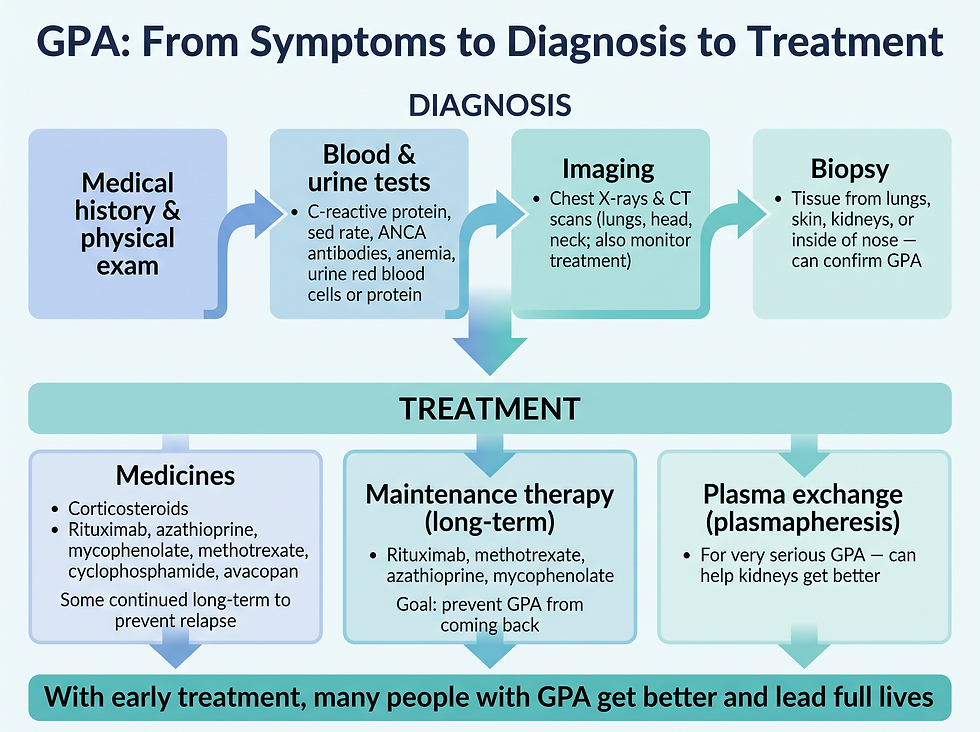
Diagnosis involves the steps your healthcare team takes to find out if you have GPA. Your healthcare professional asks about your symptoms and health history and performs a physical exam, then may order further tests [2].
What blood tests are used for GPA?
Blood tests can check for signs of the inflammation GPA causes. A high level of a protein made by the liver, called C-reactive protein, can be a clue for inflammation. So can red blood cells that quickly sink to the bottom of a test tube — a measurement known as a high erythrocyte sedimentation rate, also called a high sed rate [2].
Blood tests can also detect antineutrophil cytoplasmic antibodies. These immune system proteins attack healthy white blood cells called neutrophils by mistake, and they appear in the blood of most people who have GPA. In addition, tests may show anemia (low levels of healthy red blood cells to carry oxygen), which is common in people with GPA, and symptoms that the kidneys are not properly filtering waste products from the blood [2].
What imaging and urine tests are used?
Urine tests can reveal if the urine has red blood cells or too much protein, which might mean the disease is affecting the kidneys [2].
If you have lung symptoms, chest X-rays and CT scans can help find out if GPA is the cause. CT scans use X-rays and a computer to make more-detailed images of the organs inside the body. CT scans can also help find out if GPA is the cause of head or neck symptoms. Once a person starts treatment, healthcare professionals can use CT scans to find out if treatment is working [2].
What is a biopsy for GPA?
During a biopsy, a healthcare professional removes a small sample of tissue from the affected area of the body — for example, from the lungs, skin, kidneys, or inside of the nose. The tissue sample is checked with a microscope to look for signs of inflammation or damage. This test can confirm if you have granulomatosis with polyangiitis [2].
How Is GPA Treated?
Treatment for GPA includes medicines to get the disease under control and keep it from coming back. Along with care from your regular healthcare professional, you will likely need treatment and follow-up care from various specialists. The specialists you need depend on the organs the disease affects. With early treatment, many people who have GPA get better and lead full lives [2].
What medicines treat GPA?
Corticosteroids help lessen the immune system response and lower inflammation of the blood vessels. Common side effects include weight gain, risk of infection, and thinning of bones [2].
Other medicines that lessen the immune system response include rituximab (Rituxan), azathioprine (Azasan, Imuran), mycophenolate (CellCept, Myhibbin), methotrexate (Trexall), cyclophosphamide, and avacopan (Tavneos) [2].
Corticosteroids: Lessen immune response and lower blood vessel inflammation; side effects include weight gain, infection risk, and bone thinning.
Rituximab (Rituxan): Immune-suppressing medicine; also used long-term in maintenance therapy.
Azathioprine (Azasan, Imuran): Immune-suppressing medicine; also used in maintenance therapy.
Mycophenolate (CellCept, Myhibbin): Immune-suppressing medicine; also used in maintenance therapy.
Methotrexate (Trexall): Immune-suppressing medicine; also used in maintenance therapy.
Cyclophosphamide: Immune-suppressing medicine; can cause upset stomach, diarrhea, and hair loss.
Avacopan (Tavneos): Immune-suppressing medicine.
Once your condition is under control, you might stay on some medicines long-term. Your healthcare professional may call this maintenance therapy, and its goal is to prevent GPA from coming back, also called relapse. Medicines that can be used long-term include rituximab, methotrexate, azathioprine, and mycophenolate [2].
A key caution from the sources: medicines such as these can raise the risk of infection. Cyclophosphamide can cause upset stomach, diarrhea, and hair loss. Your healthcare professional may prescribe other medicines to help prevent side effects from prescribed treatments [2].
What is plasma exchange?
Plasma exchange removes the liquid portion of blood, called plasma. In most people with GPA, plasma has proteins in it that are linked with the disease. During plasma exchange, you receive fresh plasma or a protein made by the liver called albumin, which helps the body make new plasma. Sometimes plasma exchange is used to treat people who have very serious GPA; it can help the kidneys get better. Another name for this treatment is plasmapheresis [2].
How Should You Prepare for Your Appointment?
You are likely to start by seeing your usual healthcare professional, and you might be referred to specialists such as a rheumatologist (joints, muscles, and immune system), a pulmonologist (lung conditions), an otolaryngologist (ear, nose, and throat conditions), a nephrologist (kidney doctor), or a neurologist (nervous system conditions). A specialist likely will be the one to find out if you have GPA [2].
Before your appointment, make a list of your symptoms and when they began, key personal medical information including other recent health conditions and major stresses, the medicines, vitamins, and supplements you take with doses, and questions for your healthcare professional. If you have had recent blood tests or chest X-rays at another office or hospital, have the results forwarded or bring them yourself. Take a family member or friend along if you can, since this person can help you remember the information you receive [2].
Questions to ask your healthcare team:
What is likely causing my symptoms, and what are other possible causes?
What tests will I need, and how do I prepare for them?
Is my condition short-term or long-term?
What treatment do you recommend, and are there alternatives?
How long will treatment last?
How can I best manage my conditions together if I have another medical condition?
Questions your doctor will likely ask you:
Do your symptoms happen often or just once in a while?
How bad are your symptoms? Have you had a fever?
What makes your symptoms better? What makes them worse?
Do you smoke?
If your symptoms are getting worse while you wait, tell your main healthcare professional so they can try to get you to a specialist quickly [2].
How Should You Cope After Diagnosis?
You are likely to get better after treatment for GPA, but you might feel stress about the disease coming back or the damage it can cause. The sources suggest understanding your condition by learning all you can about GPA, since that knowledge may help you deal with complications, medicine side effects, and relapses, and talking with your healthcare professional, a counselor, or a medical social worker. Building a strong support system also helps — family and friends can help you cope, and it can be comforting to talk with other people living with the condition. Ask a member of your healthcare team how to connect with a support group [2].
Conclusion
Granulomatosis with polyangiitis is a rare disease, but its early signs — a runny nose that will not clear, recurrent sinus infections, nosebleeds with pus-like drainage, a bloody cough, or unexplained leg swelling — are easy to dismiss as everyday illness. The sources are unambiguous about what to do next: do not wait it out. GPA can worsen quickly, and without treatment it can cause organ damage that is sometimes fatal, while early treatment can help many people get better and lead full lives.
What to do next: If you have a runny nose that does not respond to cold medicines alongside nosebleeds, pus-like drainage, or a bloody cough, schedule an evaluation with your healthcare professional. Ask whether blood tests for inflammation and antineutrophil cytoplasmic antibodies, urine tests, imaging, or a biopsy are appropriate for you. If you have been diagnosed with GPA, keep every follow-up visit — relapse prevention is a core part of treatment — and ask about support groups and counseling resources.
This article provides general health information and is not a substitute for professional medical advice, diagnosis, or treatment. Always seek the advice of a qualified healthcare provider with any questions about a medical condition.
Frequently Asked Questions (FAQ)
What is granulomatosis with polyangiitis in simple terms?
GPA is a rare disease that inflames small blood vessels, mainly in the nose, sinuses, throat, lungs, and kidneys. It used to be called Wegener granulomatosis and belongs to a group of blood vessel diseases called vasculitis. The disease can form inflamed tissue masses called granulomas that damage organs, and it reduces blood and oxygen flow to tissues [1].
Is granulomatosis with polyangiitis serious?
Yes. Without treatment, GPA can lead to organ damage that is sometimes fatal. The disease can worsen quickly, which is why early detection and early treatment are so important. With early treatment, many people get better and lead full lives [1] [2].
What are the first symptoms of granulomatosis with polyangiitis?
Early symptoms can feel like a cold or flu and last for weeks or longer, including fever, tiredness, unexplained weight loss, muscle aches, and joint stiffness. Specific symptoms depend on the affected organs — for example, sinus infections and nosebleeds if the nose and sinuses are involved, or a bloody cough if the lungs are involved [1].
Can GPA affect the kidneys without symptoms?
Yes. If GPA affects the kidneys, you might not have symptoms at all. When symptoms do appear, they can include high blood pressure, leg swelling, and blood in the urine. This is one reason urine tests are an important part of diagnosis [1].
What causes granulomatosis with polyangiitis?
The exact cause is not clear, but the immune system may play a role. GPA is linked with antibodies that attack healthy white blood cells called neutrophils by mistake, which appear in the blood of most people who have GPA. The disease does not spread from person to person and likely is not passed through genes [1].
Who gets granulomatosis with polyangiitis?
Age is a risk factor. GPA most often affects people between the ages of 40 and 65, but it can happen at any age [1].
What is the difference between Wegener's granulomatosis and GPA?
They are the same disease. Wegener granulomatosis is the former name; the condition is now called granulomatosis with polyangiitis (GPA) [1].
What does a GPA blood test show?
Blood tests can show signs of inflammation (high C-reactive protein or a high sedimentation rate), antineutrophil cytoplasmic antibodies that attack healthy white blood cells by mistake, anemia (low healthy red blood cells, common in GPA), and signs that the kidneys are not properly filtering waste [2].
How is granulomatosis with polyangiitis confirmed?
A biopsy — a small tissue sample taken from an affected area such as the lungs, skin, kidneys, or inside of the nose — is checked under a microscope for inflammation or damage and can confirm the diagnosis. Imaging such as chest X-rays and CT scans and urine tests also help [2].
What medicines treat GPA?
Corticosteroids lessen the immune response and lower blood vessel inflammation. Other immune-suppressing medicines include rituximab, azathioprine, mycophenolate, methotrexate, cyclophosphamide, and avacopan. Some of these are used long-term as maintenance therapy to prevent relapse [2].
Can GPA come back after treatment?
Yes, relapse is possible, which is why long-term maintenance therapy (for example, with rituximab, methotrexate, azathioprine, or mycophenolate) may be continued after the condition is under control [2].
What is plasma exchange for GPA?
Plasma exchange (plasmapheresis) removes plasma, which in most people with GPA contains proteins linked to the disease, and replaces it with fresh plasma or albumin. It is sometimes used for very serious GPA and can help the kidneys get better [2].
Does GPA affect only the lungs?
No. GPA mainly affects blood vessels in the nose, sinuses, throat, lungs, and kidneys, but it can affect any organ, including the ears, eyes, skin, nerves, digestive system, heart, and brain. For some people, the disease affects only the lungs [1].
Is GPA inherited or contagious?
No to both. GPA does not spread from person to person, and it likely does not pass from parents to children through genes [1].
What questions should I bring to my doctor about GPA?
Ask what is causing your symptoms and what other causes are possible, what tests you will need and how to prepare, whether your condition is short-term or long-term, what treatment is recommended, whether alternatives exist, and how long treatment will last. Your doctor will likely ask about symptom frequency, severity, fever, what makes symptoms better or worse, and whether you smoke [2].
Comments