Gerota’s Fascia: The Protective Shield of the Kidneys

Updated: 2 days ago
Medically reviewed by Dr. Baraa Alnahhal, MD · Last reviewed: September 2026
TL;DR
Gerota’s fascia is a thin but resilient layer of connective tissue that encases the kidneys and adrenal glands. Its main jobs are to separate these vital organs from the rest of the abdominal cavity, hold them in place, and act as a barrier against trauma and infection. It also plays an important role in medical diagnosis, especially in staging kidney cancer. Healthy habits that support overall kidney function help protect this layer as well.
Quick Answer: What Is Gerota’s Fascia?
Gerota’s fascia, also called the renal fascia, is a tough fibrous envelope that surrounds the kidneys, the adrenal glands, and their protective fat. It anchors these organs in place, shields them from injury, and helps stop localized infections or bleeding from spreading. Made mostly of collagen, it forms a boundary within the abdominal cavity that separates the renal system from other major organs and blood vessels.
The abdominal cavity is densely packed, and its organs must be both supported and separated to work well. Gerota’s fascia gives the kidneys and adrenal glands their own compartment. This protects them physically and keeps the internal organization needed for efficient filtering and hormone activity.
Anatomy and Structural Design
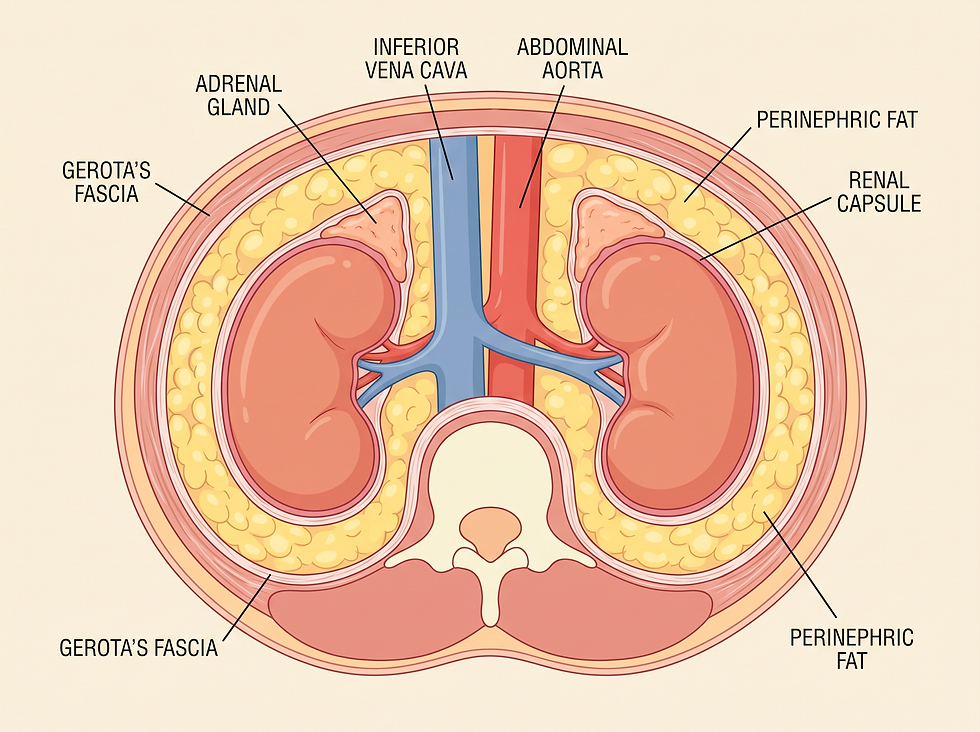
Gerota’s fascia is fibrous connective tissue rich in collagen, which gives it strength despite its thin profile. On average it is slightly over 460 micrometers thick, roughly one-quarter the width of a strand of spaghetti. Structurally it often resembles a sandwich: a central layer of thick collagen fibers flanked by edges of smaller fibers. This design lets it flex with the body’s natural movements while staying tough enough to act as a reliable barrier.
The fascia is fused at several points so the kidneys stay securely positioned. At the front, the fascia of one kidney fuses with the fascia of the other. At the back, it attaches to the muscles lining the abdominal cavity. At the top, it splits to surround the adrenal glands, which sit above the kidneys. This compartment separates the renal structures from major vessels such as the abdominal aorta and the inferior vena cava.
Composition: fibrous connective tissue with high levels of collagen.
Average thickness: approximately 460 micrometers.
Primary location: surrounds the kidneys, adrenal glands, and perinephric fat.
Key attachments: abdominal wall muscles at the back and the fascia of the opposite kidney at the front.
Essential Functions of the Renal Fascia
The main purpose of Gerota’s fascia is to give the kidneys and adrenal glands a protective, supportive environment. By enclosing these organs, it shields them from physical trauma during daily activities or accidents. It also acts as a biological barrier that helps contain infection or bleeding inside the renal compartment and keeps it from spreading to the rest of the abdomen.
Beyond protection, the fascia has a structural role. It anchors the kidneys in their proper position, which helps the renal arteries and veins maintain steady blood flow. This support lets the kidneys filter blood and remove waste without interference from nearby organs.
Structural support: keeps the kidneys and adrenal glands in place for optimal function.
Biological barrier: helps prevent the spread of infection or localized bleeding.
Physical protection: acts as a shock absorber against abdominal trauma.
Organ separation: keeps a clear boundary between the renal system and other organs.
Diagnostic and Clinical Importance
In the clinic, Gerota’s fascia is an important landmark for diagnosing and staging kidney conditions. Imaging such as CT scans and ultrasounds often focus on this tissue to find kidney stones, masses, or signs of infection such as perinephric abscesses. Bleeding or inflammation around the fascia can give immediate clues to underlying kidney problems.
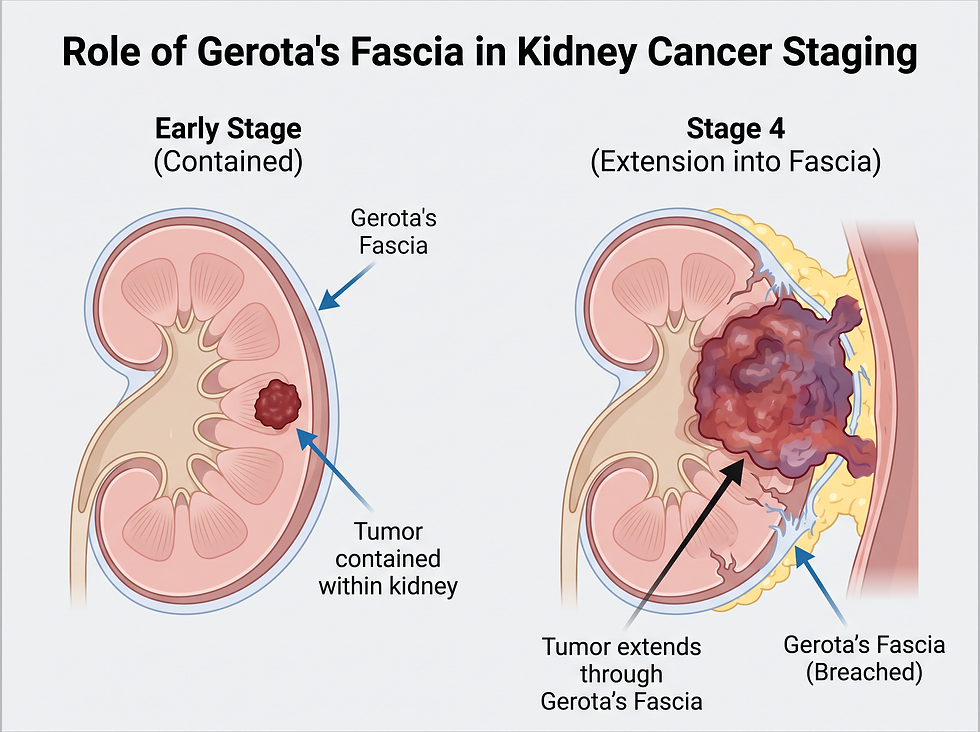
One of its most important roles is in staging kidney cancer. Healthcare providers check whether a tumor has stayed within the kidney or has grown through Gerota’s fascia into surrounding tissue. If the cancer extends through this layer, it is typically classified as Stage 4, a more advanced condition that calls for intensive treatment such as surgery or chemotherapy.
Proactive Care for Tissue Health
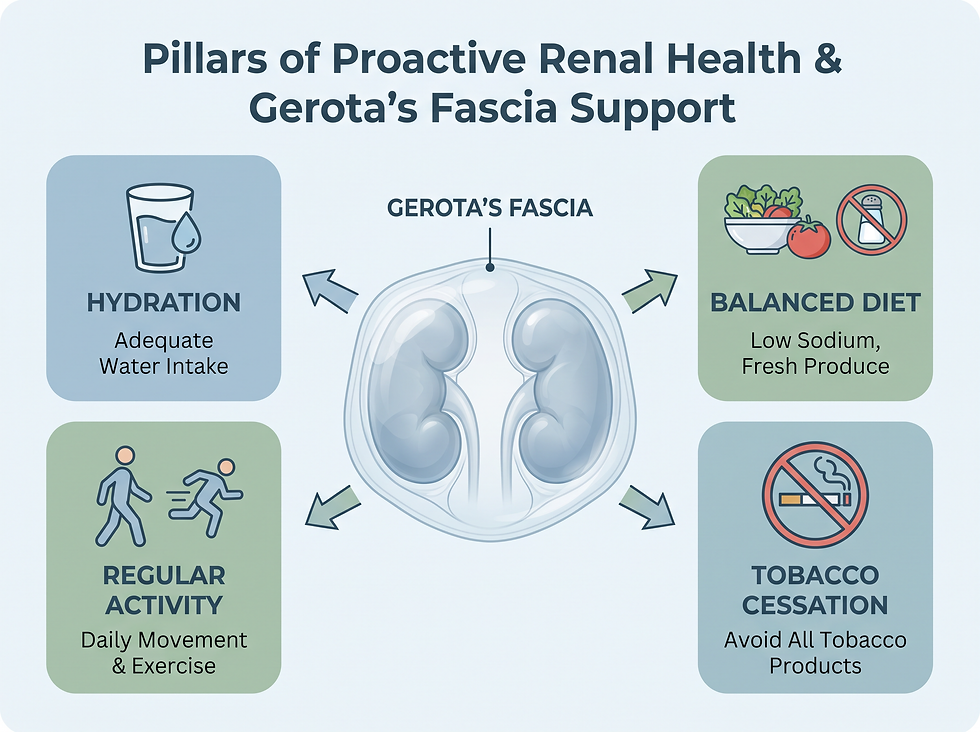
The health of Gerota’s fascia is closely tied to the health of the kidneys. Because the fascia serves the kidneys, habits that prevent kidney disease also protect this connective tissue. Staying hydrated, keeping a healthy weight, and limiting salt and processed foods are basic steps that support the renal system.
Managing conditions such as diabetes also matters, because steady blood sugar prevents long-term damage to kidney tissue. Avoiding tobacco and limiting the use of nonsteroidal anti-inflammatory drugs (NSAIDs) can further reduce stress on the kidneys. Regular medical check-ups allow early detection of problems that could affect the kidneys or their protective layers.
Conclusion
Gerota’s fascia is a quiet but vital part of human anatomy. It gives the body’s filtration system its boundaries and protection. It is rarely discussed outside medicine, yet its role in supporting organ function and in diagnosing serious conditions such as kidney cancer is indispensable. A kidney-conscious lifestyle helps keep this protective shield strong throughout life.
When to See a Healthcare Provider
Prioritize your kidney health by staying hydrated and scheduling regular physical exams. If you have persistent back pain, changes in urination, or other symptoms related to kidney health, talk to a healthcare professional for a full evaluation.
Frequently Asked Questions (FAQ)
What is Gerota’s fascia?
It is a tough layer of connective tissue that surrounds and protects the kidneys and adrenal glands.
What is another name for Gerota’s fascia?
It is also commonly called the renal fascia or Gerota’s capsule.
How do you pronounce Gerota’s fascia?
It is pronounced "gay-ROH-tuhz FASH-ee-uh."
What organs does it cover?
It covers the kidneys, the adrenal glands, and the fat surrounding the kidneys (perinephric fat).
How thick is this tissue?
It is very thin, averaging about 460 micrometers, which is about a quarter of the width of a strand of spaghetti.
What is the difference between Gerota’s fascia and the renal capsule?
Gerota’s fascia is the outer layer, while the renal capsule is a deeper layer that directly encases the kidney.
How does it protect the kidneys?
It acts as a physical shield against trauma and as a barrier that helps prevent the spread of infection or bleeding.
Why is it important for kidney cancer staging?
If a tumor extends through Gerota’s fascia, the cancer is typically classified as Stage 4.
What imaging tests can see Gerota’s fascia?
CT scans and ultrasounds are commonly used to view the fascia and check for abnormalities.
What is a perinephric abscess?
It is a pocket of pus that can form in the space surrounded by Gerota’s fascia.
Can kidney stones affect the fascia?
Yes. Stones can cause inflammation or related problems that healthcare providers monitor on imaging of this area.
What is the fascia made of?
It is made of fibrous connective tissue that is rich in collagen.
How does it help keep organs in place?
It attaches to the abdominal wall and other tissues to anchor the kidneys and adrenal glands.
What lifestyle habits support this tissue?
Drinking water, limiting salt, avoiding tobacco, and keeping a healthy weight all support kidney and fascia health.
Does Gerota’s fascia surround the adrenal glands?
Yes. The fascia splits at the top of the kidneys to enclose the adrenal glands separately.
Medical Disclaimer: The information provided in this article is for educational purposes only and is not a substitute for professional medical advice, diagnosis, or treatment. Always seek the advice of a qualified healthcare provider with any questions you may have regarding a medical condition. If you are experiencing a medical emergency, call 911 or your local emergency services immediately.
Comments