Gastrointestinal Neuroendocrine Tumors (GI NETs): Symptoms, Causes, Diagnosis, Treatment, and Outlook — What You Need to Know

Updated: 2 days ago
Medically reviewed by Dr. Baraa Alnahhal, MD · Last reviewed: September 2026
TL;DR
Gastrointestinal neuroendocrine tumors (GI NETs), formerly known as carcinoid tumors, are rare cancers that originate in specialized neuroendocrine cells throughout the digestive system. These cells act as a bridge between the nervous and endocrine systems, regulating hormone release. While GI NETs can occur anywhere in the gastrointestinal tract, they are most common in the small intestine and rectum. Many patients remain asymptomatic until the tumor grows large enough to cause an obstruction or begins secreting hormones (carcinoid syndrome). Treatment is highly individualized based on the tumor's grade and location, with surgical removal being the primary curative option. Early diagnosis and a multidisciplinary approach are essential for improving long-term survival and managing potential complications like carcinoid crisis during surgery.
Quick Answer: What are GI NETs?
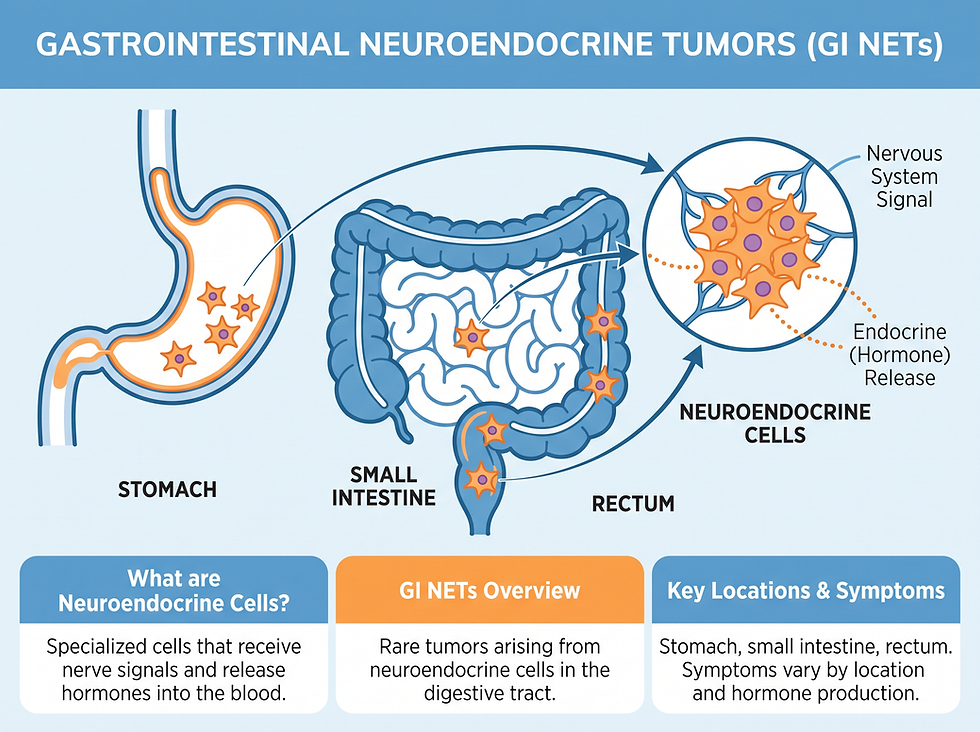
Gastrointestinal neuroendocrine tumors (GI NETs) are rare cancerous growths that develop in the neuroendocrine cells of the digestive tract. These specialized cells are found in the lining of organs like the stomach, small intestine, appendix, colon, and rectum. GI NETs are unique because they can sometimes produce and release hormones into the bloodstream, leading to a cluster of symptoms known as carcinoid syndrome. They are categorized into three grades based on how quickly the cancer cells divide and grow. While rare, affecting about 4 in 100,000 people, they are increasingly being detected through routine imaging and endoscopy. The primary treatment is surgery to remove the tumor, though medications and active surveillance are used for certain grades and stages.
What Are GI NETs?
Gastrointestinal neuroendocrine tumors (GI NETs) are a group of uncommon cancers that arise from neuroendocrine cells. These cells are unique because they possess characteristics of both nerve cells and hormone-producing endocrine cells. In the gastrointestinal tract, they help regulate digestion and the movement of food through the system.
Old Name: Carcinoid Tumors
Cell Type: Neuroendocrine Cells
Common Locations: Small intestine, rectum, stomach, appendix, esophagus
Prevalence: Approximately 4 per 100,000 people
Annual U.S. Cases: About 8,000 adults
Typical Age Range: 55 to 65 years old
Symptoms of GI NETs
Many individuals with GI NETs do not experience symptoms in the early stages. Often, these tumors are discovered incidentally during imaging tests for unrelated conditions. When symptoms do occur, they are frequently mistaken for more common, less serious gastrointestinal issues.
Common Symptoms
Abdominal Pain: Often a sign that the tumor is causing a partial or complete intestinal blockage.
Diarrhea: Frequently associated with carcinoid syndrome or post-surgical changes.
Nausea and Vomiting: Persistent digestive distress can indicate serious underlying illness.
Unintentional Weight Loss: Rapid weight loss without changes in diet or exercise.
Gastrointestinal Bleeding: Stools that are bright red or dark and tarry.
Jaundice: Yellowing of the skin and eyes, suggesting the cancer may have spread to the liver.
Fatigue: Chronic, overwhelming exhaustion that does not improve with rest.
Causes and Risk Factors
The exact cause of GI NETs remains unknown, but researchers have identified several links to stomach acid levels and inherited genetic syndromes.
Hypochlorhydria: Low stomach acid levels have been linked to an increased risk of GI NETs.
MEN1 and MEN2: Multiple Endocrine Neoplasia syndromes that cause overactive glands and tumors.
Von Hippel-Lindau: A rare genetic condition causing benign and malignant tumors.
Neurofibromatosis 1: A condition where tumors grow on skin and nerves.
Demographics: Slightly more common in women and white individuals.
Tumor Grading System
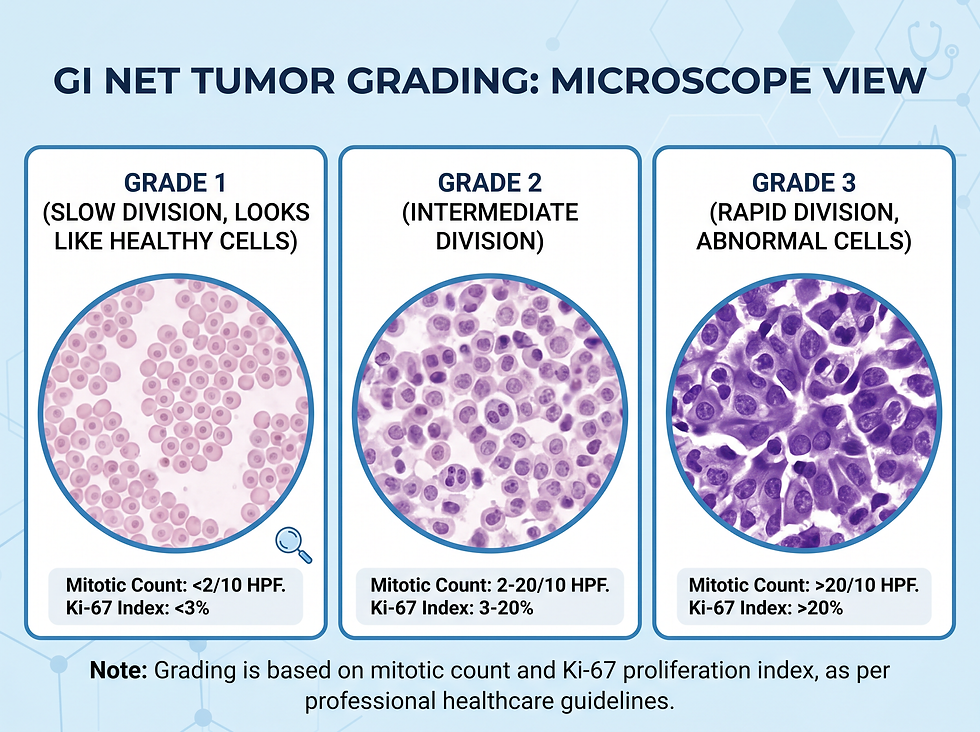
Healthcare providers use a specific grading system to determine the aggressiveness of the tumor and plan the most effective treatment.
Grade 1: Low-grade; cells look similar to healthy cells. Growth speed: slow.
Grade 2: Intermediate-grade; cells divide at a moderate rate. Growth speed: moderate.
Grade 3: High-grade; cells divide rapidly and look very abnormal. Growth speed: fast.
Diagnosis of GI NETs
Accurate diagnosis involves a combination of imaging, endoscopic procedures, and laboratory tests to locate the tumor and determine its grade.
Imaging (CT, MRI, X-ray): Used to visualize the tumor's size and check if it has spread (metastasized) to the liver or other organs.
Endoscopy and Colonoscopy: Allows direct visualization of the GI tract lining and the ability to take tissue samples.
Endoscopic Ultrasound (EUS): Uses sound waves from within the GI tract to create detailed sonograms of the tumor.
PET Scan: Uses specialized dyes designed to track and highlight neuroendocrine tumor cells.
Biopsy: The definitive method for grading the tumor by examining tissue under a microscope.
Treatment and Management
Treatment for GI NETs is highly personalized, taking into account the tumor's grade, location, and the patient's overall health.
Active Surveillance
For very slow-growing tumors that are unlikely to spread, providers may recommend regular monitoring through imaging, blood tests, and physical exams rather than immediate surgery.
Surgical Interventions
Surgery is the most common and often curative treatment for GI NETs. The specific procedure depends on where the tumor is located.
Partial Gastrectomy: Removal of the portion of the stomach containing the tumor.
Small Intestine Resection: Removal of the infected segment of the small intestine.
Appendectomy: Removal of the appendix, often where carcinoid tumors are found.
Hemicolectomy: Removal of the right or left side of the colon.
Rectal Resection: Removal of part of the rectum (LAR or APR).
Liver Resection: Removal of tumor deposits that have spread to the liver.
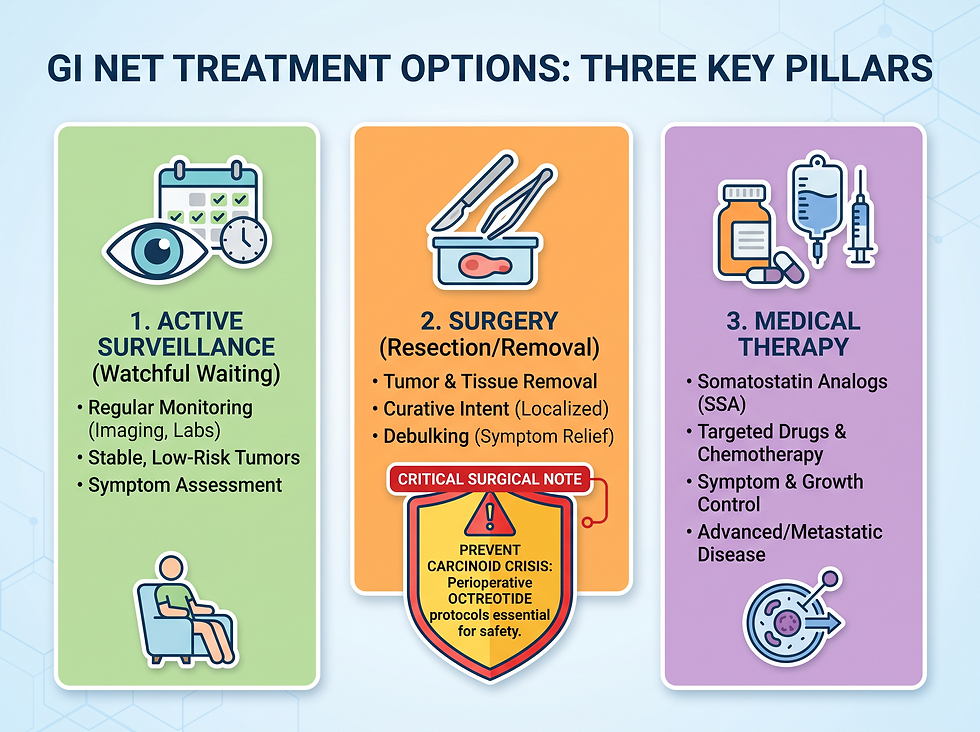
CRITICAL SURGICAL NOTE If you have carcinoid syndrome, surgery can trigger a life-threatening complication known as a carcinoid crisis. It is essential that your surgical team is aware of your diagnosis so they can administer special medications before, during, and after the procedure to prevent this crisis.
Outlook and Prognosis
The outlook for GI NETs is generally positive for low-grade tumors that are caught early. Because many of these tumors grow slowly, patients can often live for many years with the condition. However, high-grade (Grade 3) tumors are more aggressive and require more intensive treatment. Regular follow-up care is vital for all patients to monitor for recurrence or the development of new tumors.
When to See a Healthcare Provider
You should consult a healthcare provider if you experience persistent gastrointestinal symptoms that do not resolve with standard over-the-counter treatments.
Contact a provider if:
You have unexplained, chronic diarrhea
You are losing weight without trying
You feel exhausted all the time
You notice a yellow tint to your skin
Seek immediate care if:
You see bright red blood in your stool
Your stool is black and tarry
You have severe, sudden abdominal pain
You are vomiting persistently
A Note from the Care Team
"Gastrointestinal neuroendocrine tumors are rare cancerous tumors in neuroendocrine cells in your gastrointestinal (GI) tract. The most common treatment is surgery to remove the tumor. People may have these tumors without having symptoms. Common symptoms include stomach pain, diarrhea, nausea, vomiting, unintentional weight loss, and jaundice. If you have carcinoid syndrome, surgery may trigger potentially life-threatening complications. Seek medical attention if you have persistent symptoms." [1]
FAQ: Frequently Asked Questions
What were GI NETs previously called?
They were formerly known as carcinoid tumors. The name was changed to better reflect their origin in neuroendocrine cells. [1]
Are all GI NETs cancerous?
Yes, all neuroendocrine tumors in the gastrointestinal tract are considered cancerous, although many grow very slowly. [1]
What is carcinoid syndrome?
It is a group of symptoms, including flushing and diarrhea, caused by hormones released by some neuroendocrine tumors into the bloodstream. [1]
Where is the most common place for a GI NET to start?
The small intestine and the rectum are the most common primary sites for these tumors. [1]
Can GI NETs be cured?
Surgery to remove the tumor is often curative, especially if the cancer is caught before it has spread to other organs. [1]
What is the difference between Grade 1 and Grade 3 tumors?
Grade 1 tumors grow slowly and look like normal cells, while Grade 3 tumors grow very quickly and look very abnormal under a microscope. [1]
Is GI NET hereditary?
While most cases are sporadic, they can be linked to inherited conditions like Multiple Endocrine Neoplasia (MEN1/MEN2). [1]
How rare are these tumors?
They affect approximately 4 out of every 100,000 people. [1]
Can I live a normal life with a GI NET?
Many people live for decades with low-grade GI NETs, provided they receive regular monitoring and appropriate treatment. [1]
What is a PET scan for NETs?
It is a specialized imaging test that uses a specific dye to highlight neuroendocrine tumor cells that might be missed by a standard CT scan. [1]
Why is surgery dangerous for people with carcinoid syndrome?
The stress of surgery can cause the tumor to release a massive amount of hormones, leading to a dangerous drop in blood pressure or heart issues. [1]
What is hypochlorhydria?
It is a condition of low stomach acid, which has been identified as a potential risk factor for developing GI NETs. [1]
Do these tumors always show up on an X-ray?
No. Because of their size or location, they often require more advanced imaging like CT, MRI, or PET scans to be detected. [1]
What is active surveillance?
It is a "watchful waiting" approach where doctors monitor slow-growing tumors with regular tests rather than performing surgery immediately. [1]
Who is most commonly affected?
The condition typically affects adults between the ages of 55 and 65, though it can occur at any age. [1]
References
Medical Disclaimer: The information provided in this article is for educational purposes only and should not be considered medical advice. Always seek the advice of a qualified healthcare provider with any questions you may have regarding a medical condition. If you are experiencing a medical emergency, call 911 or your local emergency services immediately.
Comments