Gastrocolic Reflex: Understanding the Body's Post-Meal Signal

Updated: 1 hour ago
Medically reviewed by Dr. Baraa Alnahhal, MD · Last reviewed: September 2026
TL;DR
The gastrocolic reflex is a natural, automatic signal in the digestive system that triggers the colon to move waste out when new food enters the stomach. This process ensures the digestive tract makes room for the next meal. While perfectly normal, the intensity of this reflex can be influenced by meal size, calorie content, and specific triggers like fats or caffeine. For most, simple dietary adjustments can manage an overactive response, though persistent symptoms may indicate underlying gastrointestinal conditions.
Quick Answer
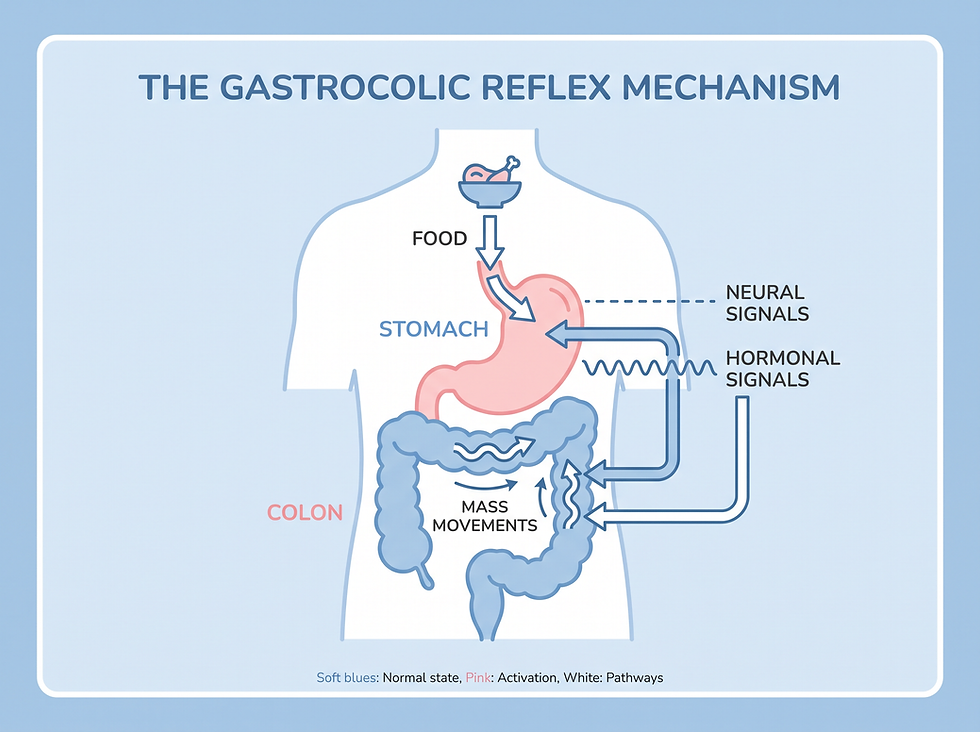
The gastrocolic reflex is an automatic communication between the stomach and the colon that stimulates bowel movements shortly after eating. When the stomach stretches to accommodate food, it sends signals via nerves and hormones to the colon, triggering "mass movements" or wave-like contractions. This essential function keeps the digestive process moving forward by clearing out old waste to make room for incoming food.
Digestion is a highly coordinated process that relies on a series of automatic reflexes to move food through the gastrointestinal (GI) tract. The gastrocolic reflex is one of the most noticeable of these functions, acting as a biological assembly line signal. When a meal begins, the stomach initiates a conversation with the colon, ensuring that the "conveyor belt" of the digestive system remains clear and ready for the next batch of nutrients.
Anatomy and Biological Mechanisms
The gastrocolic reflex involves a complex signaling network that includes the stomach, colon, and the enteric nervous system—often referred to as the "brain in the gut." The primary trigger for this reflex is the physical stretching, or distension, of the stomach as it fills with food. This stretching is detected by specialized nerves that immediately signal the smooth muscles lining the colon to begin moving.
Hormones also play a critical role in this response. When the stomach stretches, it releases gastrin, a hormone that stimulates stomach contractions. As food passes into the small intestine, another hormone called cholecystokinin (CCK) is triggered, further stimulating the digestive organs. These signals culminate in "mass movements," which are large, wave-like contractions in the colon that push waste toward the exit.
Stomach: Initiates the signaling process. Trigger: physical stretching (distension).
Colon: Performs mass movements. Trigger: neural and hormonal signals.
Enteric Nerves: Manage automatic GI functions. Trigger: detection of food intake.
Gastrin: Stimulates stomach contractions. Trigger: stomach stretching.
CCK: Triggers multi-organ contractions. Trigger: food entering the small intestine.

Factors Influencing Reflex Intensity
The strength and speed of the gastrocolic reflex vary significantly between individuals and are heavily influenced by the nature of the meal. High-calorie meals, particularly those rich in fats and proteins, tend to trigger a more robust hormonal response, leading to stronger contractions. This is why larger or richer meals are more likely to result in an urgent need to use the bathroom.
External triggers can also heighten the reflex's intensity. Greasy or spicy foods, as well as beverages containing alcohol or caffeine, are known to stimulate the digestive system more aggressively. Additionally, emotional stress can influence the enteric nervous system, potentially leading to more frequent or urgent bowel movements after eating.
Meal Size: Larger meals increase stretching (for example, multi-course dinners).
Calorie Density: Triggers more digestive hormones (for example, fried foods and heavy proteins).
Stimulants: Accelerate colon contractions (for example, coffee, energy drinks, and alcohol).
Spices: Can irritate and speed up the GI tract (for example, hot peppers and heavy seasoning).
Associated Conditions and Disorders
While the gastrocolic reflex is a normal function, an overactive or underactive response can be a symptom of underlying gastrointestinal issues. An overactive reflex is often characterized by a frequent, urgent, and sometimes uncomfortable need to poop immediately after eating. This can be associated with conditions like Irritable Bowel Syndrome (IBS) or Inflammatory Bowel Disease (IBD), where the colon is hypersensitive.
Conversely, an underactive or delayed reflex can lead to constipation and is sometimes linked to gastroparesis, a condition where nerve damage slows down stomach emptying. Understanding these associations is crucial for distinguishing between a normal biological response and a functional GI disorder that may require medical intervention.
IBS: Hypersensitive colon response. Primary symptom: urgency and abdominal discomfort.
Dumping Syndrome: Rapid stomach emptying. Primary symptom: extremely fast post-meal transit.
Gastroparesis: Delayed stomach emptying. Primary symptom: slowed or absent reflex.
IBD: Chronic colon inflammation. Primary symptom: increased sensitivity and reactivity.
Care and Lifestyle Management
For most adults experiencing a strong gastrocolic reflex, the most effective management strategy involves identifying and avoiding personal triggers. Keeping a food diary can help pinpoint specific items—such as high-fat meals or caffeine—that cause an uncomfortable response. Adjusting eating patterns, such as consuming smaller, more frequent meals, can also reduce the amount of stomach stretching and lessen the intensity of the signals sent to the colon.
If lifestyle changes do not alleviate symptoms, or if the reflex is accompanied by colon spasms, frequent diarrhea, or unexplained weight loss, consulting a healthcare provider is essential. A medical professional can evaluate whether a functional disorder is present and, if necessary, prescribe medications to either stimulate or slow down bowel movements on a case-by-case basis.

Conclusion
The gastrocolic reflex is a fundamental and natural part of the human digestive process. By coordinating the movement of food from the stomach to the colon, it ensures that the body efficiently manages waste and prepares for new intake. By understanding the triggers that influence this reflex and practicing mindful eating habits, individuals can support their digestive health and maintain a comfortable post-meal experience.
Call to Action
If you find that your post-meal bathroom urgency is disruptive to your daily life or is accompanied by pain, consult a gastroenterologist for a comprehensive evaluation. A personalized approach to diet and care can help you regain control over your digestive rhythm.
Frequently Asked Questions (FAQ)
Is it normal to poop right after eating?
Yes, this is typically the gastrocolic reflex, a natural signal for the colon to make room for new food.
What triggers the gastrocolic reflex?
The primary trigger is the stretching of the stomach as it fills with food.
How soon after eating does the reflex occur?
It can occur within minutes to an hour after a meal begins.
Why do high-fat meals make the reflex stronger?
Fats trigger the release of more digestive hormones like gastrin and CCK, which stimulate stronger contractions.
Can stress affect the gastrocolic reflex?
Yes, stress can influence the enteric nervous system and lead to more urgent bowel movements.
What is the "brain in the gut"?
It refers to the enteric nervous system, a network of nerves that manages automatic digestive functions.
Is the reflex faster in children?
Yes, the gastrocolic reflex generally works more quickly in infants and young children.
Can coffee trigger the gastrocolic reflex?
Yes, caffeine is a known stimulant that can accelerate colon contractions.
What is an overactive gastrocolic reflex?
It is a frequent, urgent, and strong need to poop immediately after most meals.
Does the reflex mean food goes straight through you?
No, it is the colon moving old waste out to make room for the new food entering the stomach.
How long can the gastrocolic reflex last?
It can last anywhere from a few minutes to a few hours.
What foods should I avoid to slow down the reflex?
High-calorie, greasy, and spicy foods are common triggers to avoid.
Can IBS cause a strong gastrocolic reflex?
Yes, individuals with IBS often have a more sensitive and reactive colon.
What is gastroparesis?
A condition where stomach emptying is delayed, often slowing down the gastrocolic reflex.
When should I see a doctor about this?
If symptoms include frequent diarrhea, weight loss, or spasms, or if diet changes don't help.
References
Medical Disclaimer: This content is for informational purposes only and is not a substitute for professional medical advice, diagnosis, or treatment.
Comments