Gastric Varices: Symptoms, Causes, Diagnosis, Treatment, and Outlook — What You Need to Know

Updated: 2 days ago
Medically reviewed by Dr. Baraa Alnahhal, MD · Last reviewed: September 2026
TL;DR
Gastric varices are enlarged, swollen veins within the stomach lining that develop when blood flow to the liver is obstructed, typically by cirrhosis or blood clots. This obstruction increases pressure in the portal vein (portal hypertension), forcing blood into smaller vessels that are not designed for high pressure. While often asymptomatic until they rupture, gastric varices pose a severe risk of life-threatening internal bleeding. Management focuses on preventing hemorrhage through medications like beta-blockers or endoscopic procedures like banding and glue injection. In acute emergencies, advanced interventions such as a TIPS procedure may be required to redirect blood flow and reduce pressure.
MEDICAL EMERGENCY WARNING Call 911 or seek immediate emergency medical care if you experience any of the following symptoms of a ruptured gastric varix or internal gastrointestinal bleeding:
Vomiting bright red blood or fluid that looks like coffee grounds
Passing stools that are black, tarry, or contain bright red blood
Sudden, severe dizziness, lightheadedness, or fainting
Rapid heart rate or difficulty breathing
Extreme weakness, cold or clammy skin, or signs of shock
Quick Answer: What are Gastric Varices?
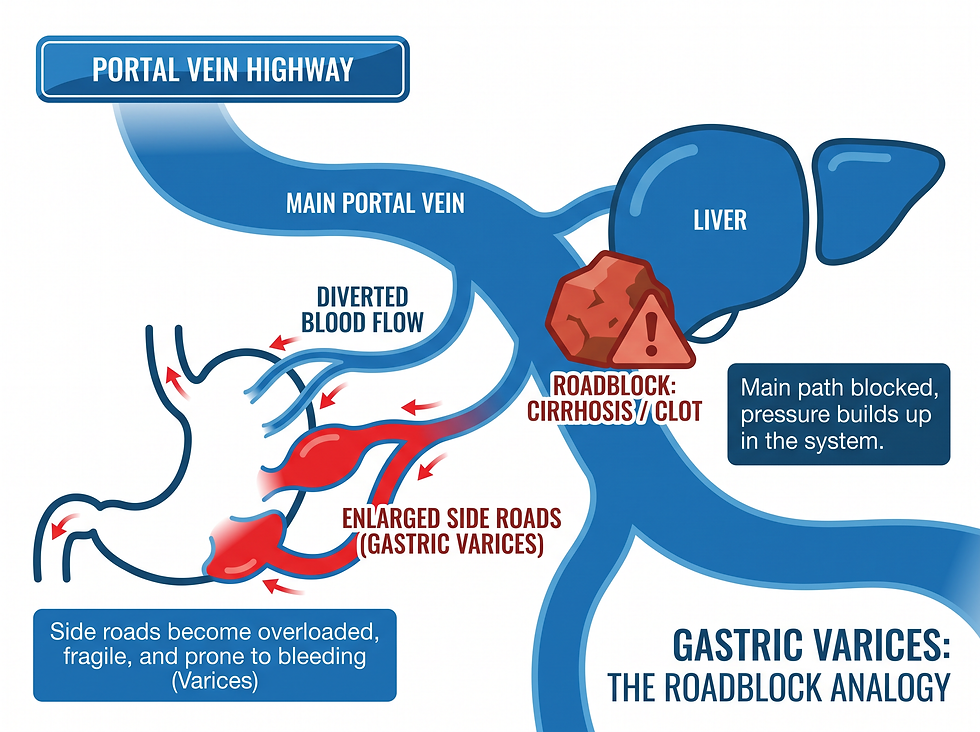
Gastric varices are swollen, dilated blood vessels (veins) located in the lining of the stomach. They form as a result of portal hypertension, a condition where blood pressure rises in the portal vein—the main vessel carrying blood from the digestive organs to the liver. When the liver is scarred (cirrhosis) or blood flow is otherwise blocked, blood diverts to smaller veins in the stomach. These vessels bulge under the increased pressure and can easily burst, leading to severe, potentially fatal upper gastrointestinal bleeding. Gastric varices are less common than esophageal varices but are often more difficult to treat and carry a higher risk of severe hemorrhage. Treatment involves reducing portal pressure and directly sealing or shrinking the swollen veins.
What Are Gastric Varices?
Gastric varices are a manifestation of systemic circulatory issues, primarily involving the liver and the portal venous system. They are not a disease themselves but rather a symptom of significant underlying pathology. When the main "highway" for blood to the liver is blocked, the body creates "detours" through smaller, fragile veins in the stomach lining. These detours are called varices.
Location: Lining of the stomach (fundus, lesser or greater curvature)
Primary Cause: Portal hypertension (often due to liver cirrhosis)
Major Risk: Life-threatening gastrointestinal hemorrhage
Comparison: Less common but more severe than esophageal varices
Prevalence: Found in approximately 20% of people with portal hypertension
Types of Gastric Varices
Medical professionals classify gastric varices based on their location and whether they are connected to similar swollen veins in the esophagus.
Gastroesophageal Varices (GOV)
These are continuous with esophageal varices:
Type 1 (GOV1): Extend along the lesser curvature of the stomach. This is the most common type.
Type 2 (GOV2): Extend along the greater curvature toward the fundus (the top part of the stomach).
Isolated Gastric Varices (IGV)
These occur only in the stomach without esophageal involvement:
Type 1 (IGV1): Located specifically in the fundus of the stomach.
Type 2 (IGV2): Located anywhere else in the stomach lining.
Symptoms of Gastric Varices
Gastric varices are "silent" until they rupture. There is typically no pain or discomfort associated with their presence. However, once a varix bursts, the symptoms of internal bleeding are rapid and severe.
Hematemesis: Vomiting bright red blood; indicates active upper GI bleeding.
Melena: Dark, tarry, foul-smelling stools; indicates digested blood.
Hematochezia: Bright red blood in the stool; indicates rapid, severe bleeding.
Hypotension: Low blood pressure leading to dizziness or fainting.
Tachycardia: Fast heart rate as the body tries to compensate for blood loss.
Shock: A life-threatening state where organs do not receive enough blood.

Causes and Risk Factors
The fundamental cause of gastric varices is portal hypertension. This is a state of high blood pressure in the portal venous system.
Primary Causes of Portal Hypertension
Cirrhosis: The most common cause. Scar tissue from long-term liver damage (due to alcohol, hepatitis, or fatty liver) blocks blood flow.
Blood Clots: A clot in the portal vein (portal vein thrombosis) or the splenic vein can act as a physical roadblock.
Parasitic Infections: Conditions like Schistosomiasis can damage the liver and spleen, leading to increased pressure.
Budd-Chiari Syndrome: A rare condition where the veins carrying blood out of the liver are blocked.
Risk Factors
Chronic Liver Disease: Increases the likelihood of developing cirrhosis.
Splenomegaly: An enlarged spleen often accompanies portal hypertension.
Previous Variceal Bleeding: Significantly increases the risk of future ruptures.
Alcohol Consumption: A major contributor to liver scarring and portal pressure.
Potential Complications
The primary complication is hemorrhage, which can lead to:
Exsanguination: Fatal blood loss.
Iron-Deficiency Anemia: Resulting from slow, chronic leaking of the varices.
Hepatic Encephalopathy: Brain dysfunction caused by the liver's inability to filter toxins from the blood, often worsened by gastrointestinal bleeding.
Renal Failure: Kidneys may fail due to the sudden drop in blood pressure during a bleed.
Diagnosis of Gastric Varices
Because they are asymptomatic, gastric varices are often found during routine screenings for patients with known liver disease.
Upper Endoscopy (EGD): The gold standard. A camera is used to visually inspect the stomach lining and assess the size and risk of the varices.
Abdominal CT Scan: Provides a detailed view of the liver, spleen, and the surrounding blood vessels.
Doppler Ultrasound: Measures the speed and direction of blood flow in the portal vein to confirm portal hypertension.
Treatment and Management
Treatment strategies differ depending on whether the varices are currently bleeding or if the goal is to prevent a first-time bleed.
Prevention (Unruptured Varices)
Beta-Blockers: Medications like propranolol or nadolol are used to lower the blood pressure in the portal vein.
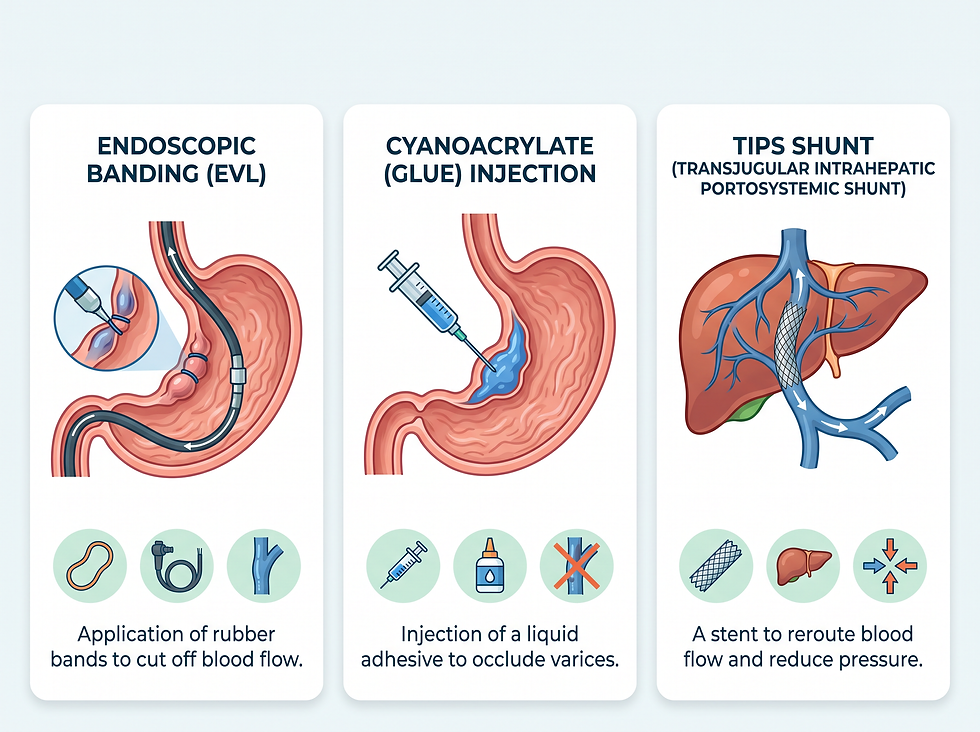
Endoscopic Variceal Ligation (EVL): Small rubber bands are placed around the varices to cut off blood flow and shrink them.
Emergency Treatment (Bleeding Varices)
Cyanoacrylate Injection: A medical "glue" is injected into the varix to stop the bleeding immediately.
TIPS Procedure: A transjugular intrahepatic portosystemic shunt creates a new pathway for blood to bypass the liver, lowering portal pressure.
Balloon Tamponade: A temporary measure using an inflated balloon to apply direct pressure to the bleeding vessel.
Octreotide/Vasopressin: Medications given intravenously to constrict blood vessels and reduce blood flow to the stomach.
Outlook and Prognosis
The prognosis for individuals with gastric varices depends heavily on the severity of their underlying liver disease and how quickly they receive treatment for bleeding. While bleeding from gastric varices is more severe than from esophageal varices, modern interventions like the TIPS procedure have significantly improved survival rates. Long-term management involves strict adherence to medications and regular endoscopic monitoring.
Prevention Strategies
While you cannot always prevent the formation of varices if you have liver disease, you can reduce the risk of complications:
Avoid Alcohol: Alcohol is the leading cause of cirrhosis progression.
Manage Liver Health: Treat underlying hepatitis or fatty liver disease.
Regular Screening: If you have cirrhosis, follow your provider's schedule for endoscopies.
Medication Adherence: Take prescribed beta-blockers exactly as directed to keep portal pressure low.
When to See a Healthcare Provider
If you have a known diagnosis of liver disease or cirrhosis, you should be under the regular care of a gastroenterologist or hepatologist.
Contact a provider if:
You feel unusually fatigued or weak
You notice a dark color in your stool
You have a history of liver disease
You experience new abdominal swelling
Seek emergency care (911) if:
You vomit blood or "coffee ground" material
Your stool is black, tarry, or bloody
You feel faint, dizzy, or lose consciousness
You show signs of shock (cold, clammy skin)
A Note from the Care Team
"Gastric varices are enlarged and swollen blood vessels within the lining of your stomach. They form when something blocks the blood flow to your liver. Blood diverts to the smaller vessels in your stomach, which can’t handle the pressure and swell. This can lead to life-threatening bleeding in your gastrointestinal tract. Treatment depends on whether the varices have burst or not. The main goal for unruptured varices is to prevent bleeding. If they burst, it is a medical emergency requiring immediate intervention to stop the bleeding and prevent complications." [1]
FAQ: Frequently Asked Questions
What is the difference between gastric and esophageal varices?
Esophageal varices occur in the food pipe (esophagus), while gastric varices occur in the stomach. Gastric varices are less common but often cause more severe bleeding. [1]
Can gastric varices be cured?
The varices themselves can be treated (shrunk or closed), but the underlying cause—usually portal hypertension from liver disease—is often a chronic condition that requires lifelong management. [1]
Why do gastric varices bleed so heavily?
Because they are connected to the high-pressure portal system, a rupture can lead to rapid blood loss, as the smaller stomach veins are not built to withstand such pressure. [1]
What is a TIPS procedure?
TIPS stands for Transjugular Intrahepatic Portosystemic Shunt. It is a procedure that creates a bypass for blood flow through the liver to reduce the pressure in the portal vein. [1]
Is the "glue" injection safe?
Yes, cyanoacrylate (medical glue) is a standard and effective treatment specifically used for gastric varices that may not respond well to traditional banding. [1]
Does cirrhosis always lead to gastric varices?
No, but it is the most common cause. About 20% of people with portal hypertension will develop gastric varices. [1]
Can I feel the varices in my stomach?
No. Gastric varices do not cause pain, bloating, or any physical sensation. They are only detectable via medical imaging or endoscopy. [1]
What are "isolated" gastric varices?
These are varices that occur only in the stomach and are not connected to any swollen veins in the esophagus. [1]
How often do I need an endoscopy?
For patients with cirrhosis, endoscopies are typically performed every 1 to 2 years, or more frequently if varices are already present. [1]
Can a blood clot cause this?
Yes, a clot in the portal vein or splenic vein can block blood flow and cause portal hypertension, leading to varices even without liver cirrhosis. [1]
What are the survival rates for a bleed?
Survival depends on the speed of treatment. While a gastric variceal bleed is a major emergency, modern treatments like TIPS have significantly improved outcomes. [1]
Should I avoid certain foods?
While there is no specific "varix diet," a low-sodium diet is often recommended for patients with liver disease to prevent fluid buildup (ascites). [1]
Can beta-blockers prevent all bleeding?
They significantly reduce the risk by lowering portal pressure, but they do not eliminate the risk entirely. Regular monitoring is still necessary. [1]
What is the fundus of the stomach?
The fundus is the upper, rounded part of the stomach. Isolated gastric varices (IGV1) are commonly found in this area. [1]
What happens if a varix is left untreated?
If portal pressure remains high, the varix will continue to swell and eventually rupture, leading to a life-threatening hemorrhage. [1]
References
Medical Disclaimer: The information provided in this article is for educational purposes only and should not be considered medical advice. Always seek the advice of a qualified healthcare provider with any questions you may have regarding a medical condition. If you are experiencing a medical emergency, call 911 or your local emergency services immediately.
Comments