Gas Gangrene: Symptoms, Causes, Diagnosis, Treatment, and Outlook — What You Need to Know

Updated: 2 days ago
Medically reviewed by Dr. Baraa Alnahhal, MD · Last reviewed: September 2026
LIFE-THREATENING MEDICAL EMERGENCY Call 911 or go to the nearest emergency room immediately if you experience any of the following symptoms, especially following a deep injury or surgery: sudden, severe pain in or around a wound that seems disproportionate to the injury; skin that quickly turns pale, dark red, purple, or black; large blisters or bubbles on the skin that contain red, brown, or black fluid; a crackling feeling or sound (like Rice Krispies) when touching the skin around a wound; foul-smelling drainage from a wound or blister; rapid heart rate, extreme sweating, or sudden lightheadedness; or yellowing of the skin or eyes (jaundice).
TL;DR
Gas gangrene, also known as clostridial myonecrosis, is a rare but extremely dangerous bacterial infection that rapidly destroys muscle tissue, blood vessels, and blood cells. Typically caused by Clostridium perfringens bacteria entering a deep, traumatic wound, the infection produces toxins and gas that can lead to systemic inflammation, organ failure, and death within hours. Key symptoms include severe pain, skin discoloration, and large, foul-smelling blisters that produce a crackling sound (crepitus) when touched. Treatment is a medical emergency requiring immediate surgical debridement, high-dose antibiotics, and often hyperbaric oxygen therapy. While the condition is nearly always fatal without intervention, early treatment significantly improves survival rates.
Quick Answer: What is Gas Gangrene?
Gas gangrene is a rare and rapidly progressing bacterial infection that destroys soft tissues and muscle. It is most commonly caused by Clostridium bacteria, particularly Clostridium perfringens, which thrive in low-oxygen environments like deep, traumatic wounds. The bacteria release potent toxins that kill blood cells and vessels, leading to widespread tissue death (myonecrosis). As the bacteria break down nutrients, they produce gas that becomes trapped under the skin, causing characteristic swelling and a crackling sensation. Because the infection can become fatal within just a few hours of the first symptoms, it is considered a critical medical emergency. Treatment involves emergency surgery to remove dead tissue, intensive antibiotic therapy, and sometimes hyperbaric oxygen to kill the oxygen-sensitive bacteria.
What Is Gas Gangrene?
Gas gangrene is a severe form of gangrene that specifically targets muscle tissue and the circulatory system. The medical term for this condition is clostridial myonecrosis. It occurs when anaerobic bacteria (bacteria that do not need oxygen to survive) infiltrate deep into the body's tissues. Once established, these bacteria release toxins that cause a catastrophic immune response and rapid tissue decay.
The "gas" in gas gangrene refers to the byproduct of bacterial fermentation. As the bacteria consume nutrients in the absence of oxygen, they release gases that build up in the infected area, leading to the foul odor and physical "crackling" associated with the disease. In the United States, the condition is rare due to modern wound-cleaning practices, but it remains a significant threat in cases of severe trauma or certain surgical complications.
Medical name: Clostridial myonecrosis.
Primary cause: Clostridium perfringens bacteria.
Infection type: Anaerobic (thrives in low-oxygen environments).
Primary risk: Deep, traumatic wounds (for example road rash, gunshot wounds, and stab wounds).
Progression speed: Extremely rapid; it can be fatal within hours.
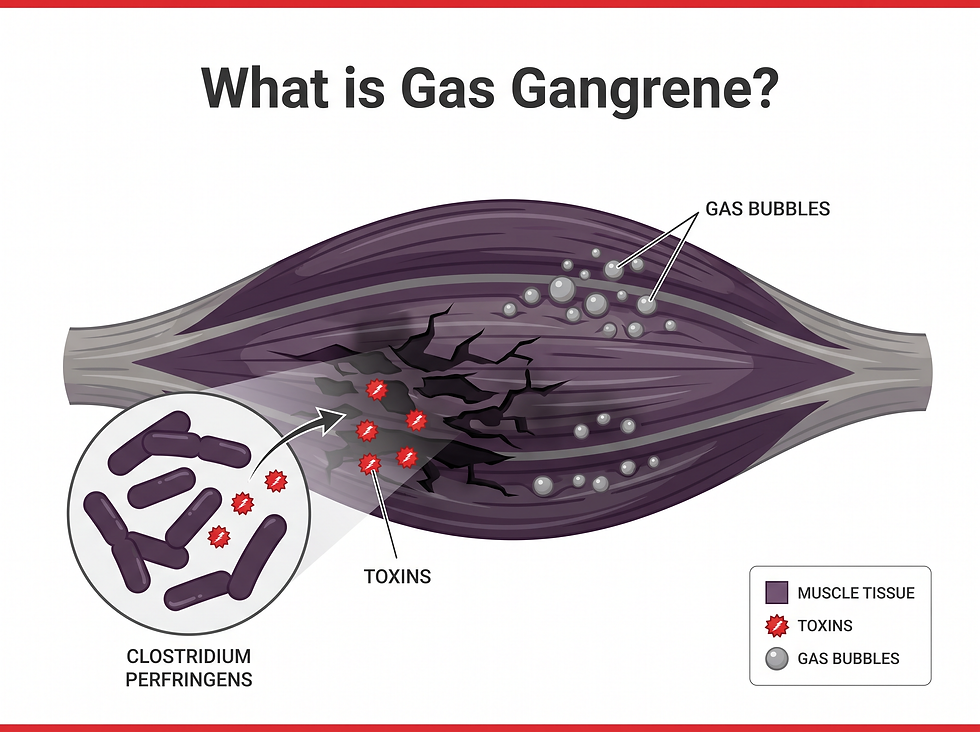
How Common is Gas Gangrene?
In modern medical settings, gas gangrene is considered very rare. This low incidence is primarily due to advanced surgical techniques and the immediate, thorough cleaning of traumatic wounds. However, it remains a critical concern for emergency medicine providers because of its high mortality rate if missed.
Symptoms of Gas Gangrene
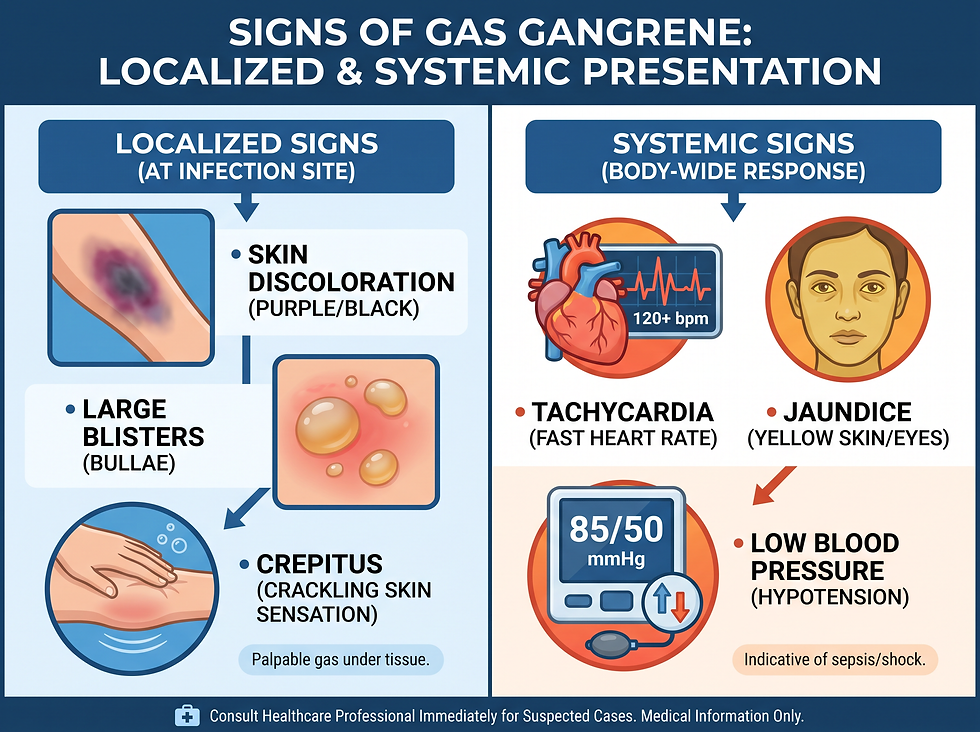
The symptoms of gas gangrene can appear and worsen in just minutes or hours. The most distinctive signs are localized to the site of the infection, but systemic symptoms quickly follow as the toxins enter the bloodstream.
Localized Skin and Wound Signs
Discoloration: Skin may turn pale, dark red, purplish, or black very quickly.
Blisters: Large bubbles (bullae) filled with red, brown, or dark green fluid.
Crepitus: A crackling feeling or sound under the skin caused by gas bubbles.
Odor: Foul-smelling fluid draining from the wound or blisters.
Severe pain: Intense pain that often feels much worse than the wound looks.
Swelling: Rapid and severe edema in the affected area.
Systemic (Body-Wide) Symptoms
As the infection spreads, it triggers a systemic inflammatory response:
Tachycardia: A very fast heart rate.
Fever and sweating: Signs of the body's attempt to fight the infection.
Jaundice: Yellowing of the skin and eyes due to the destruction of red blood cells.
Hypotension: Dangerously low blood pressure leading to lightheadedness or shock.
Anxiety: A sense of impending doom often reported by patients.
Causes and Risk Factors
The primary cause of gas gangrene is the Clostridium perfringens bacterium, though other Clostridium species can also be responsible. These bacteria are commonly found in soil and in the intestinal tracts of humans and animals.
How Infection Occurs
Infection typically requires a deep wound that is not exposed to the air. In these low-oxygen pockets, the bacteria reproduce rapidly and release toxins that destroy blood cells, preventing oxygen from reaching the tissues. This creates a self-sustaining cycle of tissue death that allows the bacteria to spread even further.
Traumatic injury: Road rash, gunshot wounds, deep stab wounds, and crush injuries.
Surgical complications: Abdominal (colon or gallbladder) or gynecological surgeries.
Medical conditions: Complications from childbirth, miscarriage, or GI tract tumors.
Underlying diseases: Diabetes or blood vessel disease (for example atherosclerosis).
Risk Factors for Spontaneous Gas Gangrene
While most cases follow an injury, "spontaneous" gas gangrene can occur in individuals with specific underlying health issues:
Colon cancer or diverticulitis: Conditions that can damage the intestinal wall and allow bacteria to escape.
Poor circulation: Reduced blood flow means less oxygen reaches tissues, creating an ideal environment for Clostridium.
Weakened immune system: Reduces the body's ability to contain a minor infection before it turns into gangrene.
Potential Complications
Gas gangrene is one of the most aggressive infections known to medicine. If not treated immediately, it leads to catastrophic organ failure.
Renal failure: The rapid destruction of red blood cells overwhelms the kidneys, leading to failure.
Sepsis and septic shock: A body-wide immune reaction that causes blood pressure to plummet and multiple organs to shut down.
Tissue loss: Even survivors often face permanent loss of muscle or limbs.
Diagnosis of Gas Gangrene
Diagnosis must be made quickly, often based on clinical appearance alone to avoid delaying treatment.
Physical examination: Providers look for skin discoloration, crepitus, and the characteristic foul odor.
Tissue biopsy and culture: Fluid or tissue from the wound is examined under a microscope for Clostridium bacteria.
Imaging (X-ray, CT, MRI): Used to detect gas bubbles trapped in the muscle tissue or under the skin.
Blood tests: To check for signs of sepsis, kidney failure, and red blood cell destruction.
Treatment and Management
Treatment for gas gangrene must begin the moment it is suspected. Patients are hospitalized and monitored in intensive care.
Emergency Procedures
Surgical debridement: Immediate removal of all dead and infected tissue to stop the spread.
High-dose antibiotics: Typically a combination of penicillin and clindamycin to kill the bacteria.
Hyperbaric oxygen: Placing the patient in a pressurized oxygen chamber to kill anaerobic bacteria and heal tissue.
Amputation: Necessary in severe cases to save the patient's life by removing an infected limb.

Outlook and Prognosis
The survival rate for gas gangrene depends entirely on how quickly treatment begins.
Without treatment: The condition is nearly always fatal, with mortality rates between 80% and 90%.
With treatment: The mortality rate drops to between 10% and 25%.
Location matters: Infections in the extremities (arms and legs) generally have a better prognosis than those in the torso or abdomen.
Prevention Strategies
Preventing gas gangrene focuses on proper wound care and the management of underlying health conditions.
Thorough cleaning: Always wash wounds with soap and water immediately after an injury.
Seek professional care: Any deep wound or one contaminated with dirt requires medical attention for professional cleaning and possible stitches.
Monitor injuries: Watch for any signs of infection, such as increasing pain, redness, or swelling.
Manage chronic conditions: Controlling diabetes and vascular disease helps maintain healthy blood flow and oxygen levels in tissues.
Protective gear: Wear appropriate clothing and safety gear when engaging in high-risk activities like motorcycling.
When to See a Healthcare Provider
If you have a deep injury, do not wait for symptoms to appear. Early cleaning and antibiotic prophylaxis can prevent the infection from starting.
Contact a provider if:
You have a wound you cannot clean.
A wound is deep or goes into muscle.
You notice a new, foul smell from a wound.
Pain is increasing after an injury.
Seek emergency care (911) if:
You see skin turning purple or black.
You feel a crackling sound under the skin.
You have a rapid heart rate and fever.
You feel lightheaded or have low blood pressure.
A Note from the Care Team
Gas gangrene is a medical emergency that can quickly be fatal. It causes severe blisters, swelling, and skin discoloration. You can get it after a deep, traumatic injury. Clostridium bacteria release toxins that destroy blood cells, blood vessels, and muscle tissue. The bacteria create gas that makes wounds smell bad when they open. Gas gangrene can be fatal within hours of symptoms starting. Seek medical attention immediately if you have symptoms. [1]
FAQ: Frequently Asked Questions
What is the main cause of gas gangrene?
The most common cause is the bacterium Clostridium perfringens, which enters the body through deep, traumatic wounds. [1]
How fast does gas gangrene spread?
It spreads incredibly fast, often causing visible skin changes within minutes or hours. It can be fatal within hours if left untreated. [1]
What does "crepitus" mean in gas gangrene?
Crepitus is the crackling sound or sensation felt when touching the skin, caused by gas bubbles produced by the bacteria trapped in the tissue. [1]
Can you get gas gangrene without an injury?
Yes, this is called "spontaneous gas gangrene." It can occur in people with underlying conditions like colon cancer or severe diabetes. [1]
Is gas gangrene the same as necrotizing fasciitis?
No. While both are dangerous "flesh-eating" infections, gas gangrene targets muscle and blood vessels, while necrotizing fasciitis targets fat and connective tissue (fascia). [1]
Why is hyperbaric oxygen used for treatment?
Clostridium bacteria are anaerobic, meaning oxygen kills them. Hyperbaric chambers provide high levels of oxygen to kill the bacteria and help tissues heal. [1]
Is gas gangrene contagious?
No, you cannot catch gas gangrene from another person. It is caused by bacteria from the environment or your own body entering a wound. [1]
What are the survival rates?
With modern treatment, the survival rate is approximately 75% to 90%. Without treatment, it is almost always fatal. [1]
Does gas gangrene always smell bad?
Yes, the fermentation process used by the bacteria produces gases and fluids that have a very distinct, foul odor. [1]
Can diabetes increase the risk?
Yes, diabetes often reduces blood flow and oxygen to tissues, making it easier for anaerobic bacteria to thrive if an infection occurs. [1]
What antibiotics are used?
Healthcare providers typically use a combination of high-dose penicillin and clindamycin. [1]
Will I always lose a limb if I have gas gangrene?
Not always, but surgical removal of infected tissue (debridement) is always necessary. Amputation is a last resort to save the patient's life. [1]
How do doctors test for it?
Doctors use tissue biopsies, cultures, and imaging like X-rays or CT scans to look for gas bubbles in the muscle. [1]
Can road rash lead to gas gangrene?
Yes, if the road rash is deep and contaminated with dirt or debris, it can harbor the bacteria that cause the infection. [1]
What should I do if I suspect gas gangrene?
Go to the emergency room immediately. Do not wait for an appointment, as every hour counts in treating this infection. [1]
References
Medical disclaimer: The information provided in this article is for educational purposes only and should not be considered medical advice. Always seek the advice of a qualified healthcare provider with any questions you may have regarding a medical condition. If you are experiencing a medical emergency, call 911 or your local emergency services immediately. Source updated 08/13/2026; standard refresh scheduled for November 2026.
Comments