Galactosemia: Symptoms, Causes, Diagnosis, Treatment and Outlook — What You Need to Know

Updated: 2 days ago
Medically reviewed by Dr. Baraa Alnahhal, MD · Last reviewed: September 2026
MEDICAL EMERGENCY WARNING If your newborn shows signs of jaundice, lethargy, vomiting, or failure to thrive within the first few days of feeding, seek emergency medical care immediately. Galactosemia can be life-threatening in newborns if not diagnosed and treated promptly. Call 911 or go to the nearest emergency room.
TL;DR — Quick Answer
What is galactosemia?
Galactosemia is a rare inherited metabolic disorder in which the body cannot properly break down galactose — a sugar found in milk, dairy products, and breast milk. When galactose builds up in the blood, the body converts it into a toxic compound called galactitol, which can damage the liver, kidneys, brain, and eyes. There are four types, with Classic (Type I) being the most severe. Galactosemia is diagnosed through newborn screening and confirmed with genetic testing. The only known treatment is a strict lifelong diet that eliminates galactose. With early diagnosis and dietary management, many people with galactosemia can lead relatively normal lives, though some complications — such as learning difficulties and ovarian insufficiency in women — may persist despite treatment.
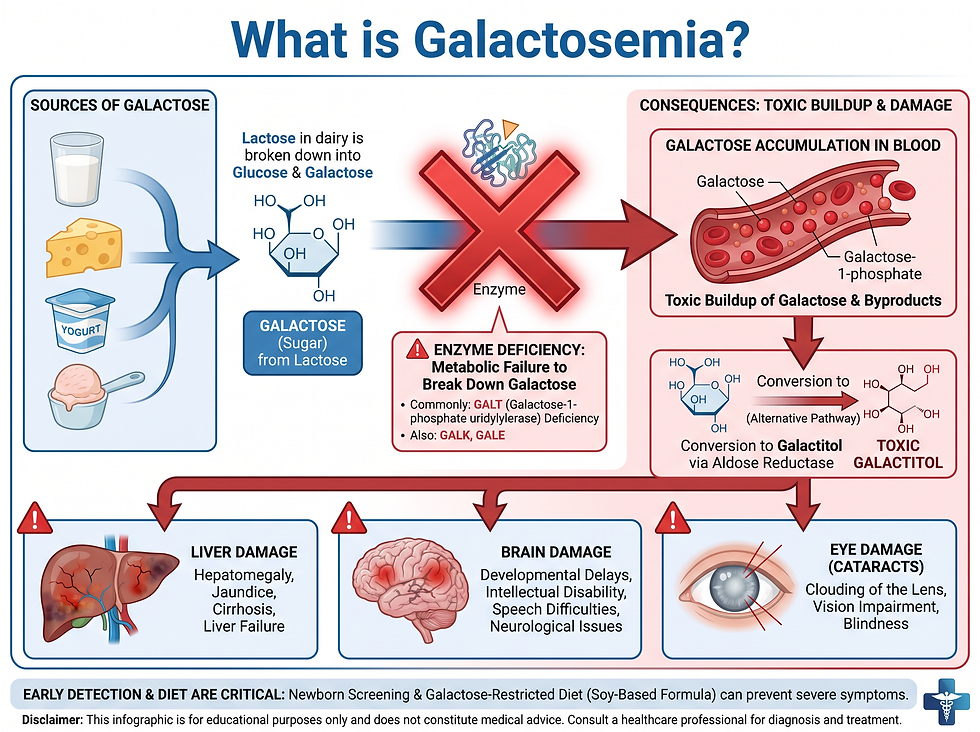
Galactosemia is caused by the body's inability to metabolize galactose, leading to toxic galactitol accumulation that damages multiple organs.
What Is Galactosemia?
Galactosemia — literally meaning "galactose in the blood" — is an inherited metabolic disorder that prevents the body from breaking down galactose, a simple sugar found in dairy products, breast milk, and most standard infant formulas. When galactose cannot be properly metabolized, it accumulates in the bloodstream and is converted by an unrelated enzyme into galactitol, an alcohol derivative that is toxic to the body's organs and tissues.
This condition is caused by mutations in one of three genes responsible for producing enzymes that process galactose. Because it follows an autosomal recessive inheritance pattern, a child must inherit one mutated gene from each parent to develop the disorder. Parents who each carry one copy of the mutated gene typically show no symptoms themselves.
Galactosemia is rare. The classic form of the condition occurs in approximately 1 in 45,000 people. A milder variant, known as Duarte galactosemia, is more common, affecting about 1 in 4,000 people. Newborn screening programs in the United States routinely test for classic galactosemia shortly after birth, making early diagnosis possible before serious complications develop.
How Does Galactosemia Affect the Body?
When galactose cannot be broken down, it overflows into tissues and organs where it does not belong. An enzyme not normally involved in galactose metabolism converts the excess galactose into galactitol. As galactitol accumulates, it causes progressive damage to multiple organ systems.
If left untreated, galactosemia can lead to a cascade of serious complications, including:
Cataracts (clouding of the eye lens)
Developmental delays and intellectual disabilities
Speech difficulties
Fine and gross motor difficulties
Neurological impairments
Kidney disease
Premature ovarian insufficiency
Liver failure
Sepsis (life-threatening blood infection in newborns)
Even with early diagnosis and strict dietary treatment, the body produces a small amount of galactose internally (endogenous galactose), which can continue to cause problems over time. Children who receive treatment may still experience speech delays, learning disabilities, behavioral problems, balance and coordination difficulties (ataxia), tremors, and hormone deficiencies.
What Are the Different Types of Galactosemia?
There are four recognized types of galactosemia, each caused by a mutation in a different gene and varying in severity.
Type | Gene Affected | Severity | Primary Risk |
Type I (Classic) | GALT | Most severe | Liver failure, sepsis, cataracts, intellectual disability |
Type II (Galactokinase deficiency) | GALK1 | Mild | Cataracts |
Type III (Galactose epimerase deficiency) | GALE | Mild to severe | Varies; can mirror Type I in severe cases |
Duarte Variant | GALT (partial) | Mildest | Digestive sensitivity; no major complications |
Type I (Classic Galactosemia) is the most common and most severe form. The GALT gene mutation essentially eliminates the enzyme activity needed to break down galactose, causing rapid accumulation in the body.
Type II causes fewer medical problems overall. The primary risk is the development of cataracts.
Type III can range from mild to severe. In its severe form, it can lead to many of the same complications as classic galactosemia, including cataracts, developmental delays, intellectual disabilities, liver disease, and kidney problems.
Duarte Galactosemia is caused by a less severe mutation in the GALT gene. It reduces but does not eliminate the essential enzyme function. People with Duarte galactosemia may have some digestive difficulties from foods containing galactose but generally do not develop the serious medical complications seen in classic galactosemia. They do not necessarily need to avoid galactose in their diet.
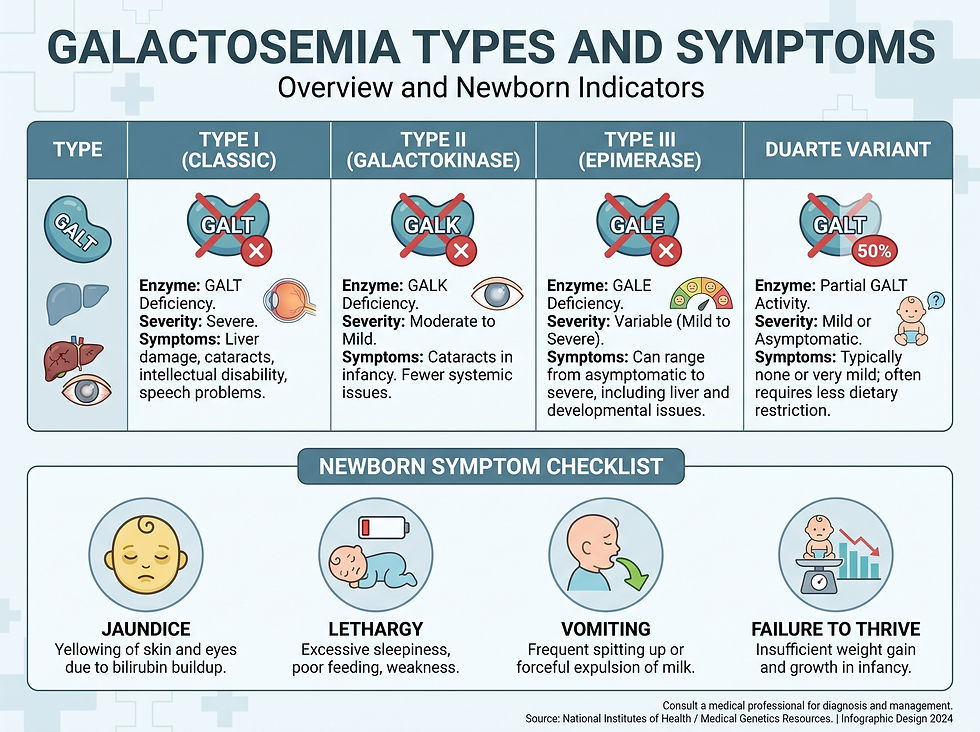
Understanding the four types of galactosemia helps families and clinicians tailor dietary and medical management to each individual's needs.
What Are the Symptoms of Galactosemia?
In Newborns
Signs of classic galactosemia typically appear within a few days of feeding. Symptoms can be mild or severe and may include:
Loss of appetite
Lethargy (unusual tiredness or low energy)
Vomiting
Diarrhea
Severe weight loss
Weakness
Failure to thrive
Jaundice (yellowing of the skin and eyes)
Enlarged liver (hepatomegaly)
Abdominal swelling with fluid (ascites)
Swelling around the brain (cerebral edema)
These symptoms in a newborn require immediate medical attention. Once galactosemia is diagnosed and galactose is removed from the diet, these acute symptoms should improve.
In Children and Adults
Even with treatment, some individuals may continue to experience:
Speech delays
Learning disabilities
Behavioral problems
Balance and coordination difficulties (ataxia)
Tremors
Hormone deficiencies leading to delayed puberty in girls
Adults with galactosemia can generally live relatively normal lives, though those who experienced symptoms as children may have lifelong challenges. Some symptoms may fluctuate depending on how strictly a person maintains their restricted diet.
How Is Galactosemia Diagnosed?
Newborn Screening
In the United States, it is standard procedure to screen newborns for classic galactosemia as part of a routine panel of metabolic disorders. This is sometimes called the PKU (phenylketonuria) test, as it screens for multiple conditions simultaneously. The test involves pricking the baby's heel and drawing a small blood sample, typically about 24 hours after birth. If the test shows reduced GALT enzyme activity, healthcare providers follow up with genetic testing to confirm the diagnosis and identify the specific type of galactosemia.
Diagnostic Step | Method | Timing |
Newborn screening | Heel-prick blood test (enzyme activity) | ~24 hours after birth |
Confirmatory testing | Genetic testing (GALT, GALK1, GALE mutations) | Following a positive screen |
Ongoing monitoring | Blood and urine tests, developmental assessments | Throughout life |
How Is Galactosemia Treated?
Dietary Management
The only known treatment for galactosemia is eliminating galactose from the diet. Because galactose is a component of lactose, this primarily means avoiding dairy products. Newborns with galactosemia must be switched from breast milk and standard infant formulas to a soy-based or elemental formula.
Children and adults with galactosemia may need to supplement their calcium and vitamin D intake to compensate for the absence of dairy in their diet. These supplements help maintain bone density over time.
Long-Term Support
Some children may require additional support as they grow, which can include:
Speech therapy for language and communication delays
Occupational therapy for fine motor skill development
Physical therapy for balance and coordination
Educational support for learning disabilities
Hormone replacement therapy for women with primary ovarian insufficiency
Primary Ovarian Insufficiency in Women
Most women with galactosemia will develop primary ovarian insufficiency, even with early diagnosis and treatment. This can cause difficulties with menstruation, fertility, and carrying a pregnancy to term. Hormone replacement therapy can help manage these effects and may support fertility in some cases.
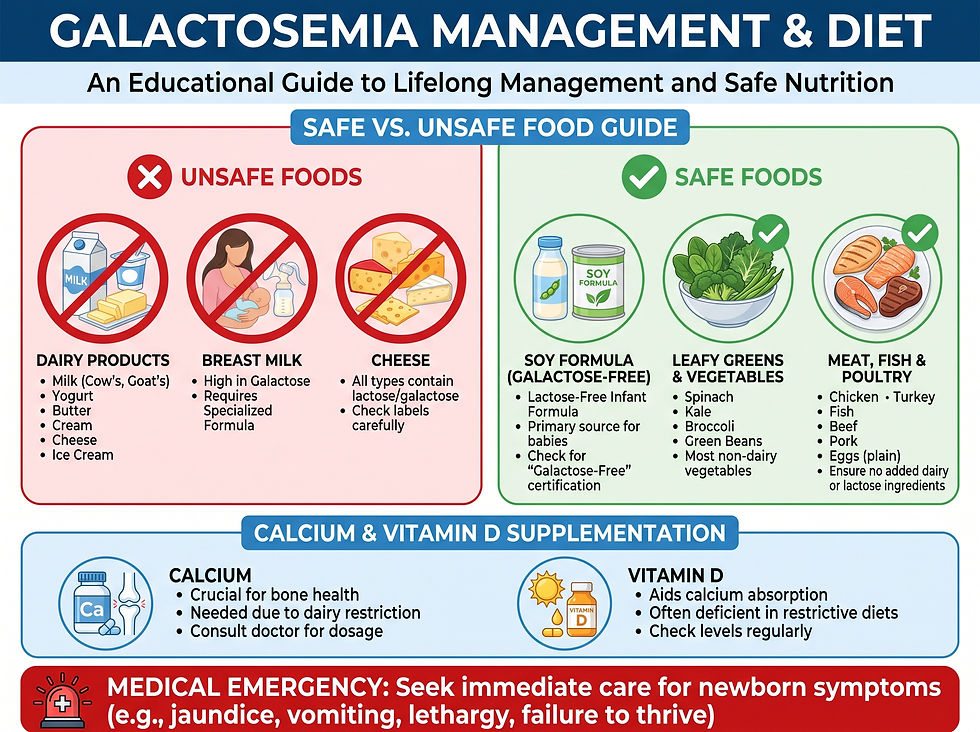
Strict dietary management — eliminating all galactose-containing foods — is the cornerstone of galactosemia treatment throughout life.
What Foods Must Be Avoided with Galactosemia?
People with classic galactosemia must avoid all foods containing galactose or lactose. The following table outlines key food categories to avoid and acceptable alternatives.
Foods to Avoid | Acceptable Alternatives |
Breast milk | Soy-based or elemental infant formula |
Cow's milk and dairy (cheese, yogurt, butter, cream) | Dairy-free alternatives (rice milk, oat milk, soy milk) |
Foods containing lactose (many processed foods) | Lactose-free or dairy-free products |
Some legumes (e.g., lentils, chickpeas) | Other legumes as tolerated |
Organ meats (liver, kidney) | Lean meats, poultry, fish |
Important: Even small amounts of galactose from hidden dietary sources can contribute to ongoing complications. Reading food labels carefully is essential for people with classic galactosemia.
What Is the Outlook for People with Galactosemia?
With early diagnosis and strict dietary management, many people with galactosemia can lead relatively normal lives. However, the outlook varies depending on the type and severity of the condition.
Children who receive an early diagnosis and follow a galactose-restricted diet generally grow and develop adequately. Some may appear no different from their peers, while others may continue to face challenges with speech, learning, coordination, and behavior.
For women with galactosemia, primary ovarian insufficiency is a common complication that occurs even with treatment. This is because the body produces a small amount of galactose internally (endogenous galactose), which cannot be eliminated through diet alone.
Adults with galactosemia can live relatively normal lives, though adherence to a lifelong restricted diet is essential for minimizing ongoing complications.
When Should You See a Healthcare Provider?
Seek immediate medical attention if your newborn shows any of the following signs within the first days of feeding:
Yellowing of the skin or eyes (jaundice)
Unusual lethargy or difficulty waking
Vomiting or refusal to feed
Failure to gain weight
Abdominal swelling
For children and adults already diagnosed with galactosemia, contact a healthcare provider if you notice:
New or worsening speech difficulties
Balance or coordination problems
Signs of delayed puberty or menstrual irregularities
Symptoms of cataracts (blurred or cloudy vision)
Note: This article is for informational purposes only. All medical decisions should be made in consultation with a qualified healthcare provider.
Conclusion
Galactosemia is a rare but serious inherited metabolic disorder that requires lifelong dietary management. Early newborn screening is critical for detecting the condition before life-threatening complications develop. While a strict galactose-free diet cannot eliminate all complications — particularly primary ovarian insufficiency in women — it significantly reduces the risk of severe outcomes and allows most people with galactosemia to lead fulfilling lives.
What you can do now:
If you have a newborn, confirm that routine newborn screening has been completed and ask your provider about the results.
If your child has been diagnosed with galactosemia, work with a registered dietitian experienced in metabolic disorders to establish a safe, nutritionally complete diet plan.
Connect with a specialist in metabolic diseases or a genetic counselor for ongoing monitoring, family planning guidance, and access to support resources.
Frequently Asked Questions (FAQ)
What does galactosemia mean?
Galactosemia literally means "galactose in the blood." It refers to an inherited metabolic disorder in which the body cannot properly break down galactose, causing it to accumulate to toxic levels.
Is galactosemia the same as lactose intolerance?
No. Lactose intolerance involves difficulty digesting lactose due to low levels of the enzyme lactase, causing digestive symptoms. Galactosemia is a more serious genetic condition in which the body cannot metabolize galactose at all, leading to organ damage and life-threatening complications if untreated.
How common is galactosemia?
Classic galactosemia occurs in approximately 1 in 45,000 people. The milder Duarte variant is more common, affecting about 1 in 4,000 people.
What causes galactosemia?
Galactosemia is caused by mutations in one of three genes (GALT, GALK1, or GALE) that produce enzymes needed to break down galactose. It follows an autosomal recessive inheritance pattern, meaning a child must inherit one mutated gene from each parent.
Can parents have galactosemia without knowing?
Yes. Parents who each carry one copy of the mutated gene (carriers) typically do not have symptoms of galactosemia themselves. Their child has a 25% chance of inheriting both copies and developing the condition.
How is galactosemia diagnosed in newborns?
Galactosemia is detected through routine newborn screening, which involves a heel-prick blood test taken about 24 hours after birth. If the test shows reduced enzyme activity, genetic testing is used to confirm the diagnosis and identify the type.
What happens if galactosemia is not treated?
Untreated galactosemia can lead to liver failure, sepsis, cataracts, intellectual disabilities, developmental delays, kidney disease, and premature ovarian insufficiency. It can be life-threatening in newborns.
What is the treatment for galactosemia?
The only known treatment is a strict lifelong diet that eliminates galactose. This means avoiding dairy products, breast milk, and most standard infant formulas. Newborns are switched to soy-based or elemental formula.
Can people with galactosemia eat any dairy?
People with classic galactosemia must avoid all dairy products. Those with the milder Duarte variant may tolerate some galactose-containing foods without developing serious complications.
What formula is safe for newborns with galactosemia?
Soy-based or elemental infant formulas are the recommended alternatives to breast milk and standard dairy-based formulas for newborns with galactosemia.
Do people with galactosemia need supplements?
Yes. Because dairy products are eliminated from the diet, people with galactosemia typically need to supplement calcium and vitamin D to maintain bone density.
Can women with galactosemia have children?
Most women with galactosemia develop primary ovarian insufficiency, which can make it difficult to conceive and carry a pregnancy to term. Hormone replacement therapy can help manage menstrual irregularities and may support fertility in some cases.
Does galactosemia affect boys and girls differently?
Galactosemia affects both males and females equally in terms of metabolic complications. However, women with galactosemia are particularly at risk for primary ovarian insufficiency, which affects menstruation, fertility, and hormonal health.
What is Duarte galactosemia?
Duarte galactosemia is a milder variant caused by a less severe mutation in the GALT gene. It reduces but does not eliminate enzyme function. People with Duarte galactosemia may have some digestive sensitivity to galactose but generally do not develop the serious complications of classic galactosemia.
Can galactosemia be cured?
There is currently no cure for galactosemia. Dietary management is the only known treatment. Researchers are investigating gene therapy and enzyme replacement approaches, but these are not yet available as standard treatments.
External Links
References
Cleveland Clinic. (2022, August 25). Galactosemia. https://my.clevelandclinic.org/health/diseases/24062-galactosemia
Medical Disclaimer
This article is intended for general informational purposes only and does not constitute medical advice. The information provided is based on a single authoritative source and should not be used as a substitute for professional medical diagnosis, treatment, or guidance. Always consult a qualified healthcare provider regarding any medical condition, symptoms, or treatment options. In the event of a medical emergency, call 911 or go to the nearest emergency room immediately.
Content reviewed and produced for Rinnit.com. For medical emergencies, contact emergency services immediately.
Comments