G6PD Deficiency: Symptoms, Causes, Diagnosis, Treatment and Outlook — What You Need to Know

Updated: 2 days ago
Medically reviewed by Dr. Baraa Alnahhal, MD · Last reviewed: September 2026
TL;DR
G6PD deficiency is a common genetic disorder that affects the body's ability to produce glucose-6-phosphate dehydrogenase, an enzyme essential for protecting red blood cells from damage. While most individuals with the condition remain asymptomatic, exposure to certain triggers—such as fava beans, specific medications, or infections—can lead to hemolytic anemia, where red blood cells break down faster than the body can replace them. Affecting between 400 million and 500 million people worldwide, it is most prevalent in males of African, Mediterranean, or Southeast Asian descent. Management primarily involves the strict avoidance of known triggers to maintain healthy red blood cell levels. [1]
Quick Answer: What is G6PD Deficiency?
G6PD deficiency is an inherited condition characterized by insufficient levels of the G6PD enzyme, which normally shields red blood cells from injury caused by harmful substances known as free radicals. Without enough of this enzyme, red blood cells become vulnerable to oxidative stress when exposed to triggers like fava beans, sulfa drugs, or certain infections. This stress causes the cells to rupture and die prematurely (hemolysis), potentially leading to hemolytic anemia. Symptoms of a reaction include jaundice, fatigue, dark-colored urine, and shortness of breath. Diagnosis is confirmed through blood tests, and while there is no cure, most people live a normal life by avoiding triggers. [1]
MEDICAL EMERGENCY WARNING Seek immediate emergency medical care if you or your child experience signs of a hemolytic crisis, such as rapid onset of severe jaundice, extreme fatigue, shortness of breath, or dark, tea-colored urine. For newborns, severe jaundice requires urgent intervention to prevent potential brain damage.

What is G6PD Deficiency?
G6PD deficiency represents a genetic shift in how the body protects its red blood cells. The G6PD enzyme acts as a biological shield, neutralizing free radicals that would otherwise cause oxidative stress. In individuals with this deficiency, the gene responsible for producing this enzyme contains a variant that results in low enzyme activity. This makes the red blood cells fragile and prone to breaking apart when they encounter specific environmental or chemical stressors. [1]
Feature | Description |
Enzyme Role | Protects red blood cells from injury and oxidative stress. |
Mechanism | Low enzyme levels lead to red blood cell rupture (hemolysis) upon trigger exposure. |
Prevalence | Affects 400 million to 500 million people globally. |
Inheritance | X-linked recessive trait, passed from biological parents. |
Genetics and Inheritance
The condition is inherited through the X chromosome. Because biological males have only one X chromosome, they are significantly more likely to manifest the deficiency if they inherit the gene variant. Females, who have two X chromosomes, are often carriers but can also be affected if both chromosomes carry the variant or through other genetic mechanisms. In the United States, the condition is notably common among Black males, affecting an estimated 10% of this demographic. [1]
Symptoms of G6PD Deficiency
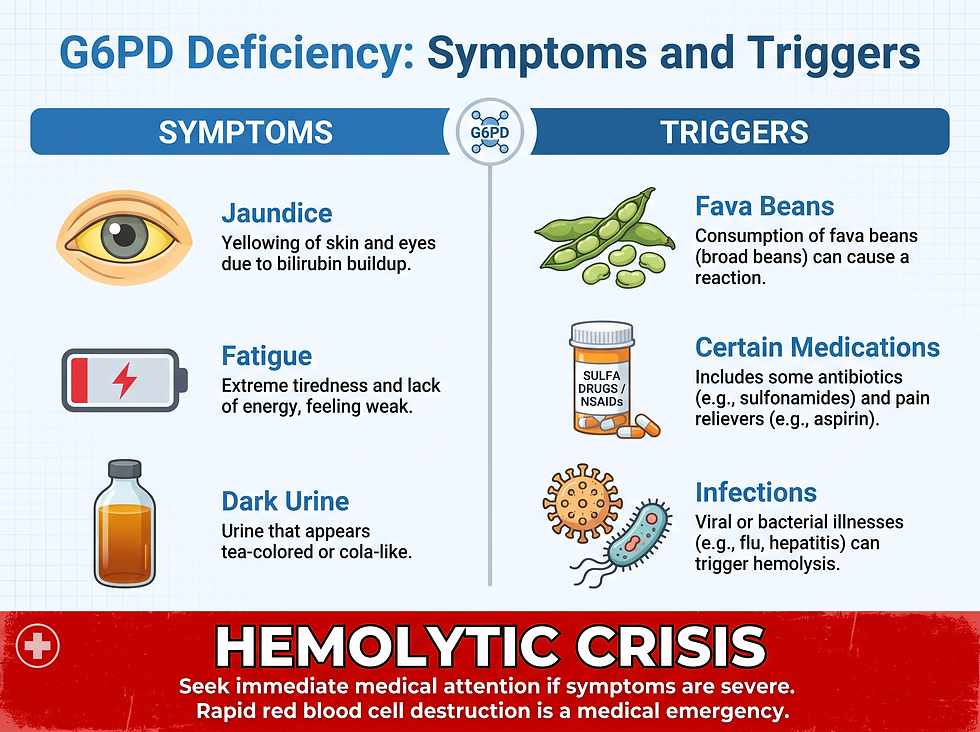
Most people living with G6PD deficiency do not experience daily symptoms. However, when a trigger causes red blood cells to break down rapidly, the following symptoms may develop:
Jaundice: Yellowing of the skin or the whites of the eyes.
Fatigue and Weakness: A profound sense of tiredness due to reduced oxygen delivery.
Respiratory Issues: Shortness of breath or rapid breathing.
Cardiovascular Signs: A rapid heart rate (tachycardia).
Discolored Urine: Pee that appears dark, yellow-orange, or tea-colored.
Physical Changes: Pale skin, lips, or tongue, and an enlarged spleen. [1]
G6PD Deficiency in Newborns
In infants, the most prominent sign is jaundice appearing within the first few days of life. It is critical to monitor and treat severe jaundice in newborns, as untreated cases can lead to a type of brain damage known as kernicterus. Healthcare providers routinely screen newborns if they suspect a deficiency or if the infant belongs to a high-risk group. [1]
Causes and Triggers
The fundamental cause of G6PD deficiency is a genetic mutation in the G6PD gene. This mutation prevents the body from making enough functional enzyme to handle "free radicals"—substances found in the environment, certain foods, and medications. When these substances build up, they cause oxidative stress that destroys the red blood cells.
Common Triggers of Hemolysis
Exposure to triggers can lead to a sudden breakdown of red blood cells. The most well-known triggers include:
Foods: Fava beans are the most common trigger; a reaction to them is specifically called "favism."
Medications: Certain antimalarial drugs (like primaquine), antibiotics (such as nitrofurantoin and sulfa drugs), and high doses of NSAIDs (like aspirin).
Infections: Bacterial or viral infections, including pneumonia, hepatitis, and typhoid fever.
Lifestyle Factors: Smoking, excessive alcohol consumption, and extreme emotional or physical stress. [1]
Trigger Category | Examples to Avoid or Monitor |
Legumes | Fava beans (Broad beans). |
Antimalarials | Primaquine. |
Antibiotics | Sulfa drugs, Dapsone, Nitrofurantoin. |
Pain Relievers | High-dose Aspirin, Ibuprofen (NSAIDs). |
Infections | Hepatitis A & B, Typhoid fever, Pneumonia. |
Diagnosis and Tests
Diagnosis typically begins with a review of medical history, family genetics, and a physical examination to check for signs like jaundice or an enlarged spleen. Several blood tests are used to confirm the condition and assess its impact:
Complete Blood Count (CBC): Measures the levels of red blood cells.
Peripheral Blood Smear: Examines the shape and size of red blood cells for signs of damage.
Bilirubin Test: Measures waste products from destroyed red blood cells.
G6PD Test: Directly measures the levels of the G6PD enzyme in the blood. [1]
Treatment and Management
There is no medical cure to "fix" the genetic variant, so treatment focuses on managing symptoms and preventing future episodes of hemolysis.
Acute Management
Mild Cases: Treatment involves managing symptoms like jaundice and identifying the trigger to ensure it is avoided in the future.
Severe Cases: If hemolytic anemia is severe or a hemolytic crisis occurs, a blood transfusion may be necessary to restore red blood cell levels.
Newborn Care: Infants with jaundice may receive phototherapy (light therapy) or, in critical cases, an exchange transfusion to replace unhealthy blood with donor blood. [1]
Long-Term Management Strategies
Strategy | Action and Benefit |
Trigger Avoidance | Strictly avoiding fava beans and specific high-risk medications. |
Infection Control | Promptly treating bacterial and viral infections to reduce stress on RBCs. |
Lifestyle Adjustment | Limiting alcohol, quitting smoking, and avoiding extreme physical strain. |
Genetic Counseling | Discussing inheritance risks with a healthcare provider for family planning. |
Outlook and Prognosis
The outlook for individuals with G6PD deficiency is generally excellent. Because the condition does not typically affect life expectancy, most people live full, active lives. The key to a positive prognosis is the consistent avoidance of oxidative triggers. While some may experience life-threatening hemolytic crises, these are preventable with proper knowledge and medical guidance. [1]
Living With G6PD Deficiency
Taking care of yourself involves proactive communication with your healthcare team and mindful lifestyle choices.
Consult Your Provider: Always ask for a comprehensive list of medications and foods to avoid.
Moderation is Key: Exercise in moderation to avoid excessive oxidative stress.
Prioritize Rest: Ensure you get enough sleep to support your immune system and overall health.
Safety First: If you are a carrier or have the condition, inform all medical professionals before starting new treatments. [1]

Conclusion and Next Steps
G6PD deficiency is a manageable genetic trait that requires awareness rather than constant medical intervention for most people. By understanding your triggers and working closely with your healthcare provider, you can protect your red blood cells and maintain optimal health.
Recommended Next Steps
Request a Trigger List: Get a printed list of high-risk medications and foods from your doctor.
Inform Your Family: Since the condition is genetic, share your diagnosis with relatives who may also be at risk.
Monitor for Symptoms: Learn the early signs of jaundice and dark urine to catch hemolytic episodes early.
Frequently Asked Questions
What is the most common trigger for G6PD deficiency?
According to research, eating fava beans is the most common trigger for a hemolytic reaction in people with this condition. This specific reaction is known as favism.
Can G6PD deficiency be cured?
No, there is currently no cure for G6PD deficiency because it is a genetic disorder. However, it can be effectively managed by avoiding specific triggers.
Does G6PD deficiency affect life expectancy?
No, G6PD deficiency typically does not impact life expectancy. Most people with the condition live normal, healthy lives as long as they avoid triggers that cause red blood cell breakdown.
Why is G6PD deficiency more common in males?
The gene variant for G6PD deficiency is carried on the X chromosome. Since males have only one X chromosome, they will have the condition if that single chromosome carries the variant. Females have two X chromosomes, which provides a level of protection unless both carry the variant.
What are the signs of a hemolytic crisis?
A hemolytic crisis is a severe, rapid breakdown of red blood cells. Signs include rapid heart rate, extreme fatigue, shortness of breath, sudden jaundice (yellowing of eyes/skin), and dark, tea-colored urine.
Are there specific medications I should avoid?
Yes. Common medications to avoid include certain antimalarials (primaquine), specific antibiotics (sulfa drugs, dapsone, nitrofurantoin), and high doses of aspirin or other NSAIDs. Always consult your doctor for a complete list.
Can infections trigger a reaction?
Yes, bacterial and viral infections like pneumonia, hepatitis, and typhoid fever can cause oxidative stress that triggers the breakdown of red blood cells in people with G6PD deficiency.
Is G6PD deficiency the same as anemia?
Not exactly. G6PD deficiency is a genetic condition that can lead to hemolytic anemia if a person is exposed to a trigger. Many people with the deficiency are not anemic most of the time.
How is G6PD deficiency diagnosed in newborns?
Newborns are typically screened through blood tests that measure G6PD enzyme levels, especially if they show early signs of jaundice or have a family history of the condition.
Can I exercise if I have G6PD deficiency?
Yes, but moderation is recommended. Strenuous or extreme exercise can sometimes increase oxidative stress, so it is best to maintain a balanced workout routine.
What is kernicterus?
Kernicterus is a type of brain damage that can occur in newborns with severe, untreated jaundice. Because G6PD deficiency can cause jaundice in infants, early detection and treatment are vital.
Is it safe to drink alcohol with this condition?
It is recommended to limit alcohol consumption, as excessive drinking can put additional stress on your red blood cells.
What does "oxidative stress" mean in G6PD deficiency?
Oxidative stress occurs when harmful substances called free radicals build up in the red blood cells. Without enough G6PD enzyme to neutralize them, these substances damage the cell membrane, causing the cell to rupture.
Can I take ibuprofen for pain?
NSAIDs like ibuprofen can be a trigger for some people with G6PD deficiency, especially in high doses. You should discuss safe pain relief options with your healthcare provider.
Do all people with G6PD deficiency have symptoms?
No. Many people with the condition never experience symptoms and may not even know they have it unless they encounter a significant trigger or undergo genetic testing.
References
Cleveland Clinic. G6PD Deficiency (Glucose-6-Phosphate Dehydrogenase Deficiency). https://my.clevelandclinic.org/health/diseases/22556-g6pd-glucose-6-phosphate-dehydrogenase-deficiency. Accessed 08/21/2026.
Medical Disclaimer: The information provided in this article is for educational purposes only and should not be used as a substitute for professional medical advice, diagnosis, or treatment. Always seek the advice of your physician or other qualified health provider with any questions you may have regarding a medical condition.
Comments